VCT Floor Restoration vs Replacement: 2026 Cost Analysis
VCT FLOOR RESTORATION VS REPLACEMENT COST ANALYSIS
VCT floor restoration costs $0.40-$1.80/sqft while replacement runs $2-$4/sqft. See the full cost breakdown and learn when each option makes financial sense.
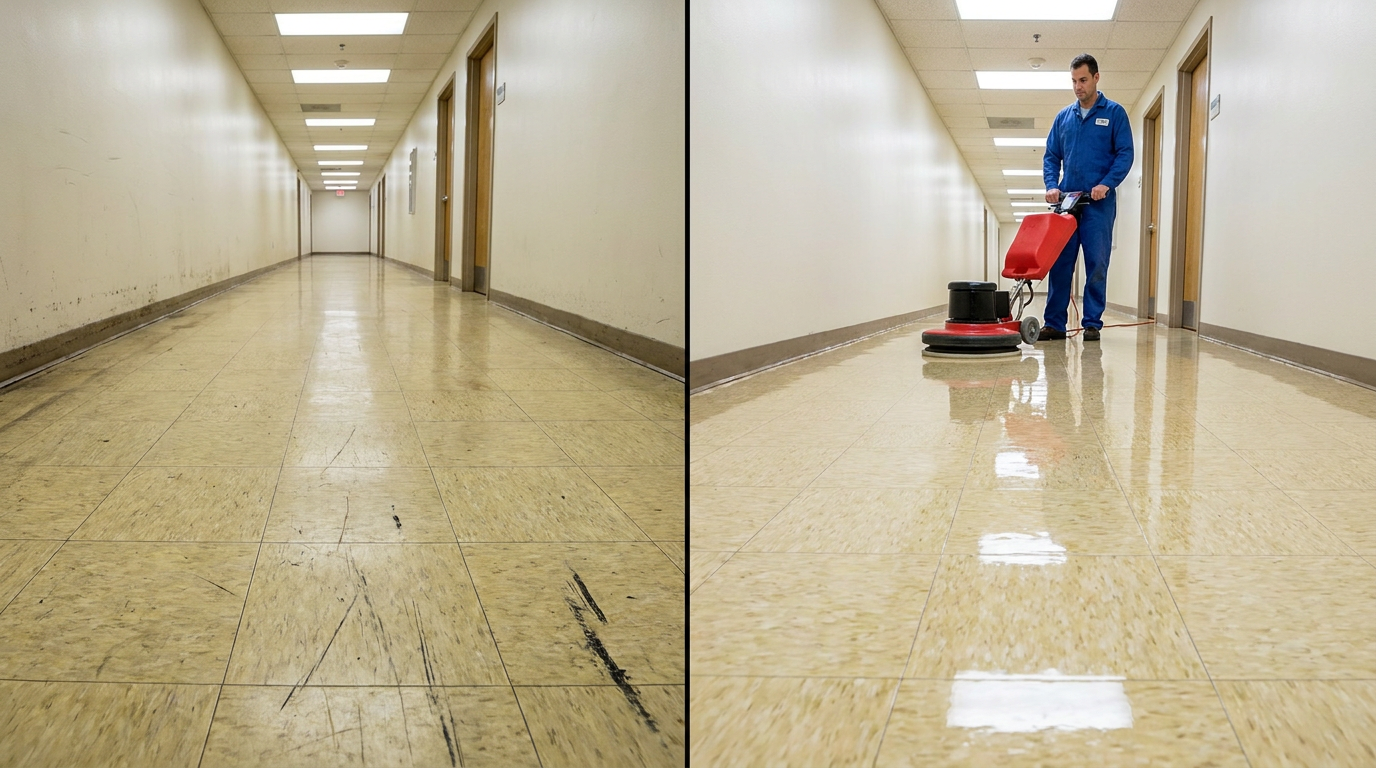
VCT floor restoration costs $0.40 to $1.80 per square foot, while full replacement runs $2.00 to $4.00 per square foot. For a 5,000 square foot facility, that translates to $2,000 to $9,000 for restoration versus $10,000 to $20,000 for replacement. Properly maintained VCT floors last 25 to 30 years; neglected floors require replacement within 5 to 7 years.
- Restoration saves 50% to 80% compared to replacement for structurally sound VCT floors
- Annual maintenance programs ($0.16 to $0.40 per square foot) extend floor life from 5 years to 30 years
- Strip and wax services cost $0.85 to $1.80 per square foot; scrub and recoat runs $0.60 to $1.50 per square foot
- Replacement becomes necessary when tiles crack, lift, or show moisture damage across more than 15% of the floor area
- South Florida humidity accelerates finish degradation, requiring maintenance every 3 to 6 months
Understanding VCT Flooring and Why Restoration Works
Vinyl composition tile is a porous commercial flooring material that relies entirely on its protective finish layer for durability. The tile itself provides structural support, but the wax finish creates the actual wear surface that resists scuffs, stains, and foot traffic. Without this protective coating, VCT degrades rapidly.
According to industry analysis from Mill Facilities, VCT floor maintenance under traditional strip and wax models costs $0.12 to $0.18 per square foot per strip event in labor and chemicals alone. This baseline cost explains why restoration remains dramatically cheaper than replacement for floors without structural damage.
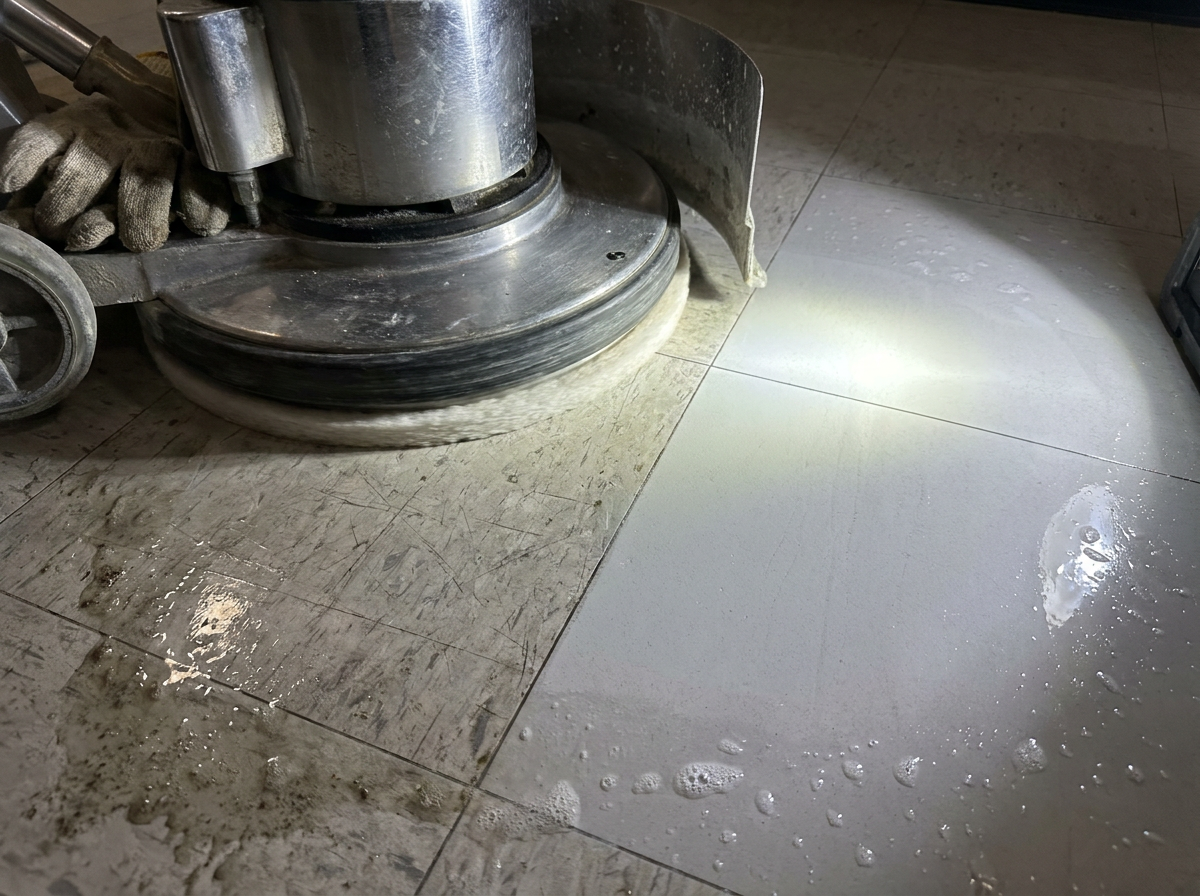
The restoration process addresses finish degradation, not tile replacement. Professional floor care technicians strip away damaged or yellowed finish layers, neutralize the surface, and apply fresh coats of commercial-grade floor wax. This rebuilds the protective barrier without touching the underlying tile structure.
Complete Cost Breakdown: Restoration vs Replacement
The financial difference between restoration and replacement is substantial. Below is a detailed comparison based on a 5,000 square foot commercial facility, which represents a typical retail space, medical office, or school corridor.
| Service Type | Cost Per Sq Ft | 5,000 Sq Ft Total | Frequency |
|---|---|---|---|
| Scrub and Recoat | $0.60 to $1.50 | $3,000 to $7,500 | Every 3 to 6 months |
| Full Strip and Wax | $0.85 to $1.80 | $4,250 to $9,000 | Every 12 to 18 months |
| Annual Maintenance Program | $0.16 to $0.40 | $800 to $2,000 | Ongoing yearly |
| Full VCT Replacement | $2.00 to $4.00 | $10,000 to $20,000 | One-time capital expense |
The National Flooring Repair Authority notes that decision criteria extend beyond simple cost comparison. Damage assessment, permitting requirements, and business disruption all factor into the total expense calculation.
10-Year Lifecycle Cost Comparison
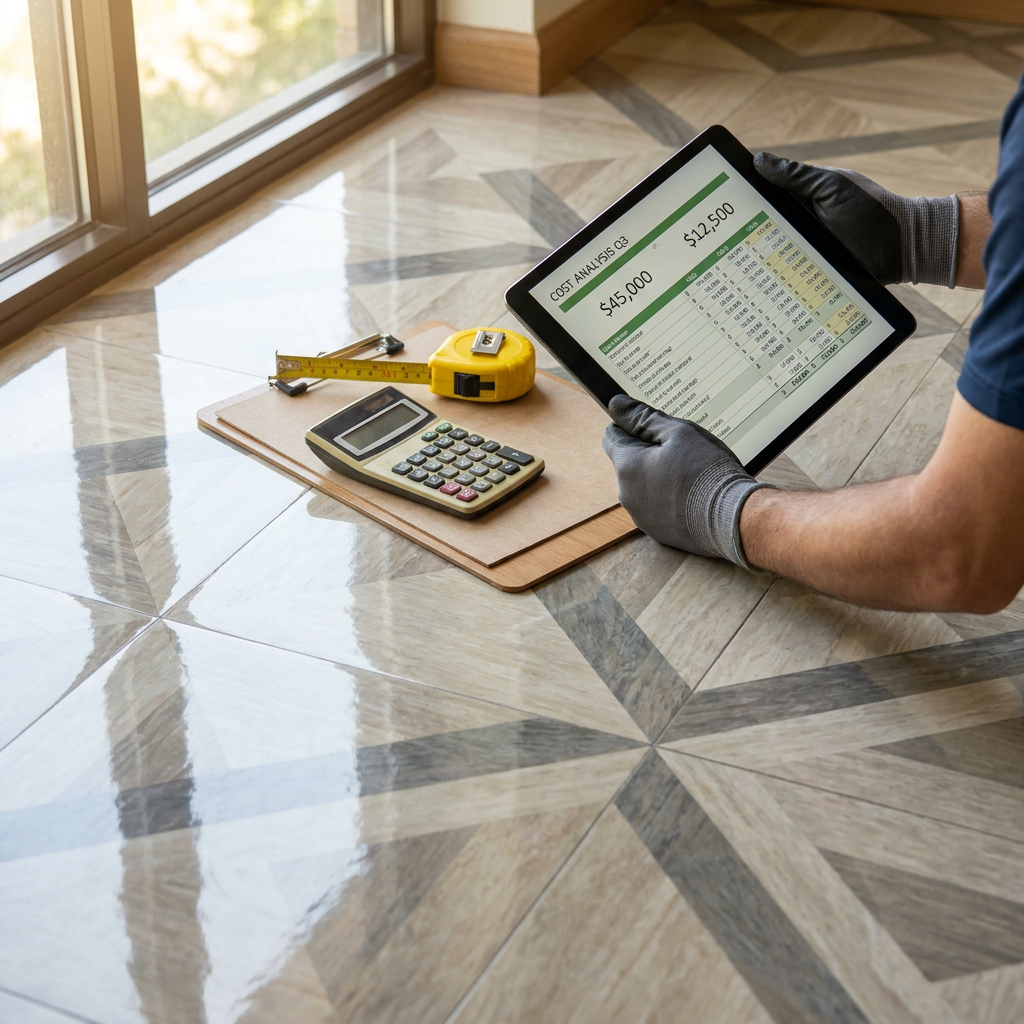
Short-term savings from restoration compound dramatically over a decade. A facility manager choosing restoration over replacement saves between $30,000 and $100,000 per 5,000 square feet over a 10-year period, assuming consistent maintenance.
Restoration-focused strategy (10 years): Initial strip and wax at $4,250 to $9,000, followed by annual maintenance at $800 to $2,000 per year. Total 10-year cost: $12,250 to $29,000.
Replacement strategy (10 years): Full replacement at $10,000 to $20,000 upfront, plus ongoing maintenance on new flooring at $800 to $2,000 per year. Total 10-year cost: $18,000 to $40,000, and the floor still needs maintenance.
When VCT Restoration Makes Financial Sense
Restoration delivers the best return on investment when the underlying tile remains structurally intact. The decision framework centers on three key indicators: tile condition, damage extent, and operational requirements.
Ideal Candidates for Restoration
Floors showing surface-level wear respond well to professional floor stripping and waxing services. Yellowed finish, embedded scuff marks, dull appearance, and minor scratches all indicate finish degradation rather than tile failure. These conditions reverse completely with proper restoration.
Budget constraints often make restoration the only viable option. Capital expenditure approval for $10,000 to $20,000 floor replacement takes months in many organizations. Restoration at $4,250 to $9,000 frequently falls within operational maintenance budgets, enabling faster project completion.
Facilities requiring minimal downtime benefit from restoration scheduling flexibility. Professional crews complete strip and wax projects during off-hours, working section by section. A 5,000 square foot restoration typically requires 2 to 3 nights of after-hours work. Full replacement demands 1 to 2 weeks of area closure.
Industries Where Restoration Delivers Maximum ROI
Schools and daycares face strict budget cycles and limited summer windows for major projects. A DCF-compliant daycare cleaning service can restore VCT floors during scheduled closures, maintaining compliance documentation while avoiding capital expenditure requests.
Retail environments prioritize appearance without disrupting sales. According to the Carpet and Rug Institute's lifecycle cost analysis, VCT maintenance costs remain predictable when facilities follow scheduled restoration programs.
Office buildings with multi-tenant leases cannot close common areas for extended replacement projects. Property managers serving Miami-Dade, Broward, and Palm Beach counties often choose phased restoration to maintain tenant satisfaction and lease compliance.
When Replacement Becomes the Smarter Investment
Certain floor conditions make restoration ineffective or cost-prohibitive. Recognizing these indicators prevents wasted spending on restoration that will not deliver lasting results.
Structural Damage Requiring Replacement
Cracked, chipped, or broken tiles cannot be restored. When damage affects more than 10% to 15% of floor tiles, individual tile replacement becomes impractical. Full replacement provides a uniform appearance and eliminates the patchwork effect of scattered repairs.
Tiles lifting from the subfloor indicate adhesive failure or moisture infiltration. South Florida's humidity levels, averaging 75% to 85% year-round, accelerate adhesive breakdown in buildings with inadequate climate control. Once tiles begin lifting, the underlying moisture problem requires subfloor remediation before any flooring solution succeeds.
Repeated restoration failures signal deeper issues. If professionally applied finish degrades within 60 to 90 days despite proper application, the tile surface may be compromised. Excessive porosity, chemical contamination, or manufacturing defects in older VCT can prevent finish adhesion.
Strategic Reasons for Replacement
Facility rebranding or design updates may require different flooring aesthetics that restoration cannot achieve. Luxury vinyl tile, polished concrete, or terrazzo offer distinct visual profiles that VCT restoration cannot replicate.
Buildings undergoing major renovation often bundle flooring replacement with other capital improvements. Post-construction cleaning services then prepare new floors for occupancy, establishing the initial finish layer that maintenance programs will preserve.
South Florida Climate Considerations
Miami-Dade, Broward, and Palm Beach County facilities face accelerated floor finish degradation due to regional climate factors. Understanding these conditions helps facility managers budget appropriately for maintenance frequency.
High humidity levels cause floor finish to soften and become more susceptible to scuffing and dirt embedding. Standard VCT maintenance schedules developed for northern climates underestimate South Florida requirements by 30% to 50%. Facilities here typically need scrub and recoat services every 3 to 4 months rather than the 6-month intervals common in drier regions.
Salt air exposure in coastal properties adds another degradation factor. Buildings within 5 miles of the Atlantic Ocean experience faster finish breakdown due to salt particle abrasion. These facilities benefit from more frequent burnishing between full restoration cycles.
Air conditioning transitions create condensation risk. When facilities power down HVAC systems overnight or on weekends, temperature differentials cause moisture accumulation on floor surfaces. This moisture penetrates finish layers and accelerates yellowing. Consistent climate control, maintaining 68 to 75 degrees Fahrenheit with 50% to 60% relative humidity, extends finish life by 40% to 60%.
Decision Framework: Restore or Replace
Use this assessment checklist to determine the appropriate path for your VCT floors. Each factor carries weight in the final decision, but structural integrity remains the primary consideration.
| Assessment Factor | Restoration Indicated | Replacement Indicated |
|---|---|---|
| Tile Integrity | Less than 5% damaged tiles | More than 15% damaged tiles |
| Adhesion | Tiles firmly bonded | Widespread lifting or bubbling |
| Moisture Issues | No subfloor moisture | Active moisture infiltration |
| Previous Restoration | Finish lasts 6+ months | Finish fails within 90 days |
| Budget Timeline | Operational funds available | Capital budget approved |
| Downtime Tolerance | Minimal closure acceptable | Extended closure possible |
Frequently Asked Questions
What is the rule of 3 in flooring?
The rule of 3 in flooring refers to the three-coat minimum for commercial floor finish application. Professional floor care technicians apply at least three coats of floor wax after stripping, allowing each coat to dry completely before applying the next. This builds adequate film thickness for durability. Some high-traffic facilities require 4 to 5 coats for optimal protection.
Is it cheaper to refinish or replace floors?
Refinishing VCT floors costs 50% to 80% less than replacement. A 5,000 square foot strip and wax project runs $4,250 to $9,000, while replacement costs $10,000 to $20,000 for the same area. Refinishing also avoids demolition expenses, disposal fees, and extended business disruption that add hidden costs to replacement projects.
What is the ROI on replacing flooring?
VCT replacement ROI depends heavily on the existing floor condition and remaining lifespan. If current floors have 15+ years of potential life remaining with proper maintenance, replacement delivers negative ROI. However, replacing severely damaged floors that require restoration every 2 to 3 months can deliver positive ROI within 3 to 5 years by eliminating excessive maintenance costs.
How much does VCT cost per square foot?
New VCT material costs $1.00 to $2.50 per square foot, with installation adding another $1.00 to $1.50 per square foot. Total installed cost ranges from $2.00 to $4.00 per square foot. Premium VCT products with enhanced durability or specialized patterns reach $3.00 to $5.00 per square foot installed. These figures do not include demolition and disposal of existing flooring.
How often should commercial VCT floors be stripped and waxed?
Most commercial facilities require full strip and wax every 12 to 18 months, with professional floor deep cleaning and scrub and recoat services every 3 to 6 months between full restorations. High-traffic areas like retail entrances, school corridors, and hospital hallways may need more frequent attention. South Florida facilities typically require 20% to 30% more frequent service due to humidity.
How long can properly maintained VCT flooring last?
VCT flooring with consistent professional maintenance lasts 25 to 30 years before requiring replacement. Neglected VCT floors typically need replacement within 5 to 7 years. The difference comes entirely from maintaining the protective finish layer that shields the porous tile from wear and staining.
Making the Right Decision for Your Facility
The restoration versus replacement decision ultimately depends on floor condition, budget constraints, and operational requirements. For the majority of commercial VCT floors in South Florida, professional restoration delivers superior financial returns while maintaining appearance standards.
Facility managers should schedule professional floor assessments before committing to either path. A qualified floor care specialist can identify tile damage invisible to untrained observers, test adhesion strength, and recommend the most cost-effective approach for each specific situation.
Request a free on-site floor assessment to receive a detailed condition report and transparent pricing for restoration services. Professional evaluation typically takes 30 to 45 minutes and includes square footage measurement, damage documentation, and maintenance recommendations.
Get Your Free VCT Floor Assessment
MB Clean Solutions provides complimentary on-site floor evaluations throughout Miami-Dade, Broward, and Palm Beach counties. Our specialists assess your VCT condition and deliver transparent restoration quotes within 24 hours.
Schedule Your Free AssessmentKeep reading
More guides on the same topic from our team.
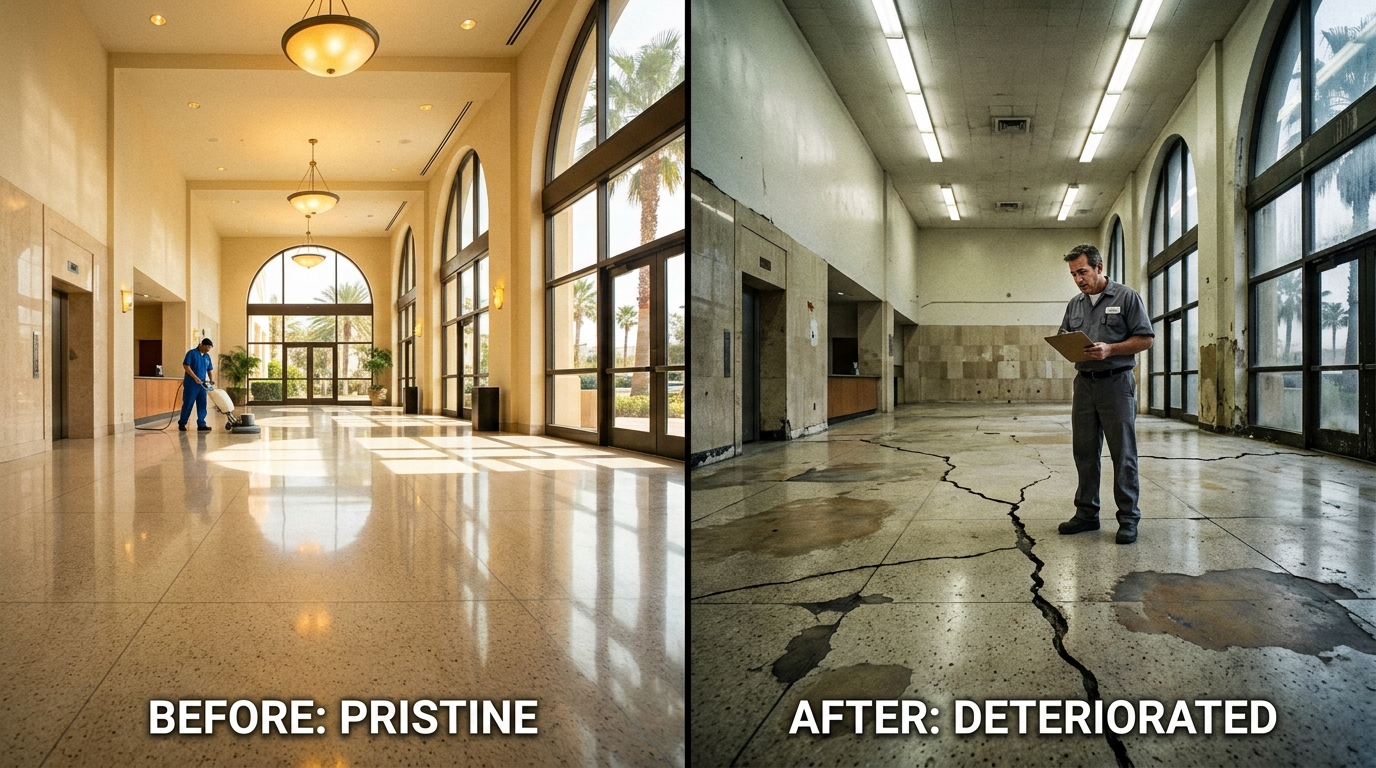
Floor Maintenance Program Cost vs Reactive Repairs: Full Analysis
Reactive floor repairs cost 3 to 5 times more than planned maintenance. See the full cost breakdown by floor type, plus ROI data for South Florida facilities.
Read the guide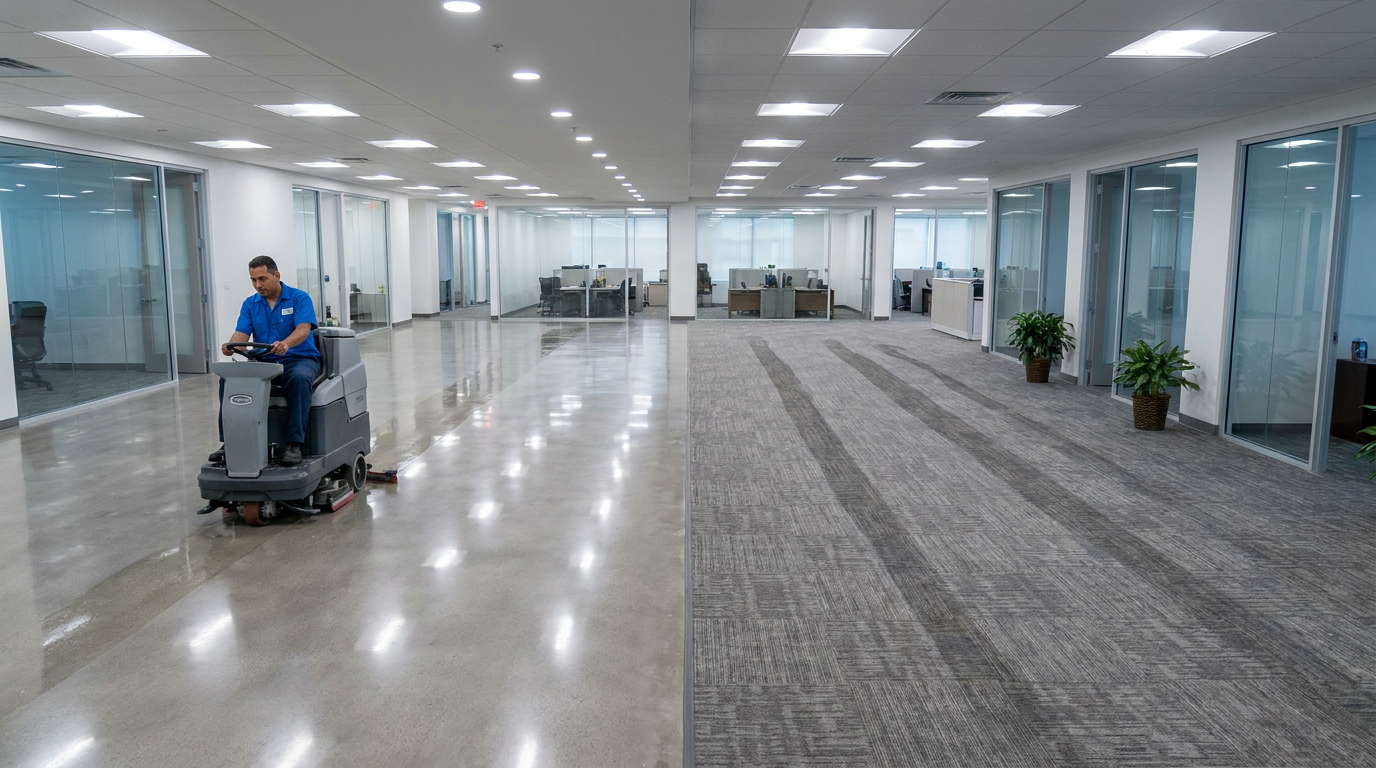
Commercial Carpet vs Hard Floor Maintenance Costs: 10-Year Analysis
Compare commercial carpet and hard floor maintenance costs over 10 years. Includes VCT, polished concrete, and carpet data with real pricing for South Florida facilities.
Read the guide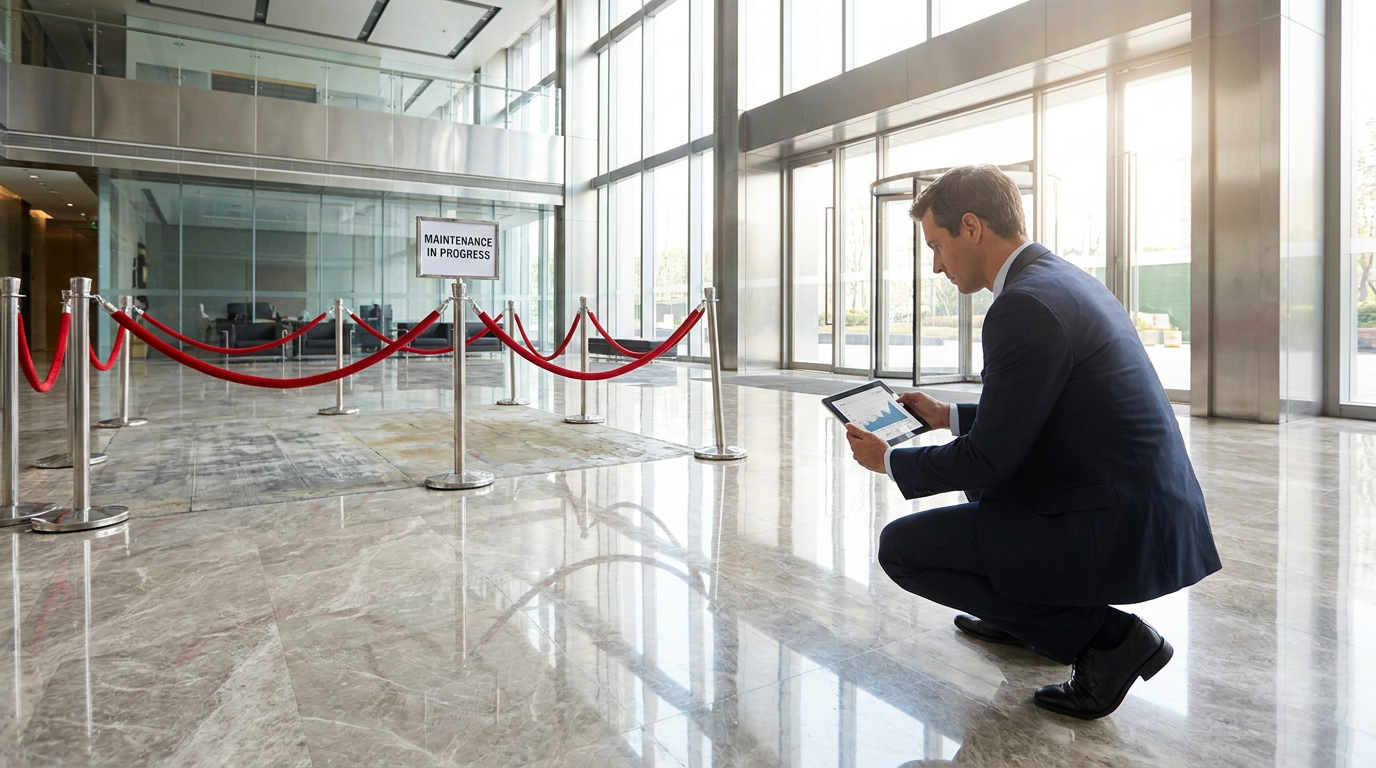
ROI of Professional Floor Maintenance Programs for Commercial Buildings
Professional floor maintenance programs deliver 9-18 month payback periods. Learn how to calculate ROI, reduce costs, and extend floor life in commercial facilities.
Read the guide
Ready for a Spotless Space?
Get a free, no-obligation estimate for your commercial cleaning project. Most quotes delivered within 24 hours.