Floor Maintenance Program Cost vs Reactive Repairs: Full Analysis
FLOOR MAINTENANCE PROGRAM COST VS REACTIVE REPAIRS ANALYSIS
Reactive floor repairs cost 3 to 5 times more than planned maintenance. See the full cost breakdown by floor type, plus ROI data for South Florida facilities.
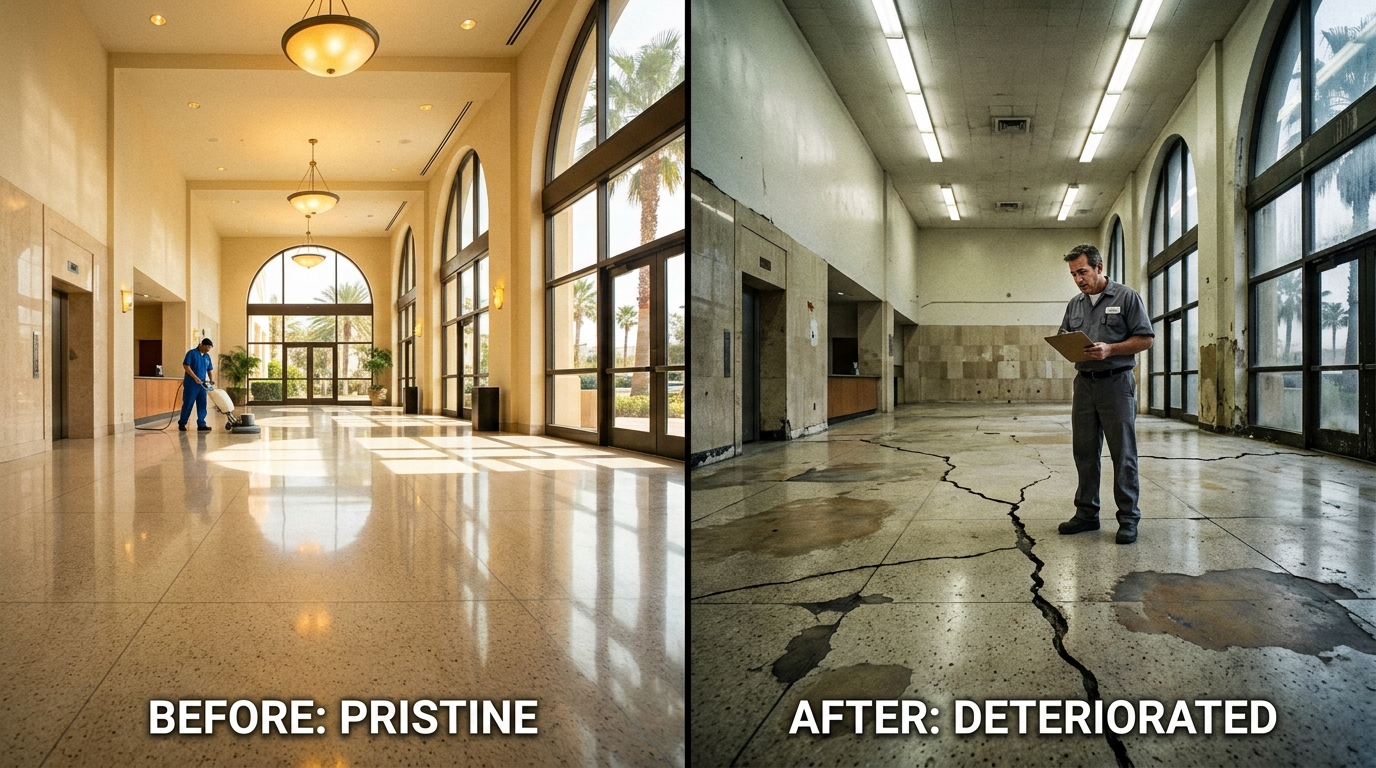
Reactive floor repairs cost 3 to 5 times more than scheduled maintenance programs. A planned floor care program for commercial properties runs $0.40 to $2.00 per square foot annually, while emergency repairs and full floor replacements can reach $8.00 to $12.00 per square foot when damage spreads beyond the initial failure point.
- Reactive maintenance costs 3 to 5 times more than preventive floor care according to U.S. Department of Energy benchmarks
- Planned floor programs cost $1.50 to $2.50 per square foot annually; reactive-only facilities spend $4.50 to $6.00 per square foot
- VCT floors need scrub and recoat every 3 to 6 months and full strip and wax every 12 to 18 months to avoid costly restoration
- South Florida humidity accelerates floor finish breakdown, making scheduled maintenance even more cost-effective than national averages
Why Reactive Floor Repairs Cost More Than Planned Maintenance
Reactive maintenance appears cheaper because you only pay when something breaks. The hidden costs emerge when you factor in emergency service premiums, overtime labor rates, expedited material shipping, and the collateral damage that spreads while waiting for repairs. According to eWorkOrders research backed by Department of Energy data, facilities using reactive-only approaches pay 3 to 5 times more over a building's lifecycle.
Floor failures rarely stay contained. A worn VCT tile in a high-traffic corridor allows moisture to penetrate the substrate. Within weeks, adhesive failure spreads to adjacent tiles. What started as a $200 spot repair becomes a $3,000 section replacement. In South Florida, where humidity regularly exceeds 70%, this moisture infiltration happens faster than in drier climates.
Emergency floor repairs also disrupt operations. A retail store closing a section for unexpected repairs loses sales revenue. A hotel lobby under construction during peak check-in hours damages guest satisfaction scores. These indirect costs rarely appear in maintenance budgets but directly impact profitability.
Cost Comparison: Planned Programs vs Reactive Repairs by Floor Type
Different flooring materials have different maintenance requirements and failure costs. The table below shows annual cost ranges for a 10,000 square foot commercial space in South Florida, comparing scheduled maintenance against reactive-only approaches.
| Floor Type | Annual Planned Maintenance | Annual Reactive Costs | Replacement Cost if Neglected |
|---|---|---|---|
| VCT (Vinyl Composition Tile) | $4,000 to $10,000 | $12,000 to $30,000 | $25,000 to $40,000 |
| Polished Concrete | $5,000 to $15,000 | $15,000 to $45,000 | $50,000 to $80,000 |
| Terrazzo | $6,000 to $20,000 | $18,000 to $60,000 | $80,000 to $150,000 |
| Ceramic Tile | $3,000 to $8,000 | $9,000 to $24,000 | $35,000 to $60,000 |
| Luxury Vinyl Plank (LVP) | $3,500 to $9,000 | $10,500 to $27,000 | $30,000 to $50,000 |
These figures reflect South Florida market rates as of July 2026. The reactive cost column includes emergency service premiums, which typically add 40% to 60% above standard rates. According to OxMaint facility management benchmarks, commercial buildings with preventive programs spend approximately $2.50 per square foot annually on all maintenance, while reactive-only facilities average $4.50 to $6.00 per square foot.
The 80/20 Rule in Floor Maintenance Budgeting
The 80/20 rule in maintenance states that 80% of equipment failures come from 20% of the causes. For commercial floors, this means focusing preventive efforts on high-traffic zones, entryways, and areas near food service or water sources. A 50,000 square foot retail center does not need uniform maintenance intensity across every square foot.
Identifying your critical 20% requires traffic pattern analysis. The main entrance of a Miami Beach hotel sees 10 times the foot traffic of back-of-house corridors. Concentrating scrub and recoat services on these high-wear zones every 8 to 12 weeks, while treating low-traffic areas every 16 to 20 weeks, optimizes budget allocation without sacrificing floor condition.
This targeted approach reduces total program costs by 25% to 35% compared to uniform treatment schedules. It also extends the interval between full floor stripping and waxing from 12 months to 18 months in properly managed facilities.
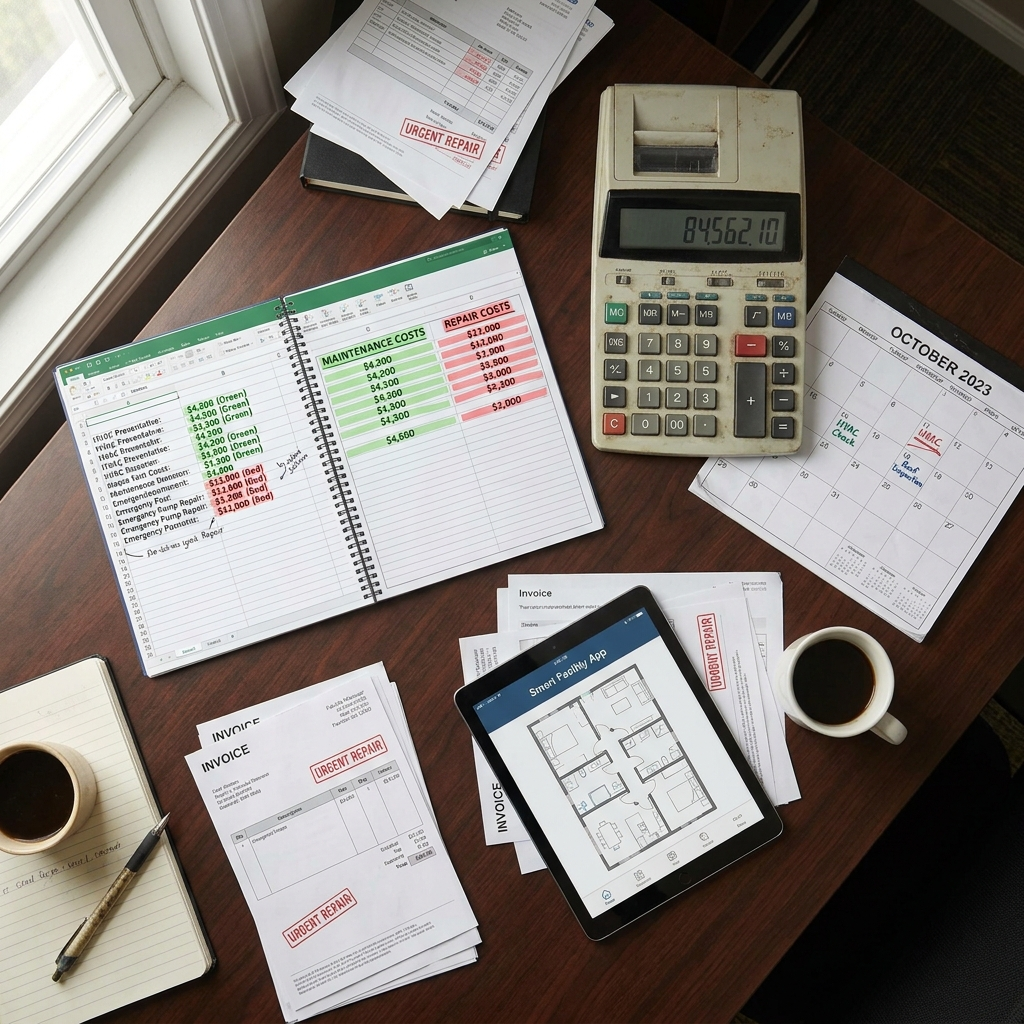
Which Maintenance Strategy is Most Cost-Effective for Commercial Floors?
Preventive maintenance delivers the lowest total cost of ownership for commercial flooring in 92% of scenarios. The exceptions are non-critical areas with minimal traffic and flooring scheduled for replacement within 6 months. For all other situations, scheduled care programs outperform reactive approaches on every financial metric.
The U.S. Department of Energy reports that planned preventive maintenance saves 12% to 18% annually compared to reactive strategies. For floor care specifically, the savings often exceed these averages because floor damage compounds rapidly. A scuff mark that takes 5 minutes to buff out during routine maintenance requires 45 minutes of intensive treatment after 6 months of foot traffic grinds dirt into the damaged finish.
Predictive maintenance, which uses sensors and condition monitoring, offers additional savings for large portfolios. However, most commercial floor care does not require this sophistication. Visual inspection during scheduled maintenance visits identifies 95% of developing problems before they escalate.
The 3 P's of Floor Maintenance: Protect, Preserve, Prolong
Professional floor care follows the 3 P's framework: Protect the surface from damage, Preserve the existing finish, and Prolong the interval before replacement becomes necessary. Each principle translates to specific maintenance activities and cost savings.
Protect involves daily and weekly activities: dust mopping, auto-scrubbing, and prompt spill cleanup. A 20,000 square foot office building requires approximately 30 minutes of daily dust mopping and 2 hours of weekly auto-scrubbing. These activities cost $400 to $600 monthly but prevent 70% of finish damage.
Preserve covers periodic deep cleaning and interim maintenance. Quarterly commercial floor deep cleaning removes embedded soil that daily maintenance cannot address. This service runs $0.40 to $1.00 per square foot and extends finish life by 30% to 50%.
Prolong refers to restoration services that reset the floor's condition without replacement. Strip and wax for VCT, diamond polishing for terrazzo, and resealing for concrete all fall into this category. These services cost $0.85 to $2.00 per square foot but delay replacement by 5 to 15 years.
How South Florida Climate Affects Floor Maintenance ROI
South Florida's subtropical climate creates unique challenges that increase the ROI of preventive floor maintenance. Average humidity in Miami-Dade, Broward, and Palm Beach counties ranges from 65% to 80% year-round. This moisture accelerates floor finish breakdown, promotes mold growth in grout lines, and causes adhesive failures in sheet goods.
According to Attune IoT research on maintenance cost gaps, facilities in high-humidity environments experience 40% faster floor finish degradation compared to climate-controlled buildings. For South Florida properties without consistent HVAC operation, this means maintenance intervals must be shortened by 20% to 30% from national averages.
Salt air in coastal areas compounds the problem. Properties within 5 miles of the ocean in Fort Lauderdale, Boca Raton, and West Palm Beach see accelerated corrosion of metal floor fixtures and faster breakdown of certain finish chemistries. Scheduled maintenance programs account for these factors; reactive approaches discover them only after damage occurs.
Sample Annual Floor Maintenance Budget for a 25,000 Square Foot Facility
The following budget breakdown shows what a properly funded floor maintenance program costs for a mid-sized commercial property in South Florida. This example assumes VCT flooring in a retail environment with moderate to heavy foot traffic.
| Service | Frequency | Cost Per Service | Annual Total |
|---|---|---|---|
| Auto-scrubbing (in-house or contracted) | Weekly | $150 to $250 | $7,800 to $13,000 |
| Scrub and Recoat | Quarterly | $15,000 to $37,500 | $15,000 to $37,500 |
| Full Strip and Wax | Annual | $21,250 to $45,000 | $21,250 to $45,000 |
| Spot Repairs and Touch-ups | As needed | Variable | $1,500 to $3,000 |
| Total Annual Program Cost | $45,550 to $98,500 | ||
| Cost Per Square Foot | $1.82 to $3.94 |
Compare this to the reactive scenario: the same facility, without scheduled maintenance, would likely require emergency strip and wax services twice annually at premium rates, plus section replacements averaging $8,000 to $15,000 per incident. Total reactive costs typically reach $75,000 to $140,000 annually, or $3.00 to $5.60 per square foot.
When Does a Floor Maintenance Program Pay for Itself?
Most floor maintenance programs achieve positive ROI within 8 to 14 months. The payback period depends on current floor condition, facility type, and traffic volume. Properties with severely neglected floors may require initial restoration investment before entering a maintenance cycle, extending payback to 18 to 24 months.
The calculation is straightforward. If reactive repairs averaged $50,000 annually over the past 3 years, and a preventive program costs $25,000 annually, the $25,000 savings covers the program cost immediately. The additional benefit comes from extended floor life. VCT flooring under proper maintenance lasts 15 to 20 years; neglected VCT requires replacement in 7 to 10 years.
For a 25,000 square foot facility, this replacement deferral represents $62,500 to $100,000 in avoided capital expenditure over a 10-year period. Divided across the maintenance program timeline, this adds $6,250 to $10,000 in annual value beyond direct repair savings.
Hidden Costs of Reactive Floor Repairs That Executives Miss
Facility managers understand reactive repair costs, but executives reviewing maintenance budgets often miss several hidden expenses that inflate the true cost of deferred maintenance.
Slip-and-fall liability represents the largest hidden cost. The National Floor Safety Institute reports that floor-related injuries cost businesses an average of $40,000 per incident in medical expenses, legal fees, and settlements. Worn floor finishes with reduced slip resistance increase incident probability by 300% compared to properly maintained surfaces.
Tenant and customer perception affects revenue directly. A 2024 BOMA International survey found that 67% of commercial tenants consider floor condition when evaluating lease renewals. Retail studies from the International Council of Shopping Centers show that store appearance, including flooring, influences 23% of purchase decisions.
Energy costs increase with floor neglect. Polished, well-maintained floors reflect 30% more light than dull, worn surfaces. Facilities with reflective floors can reduce lighting requirements by 10% to 15%, translating to measurable utility savings in South Florida's high-rate electricity market.
Industry-Specific Floor Maintenance Considerations
Different industries face unique floor maintenance challenges that affect cost-benefit calculations. Understanding these variations helps facility managers build accurate budgets.
Hotels and hospitality properties require appearance-driven maintenance schedules. Lobby marble floors need diamond polishing every 6 to 12 months regardless of wear patterns because guest perception drives revenue. Hotel and hospitality cleaning programs typically cost 20% to 30% more than equivalent office buildings due to these aesthetic requirements.
Retail environments experience concentrated wear in specific zones. Entry mats capture 80% of incoming soil, but the 10-foot radius around entrances still receives 5 times the traffic of interior aisles. Retail floor care programs should allocate 40% of the maintenance budget to this critical zone.
Schools and daycares must balance cost efficiency with regulatory compliance. DCF-licensed facilities in Florida require documented cleaning schedules and product safety certifications. School and daycare cleaning services that include compliance documentation cost 10% to 15% more but eliminate audit risk.
Office buildings benefit from predictable maintenance schedules aligned with lease cycles. Property managers preparing for tenant turnover or lease renewals should schedule office building floor restoration 30 to 60 days before critical dates.
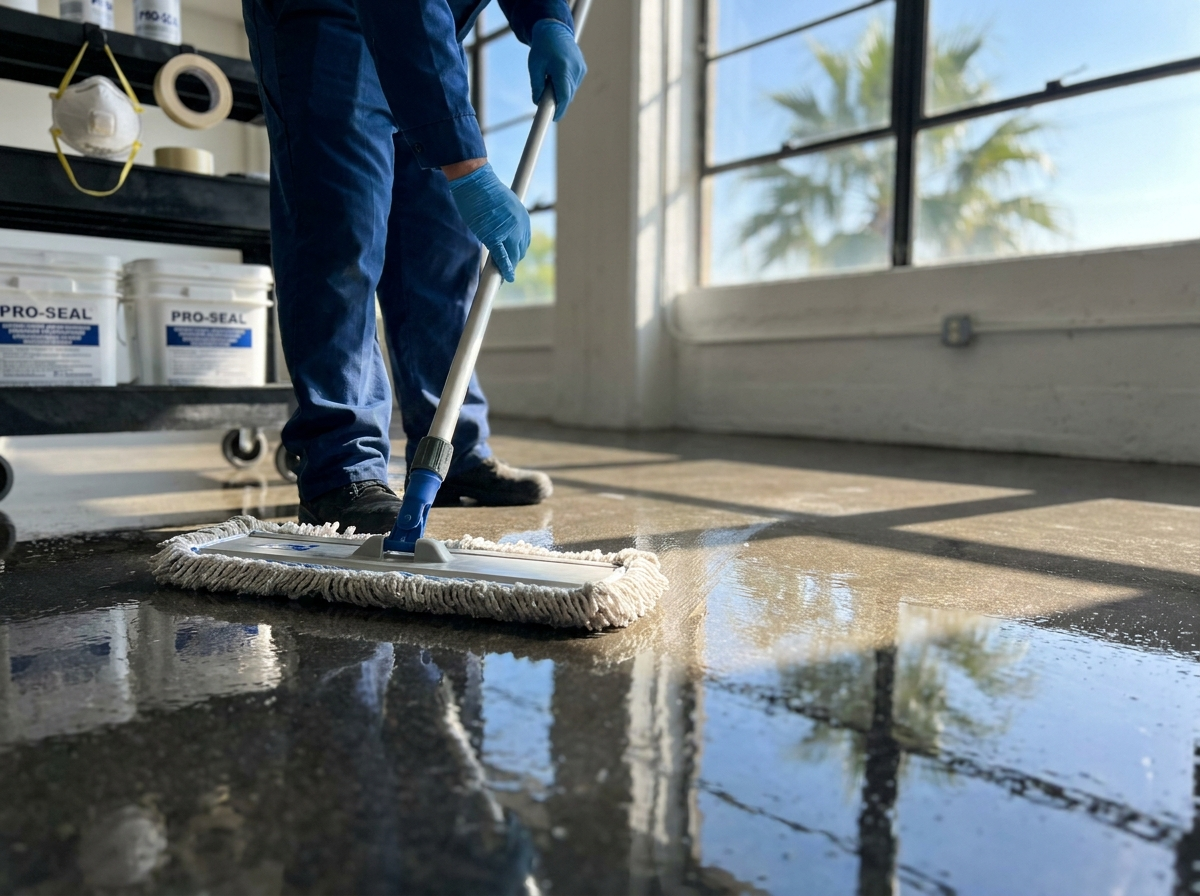
How to Present Floor Maintenance ROI to Executives
Facility managers often struggle to secure preventive maintenance budgets because they present costs without context. Executives respond to business metrics, not maintenance jargon. Frame your proposal using these approaches.
Present total cost of ownership, not annual expense. A 10-year floor care program costing $250,000 that prevents $400,000 in replacements shows $150,000 in savings. This framing transforms maintenance from a cost center to a value driver.
Quantify risk reduction. If your facility has experienced slip-and-fall incidents, calculate the potential liability of continued reactive maintenance. Insurance carriers can provide loss projections that support preventive investment.
Benchmark against industry standards. According to Fabrico's maintenance cost research, best-in-class facilities maintain a 70/30 ratio of preventive to reactive maintenance. If your facility runs 30/70 or worse, you are paying premium prices for inferior results.
Frequently Asked Questions
How much more than planned maintenance does reactive repair cost?
Reactive floor repairs cost 3 to 5 times more than equivalent planned maintenance. This multiplier accounts for emergency service premiums (40% to 60% above standard rates), overtime labor, expedited materials, and collateral damage that spreads during the delay between failure and repair. For commercial flooring specifically, the multiplier often reaches 4 to 6 times because floor damage compounds rapidly.
What is the 80/20 rule in maintenance?
The 80/20 rule states that 80% of maintenance problems originate from 20% of causes or locations. For floor care, this means concentrating preventive efforts on high-traffic zones, entryways, and areas near moisture sources. Applying this principle reduces total maintenance costs by 25% to 35% compared to uniform treatment schedules.
Which type of maintenance program is most cost-effective?
Preventive maintenance delivers the lowest total cost for commercial flooring in 92% of scenarios. The only exceptions are non-critical areas with minimal traffic and floors scheduled for replacement within 6 months. Preventive programs cost $1.50 to $2.50 per square foot annually, while reactive-only approaches average $4.50 to $6.00 per square foot.
What are the 3 P's of maintenance?
The 3 P's of floor maintenance are Protect, Preserve, and Prolong. Protect involves daily activities like dust mopping and spill cleanup. Preserve covers periodic deep cleaning and interim maintenance. Prolong refers to restoration services like strip and wax or diamond polishing that reset floor condition without replacement.
How often should commercial floors be stripped and waxed?
VCT and vinyl floors in moderate-traffic commercial environments need full strip and wax every 12 to 18 months. High-traffic retail and hospitality spaces may require service every 9 to 12 months. Quarterly scrub and recoat services between full strip cycles extend finish life and reduce annual stripping frequency.
When should a floor be restored instead of replaced?
Restore rather than replace when the substrate remains sound and damage affects only the surface finish. VCT with intact tiles but yellowed, scratched finish is a restoration candidate. Replace when tiles crack, lift, or show substrate damage. Terrazzo and concrete can almost always be restored unless structural issues exist. Professional assessment determines the cost-effective path for each situation.
Building Your Floor Maintenance Program
Starting a floor maintenance program requires accurate assessment of current conditions, traffic patterns, and budget constraints. Request a free on-site floor assessment to identify your facility's specific needs and receive a transparent quote based on actual square footage and floor condition.
The assessment process evaluates floor type, current finish condition, traffic patterns, and problem areas. Most assessments take 30 to 60 minutes for facilities under 25,000 square feet. Quotes are typically delivered within 24 hours and include recommended service frequencies, cost breakdowns, and expected outcomes.
For South Florida facilities in Miami-Dade, Broward, and Palm Beach counties, local expertise matters. Regional humidity patterns, salt air exposure, and seasonal traffic variations all affect maintenance requirements. Working with a locally owned commercial cleaning company ensures your program accounts for these factors.
Stop Paying Emergency Rates for Floor Repairs
Get a free on-site assessment and transparent quote for your South Florida facility. See exactly what a planned maintenance program costs compared to your current reactive spending.
Schedule Your Free AssessmentKeep reading
More guides on the same topic from our team.
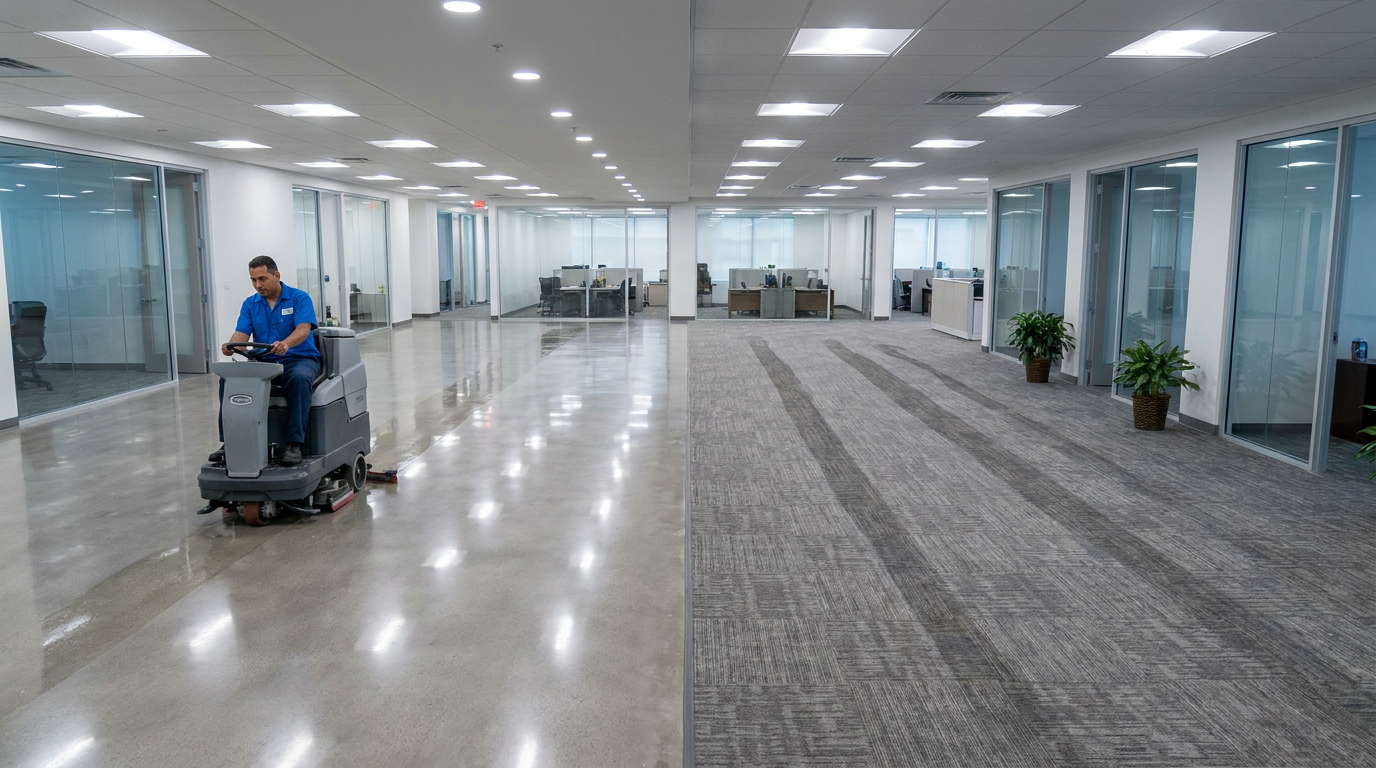
Commercial Carpet vs Hard Floor Maintenance Costs: 10-Year Analysis
Compare commercial carpet and hard floor maintenance costs over 10 years. Includes VCT, polished concrete, and carpet data with real pricing for South Florida facilities.
Read the guide
ROI of Professional Floor Maintenance Programs for Commercial Buildings
Professional floor maintenance programs deliver 9-18 month payback periods. Learn how to calculate ROI, reduce costs, and extend floor life in commercial facilities.
Read the guide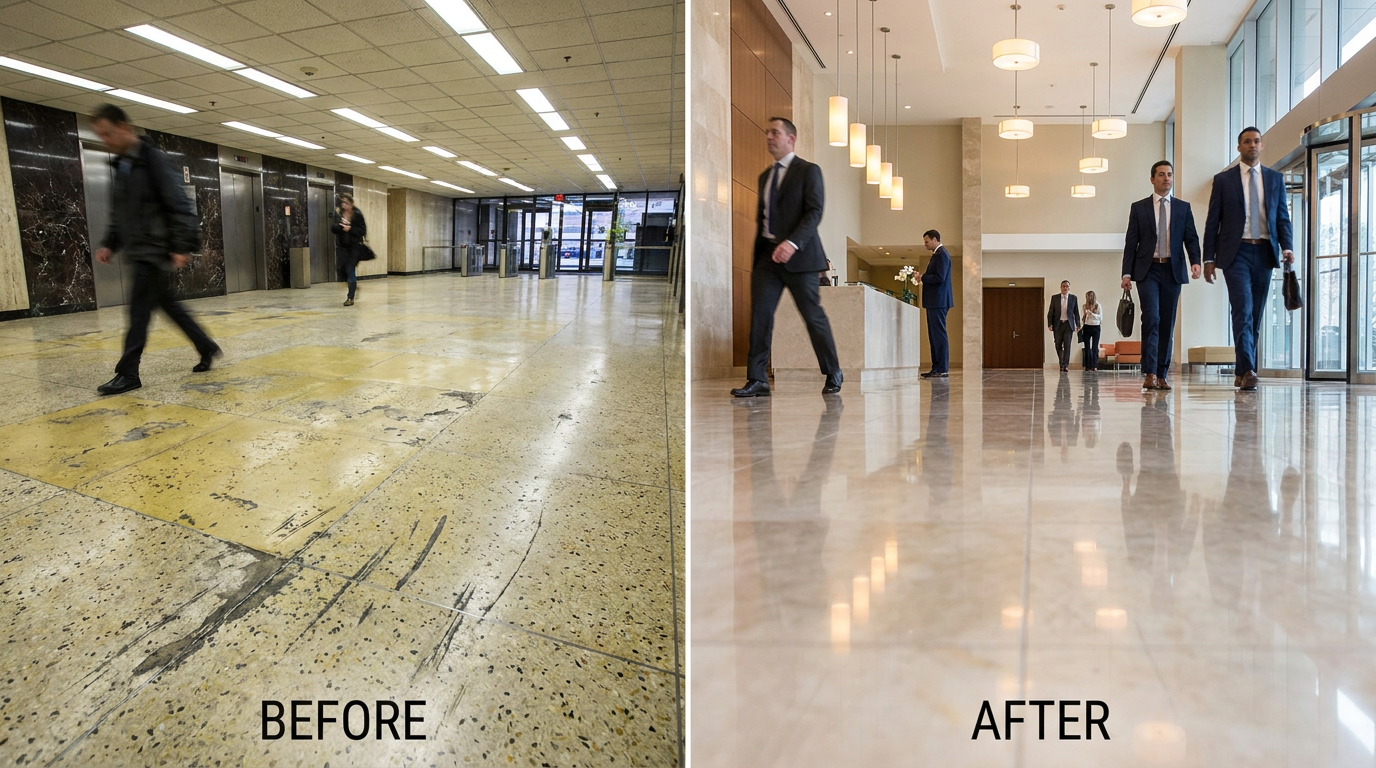
Signs Your Commercial Floor Needs Professional Restoration
Learn the 8 warning signs that indicate your commercial floor needs professional restoration, from yellowing wax to safety hazards. Free assessment available.
Read the guide
Ready for a Spotless Space?
Get a free, no-obligation estimate for your commercial cleaning project. Most quotes delivered within 24 hours.