Slip Resistance Testing for Commercial Floors: Complete Guide
SLIP RESISTANCE TESTING AND TREATMENT FOR COMMERCIAL FLOORS
Learn how slip resistance testing protects your business from liability. Covers DCOF standards, testing methods, treatment options, and maintenance protocols.
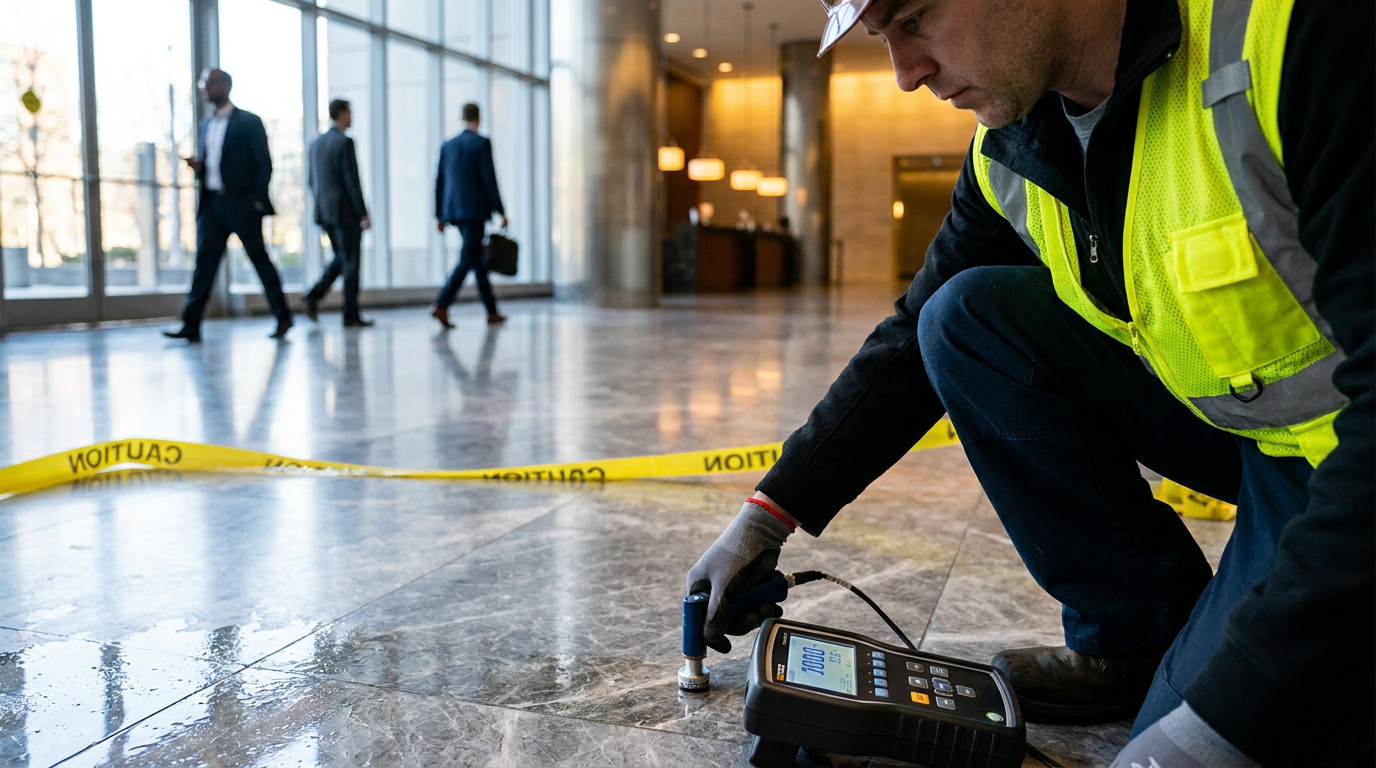
Slip resistance testing measures how well a floor surface prevents pedestrian falls, with the industry standard requiring a Dynamic Coefficient of Friction (DCOF) of 0.42 or higher for wet conditions. Commercial property owners in Florida face heightened liability because high humidity and frequent rain create persistently wet conditions that reduce floor traction by 30 to 50 percent compared to dry surfaces.
- ANSI A326.3 requires a minimum DCOF of 0.42 for level interior wet surfaces
- Slip and fall accidents cause 15% of all accidental deaths according to OSHA data
- Professional slip testing costs $200 to $500 per location; treatments range from $0.50 to $3.00 per square foot
- Half of all commercial facilities tested fail to meet minimum slip resistance standards (CNA Risk Control study)
- Florida's humidity requires testing every 6 to 12 months, not the standard annual schedule
What Is Slip Resistance Testing and Why It Matters
Slip resistance testing quantifies the friction between a floor surface and a pedestrian's footwear. The measurement, called the coefficient of friction (COF), represents the ratio of horizontal resistance to vertical force. A COF of 0.50 means the floor provides resistance equal to half the downward force applied by a person's weight.
According to InterNACHI's commercial inspection standards, slip and fall accidents constitute the majority of general industry accidents. The financial impact extends beyond medical costs: property owners face liability payouts averaging $20,000 to $50,000 per incident, legal defense costs, insurance premium increases of 15 to 40 percent, and reputational damage that affects tenant retention.
The CNA Risk Control slip and fall study found that half of all facilities with public access areas fail to adequately address flooring selection and ongoing maintenance. This gap between industry standards and actual practice creates significant liability exposure for commercial property managers across South Florida.
Understanding DCOF Standards and Measurements
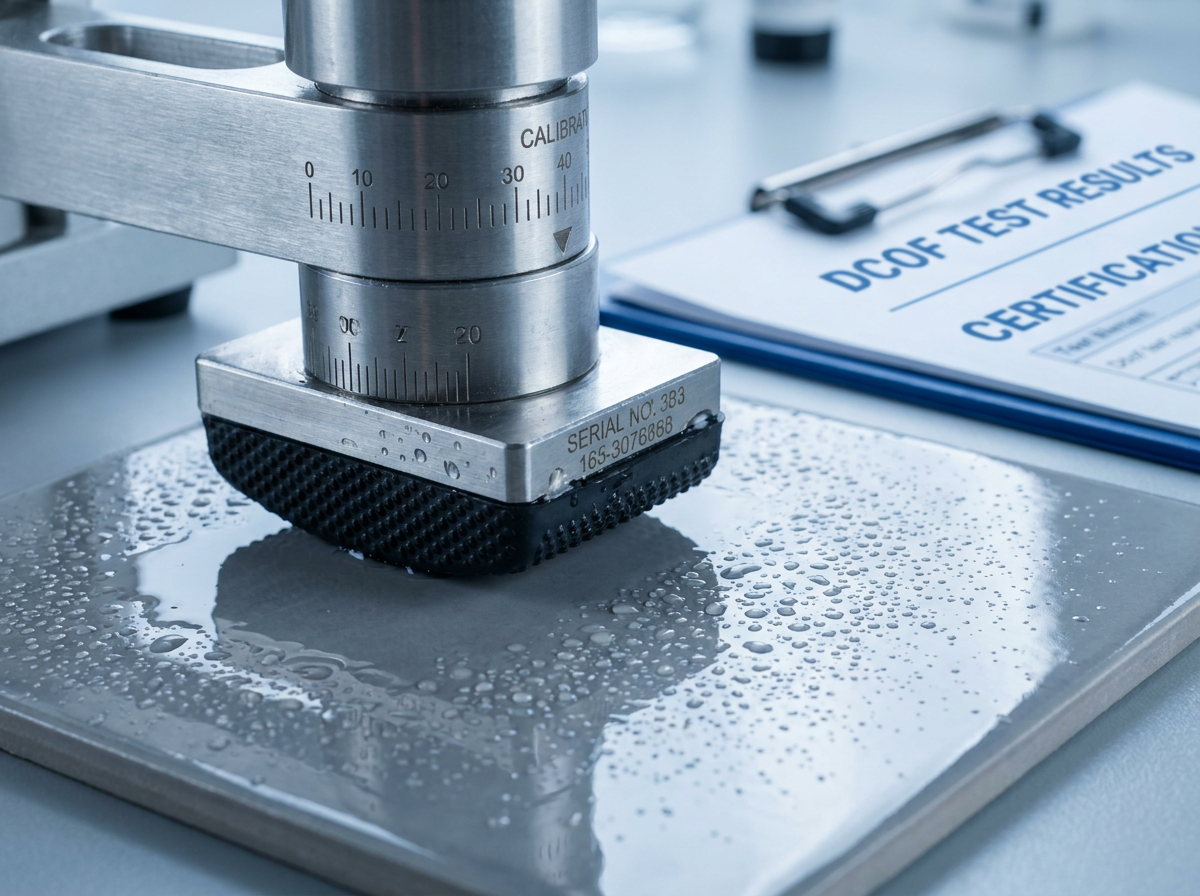
The tile industry transitioned from Static Coefficient of Friction (SCOF) to Dynamic Coefficient of Friction (DCOF) testing in 2012. DCOF measures friction while the foot is in motion, which more accurately represents real walking conditions. The ANSI A326.3 standard, developed by the Tile Council of North America (TCNA), establishes the current benchmark.
DCOF values follow this classification system:
| DCOF Value | Classification | Suitable Applications |
|---|---|---|
| Below 0.42 | Inadequate | Not recommended for wet areas |
| 0.42 to 0.50 | Minimum compliant | Interior level surfaces, low traffic |
| 0.50 to 0.60 | Good | Retail, offices, lobbies |
| 0.60 to 0.80 | Very good | Restaurants, kitchens, pool decks |
| Above 0.80 | Excellent | Industrial, ramps, exterior stairs |
The James Machine, referenced in UL 410 testing standards, remains one of the most recognized laboratory devices for measuring COF. However, field testing requires portable tribometers that can assess floors in actual operating conditions.
Professional Testing Methods and Equipment
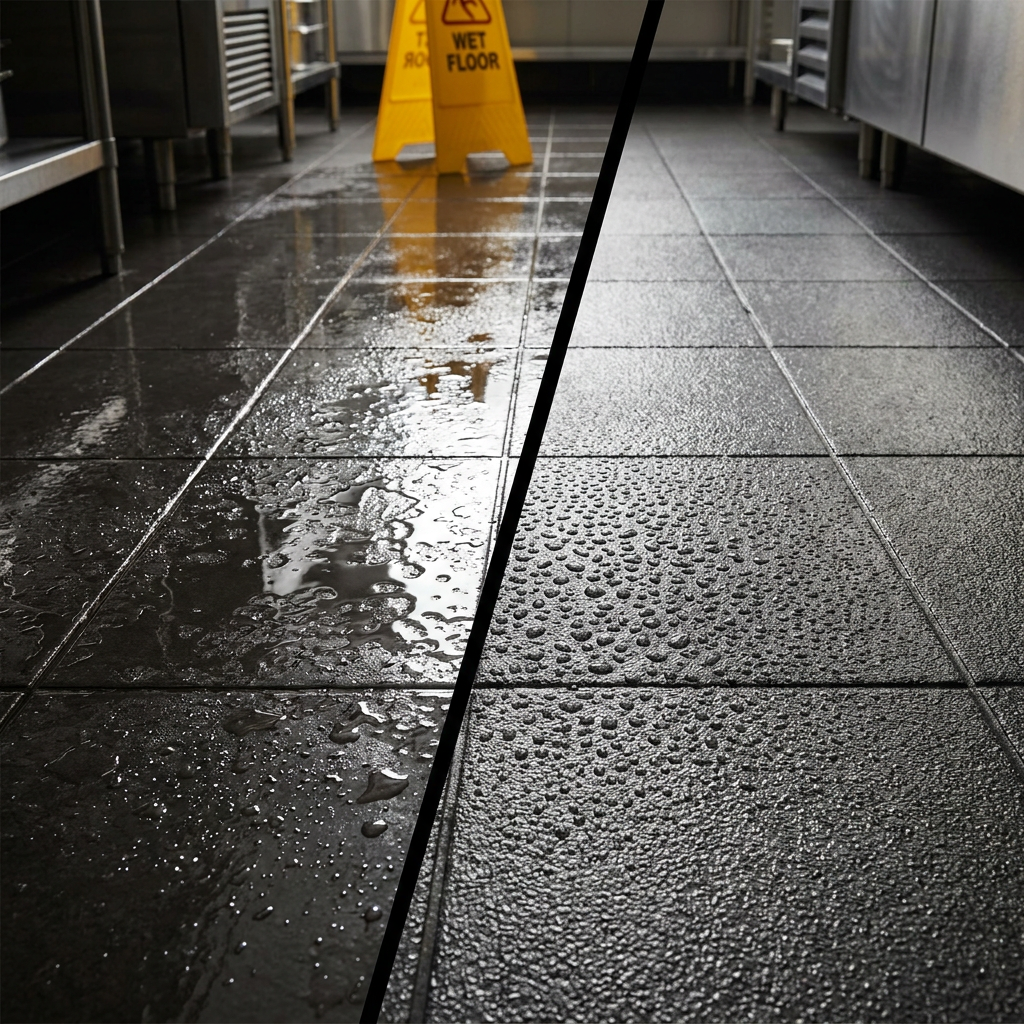
Three primary testing methods dominate commercial floor assessment. Each serves different purposes and provides varying levels of accuracy for liability documentation.
BOT-3000E Digital Tribometer
The BOT-3000E is the most widely accepted field testing device in the United States. It measures DCOF by simulating a heel strike at controlled speeds. Testing costs range from $200 to $400 per location when performed by certified walkway auditors. Results are admissible in court proceedings and accepted by insurance carriers.
English XL Variable Incidence Tribometer
This pendulum-style device measures slip resistance using a calibrated rubber slider that swings across the floor surface. The English XL produces British Pendulum Numbers (BPN) that correlate to DCOF values. It excels at testing textured surfaces like ceramic tile and natural stone.
ASTM E303 Pendulum Testing
The ASTM E303 standard specifies pendulum testing procedures used internationally. According to KTA's flooring analysis, this method identifies regulations, appropriate test devices, test methods, and surfaces requiring assessment. Results help determine whether floors meet Americans with Disabilities Act (ADA) accessibility requirements.
Common Causes of Slip Resistance Degradation
Floor surfaces lose slip resistance through predictable mechanisms. Understanding these causes helps property managers implement preventive maintenance rather than reactive repairs.
Wax buildup and finish degradation reduces traction on VCT, vinyl, and linoleum floors. Each wax layer adds 0.5 to 2 mils of thickness. After 8 to 12 coats, the accumulated finish creates a smooth, slippery surface regardless of the original floor texture. Professional floor stripping and waxing removes all old finish layers and restores proper traction.
Contamination from cleaning products leaves residues that attract dirt and create slick films. Soap-based cleaners are particularly problematic on tile and terrazzo. The CNA study found that improper cleaning protocols contributed to slip hazards in 35% of tested facilities.
Surface wear patterns develop in high-traffic areas where foot traffic polishes the floor texture smooth. Retail entrances, elevator lobbies, and hallway intersections show wear within 6 to 18 months of installation. Regular commercial floor deep cleaning removes embedded contaminants that accelerate wear.
Moisture intrusion affects South Florida properties disproportionately. Humidity above 60% causes condensation on polished concrete and terrazzo. Rain tracked in from entrances creates wet zones extending 15 to 25 feet into buildings. These conditions persist 8 to 10 months per year in Miami-Dade, Broward, and Palm Beach counties.
Slip Resistance Treatment Options
Treatment selection depends on floor type, current DCOF readings, budget constraints, and aesthetic requirements. The following options represent proven solutions for commercial applications.
Chemical Etching Treatments
Acid-based solutions create microscopic channels in tile, stone, and concrete surfaces. These channels increase surface area and provide drainage paths for water. Treatment costs range from $0.75 to $2.00 per square foot. Results typically last 2 to 4 years depending on traffic volume and maintenance practices.
Chemical treatments work best on ceramic tile, porcelain, natural stone, terrazzo, and polished concrete. They are not suitable for VCT, vinyl, or epoxy-coated floors. Professional application requires 4 to 8 hours of cure time before foot traffic resumes.
Anti-Slip Coatings and Sealers
Topical coatings add aggregate particles or textured finishes to floor surfaces. Options include:
- Epoxy with aluminum oxide: $1.50 to $3.00 per square foot, 3 to 5 year lifespan
- Polyurethane with silica: $1.00 to $2.50 per square foot, 2 to 4 year lifespan
- Acrylic slip-resistant sealers: $0.50 to $1.50 per square foot, 1 to 2 year lifespan
Coatings require proper surface preparation including cleaning, degreasing, and light abrasion. Application on contaminated or poorly prepared surfaces causes peeling within 6 to 12 months.
Mechanical Surface Modification
Diamond grinding, shot blasting, and scarification physically alter floor texture. These methods increase DCOF by 0.15 to 0.30 points on concrete and stone surfaces. Costs range from $2.00 to $5.00 per square foot depending on the degree of modification required.
Mechanical treatments are permanent but may affect floor appearance. They work well in industrial facilities, commercial kitchens, and back-of-house areas where aesthetics are secondary to safety.
Industry-Specific Slip Resistance Requirements
Different commercial environments present unique slip hazards requiring tailored testing and treatment protocols.
Hotels and Hospitality
Lobby marble floors, pool decks, and restaurant areas require DCOF values of 0.55 or higher due to water exposure. South Florida hotel cleaning services must address slip resistance during routine marble restoration. Pool deck surfaces need quarterly testing during peak season (November through April) when guest traffic increases 40 to 60 percent.
Retail and Shopping Centers
Entrance zones require the highest slip resistance in retail environments. Rain and irrigation water tracked in from parking areas creates hazardous conditions within 10 feet of exterior doors. Retail floor maintenance programs should include monthly entrance zone assessments and immediate treatment when DCOF drops below 0.50.
Schools and Daycares
DCF-licensed childcare facilities face strict safety requirements including floor surface standards. Children's shorter stride length and developing motor skills increase fall risk on surfaces that adults navigate safely. School and daycare cleaning services must maintain slip resistance documentation for inspection files.
Office Buildings
Elevator lobbies, restrooms, and break rooms present the highest slip risk in office environments. Tile and terrazzo surfaces in these areas require DCOF testing every 12 months. Office building maintenance programs should include slip resistance monitoring as part of tenant safety protocols.
Maintenance Protocols That Preserve Slip Resistance
Proper maintenance extends treatment longevity and prevents slip resistance degradation between professional services.
Daily cleaning protocols should use neutral pH cleaners (pH 7 to 9) that leave no residue. Avoid soap-based products, oil-based cleaners, and wax-containing solutions on treated surfaces. Microfiber mops outperform cotton string mops because they remove contaminants rather than spreading them.
Weekly deep cleaning with auto-scrubbers removes embedded dirt that accumulates in floor texture. Machine scrubbing at 175 to 300 RPM with appropriate pad selection maintains surface profile without causing excessive wear. A quarterly scrub and recoat service extends floor finish life while maintaining proper traction.
Entrance matting systems capture 80 to 90 percent of tracked-in moisture and debris when properly sized. Effective systems include scraper mats at exterior doors, absorbent mats in vestibules, and walk-off mats extending 12 to 15 feet into the building. Mat cleaning frequency should match building traffic: daily for retail, twice weekly for offices.
Immediate spill response prevents slip hazards from developing. Establish protocols requiring spill cleanup within 5 minutes of discovery. Place wet floor signs immediately and maintain them until the surface is completely dry. Document all incidents for liability protection.
Testing Frequency Recommendations by Floor Type
| Floor Type | Standard Testing | South Florida Adjustment |
|---|---|---|
| Ceramic/Porcelain Tile | Annually | Every 6 months |
| Polished Concrete | Annually | Every 6 months |
| Terrazzo | Annually | Every 6 months |
| VCT/Vinyl | Every 18 months | Annually |
| Natural Stone | Annually | Every 6 months |
| Epoxy Coatings | Every 2 years | Annually |
South Florida's extended rainy season (May through October) and year-round humidity above 70% accelerate slip resistance degradation. Properties within 5 miles of the coast experience additional salt air exposure that affects floor finishes.
Documentation and Liability Protection
Proper documentation creates a defensible record demonstrating reasonable care. Insurance carriers and legal counsel recommend maintaining the following records:
- Testing reports with DCOF values, test locations, equipment used, and technician certification
- Treatment records including products applied, coverage rates, and cure times
- Maintenance logs documenting cleaning frequency, products used, and responsible personnel
- Incident reports for any slip events, near-misses, or complaints
- Before and after photographs of treated areas with date stamps
Retain all documentation for a minimum of 7 years. Florida's statute of limitations for premises liability claims extends to 4 years, but discovery rules may require older records in complex litigation.
Cost-Benefit Analysis of Slip Resistance Programs
Proactive slip resistance management costs significantly less than reactive incident response. A comprehensive program for a 50,000 square foot commercial property typically includes:
- Annual testing: $300 to $500
- Treatment (every 2 to 3 years): $1,500 to $4,000
- Enhanced maintenance supplies: $500 to $1,000 annually
- Total annual cost: $1,000 to $2,500
Compare this to slip and fall incident costs: average medical claims of $20,000 to $50,000, legal defense fees of $10,000 to $30,000 regardless of outcome, and insurance premium increases of 15 to 40 percent over 3 to 5 years. A single serious incident can cost 10 to 50 times more than a decade of preventive maintenance.
Selecting a Slip Resistance Testing Provider
Qualified testing providers should demonstrate the following credentials:
- NFSI certification (National Floor Safety Institute) or equivalent walkway auditor training
- Calibrated equipment with current certification documentation
- Professional liability insurance covering testing services
- Court testimony experience if litigation support may be needed
- Local market knowledge regarding Florida-specific conditions and regulations
Request sample reports before engaging a provider. Quality reports include testing methodology, equipment specifications, environmental conditions during testing, specific DCOF values by location, and actionable recommendations for remediation.
For properties requiring both testing and treatment services, consider providers who offer integrated solutions. This approach ensures treatment protocols address specific deficiencies identified during testing. Contact MB Clean Solutions for a free on-site floor assessment to evaluate your property's current slip resistance status and maintenance needs.
Protect Your Property from Slip and Fall Liability
MB Clean Solutions provides commercial floor deep cleaning, stripping, and restoration services across Miami-Dade, Broward, and Palm Beach counties. Our industrial-grade equipment and professional-strength solutions restore proper floor traction while maintaining appearance.
Schedule Your Free AssessmentKeep reading
More guides on the same topic from our team.
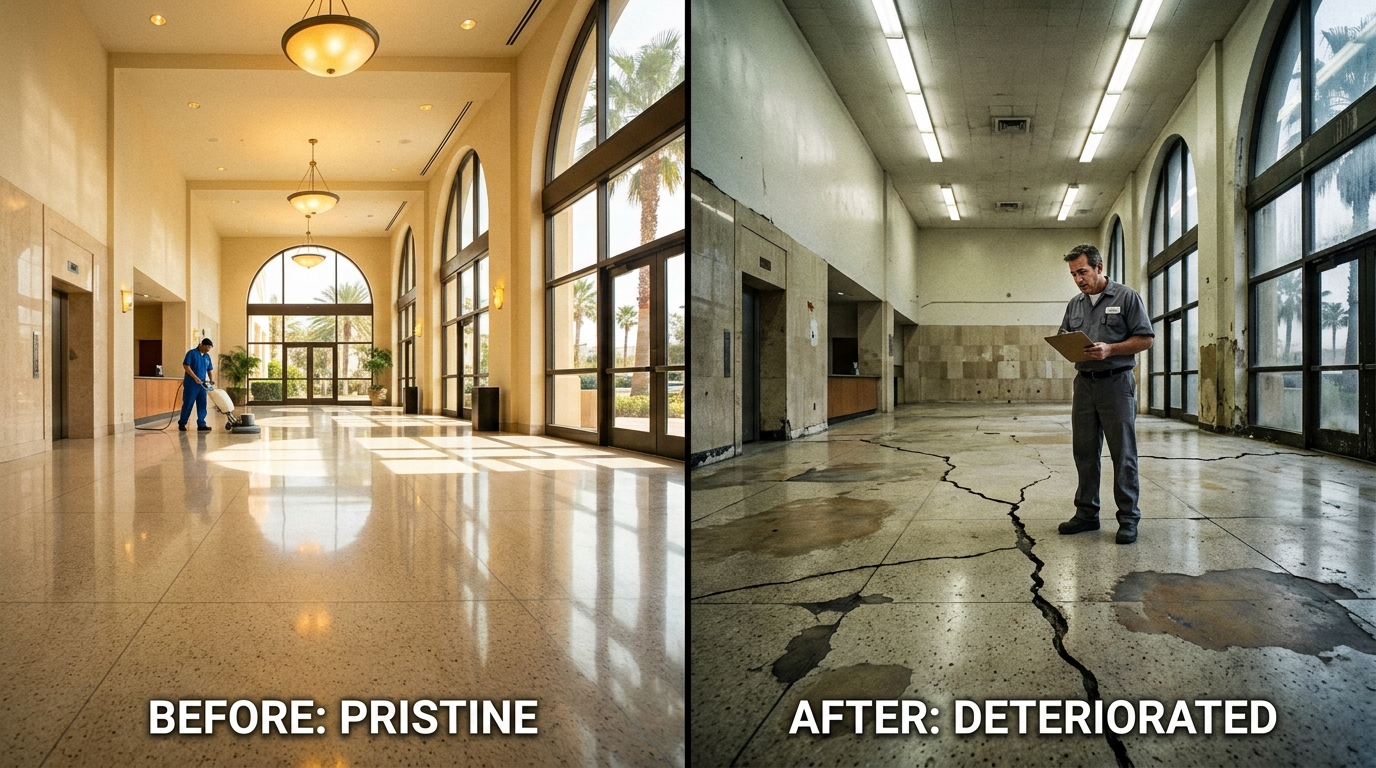
Floor Maintenance Program Cost vs Reactive Repairs: Full Analysis
Reactive floor repairs cost 3 to 5 times more than planned maintenance. See the full cost breakdown by floor type, plus ROI data for South Florida facilities.
Read the guide
Commercial Carpet vs Hard Floor Maintenance Costs: 10-Year Analysis
Compare commercial carpet and hard floor maintenance costs over 10 years. Includes VCT, polished concrete, and carpet data with real pricing for South Florida facilities.
Read the guide
ROI of Professional Floor Maintenance Programs for Commercial Buildings
Professional floor maintenance programs deliver 9-18 month payback periods. Learn how to calculate ROI, reduce costs, and extend floor life in commercial facilities.
Read the guide
Ready for a Spotless Space?
Get a free, no-obligation estimate for your commercial cleaning project. Most quotes delivered within 24 hours.