Office Building Cleaning Checklist: Complete Guide for 2026
OFFICE BUILDING CLEANING CHECKLIST: WHAT SHOULD BE INCLUDED
Comprehensive office building cleaning checklist covering daily, weekly, and monthly tasks. Includes high-touch surfaces, restrooms, floors, and deep cleaning schedules.
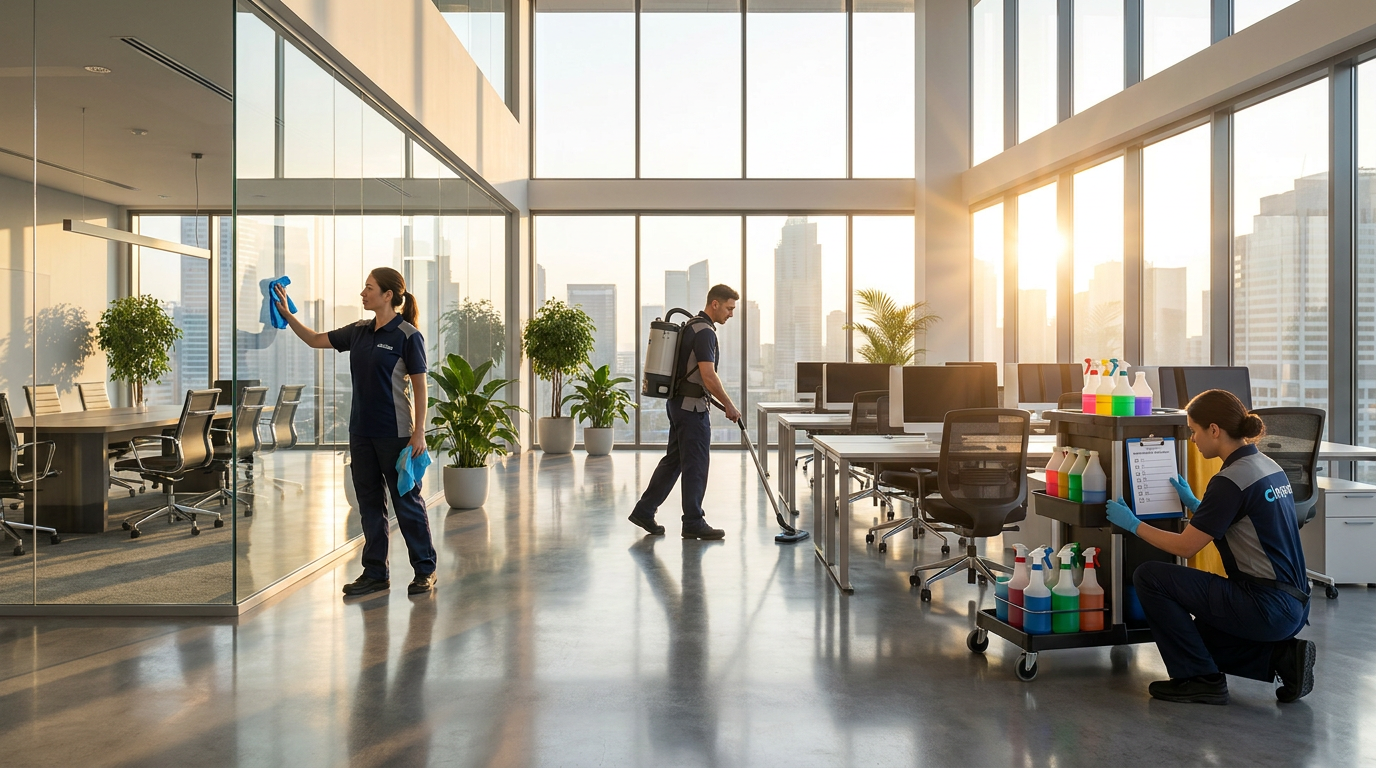
A complete office building cleaning checklist should include daily tasks (trash removal, restroom sanitation, high-touch surface disinfection), weekly tasks (floor care, glass cleaning, kitchen deep cleaning), and monthly tasks (HVAC vent dusting, carpet extraction, baseboard wiping). The checklist must be organized by frequency and area to ensure consistent coverage across lobbies, workspaces, restrooms, break rooms, and common areas.
- Daily cleaning covers 12 to 15 essential tasks including trash removal, restroom sanitation, and disinfection of door handles, elevator buttons, and shared equipment
- High-touch surfaces require disinfection every 2 to 4 hours in occupied buildings, according to CDC guidelines for workplace sanitation
- Weekly tasks add 8 to 12 items including floor mopping, glass cleaning, and kitchen appliance sanitization
- Monthly deep cleaning addresses HVAC vents, carpet extraction, and baseboards, which accumulate 40% of indoor dust particles
- Professional deep cleaning every 6 to 12 months restores floors, extracts embedded carpet soil, and addresses areas standard janitorial services miss
Daily Office Cleaning Tasks: The Foundation of Building Hygiene
Daily cleaning tasks form the baseline for maintaining a healthy office environment. According to Janitorial Manager's commercial cleaning guidelines, these tasks should be completed every business day, typically after hours to minimize disruption to employees.
The daily checklist must address three primary categories: waste management, surface sanitation, and restroom maintenance. Each category contains specific line items that cleaning staff should verify and initial upon completion.
Trash and Recycling Management
Empty all trash receptacles throughout the building, including individual desk bins, common area containers, and outdoor receptacles. Replace liners with appropriate sizes, typically 7 to 10 gallon bags for desk bins and 33 to 44 gallon bags for common areas. Wipe down the exterior of trash cans to remove fingerprints and spills.
Separate recyclables according to local municipality requirements. In Miami-Dade, Broward, and Palm Beach counties, this typically means separating paper, cardboard, plastics numbered 1 through 7, and aluminum. Document any contamination issues for building management review.
High-Touch Surface Disinfection
High-touch surfaces harbor the highest concentration of bacteria and viruses in office environments. Research from Kimberly-Clark Professional identifies the top five germiest surfaces in offices: break room sink faucet handles, microwave door handles, computer keyboards, refrigerator door handles, and water fountain buttons.
Daily disinfection should cover door handles and push bars, light switches, elevator buttons, stair railings, shared office equipment (copiers, printers, fax machines), reception desk surfaces, and conference room tables. Use EPA-registered disinfectants with appropriate contact time, typically 1 to 10 minutes depending on the product formulation.
| Surface Type | Cleaning Frequency | Recommended Product |
|---|---|---|
| Door handles | Every 2 to 4 hours | EPA List N disinfectant |
| Elevator buttons | Every 2 to 4 hours | Disinfectant wipes |
| Keyboards and mice | Daily (shared) or weekly (assigned) | 70% isopropyl alcohol |
| Break room appliances | Daily exterior, weekly interior | Food-safe sanitizer |
| Conference tables | After each meeting or daily | Multi-surface cleaner |
Restroom Daily Maintenance
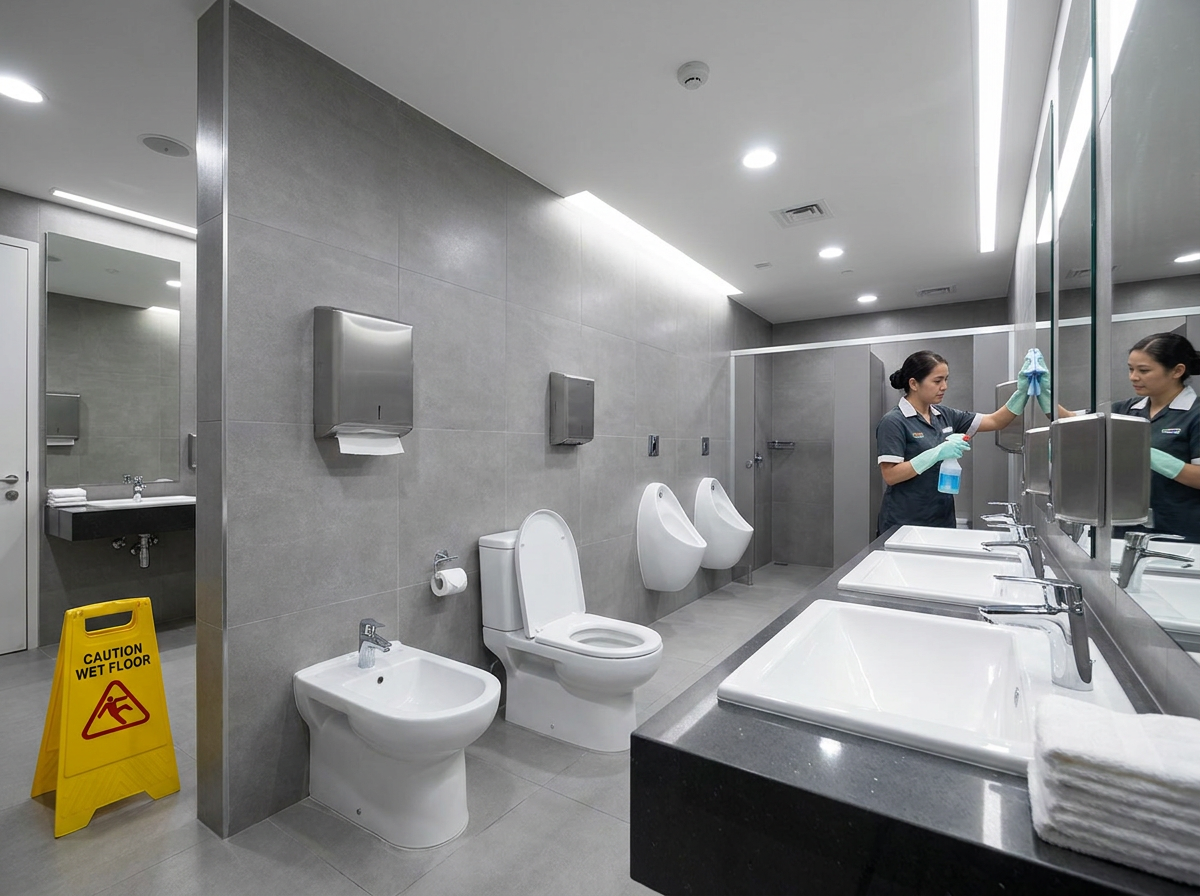
Restrooms require the most intensive daily attention due to their direct impact on employee health and building perception. A complete restroom checklist includes cleaning and disinfecting toilets, urinals, and sinks; wiping mirrors and countertops; mopping floors with disinfectant solution; restocking toilet paper, paper towels, and soap dispensers; and emptying sanitary disposal units.
Check that all fixtures function properly, including faucets, flush valves, and hand dryers. Report maintenance issues immediately to prevent minor problems from becoming costly repairs. In South Florida's humid climate, pay particular attention to grout lines and corners where mold can develop within 24 to 48 hours.
Weekly Office Cleaning Tasks: Maintaining Building Standards
Weekly tasks address areas that accumulate dirt and grime over multiple days but do not require daily attention. According to SquareFoot's office maintenance guidelines, scheduling these tasks on a specific day each week ensures consistent completion and prevents oversight.
Floor Care and Maintenance
Vacuum all carpeted areas thoroughly, including under desks and along baseboards where 60% of tracked-in soil accumulates. Use a commercial-grade vacuum with HEPA filtration to capture particles down to 0.3 microns, improving indoor air quality for employees with allergies or respiratory sensitivities.
Mop hard surface floors with appropriate cleaning solutions based on floor type. VCT (vinyl composition tile) requires neutral pH cleaners to preserve the wax finish. Polished concrete needs specialized cleaners that will not etch the surface. Terrazzo floors common in South Florida office lobbies require pH-neutral solutions to protect the marble chips. For buildings with extensive hard flooring, professional commercial floor deep cleaning every quarter extends the time between costly refinishing projects.
Glass and Window Cleaning
Clean all interior glass surfaces including office partitions, conference room walls, and entrance doors. Remove fingerprints, smudges, and water spots using streak-free glass cleaner and microfiber cloths. Interior windows at eye level should be cleaned weekly; windows above 7 feet can be cleaned monthly.
Exterior window cleaning frequency depends on building location and environmental factors. Buildings near major roadways or construction sites may require bi-weekly exterior cleaning, while those in less trafficked areas can maintain monthly schedules.
Kitchen and Break Room Deep Cleaning
Weekly kitchen tasks go beyond daily wipe-downs to include cleaning inside microwaves, sanitizing refrigerator shelves, descaling coffee makers, and deep cleaning sink basins. Check expiration dates on communal food items and dispose of anything past its date or showing signs of spoilage.
Clean and sanitize cabinet fronts, drawer pulls, and vending machine buttons. These surfaces accumulate oils from hands and food residue that daily cleaning may miss. Inspect and clean floor drains to prevent odors and bacterial growth.
Monthly Deep Cleaning Tasks: Addressing Hidden Contamination
Monthly tasks target areas where dust, allergens, and contaminants accumulate over weeks. These tasks require more time and often specialized equipment, making them ideal for scheduling during low-occupancy periods or weekends.
HVAC Vents and Air Quality
Dust and vacuum all HVAC vents, returns, and diffusers throughout the building. According to EPA indoor air quality studies, HVAC systems can circulate dust, mold spores, and allergens throughout a building if vents are not regularly cleaned. In South Florida, where air conditioning runs 10 to 12 months per year, monthly vent cleaning is essential for maintaining healthy indoor air.
Inspect air filters and note replacement needs for building maintenance. Standard filters require replacement every 30 to 90 days depending on building occupancy and outdoor air quality. HEPA filters in medical office buildings may require more frequent replacement.
Carpet and Upholstery Care
Spot treat carpet stains that have developed over the month using appropriate stain removers based on the stain type (protein-based, oil-based, or tannin-based). Schedule professional carpet extraction quarterly for high-traffic areas and annually for entire floor coverage.
Vacuum upholstered furniture including lobby seating, conference room chairs, and break room couches. Use upholstery attachments to reach crevices where crumbs and debris accumulate. Professional commercial bonnet carpet cleaning provides fast-drying results ideal for occupied office buildings where extended downtime is not feasible.
Baseboards, Light Fixtures, and Ceiling Tiles
Wipe down all baseboards to remove dust accumulation and scuff marks. Clean light fixtures and diffusers to maintain proper illumination levels; dust-covered fixtures can reduce light output by 20% to 30%. Inspect ceiling tiles for water stains, damage, or sagging that may indicate HVAC or roof issues.
Dust decorative items, artwork, and signage throughout the building. These items are often overlooked in daily cleaning but contribute significantly to the overall impression of building cleanliness.
Quarterly and Annual Deep Cleaning: Professional-Grade Restoration
Quarterly and annual tasks require professional equipment and expertise beyond standard janitorial capabilities. These services address accumulated wear and restore surfaces to like-new condition.
Floor Restoration Services
VCT floors require professional scrub-and-recoat service every 3 to 6 months to maintain appearance and protect the tile surface. This process removes scuff marks and embedded dirt while applying 2 to 3 fresh coats of floor wax. A professional scrub-and-recoat maintenance service costs $0.60 to $1.50 per square foot and extends the time between full strip-and-wax cycles from 12 months to 18 to 24 months.
Full floor stripping and waxing should be scheduled annually or when existing finish shows yellowing, peeling, or heavy buildup. This process removes all old finish layers and applies 4 to 6 fresh coats of commercial floor wax, costing $0.85 to $1.80 per square foot depending on floor condition and layout complexity.
| Floor Service | Frequency | Cost per Sq Ft | Best For |
|---|---|---|---|
| Scrub and recoat | Every 3 to 6 months | $0.60 to $1.50 | Floors with intact but dull finish |
| Full strip and wax | Annually | $0.85 to $1.80 | Yellowed, peeling, or heavy buildup |
| Tile and grout deep clean | Every 6 to 12 months | $0.80 to $3.00 | Restrooms, kitchens, lobbies |
| Carpet hot water extraction | Annually | $0.30 to $0.80 | All carpeted areas |
| Marble and terrazzo polish | Every 1 to 3 years | $2.00 to $9.00 | Lobby floors, high-visibility areas |
Tile and Grout Restoration
Restroom and kitchen tile requires professional deep cleaning every 6 to 12 months to address embedded dirt, mold, and bacteria in grout lines. Standard mopping cannot penetrate porous grout; professional hot water extraction pulls contaminants from deep within grout pores. In South Florida's humid climate, professional commercial tile and grout cleaning prevents mold colonization that can develop within weeks of initial growth.
Lobby and Common Area Restoration
Building lobbies create the first impression for tenants, visitors, and prospective clients. Marble and terrazzo floors common in Class A office buildings require periodic diamond polishing to maintain their mirror-like finish. Professional marble and terrazzo polishing and restoration addresses etching from acidic cleaners, sand abrasion from foot traffic, and general wear that dulls the surface over time.
The 5-5-5 Rule for Office Cleaning Efficiency
The 5-5-5 rule is a time management framework used by professional cleaning teams to maintain efficiency and consistency. The rule structures cleaning tasks into 5-minute quick cleans, 5-area rotations, and 5-point quality checks.
The first 5 refers to 5-minute quick clean cycles for high-touch surfaces throughout the day. Cleaning staff perform rapid disinfection rounds every 2 to 4 hours, spending no more than 5 minutes per floor or zone. This maintains sanitation without disrupting building operations.
The second 5 represents 5 distinct cleaning areas that receive focused attention during each shift: entrances and lobbies, workspaces, restrooms, break rooms, and common areas. By rotating focus among these five zones, cleaning teams ensure comprehensive coverage without overlooking any area.
The third 5 is a 5-point quality inspection checklist used by supervisors: visual cleanliness, proper supply levels, equipment functionality, safety compliance, and documentation completion. This standardized approach ensures consistent quality across shifts and cleaning personnel.
Area-by-Area Checklist Breakdown
Main Entrance and Lobby
The building entrance sets expectations for cleanliness throughout the facility. According to Commercial Cleaning Corp's office cleaning checklist, lobby tasks include cleaning glass doors and sidelights, vacuuming or cleaning floor mats, polishing metal fixtures and door hardware, dusting furniture and decorative items, and emptying trash receptacles.
Inspect welcome mats for wear and proper placement. Dirty or damaged mats allow soil to track deeper into the building, increasing cleaning requirements throughout. Replace mats showing significant wear or staining that cannot be removed through cleaning.
Open Office and Workstation Areas
Workstation cleaning requires sensitivity to personal items and confidential materials. Empty trash and recycling at each desk, wipe down cleared surfaces (do not move personal items), vacuum under desks and around chair bases, and dust monitor screens with appropriate microfiber cloths.
Shared equipment including copiers, printers, and mail stations requires daily disinfection of touch surfaces. Check paper and supply levels and report low inventory to building management.
Conference Rooms and Meeting Spaces
Conference rooms should be cleaned after each use when possible, or at minimum daily. Wipe and sanitize the conference table, clean whiteboard surfaces, dust AV equipment and teleconference systems, vacuum floors, and arrange chairs in standard configuration.
Check that markers work and erasers are clean. Replace dead batteries in remote controls. Ensure adequate supplies of notepads, pens, and other meeting materials based on building standards.
Restroom Detailed Checklist
Restroom cleaning follows a top-to-bottom, back-to-front approach to prevent recontamination of cleaned surfaces. Start with mirrors and light fixtures, then countertops and sinks, followed by toilet and urinal fixtures, and finish with floors. This sequence ensures dirty water and cleaning solution flow toward the drain rather than onto already-cleaned surfaces.
Daily restroom tasks include: clean and disinfect all toilet bowls and urinals inside and out; wipe toilet seats with disinfectant; clean sink basins, faucets, and countertops; polish mirrors to streak-free finish; restock toilet paper, paper towels, soap, and seat covers; empty trash and sanitary disposal units; mop floors with disinfectant solution; and check that all dispensers function properly.
Break Room and Kitchen Detailed Checklist
Kitchen areas require food-safe cleaning products and careful attention to cross-contamination prevention. Daily tasks include: wipe down countertops and tables; clean exterior of appliances (microwave, refrigerator, coffee maker); wash dishes left in sink or load dishwasher; empty and sanitize trash receptacles; sweep and mop floors; and restock supplies (napkins, utensils, coffee supplies).
Weekly additions include: clean inside microwave; wipe refrigerator shelves and dispose of expired items; descale coffee maker; clean cabinet fronts and drawer pulls; and deep clean sink basin and drain.
Pricing Guidelines for Office Building Cleaning
Understanding cleaning costs helps facility managers budget appropriately and evaluate service proposals. Pricing varies based on building size, cleaning frequency, service scope, and regional labor costs.
For a 2,000 square foot office, standard janitorial service typically costs $200 to $400 per month for 3 to 5 day per week service. This translates to $0.10 to $0.20 per square foot per cleaning visit. Deep cleaning services for the same space range from $400 to $800 as a one-time project, depending on the scope of work and current condition.
Larger office buildings of 10,000 to 50,000 square feet benefit from economies of scale, with per-square-foot costs decreasing as building size increases. Multi-tenant buildings can coordinate cleaning schedules across tenants to reduce overall costs while maintaining individual suite cleanliness standards.
What Standard Office Cleaning Includes vs. Deep Cleaning
Standard janitorial service and commercial deep cleaning serve different purposes and should be understood as complementary rather than interchangeable services.
| Service Component | Standard Janitorial | Deep Cleaning |
|---|---|---|
| Trash removal | Yes, daily | Yes, included |
| Surface wiping | Cleared surfaces only | All surfaces including behind items |
| Floor care | Vacuum and mop | Machine scrubbing, extraction, restoration |
| High dusting | Monthly at best | Ceiling tiles, HVAC vents, overhead pipes |
| Restroom cleaning | Surface disinfection | Complete tear-down, grout cleaning |
| Equipment used | Standard vacuum, mop | Auto-scrubbers, extractors, steam cleaners |
| Frequency | Daily to weekly | Quarterly to annually |
Buildings that have not received professional deep cleaning in 6 or more months typically show visible accumulation in grout lines, dull floor finishes, dust on overhead surfaces, and embedded soil in carpets that standard vacuuming cannot remove. A professional deep cleaning project addresses these accumulated issues and resets the building to a baseline that standard janitorial service can then maintain.
Building Your Custom Office Cleaning Checklist
Every office building has unique characteristics that require customization of standard cleaning checklists. Consider building age, floor types, tenant mix, occupancy patterns, and regional environmental factors when developing your specific checklist.
South Florida office buildings face particular challenges including high humidity that accelerates mold growth, salt air that corrodes fixtures, frequent rain that tracks soil into lobbies, and year-round air conditioning that circulates dust and allergens. Checklists for buildings in Miami-Dade, Broward, and Palm Beach counties should include more frequent attention to humidity-related issues and HVAC system maintenance.
Multi-tenant buildings should establish baseline standards that apply building-wide while allowing individual tenants to request enhanced service for their specific suites. Document all cleaning specifications in service agreements to ensure clear expectations and accountability.
For facility managers seeking professional guidance on developing comprehensive cleaning programs, requesting a free on-site assessment provides expert evaluation of your building's specific needs and recommendations for cleaning frequency and scope tailored to your facility.
Need Professional Office Building Cleaning?
MB Clean Solutions provides project-based deep cleaning and floor restoration for office buildings throughout Miami-Dade, Broward, and Palm Beach counties. Get a free on-site assessment with transparent, upfront pricing.
Get Your Free AssessmentKeep reading
More guides on the same topic from our team.
How to Choose a Commercial Cleaning Service for Office Buildings
Learn the 7 essential criteria for selecting a commercial cleaning service for office buildings, including pricing, certifications, and evaluation checklists.
Read the guide
How to Prepare Your Office for Post-Construction Cleaning
Learn the exact steps to prepare an office for post-construction cleaning. Covers the 3 phases, common mistakes, and GC coordination for faster CO approval.
Read the guide
What to Expect During Commercial Deep Cleaning Service
Learn exactly what happens during a commercial deep cleaning service, from pre-cleaning assessment to final inspection. Includes timelines, costs, and preparation tips.
Read the guide
Ready for a Spotless Space?
Get a free, no-obligation estimate for your commercial cleaning project. Most quotes delivered within 24 hours.