How to Choose a Commercial Cleaning Service for Office Buildings
HOW TO CHOOSE COMMERCIAL CLEANING SERVICE FOR OFFICE BUILDINGS
Learn the 7 essential criteria for selecting a commercial cleaning service for office buildings, including pricing, certifications, and evaluation checklists.
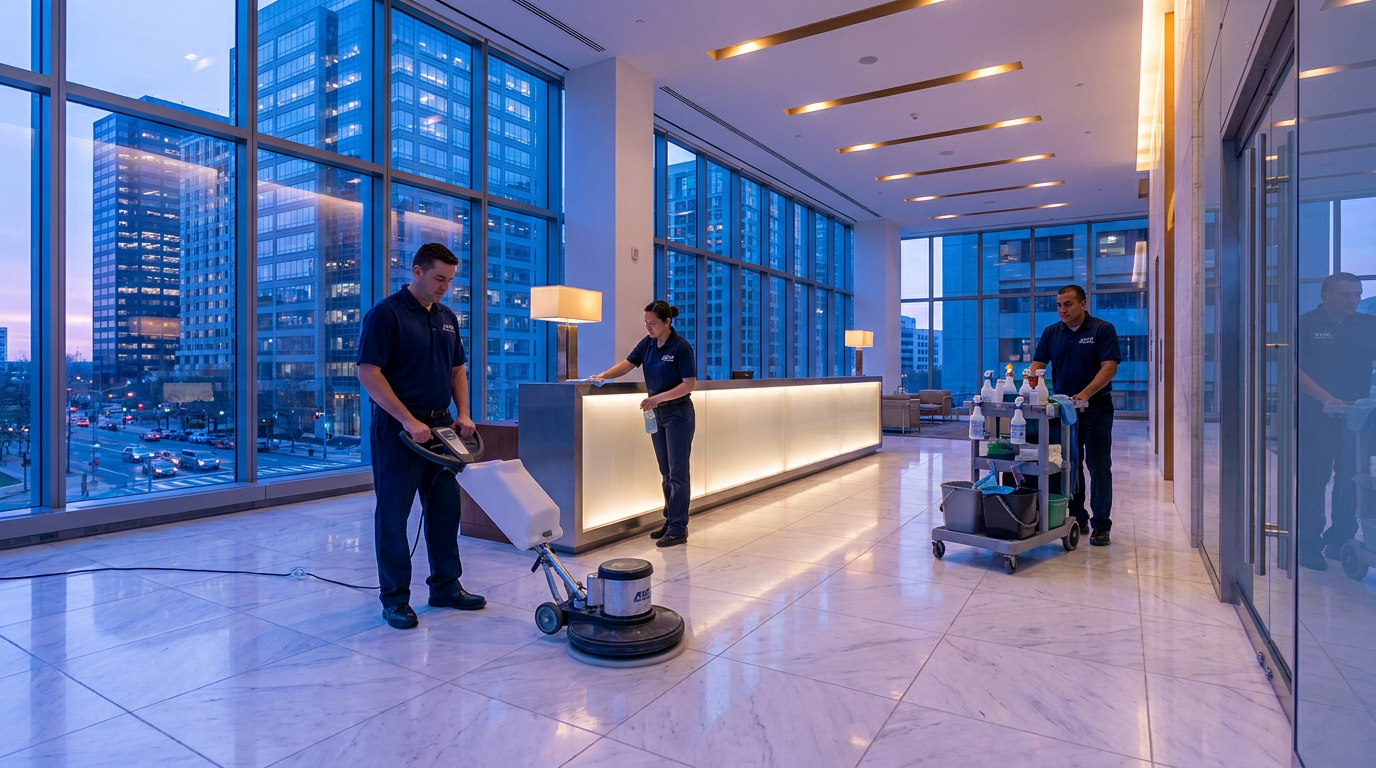
Choosing a commercial cleaning service for office buildings requires evaluating seven core factors: licensing and insurance verification, industry certifications, equipment capabilities, pricing transparency, service flexibility, references from similar properties, and written scope documentation. The right provider will offer customized cleaning plans at $0.17 to $2.00 per square foot, depending on service frequency and building complexity.
- Commercial cleaning rates range from $0.17 to $2.00 per square foot, with office buildings averaging $0.20 to $0.50 per square foot for routine janitorial
- Verify general liability insurance of at least $1 million and workers' compensation coverage before signing any contract
- Request references from 3 to 5 properties similar in size and type to your office building
- Require detailed scope documents specifying cleaning frequencies, products used, and quality checkpoints
- SBE, WOSB, and ISSA CIMS certifications indicate professional standards and accountability
Understanding the Commercial Cleaning Landscape in 2026
The commercial cleaning industry generates over $90 billion annually in the United States, according to industry data compiled by Wikipedia. Office buildings represent the largest segment of this market, with facility managers spending between $1.50 and $3.00 per square foot annually on combined janitorial and deep cleaning services.
South Florida presents unique challenges for office building maintenance. Miami-Dade, Broward, and Palm Beach counties experience humidity levels exceeding 75% for much of the year, accelerating mold growth, floor finish degradation, and HVAC contamination. These conditions require cleaning providers with specialized equipment and regional expertise.
The distinction between standard janitorial services and project-based deep cleaning matters significantly. Janitorial covers daily tasks like trash removal and surface wiping. Deep cleaning addresses embedded dirt, floor restoration, and areas standard cleaning misses, including elevator tracks, ventilation grilles, and grout lines.
The 7 Essential Evaluation Criteria
1. Licensing and Insurance Verification
Every commercial cleaning company operating in Florida must carry general liability insurance with minimum coverage of $1 million per occurrence. Workers' compensation insurance protects your property from liability if a cleaning employee is injured on-site. Request certificates of insurance directly from the provider's insurance company, not just copies from the cleaning service.
Florida business licenses should be current and verifiable through the Florida Department of Business and Professional Regulation. Ask for the company's license number and verify it independently. Unlicensed operators expose property managers to significant liability risk.
2. Industry Certifications and Credentials
Professional certifications indicate a cleaning company meets established industry standards. The ISSA Cleaning Industry Management Standard (CIMS) certification requires documented quality systems, worker training protocols, and environmental practices. Small Business Enterprise (SBE) and Women-Owned Small Business (WOSB) certifications, verified through the Small Business Administration, demonstrate additional accountability layers.
According to ServiceMaster Clean's industry guidelines, certified providers typically maintain higher customer satisfaction rates and more consistent service delivery than non-certified competitors.
3. Equipment and Technology Capabilities
Commercial-grade equipment separates professional cleaning services from basic janitorial operations. Ride-on auto-scrubbers clean 20,000 to 50,000 square feet per hour, compared to 3,000 to 5,000 square feet with traditional mops. HEPA-filtered vacuums capture 99.97% of particles down to 0.3 microns, essential for maintaining indoor air quality in office environments.
For floor restoration projects, industrial equipment matters significantly. Truck-mounted carpet extractors deliver water temperatures exceeding 200 degrees Fahrenheit, removing embedded soil that portable units cannot reach. Propane burnishers produce high-gloss finishes on VCT and terrazzo floors impossible to achieve with standard equipment.
4. Pricing Structure and Transparency
Commercial cleaning pricing follows three primary models: per square foot, hourly rates, or flat monthly fees. According to Janitorial Leads Pro's 2026 pricing analysis, the average commercial cleaning cost is $0.17 per square foot or $25 per hour per worker for routine janitorial services.
Deep cleaning and floor restoration services command higher rates. VCT floor stripping and waxing typically costs $0.85 to $1.80 per square foot. Carpet deep cleaning ranges from $0.15 to $0.35 per square foot. Request itemized quotes that separate labor, materials, and equipment costs.
| Service Type | Price Range (per sq ft) | Frequency |
|---|---|---|
| Routine Janitorial | $0.17 - $0.35 | Daily to Weekly |
| Commercial Deep Cleaning | $0.40 - $2.00 | Quarterly to Annually |
| VCT Scrub and Recoat | $0.60 - $1.50 | Every 3-6 Months |
| Floor Stripping and Waxing | $0.85 - $1.80 | Annually |
| Carpet Deep Extraction | $0.15 - $0.35 | Quarterly |
5. Service Flexibility and Scheduling
Multi-tenant office buildings require cleaning providers who can navigate complex access schedules. Class A buildings in downtown Miami or Fort Lauderdale often restrict cleaning to after-hours windows between 6 PM and 6 AM. Your provider should demonstrate experience coordinating with building security, tenant schedules, and property management requirements.
Emergency response capability matters for unexpected situations. Ask potential providers about their response time for urgent cleaning needs, such as post-event cleanup or water damage mitigation. Providers with local operations typically respond within 2 to 4 hours, while national franchises may require 24 to 48 hours to mobilize.
6. References and Track Record
Request references from 3 to 5 properties similar to yours in size, type, and location. A provider experienced with 50,000 square foot Class B office buildings in Broward County offers more relevant experience than one primarily serving retail centers or industrial facilities.
According to Atlas Facilities' vendor selection guide, the most revealing reference questions include: How does the provider handle service failures? What is their typical response time to complaints? Have they maintained consistent quality over 12 or more months?
7. Written Scope and Quality Documentation
Professional cleaning contracts should specify exact services, frequencies, and quality standards. Vague language like "general cleaning" or "as needed" creates disputes. Require detailed task lists for each area: reception, common areas, restrooms, break rooms, individual offices, and exterior entrances.
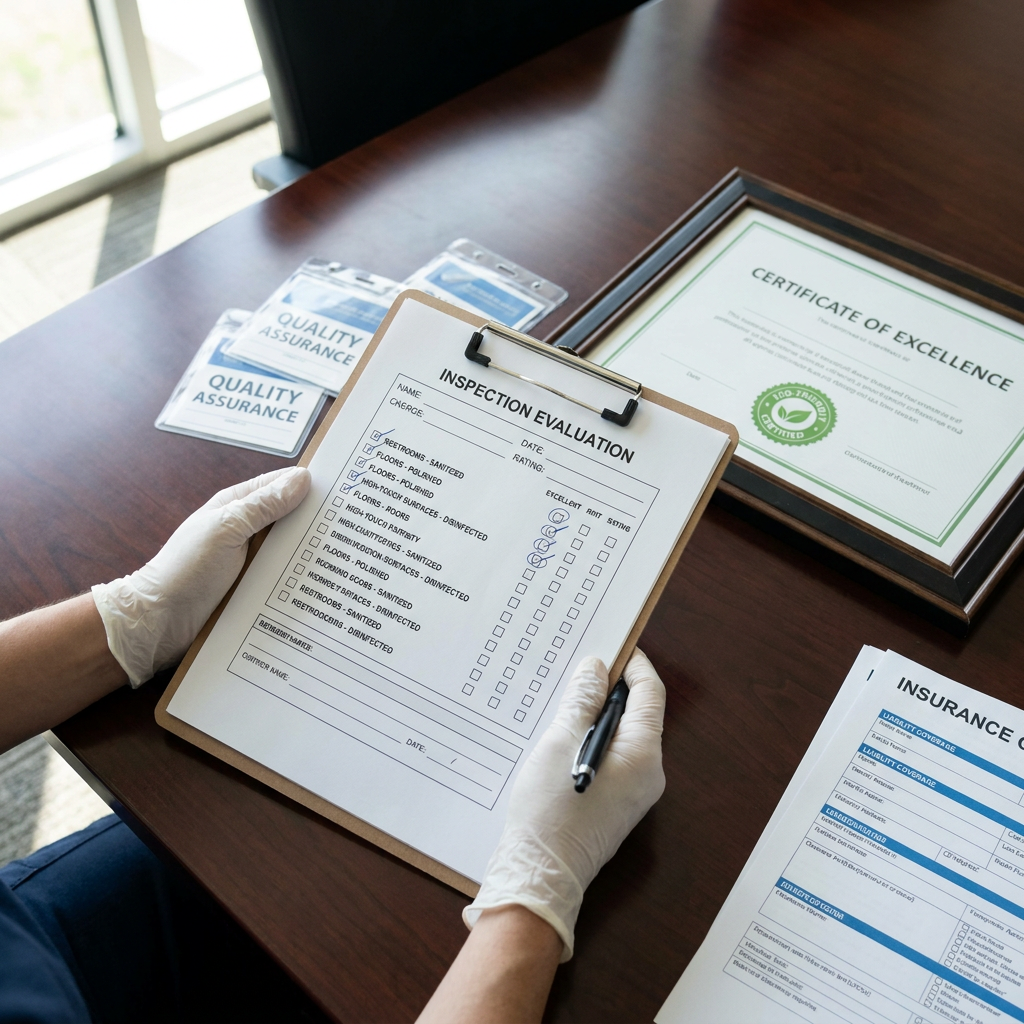
Quality assurance documentation separates professional providers from basic operators. Before and after photography, signed service completion records, and regular inspection reports provide accountability. These records prove particularly valuable during lease renewal inspections or tenant satisfaction reviews.
Questions to Ask During the Evaluation Process
The interview process reveals more about a cleaning company than marketing materials ever can. Prepare specific questions that test operational knowledge and commitment to quality.
Insurance and Compliance Questions
What are your current general liability and workers' compensation policy limits? Can you provide certificates of insurance directly from your carrier? Are you licensed to operate in Miami-Dade, Broward, and Palm Beach counties? What background check process do you use for employees who will access our building?
Operational Capability Questions
What equipment do you own versus rent for projects? How do you handle employee absences or turnover? What is your supervisor-to-cleaner ratio? Do you provide dedicated crews for consistent service, or rotate staff between accounts?
Quality and Communication Questions
How do you measure and report service quality? What is your process for handling complaints? How quickly can you respond to urgent requests? Will we have a dedicated account manager as our primary contact?
The 20-10 Rule and Other Industry Standards
The 20-10 rule is a hospitality industry standard that applies to commercial office environments. When a cleaning professional comes within 20 feet of a building occupant, they should make eye contact and smile. Within 10 feet, they should offer a verbal greeting. This standard indicates training in professional conduct, not just cleaning techniques.
ISSA, the worldwide cleaning industry association, publishes cleaning time standards that help facility managers evaluate proposals. A 5,000 square foot office floor typically requires 1.5 to 2 hours for thorough daily cleaning. Proposals significantly below these benchmarks may indicate corners being cut.
Green cleaning certifications from organizations like Green Seal or the EPA's Safer Choice program indicate commitment to environmental responsibility. These certifications require using products that meet strict toxicity, biodegradability, and packaging standards.
Red Flags That Indicate Problems
Certain warning signs should disqualify a cleaning provider from consideration. Recognizing these early saves significant time and prevents costly mistakes.
Reluctance to provide insurance certificates suggests coverage gaps or policy lapses. Legitimate providers produce documentation within 24 to 48 hours. Inability to provide local references indicates limited experience in your market or a pattern of short-term client relationships.
Pricing significantly below market rates, such as $0.08 per square foot when competitors quote $0.20, typically means the provider will cut corners, underpay workers, or add charges later. Vague contract language that avoids specific commitments creates future disputes.
High employee turnover rates, exceeding 100% annually, result in inconsistent service and security concerns. Ask directly about turnover and what the provider does to retain quality staff.
Comparing Janitorial Services vs. Deep Cleaning Specialists
Understanding the difference between routine janitorial and specialized deep cleaning helps facility managers build comprehensive maintenance programs. Most office buildings need both service types from providers with different capabilities.
| Factor | Routine Janitorial | Deep Cleaning Specialist |
|---|---|---|
| Service Frequency | Daily to Weekly | Monthly to Annually |
| Equipment Level | Standard Commercial | Industrial Grade |
| Typical Tasks | Trash, Surfaces, Restrooms | Floor Restoration, HVAC, Grout |
| Contract Type | Ongoing Monthly | Project-Based |
| Best For | Daily Maintenance | Periodic Restoration |
National franchise operations like JAN-PRO and ServiceMaster excel at consistent daily janitorial across multiple locations. Local specialists often provide superior results for project-based work requiring specialized equipment and techniques. Many facility managers use different providers for each service type.
For office building deep cleaning projects, providers with industrial auto-scrubbers, truck-mounted extractors, and HEPA filtration systems deliver results impossible to achieve with standard janitorial equipment.
Building Your Vendor Evaluation Checklist
A structured evaluation process ensures consistent comparison across potential providers. Use this checklist during your selection process.
Documentation Requirements: Current certificates of insurance with your property listed as additional insured. Florida business license verification. OSHA training records for employees. References from 3 to 5 similar properties. Sample service agreements and scope documents.
Operational Assessment: Equipment inventory and ownership versus rental status. Employee screening and training protocols. Supervisor structure and accountability systems. Emergency response capabilities and timelines. Quality assurance and reporting procedures.
Financial Evaluation: Detailed pricing breakdown by service type. Payment terms and invoicing procedures. Contract length and termination provisions. Price adjustment clauses and frequency. Additional charges for special requests or emergencies.
South Florida-Specific Considerations
Commercial properties in Miami-Dade, Broward, and Palm Beach counties face environmental challenges that require specialized expertise. Providers without regional experience often underestimate these factors.
Humidity levels averaging 75% to 85% accelerate mold growth in HVAC systems, behind wall coverings, and under floor finishes. Effective cleaning programs include quarterly air duct cleaning and monthly humidity monitoring. Floor finishes degrade 30% to 40% faster in South Florida than in northern climates, requiring more frequent scrub and recoat services.
Hurricane season from June through November creates additional requirements. Providers should offer pre-storm preparation services and post-storm cleanup capabilities. Properties in flood zones need partners experienced with water extraction and mold remediation.
Salt air exposure in coastal areas like Miami Beach, Fort Lauderdale, and Boca Raton corrodes metal fixtures and degrades exterior surfaces faster than inland locations. Cleaning programs should include regular exterior pressure washing and protective treatments.
Making the Final Decision
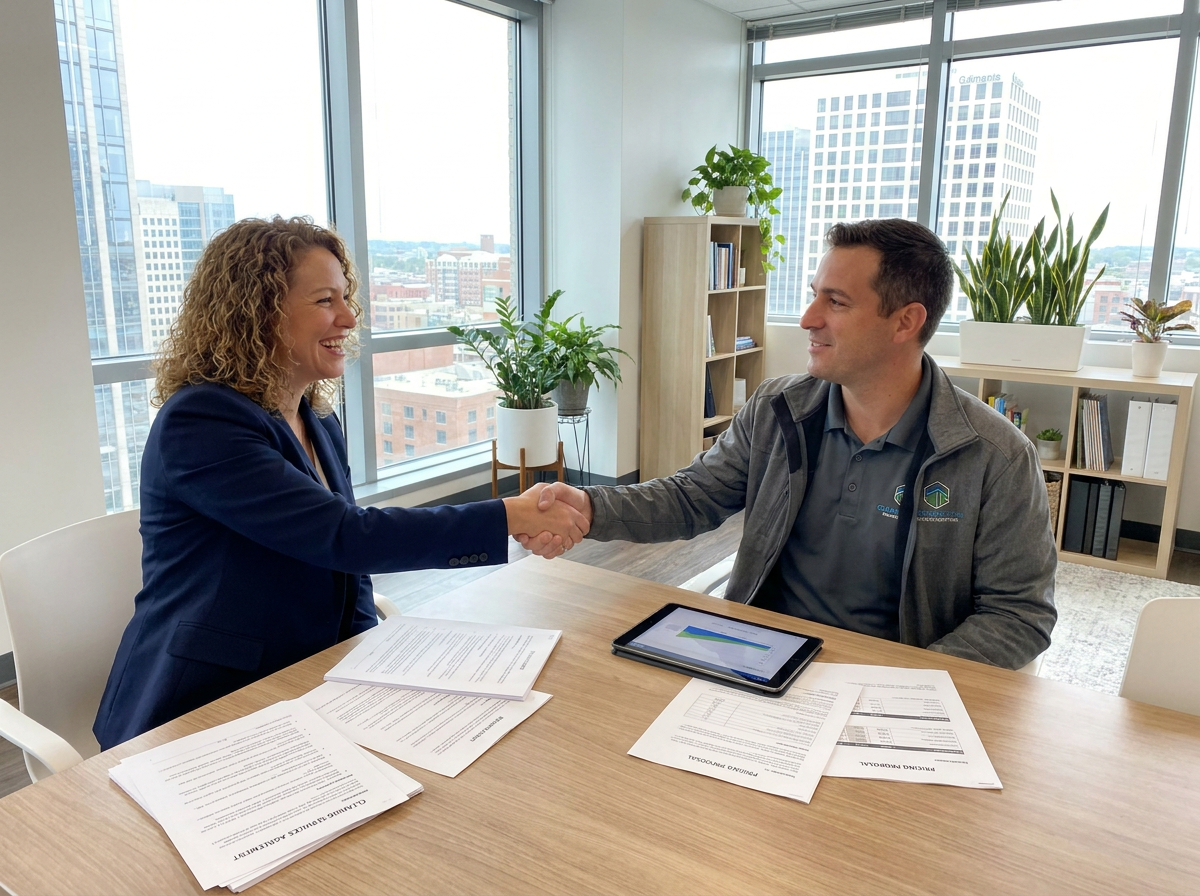
After gathering proposals and completing evaluations, the final selection should balance multiple factors. The lowest price rarely indicates the best value. Consider total cost of ownership, including potential rework, tenant complaints, and management time addressing service failures.
Request a trial period of 30 to 90 days before committing to long-term contracts. This allows evaluation of actual performance against promises. Include specific performance metrics and termination provisions in trial agreements.
According to Pro Cleanings' selection guide, the most successful facility manager and cleaning provider relationships include regular communication, documented expectations, and mutual accountability systems.
For properties requiring both routine janitorial and periodic deep cleaning, consider whether a single provider or specialized partners better serves your needs. A free on-site assessment from deep cleaning specialists can identify restoration opportunities your current janitorial provider may have missed.
Frequently Asked Questions
What is the 20-10 rule in cleaning?
The 20-10 rule is a hospitality industry standard for professional conduct. When cleaning staff come within 20 feet of a building occupant, they should make eye contact and smile. Within 10 feet, they should offer a verbal greeting. This standard indicates training beyond basic cleaning techniques and reflects commitment to professional service delivery.
How much do cleaning services charge to clean commercial offices?
Commercial office cleaning costs range from $0.17 to $0.50 per square foot for routine janitorial services, according to 2026 industry data. Deep cleaning and floor restoration services cost $0.40 to $2.00 per square foot. A 10,000 square foot office typically costs $1,700 to $5,000 annually for daily janitorial, plus $4,000 to $20,000 for periodic deep cleaning.
What is the going rate for a commercial cleaner?
Individual commercial cleaners earn $15 to $25 per hour in South Florida, while cleaning companies charge $25 to $45 per hour per worker. The difference covers insurance, equipment, supervision, and business overhead. Per square foot pricing ranges from $0.17 for basic janitorial to $1.80 or more for specialized floor restoration services.
How to choose a commercial cleaning company?
Select a commercial cleaning company by verifying insurance and licensing, checking industry certifications, evaluating equipment capabilities, comparing transparent pricing, confirming scheduling flexibility, contacting references from similar properties, and requiring detailed scope documentation. Request on-site assessments from 3 to 5 providers before making a final decision.
Get Your Free Office Building Assessment
MB Clean Solutions provides complimentary on-site assessments for office buildings throughout Miami-Dade, Broward, and Palm Beach counties. Our team identifies floor restoration opportunities and delivers transparent quotes within 24 hours.
Schedule Your Free AssessmentKeep reading
More guides on the same topic from our team.
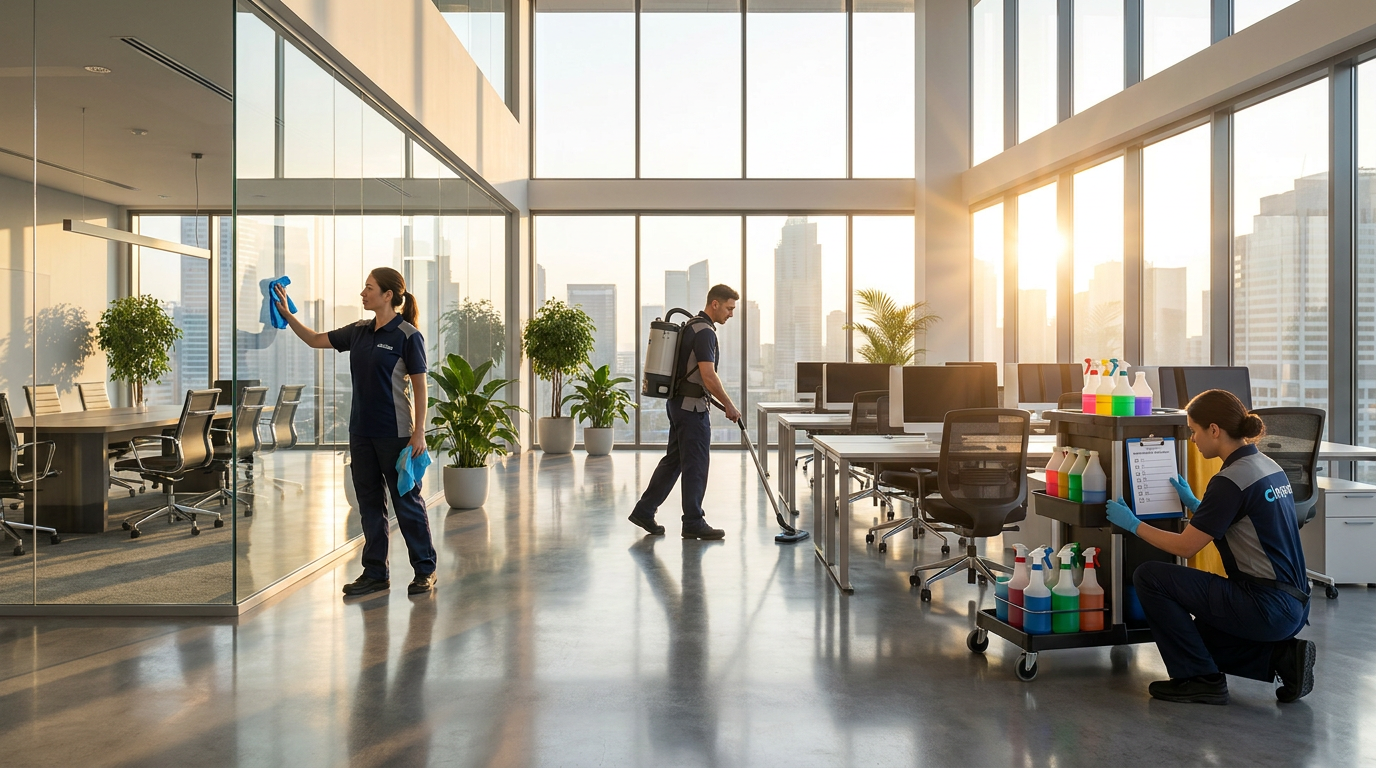
Office Building Cleaning Checklist: Complete Guide for 2026
Comprehensive office building cleaning checklist covering daily, weekly, and monthly tasks. Includes high-touch surfaces, restrooms, floors, and deep cleaning schedules.
Read the guide
How to Prepare Your Office for Post-Construction Cleaning
Learn the exact steps to prepare an office for post-construction cleaning. Covers the 3 phases, common mistakes, and GC coordination for faster CO approval.
Read the guide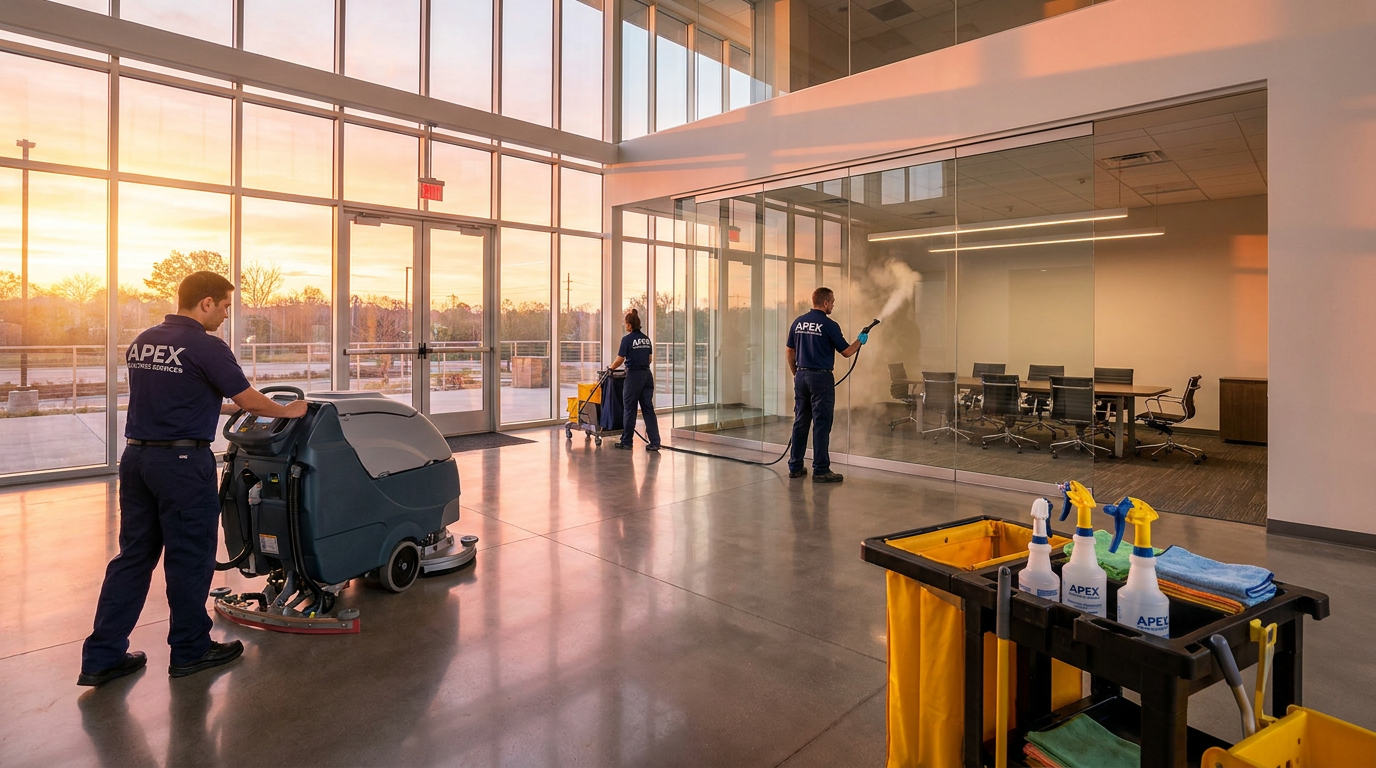
What to Expect During Commercial Deep Cleaning Service
Learn exactly what happens during a commercial deep cleaning service, from pre-cleaning assessment to final inspection. Includes timelines, costs, and preparation tips.
Read the guide
Ready for a Spotless Space?
Get a free, no-obligation estimate for your commercial cleaning project. Most quotes delivered within 24 hours.