Hospital-Grade Disinfection for Commercial Spaces: Requirements
HOSPITAL-GRADE DISINFECTION REQUIREMENTS FOR COMMERCIAL SPACES
Learn hospital-grade disinfection requirements for commercial spaces, including EPA-registered products, contact times, and protocols for offices and retail.
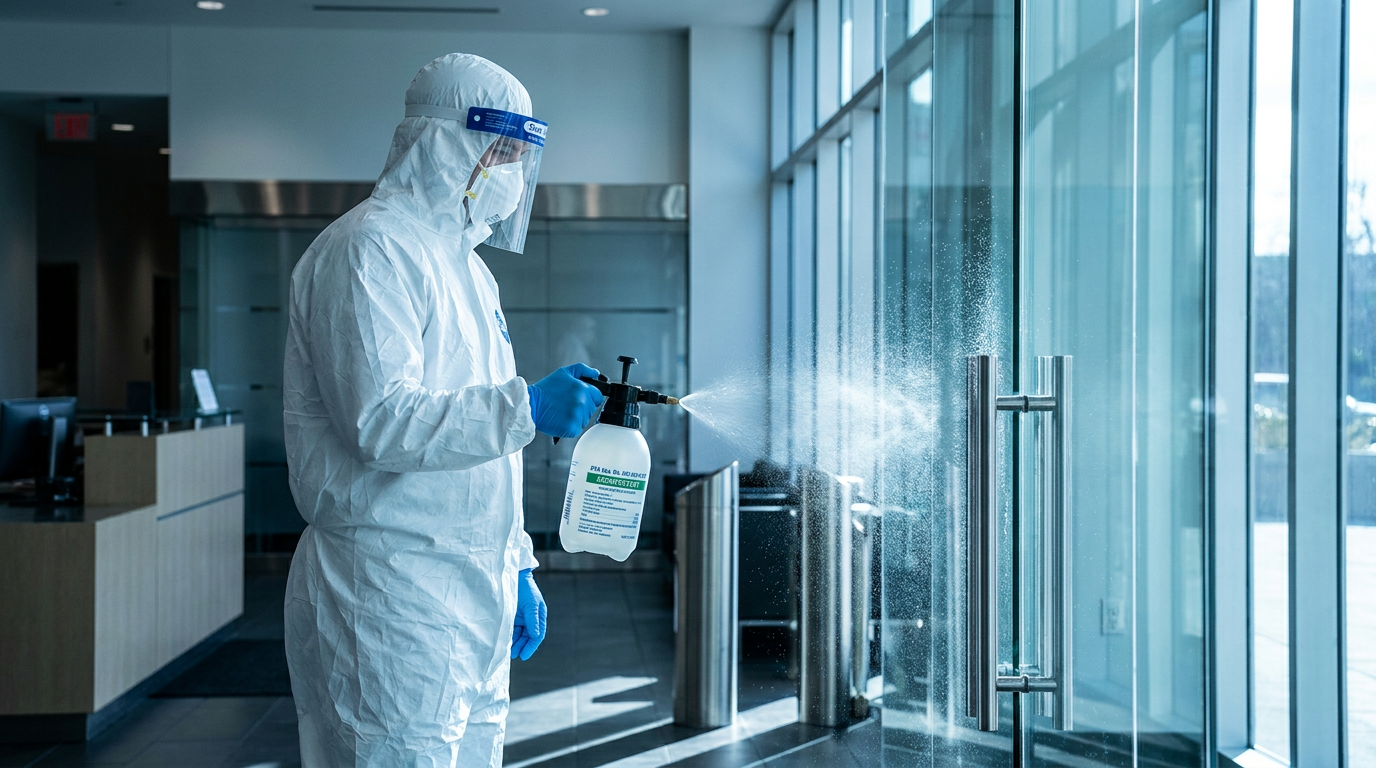
Hospital-grade disinfection for commercial spaces requires EPA-registered disinfectants tested against Staphylococcus aureus, Salmonella enterica, and Pseudomonas aeruginosa, applied with strict adherence to label contact times ranging from 1 to 10 minutes. This standard, once exclusive to healthcare facilities, now applies to offices, retail centers, and hospitality venues seeking measurable pathogen reduction.
- EPA registration is mandatory: Products must pass efficacy tests against specific hospital pathogens to claim "hospital-grade" status
- Contact time compliance is critical: Surfaces must remain visibly wet for 1 to 10 minutes depending on the product
- High-touch surfaces require disinfection 2 to 4 times daily in commercial settings
- Color-coded cleaning systems prevent cross-contamination between restrooms, food areas, and general spaces
- Documentation of products, frequencies, and methods supports regulatory compliance and audit readiness
What Makes a Disinfectant Hospital-Grade
The term "hospital-grade disinfectant" is a regulatory classification, not a marketing phrase. According to the CDC's recommendations for disinfection and sterilization, these products must be EPA-registered and demonstrate efficacy against specific test organisms on hard, nonporous surfaces.
The Federal Insecticide, Fungicide, and Rodenticide Act (FIFRA) governs this registration process. Products undergo laboratory testing to prove they eliminate at least 99.9% of target pathogens within their stated contact time. Without EPA registration, a product cannot legally claim hospital-grade status.
Three organisms serve as the baseline efficacy standard: Staphylococcus aureus (a gram-positive bacterium), Salmonella enterica (a gram-negative bacterium), and Pseudomonas aeruginosa (a highly resistant gram-negative bacterium). Products effective against all three earn the hospital disinfectant classification.
EPA Registration Categories for Commercial Use
EPA categorizes disinfectants by efficacy level. General disinfectants work against common bacteria. Hospital disinfectants meet the three-organism standard. Sporicidal agents kill bacterial spores like Clostridioides difficile. Commercial facilities typically need hospital-grade products for high-touch areas and may require sporicidal agents during outbreak conditions.
The EPA's List N identifies products effective against emerging pathogens including SARS-CoV-2. Facilities in Miami-Dade, Broward, and Palm Beach counties often reference this list when updating their disinfection protocols. Products on List N have demonstrated efficacy against harder-to-kill viruses, providing additional assurance for commercial applications.
Contact Time: The Most Misunderstood Requirement
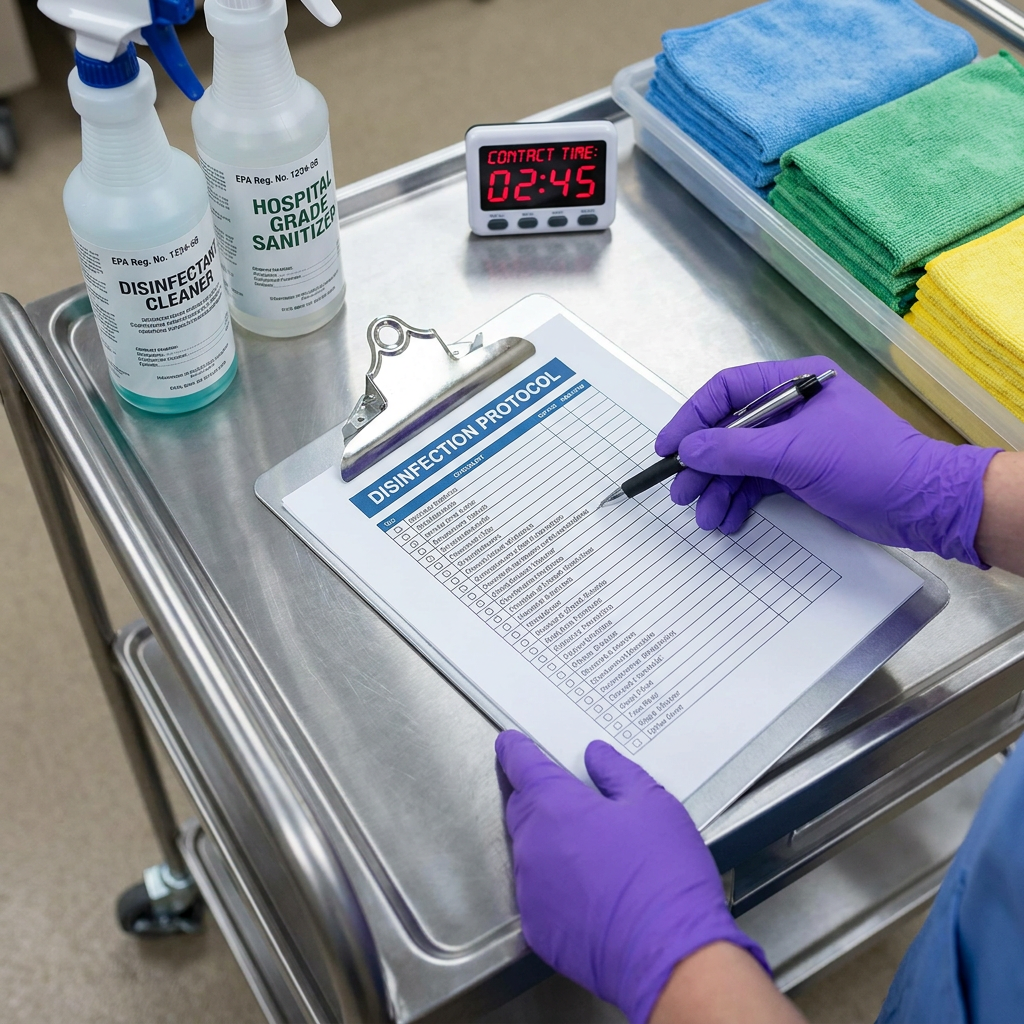
Contact time, also called dwell time or wet time, determines whether a disinfectant actually works. According to medical office cleaning experts, surfaces must remain visibly wet with the disinfectant for the entire duration specified on the product label. Wiping a surface dry after 30 seconds when the label requires 3 minutes renders the disinfection ineffective.
Most hospital-grade disinfectants require contact times between 1 and 10 minutes. Quaternary ammonium compounds (quats) typically need 10 minutes. Hydrogen peroxide formulations often work in 1 to 3 minutes. Sodium hypochlorite (bleach) solutions vary from 1 to 10 minutes depending on concentration.
Commercial cleaning teams frequently undermine disinfection by using spray-and-wipe techniques learned from general cleaning. Proper protocol requires pre-cleaning visibly soiled surfaces, applying disinfectant liberally, allowing full contact time, and re-wetting if the surface dries before the time elapses.
| Disinfectant Type | Typical Contact Time | Best Commercial Applications |
|---|---|---|
| Quaternary Ammonium (Quats) | 10 minutes | General surfaces, low-odor environments |
| Hydrogen Peroxide | 1 to 3 minutes | Food service areas, occupied spaces |
| Sodium Hypochlorite (Bleach) | 1 to 10 minutes | Restrooms, high-risk contamination |
| Phenolic Compounds | 10 minutes | Healthcare-adjacent facilities |
| Alcohol-Based (70%+) | 30 seconds to 2 minutes | Electronics, quick-dry surfaces |
What Surfaces Need Hospital-Grade Disinfectant
High-touch surfaces in commercial environments require hospital-grade disinfection because they accumulate pathogens from multiple users throughout the day. Research from the National Center for Biotechnology Information confirms that contaminated surfaces serve as reservoirs for infectious agents, making systematic disinfection essential for breaking transmission chains.
Door handles, elevator buttons, light switches, and handrails represent primary transmission points. In office buildings, shared equipment like copiers, coffee machines, and conference room controls require attention. Retail environments add point-of-sale terminals, shopping cart handles, and fitting room hooks to the priority list.
Surface Categories and Disinfection Frequencies
Critical surfaces in commercial spaces fall into three risk tiers. Tier one includes restroom fixtures, breakroom appliances, and shared equipment requiring disinfection 2 to 4 times daily. Tier two covers workstations, reception desks, and seating areas needing daily disinfection. Tier three encompasses walls, windows, and low-contact surfaces addressed weekly or during deep cleaning cycles.
South Florida's humid climate, with average humidity levels of 73% to 77% in Miami-Dade County, creates additional challenges. Moisture accelerates microbial growth on surfaces, making consistent disinfection protocols more important than in drier regions. Facilities in Broward and Palm Beach counties face similar conditions.
Hospital-Grade Protocols for Different Commercial Environments
Office Buildings and Multi-Tenant Properties
Class A, B, and C office buildings require zone-based disinfection protocols. Lobbies and common areas see the highest traffic and need disinfection every 2 to 4 hours during business hours. Individual tenant spaces typically require daily service with enhanced attention to conference rooms after each meeting.
Property managers increasingly include hospital-grade disinfection requirements in tenant leases. This protects building owners from liability while meeting occupant expectations established during the COVID-19 pandemic. MB Clean Solutions provides office building cleaning programs that include documentation suitable for tenant satisfaction reporting.
Elevator interiors deserve special attention in multi-story buildings. Button panels, handrails, and door edges accumulate contamination from every user. Disinfection frequency should match traffic patterns, with high-rise buildings requiring service every 1 to 2 hours during peak periods.
Retail and Shopping Centers
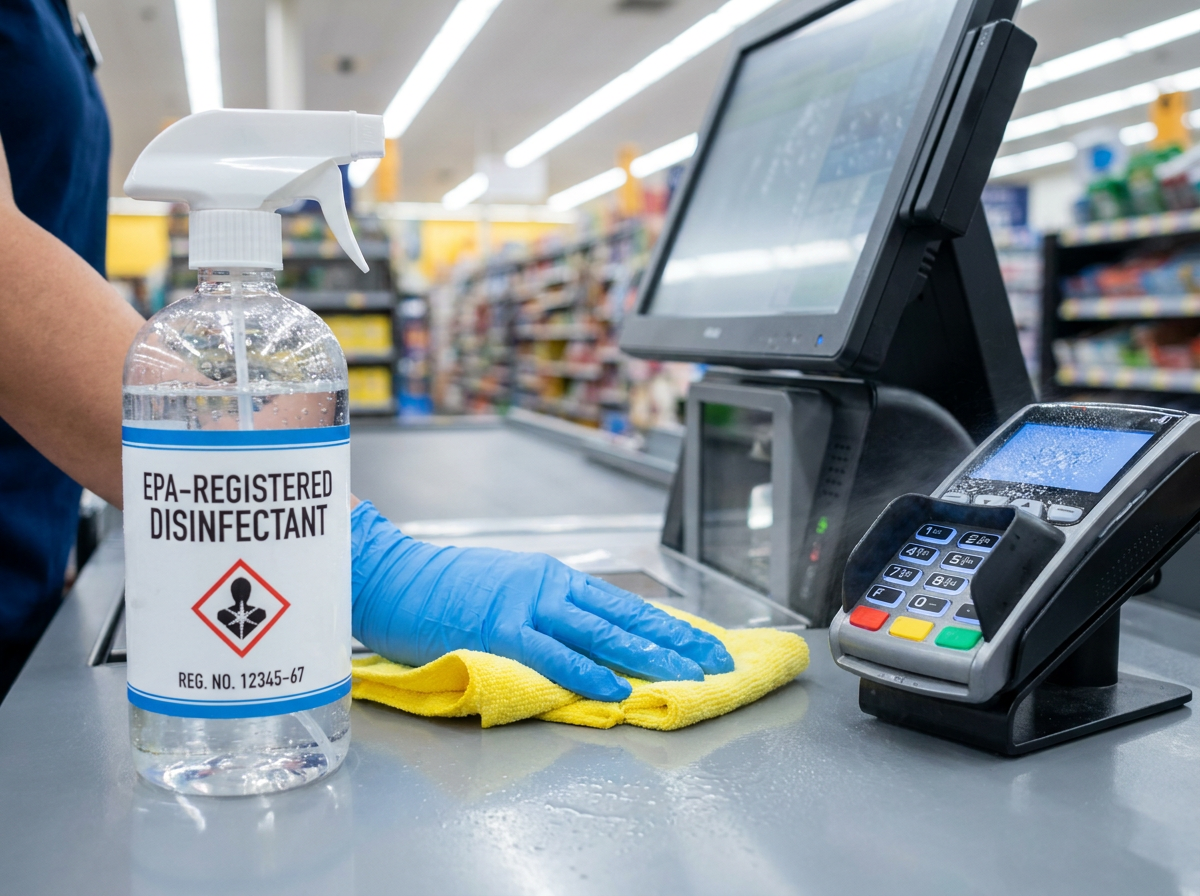
Retail environments present unique challenges due to constant customer flow and diverse touchpoints. Checkout counters, payment terminals, and product displays require disinfection throughout operating hours. Food court seating and tables need attention after each customer turnover.
Shopping center common areas, including restrooms, food courts, and seating areas, fall under property management responsibility. Individual tenant spaces typically maintain their own protocols. Coordinated approaches under a single contract simplify compliance tracking across multi-tenant properties. Our retail and shopping center cleaning services address both common area and tenant space requirements.
Hotels and Hospitality Venues
Hospitality properties face guest expectations shaped by highly publicized cleaning protocols from brands like Marriott, Hilton, and Hyatt. These programs established new baselines including electrostatic spraying, UV-C disinfection, and EPA List N product requirements that guests now expect from all lodging facilities.
Guest room turnover requires complete disinfection of all high-touch surfaces including light switches, remote controls, door handles, bathroom fixtures, and desk surfaces. Public areas like lobbies, fitness centers, and pool decks need continuous attention. Hotel and hospitality cleaning services must balance thoroughness with operational efficiency to maintain room availability.
Schools, Daycares, and Educational Facilities
Licensed childcare facilities in Florida must meet Department of Children and Families (DCF) sanitation requirements. These standards align closely with hospital-grade protocols, requiring EPA-registered disinfectants and documented cleaning schedules. Nap areas, play equipment, and food preparation surfaces require particular attention.
Schools face similar requirements with the added complexity of larger facilities and diverse space types. Classrooms, cafeterias, gymnasiums, and administrative offices each present different disinfection challenges. Our school and daycare deep cleaning services include signed completion documentation that supports DCF inspection compliance.
Equipment and Methods for Hospital-Grade Results
Achieving hospital-grade disinfection requires more than proper products. Equipment selection, application methods, and staff training determine whether protocols deliver their intended results. Commercial facilities benefit from understanding what distinguishes professional disinfection from standard janitorial approaches.
Electrostatic Sprayers
Electrostatic technology applies a positive charge to disinfectant droplets, causing them to wrap around surfaces and reach areas that traditional spraying misses. This method reduces chemical usage by 65% while improving coverage consistency. Contact times still apply; electrostatic application simply improves distribution.
Healthcare facilities adopted electrostatic spraying for operating rooms and patient areas. Commercial applications include conference rooms, fitness equipment, and vehicle interiors. The technology works best as a supplement to manual wiping rather than a replacement.
HEPA-Filtered Vacuums
High-Efficiency Particulate Air (HEPA) filters capture 99.97% of particles 0.3 microns or larger, including many bacteria and allergens. Standard vacuums recirculate these particles into the air. Hospital-grade cleaning protocols require HEPA filtration for all vacuuming to prevent airborne contamination during cleaning.
HEPA vacuuming should precede disinfection on carpeted surfaces and upholstered furniture. This removes particulate matter that could shield microorganisms from disinfectant contact. The sequence matters: vacuum first, then disinfect.
Color-Coded Microfiber Systems
Cross-contamination prevention requires separating tools by use area. Hospital environmental services departments use color-coded microfiber cloths and mop heads: red for restrooms, yellow for clinical areas, blue for general surfaces, green for food service. Commercial facilities can adapt this system to their specific zones.
Microfiber's structure captures and holds pathogens rather than spreading them. Single-use or laundered microfiber cloths outperform traditional cotton rags for disinfection applications. Laundering requires water temperatures of 160 degrees Fahrenheit or higher to sanitize cloths for reuse.
Comparing Hospital-Grade and Standard Commercial Disinfection
| Factor | Standard Commercial Cleaning | Hospital-Grade Disinfection |
|---|---|---|
| Product Requirements | General-purpose cleaners | EPA-registered hospital disinfectants |
| Contact Time Compliance | Often ignored | Strictly enforced per label |
| High-Touch Frequency | Once daily | 2 to 4 times daily |
| Cross-Contamination Prevention | Minimal controls | Color-coded systems, zone separation |
| Documentation | Basic service records | Product logs, SDS sheets, completion certificates |
| Staff Training | General cleaning techniques | Infection control principles, proper dilution |
| Cost per Square Foot | $0.15 to $0.30 | $0.40 to $2.00 |
Implementing Hospital-Grade Standards in Your Facility
Step 1: Conduct a Risk Assessment
Map your facility's high-touch surfaces and traffic patterns. Identify areas where people congregate, share equipment, or handle common items. Categorize spaces by risk level: high (restrooms, breakrooms, lobbies), medium (workstations, conference rooms), and low (storage, utility areas).
Consider occupant populations. Facilities serving immunocompromised individuals, young children, or elderly populations require more stringent protocols. Medical-adjacent businesses like wellness centers, physical therapy offices, and dental practices fall into higher-risk categories even without formal healthcare licensing.
Step 2: Select Appropriate Products
Choose EPA-registered hospital disinfectants appropriate for your surface types and occupant safety requirements. Review Safety Data Sheets (SDS) for each product. Consider ventilation requirements, PPE needs, and compatibility with existing materials including flooring, countertops, and equipment.
Maintain a standardized chemical program with 1 to 2 primary disinfectants for daily use. Reserve specialty products like sporicidal agents for outbreak response or high-risk areas. Document all products by EPA registration number for audit purposes.
Step 3: Develop Written Protocols
Create zone-specific cleaning and disinfection procedures. Specify products, dilution ratios, application methods, contact times, and frequencies for each area type. Include verification steps such as ATP testing or visual inspection checklists.
Protocols should address both routine maintenance and enhanced disinfection triggers. Define when to escalate to outbreak response protocols, such as confirmed illness reports or community transmission alerts. Include contact information for professional deep cleaning services when situations exceed routine capacity.
Step 4: Train Staff Thoroughly
Training must cover infection control principles, not just cleaning techniques. Staff should understand why contact time matters, how cross-contamination occurs, and what distinguishes disinfection from cleaning. Hands-on practice with proper product application reinforces classroom instruction.
Refresher training should occur quarterly at minimum. Protocol updates, new product introductions, and incident reviews provide natural training opportunities. Document all training with dates, topics, and attendee signatures.
Step 5: Verify and Document Results
ATP (adenosine triphosphate) testing provides objective measurement of surface cleanliness. Readings below 100 RLU (relative light units) indicate effective cleaning. Regular testing identifies protocol gaps and validates training effectiveness.
Maintain logs of all disinfection activities including date, time, areas serviced, products used, and staff responsible. These records support regulatory compliance, liability protection, and continuous improvement efforts. Before-and-after photography documents deep cleaning results for property management reporting.
Floor Care and Hospital-Grade Disinfection
Flooring represents the largest surface area in most commercial facilities and requires specific attention within hospital-grade protocols. According to medical facility cleaning specialists, daily mopping with hospital-grade disinfectant solutions maintains baseline hygiene between periodic deep cleaning cycles.
VCT (vinyl composition tile), common in offices, retail, and educational facilities, requires proper sealing and finishing to support effective disinfection. Porous or damaged floor finishes harbor pathogens that survive surface disinfection. Regular floor stripping and waxing maintains the sealed surface necessary for hospital-grade protocols.
Polished concrete, terrazzo, and ceramic tile each present different porosity and cleaning requirements. Professional assessment determines appropriate products and methods for each floor type. MB Clean Solutions offers commercial floor deep cleaning starting at $0.40 per square foot across Miami-Dade, Broward, and Palm Beach counties.
Common Questions About Hospital-Grade Disinfection
Can You Use Hospital-Grade Disinfectant in Non-Medical Settings?
Yes. Hospital-grade disinfectants are safe and effective for offices, retail, hospitality, and other commercial environments when used according to label directions. These products undergo rigorous safety testing as part of EPA registration. The designation indicates efficacy level, not restricted use.
Some hospital-grade products require ventilation during application or have specific surface compatibility limitations. Always review product labels and SDS documents before use. Low-VOC formulations suit occupied spaces where occupants cannot vacate during cleaning.
What Is a Commercial-Grade Disinfectant?
"Commercial-grade" lacks regulatory definition and may indicate any product marketed for business use. This term does not guarantee efficacy against specific pathogens. Always verify EPA registration and review efficacy claims before selecting products for infection control purposes.
Products labeled "commercial-grade" without EPA registration may function as cleaners rather than disinfectants. Cleaning removes soil and some microorganisms through physical action. Disinfection kills specific pathogens through chemical action. Both processes serve important roles, but only EPA-registered disinfectants provide verified pathogen reduction.
How Often Should Commercial High-Touch Surfaces Be Disinfected?
Hospital-grade protocols recommend disinfecting high-touch surfaces 2 to 4 times daily in commercial settings. Frequency should increase during flu season, disease outbreaks, or when occupant illness rates rise. Restrooms and breakrooms typically require the highest frequencies.
Traffic patterns influence optimal scheduling. Disinfection after morning arrival, before and after lunch periods, and at end of day covers major contamination windows. Facilities with continuous public access may require hourly attention to critical touchpoints.
Choosing a Commercial Cleaning Partner for Hospital-Grade Service
Not all commercial cleaning companies can deliver hospital-grade disinfection. Franchise operations often follow standardized protocols that may not meet healthcare-level requirements. Local specialists with medical facility experience bring relevant expertise to commercial applications.
Key qualifications to verify include staff training documentation, product selection rationale, protocol customization capability, and documentation practices. Request references from clients in similar facility types. Review sample service reports to assess documentation quality.
MB Clean Solutions brings project-based deep cleaning expertise to hospital-grade disinfection requirements across South Florida. As an SBE and WOSB certified cleaning company based in Aventura, we provide direct owner accountability and transparent pricing starting at $0.40 per square foot.
Ready for Hospital-Grade Disinfection?
Request a free on-site assessment for your Miami-Dade, Broward, or Palm Beach County facility. We provide transparent quotes within 24 hours with no obligation.
Get Your Free AssessmentKeep reading
More guides on the same topic from our team.
What to Expect During Commercial Deep Cleaning Service
Learn exactly what happens during a commercial deep cleaning service, from pre-cleaning assessment to final inspection. Includes timelines, costs, and preparation tips.
Read the guide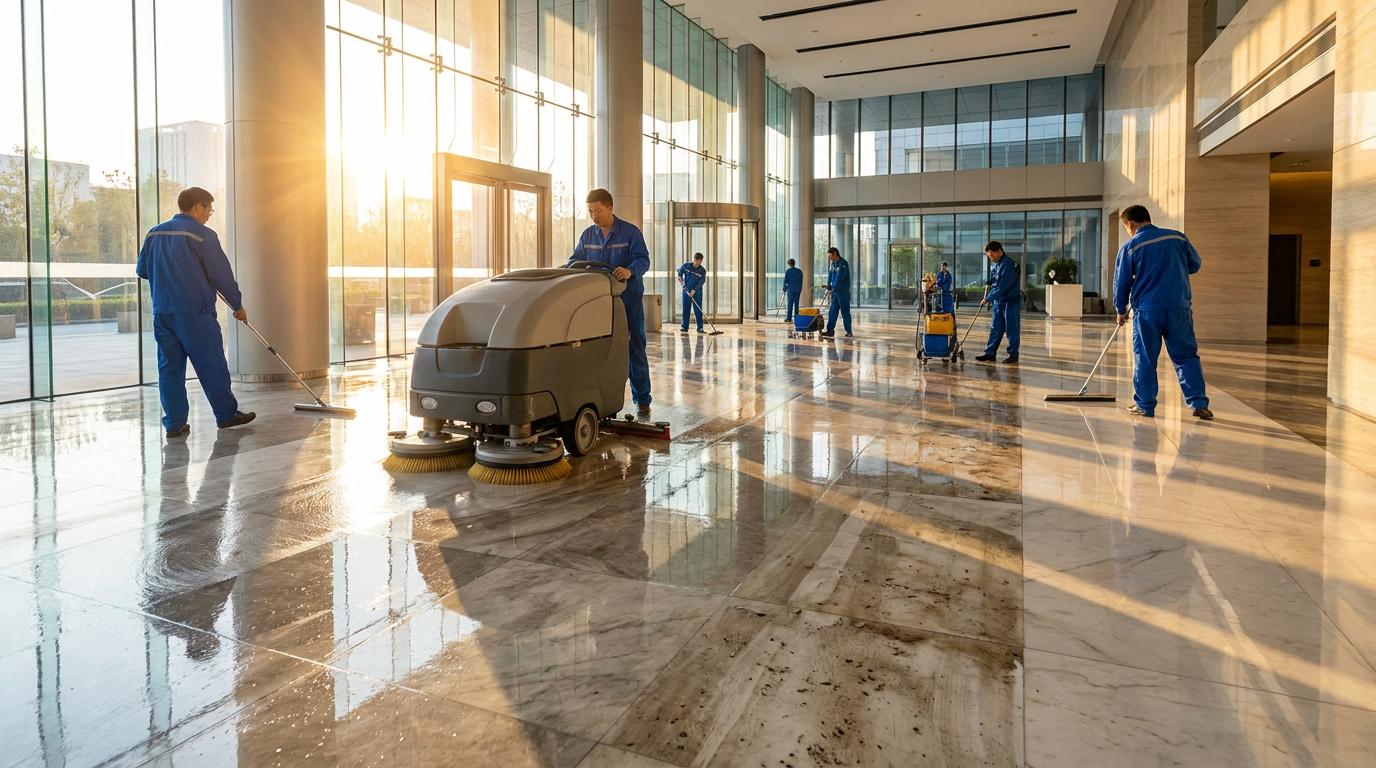
Commercial Deep Cleaning Cost by Square Footage and Building Type
Commercial deep cleaning costs $0.40 to $2.00 per square foot depending on building type, floor condition, and service scope. Get exact pricing breakdowns.
Read the guide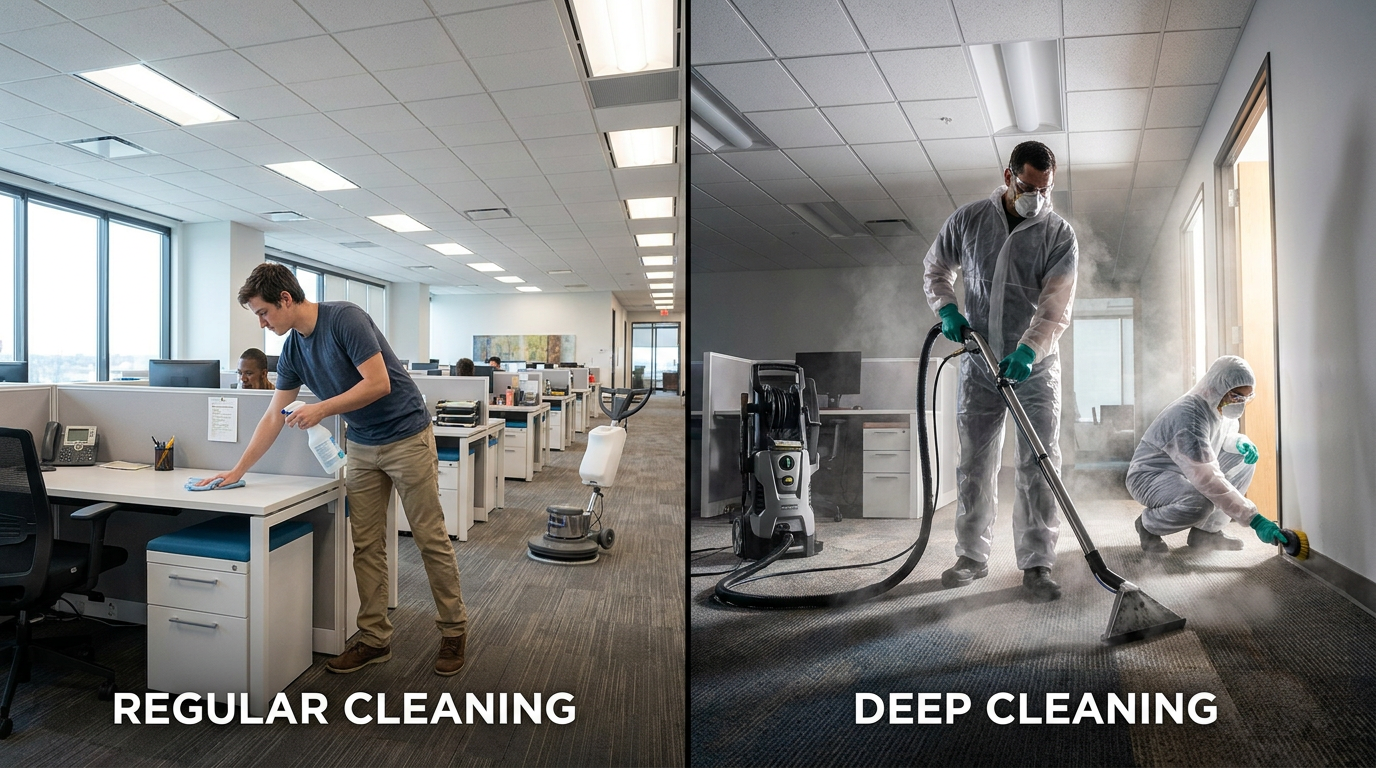
Commercial Deep Cleaning vs Regular Cleaning: Key Differences
Learn the exact differences between commercial deep cleaning and regular cleaning, including costs, frequency, tasks covered, and which service your business needs.
Read the guide
Ready for a Spotless Space?
Get a free, no-obligation estimate for your commercial cleaning project. Most quotes delivered within 24 hours.