Floor Stripping vs Polishing: Which Service Your Building Needs
HOW TO CHOOSE BETWEEN FLOOR STRIPPING AND FLOOR POLISHING FOR COMMERCIAL SPACES
Learn when to choose floor stripping over polishing for commercial spaces. Compare costs, timelines, and results to make the right decision for your facility.
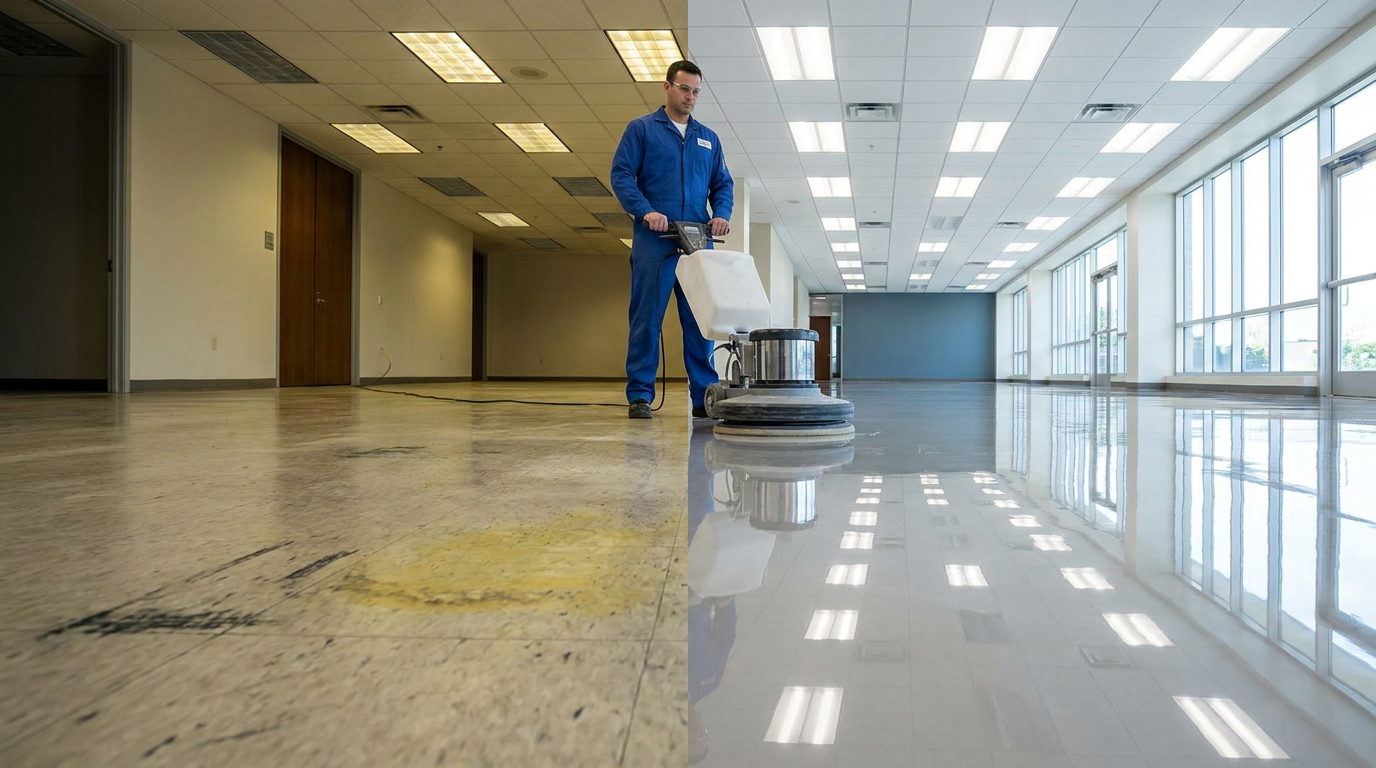
Choose floor stripping when your finish shows yellowing, heavy buildup, or embedded grime that cleaning cannot remove. Choose floor polishing when the existing finish is intact but appears dull or lightly scuffed. Stripping removes all finish layers down to bare flooring and costs $0.85 to $1.80 per square foot, while polishing restores shine on existing finish for $0.60 to $1.50 per square foot.
- Floor stripping removes 100% of old finish layers and costs $0.85 to $1.80 per square foot with 24 to 48 hour dry time
- Floor polishing (scrub and recoat) preserves existing finish and costs $0.60 to $1.50 per square foot with 2 to 4 hour dry time
- VCT floors in high traffic areas need stripping every 12 to 18 months; polishing every 3 to 6 months between strips
- South Florida humidity accelerates finish failure by 30 to 40%, requiring more frequent maintenance cycles
- Wrong service choice wastes 40 to 60% of your floor care budget annually
Facility managers across Miami, Fort Lauderdale, and West Palm Beach face this decision multiple times per year. The wrong choice locks in defects, wastes labor costs, and shortens the life of your flooring investment. This guide provides a clear decision framework based on floor condition, traffic patterns, and budget constraints specific to South Florida commercial properties.
What Is Floor Stripping and When Is It Necessary?
Floor stripping is a complete restoration process that chemically dissolves and mechanically removes every layer of old wax, sealer, and finish from VCT, vinyl, linoleum, and other resilient commercial flooring. According to industry floor care standards, stripping exposes the bare substrate so new finish can bond properly without contamination from old product buildup.
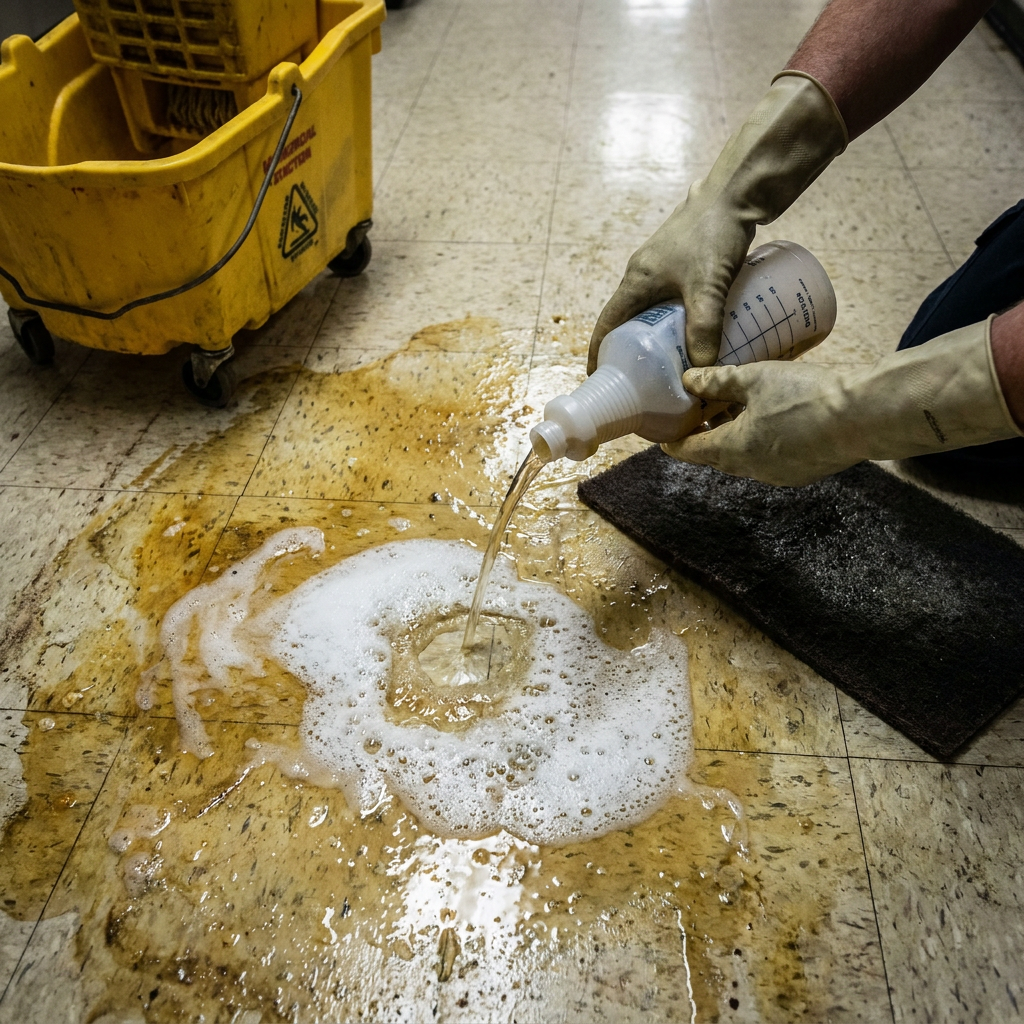
The process involves applying alkaline stripping solution with pH levels between 12 and 14, allowing 10 to 15 minutes of dwell time, then agitating with a rotary floor machine equipped with black stripping pads. Industrial wet vacuums extract the dissolved finish, followed by neutralizing rinses to prepare the surface for new wax application. A complete strip and wax job requires 4 to 6 coats of commercial floor finish applied over 24 to 48 hours.
Five Signs Your Floor Requires Full Stripping
The first indicator is yellowing or discoloration that appears despite regular cleaning. This yellowing results from oxidation of old wax layers, UV exposure, and chemical reactions between cleaning products and aged finish. Once yellowing sets in, no amount of polishing will restore the original appearance.
The second sign is wax buildup along baseboards, corners, and edges where mopping does not reach effectively. This buildup creates visible ridges and color differences between traffic areas and perimeter zones. ISSA, the worldwide cleaning industry association, reports that edge buildup exceeding 1/8 inch indicates finish failure requiring stripping.
Third, embedded scuff marks and black heel marks that resist standard cleaning indicate the finish has become porous. When the protective layer breaks down, contaminants penetrate into the wax rather than sitting on top where they can be removed.
Fourth, peeling, flaking, or powdering finish signals adhesion failure between wax layers. This commonly occurs when previous contractors applied incompatible products or failed to properly clean between coats. Polishing over failing finish accelerates delamination.
Fifth, grey or brown traffic lanes that appear even after cleaning indicate the finish has worn through to the bare flooring. These worn paths allow dirt and moisture to reach the actual VCT or vinyl, causing permanent staining and potential substrate damage.
What Is Floor Polishing and How Does It Differ?
Floor polishing, often called scrub and recoat or buff and wax, is a maintenance procedure that removes only the top layer of existing finish while preserving the underlying coats. A scrub and recoat service uses rotary machines with red or blue pads to abrade surface contamination and scuffs, followed by application of 2 to 3 fresh wax coats.
This process works only when the existing finish remains structurally sound. The machine removes approximately 10 to 15% of the finish thickness, eliminating surface scratches and embedded dirt while leaving the bonded base layers intact. Dry time ranges from 2 to 4 hours per coat, allowing most facilities to resume operations within 8 to 12 hours.
Ideal Conditions for Polishing Over Stripping
Polishing delivers excellent results when floors show general dullness without discoloration. If the finish appears flat or matte but maintains uniform color across the entire surface, the protective layers remain functional and simply need refreshing.
Light scuff marks that appear in traffic patterns but have not penetrated deep into the finish respond well to polishing. The abrasive pads remove the damaged top layer while the new wax coats restore gloss levels between 60 and 80 on standard gloss meters.
Floors that received a full strip and wax within the past 6 to 12 months typically need only polishing to maintain appearance. This maintenance approach extends the interval between expensive full restorations by 40 to 60%.
Cost Comparison: Stripping vs Polishing in South Florida
Understanding the true cost difference requires examining both direct service pricing and long term maintenance economics. South Florida commercial properties face unique cost factors due to humidity, salt air exposure, and year round foot traffic patterns.
| Factor | Floor Stripping | Floor Polishing |
|---|---|---|
| Cost per square foot | $0.85 to $1.80 | $0.60 to $1.50 |
| 5,000 sq ft facility cost | $4,250 to $9,000 | $3,000 to $7,500 |
| Downtime required | 24 to 48 hours | 8 to 12 hours |
| Recommended frequency | Every 12 to 18 months | Every 3 to 6 months |
| Annual cost (high traffic) | $4,250 to $9,000 | $6,000 to $15,000 |
| Results longevity | Complete reset | Extends existing finish |
The optimal approach combines both services strategically. Facilities that implement quarterly polishing between annual stripping cycles reduce total floor care costs by 25 to 35% compared to those relying solely on stripping when floors visibly deteriorate.
How South Florida Climate Affects Your Decision
Miami, Broward, and Palm Beach counties experience average relative humidity between 73% and 77% year round, according to National Weather Service data for South Florida. This persistent moisture creates unique challenges for commercial floor finishes that facilities in drier climates do not face.
High humidity slows floor finish curing times by 30 to 50%, increasing the risk of contamination during the vulnerable drying period. Dust, foot traffic, and airborne particles embed into uncured wax, creating defects that require premature stripping. Professional floor care contractors in South Florida schedule services during overnight hours when HVAC systems can maintain controlled humidity levels.
Salt air from coastal proximity accelerates oxidation of floor finishes. Properties within 5 miles of the Atlantic Ocean or Intracoastal Waterway typically require stripping 20 to 30% more frequently than inland facilities. The salt deposits create a hazy film that polishing cannot fully remove once it bonds with the finish.
Humidity Impact on Service Scheduling
The summer rainy season from May through October presents the highest risk for floor finish failure. Afternoon thunderstorms drive humidity spikes that can reach 90% or higher, even in air conditioned buildings when doors open frequently. Scheduling major floor work during the dry season from November through April produces longer lasting results.
Properties with high foot traffic from outdoor areas, such as retail centers, hotels, and schools, experience accelerated finish wear during wet months. Tracked in moisture degrades wax bonds and creates cloudy spots that indicate stripping is needed. A commercial floor deep cleaning can help assess whether the damage requires full stripping or targeted restoration.
Decision Framework by Industry and Facility Type
Different commercial environments generate distinct wear patterns that influence the stripping versus polishing decision. Traffic volume, contaminant types, and appearance standards vary significantly across industries.
Retail and Shopping Centers
Retail environments prioritize high gloss appearance to create positive customer impressions. Shopping center common areas see 10,000 to 50,000 foot traffic instances daily, concentrating wear in predictable patterns. According to commercial floor maintenance guidelines, retail floors typically need full stripping every 12 months with polishing every 8 to 12 weeks.
Retail and shopping center cleaning services often schedule floor work during overnight hours between 10 PM and 6 AM to avoid business disruption. Multi tenant centers benefit from coordinated maintenance programs that address all common areas under a single contract, reducing per square foot costs by 15 to 20%.
Hotels and Hospitality
Hotel lobbies, corridors, and back of house areas each require different maintenance approaches. Marble and terrazzo lobby floors need specialized diamond polishing rather than wax based systems. VCT in service corridors and kitchen areas requires aggressive stripping schedules due to grease, food spills, and constant cart traffic.
Hotel and hospitality cleaning services coordinate floor work around occupancy patterns and event schedules. Properties hosting conferences and banquets often schedule full stripping during low season periods in September and early October when room rates and occupancy drop.
Office Buildings
Class A office buildings maintain higher appearance standards than Class B or C properties, affecting maintenance frequency. Lobby and elevator landing areas receive concentrated traffic that wears finish 3 to 4 times faster than interior corridors. Tenant suite floors vary based on individual business operations.
Property managers serving multiple tenants benefit from office building cleaning programs that include quarterly floor assessments. These evaluations identify which areas need stripping versus polishing, optimizing budget allocation across the entire property.
Schools and Daycares
Educational facilities face strict scheduling constraints, with major floor work limited to summer break, winter recess, and spring break periods. DCF licensed daycares in Florida must maintain floors in sanitary condition with documentation for inspection files.
School and daycare deep cleaning services typically perform full stripping during summer months when 6 to 8 week windows allow proper curing time. Interim polishing during shorter breaks maintains appearance throughout the academic year. Child safe, low VOC products are mandatory for these environments.
The Professional Assessment Process
Accurate service recommendations require on site evaluation by trained floor care specialists. Visual inspection alone cannot determine finish thickness, adhesion quality, or contamination depth. Professional assessments use specific diagnostic methods to recommend the appropriate service.
What Happens During a Floor Assessment
The technician first identifies the flooring substrate type. VCT, luxury vinyl plank, sheet vinyl, and linoleum each have different chemical tolerances and stripping requirements. Applying the wrong products can permanently damage certain materials.
Next, the technician performs a scratch test to evaluate finish hardness and layer thickness. A coin edge dragged across the surface reveals whether the finish has adequate depth for polishing or requires stripping to rebuild. Soft, easily scratched finish indicates degradation.
The assessment includes measuring gloss levels with a calibrated meter. New finish typically registers 80 to 100 gloss units. Readings below 40 indicate significant wear. Readings between 40 and 60 suggest polishing may restore acceptable appearance.
Finally, the technician examines edge buildup, traffic patterns, and any areas of discoloration or damage. This comprehensive evaluation produces specific recommendations with accurate pricing based on actual conditions rather than estimates based on square footage alone.
MB Clean Solutions provides free on site floor assessments throughout Miami, Fort Lauderdale, Boca Raton, and West Palm Beach. Most quotes are delivered within 24 hours of the site visit.
Common Mistakes That Waste Floor Care Budgets
Facility managers frequently make decisions that increase long term costs while producing inferior results. Understanding these pitfalls helps optimize your floor maintenance investment.
Polishing Over Failed Finish
The most expensive mistake is applying new wax coats over finish that has lost adhesion or become contaminated. The fresh product cannot bond properly to the degraded substrate, resulting in premature failure. Within 4 to 8 weeks, the new finish peels or clouds, requiring a full strip that should have been performed initially.
This mistake wastes the entire polishing investment plus requires stripping anyway. A 5,000 square foot facility loses $3,000 to $7,500 in wasted polish service plus incurs the $4,250 to $9,000 stripping cost that was needed from the start.
Stripping Too Frequently
Conversely, stripping floors that only need polishing removes perfectly good finish layers unnecessarily. Each stripping cycle exposes the bare substrate to potential damage and requires rebuilding the entire protective system from scratch.
VCT and vinyl flooring have finite lifespans, typically 15 to 25 years with proper maintenance. Excessive stripping accelerates wear on the actual flooring material, not just the finish. Facilities that strip quarterly instead of annually may reduce flooring lifespan by 30 to 40%.
Ignoring Maintenance Between Services
Daily and weekly maintenance practices significantly impact how long floor finishes last. Dust mopping removes abrasive particles that scratch finish with every footstep. Damp mopping with neutral pH cleaners removes contaminants before they bond with wax.
Facilities that implement proper daily maintenance extend polish intervals by 25 to 35% and stripping intervals by 15 to 20%. The cost of daily maintenance is minimal compared to the savings on professional floor services.
Creating a Floor Maintenance Calendar
Proactive scheduling prevents the reactive cycle of waiting until floors look terrible before calling for service. A structured maintenance calendar optimizes appearance while controlling costs.
| Traffic Level | Stripping Frequency | Polishing Frequency | Examples |
|---|---|---|---|
| Very High | Every 6 to 9 months | Monthly | Grocery stores, hospitals, airports |
| High | Every 12 months | Every 6 to 8 weeks | Retail stores, schools, hotels |
| Moderate | Every 18 months | Quarterly | Office buildings, medical offices |
| Low | Every 24 months | Every 6 months | Storage areas, low traffic corridors |
These intervals assume proper daily maintenance and South Florida climate conditions. Facilities with superior HVAC control, entrance matting systems, and strict cleaning protocols may extend intervals by 20 to 30%.
Questions Facility Managers Ask About Floor Services
Can you polish a floor without stripping it first?
Yes, polishing without stripping is the preferred approach when existing finish remains structurally sound. The scrub and recoat process removes only surface contamination and damaged top layers while preserving the bonded base coats. This approach works when floors show dullness or light scuffs without yellowing, peeling, or embedded contamination.
How long does a commercial strip and wax job take?
A 5,000 square foot facility typically requires 8 to 12 hours for the stripping and initial wax application, plus 24 to 48 hours of curing time before normal traffic can resume. Larger facilities or floors with heavy buildup may require additional time. Weekend scheduling allows completion without business disruption.
Is floor polishing cheaper than floor stripping?
Per service, polishing costs 25 to 40% less than stripping. However, polishing requires more frequent application, typically 2 to 4 times per year compared to annual stripping. The total annual investment depends on traffic levels and appearance standards. Most facilities find a combined approach delivers the best value.
What floors should not be stripped?
Natural stone floors including marble, granite, and travertine should never be stripped with standard floor stripping chemicals. These alkaline solutions etch and damage stone surfaces. Stone floors require specialized diamond polishing or crystallization processes. Sealed concrete and epoxy coated floors also require different maintenance approaches than VCT or vinyl.
How do I know if my commercial floor needs stripping or polishing?
The simplest test is examining floor edges and corners. If you see visible wax buildup creating ridges or color differences between traffic areas and edges, stripping is needed. If the floor appears uniformly dull without discoloration or buildup, polishing will likely restore appearance. When uncertain, request a professional assessment.
Why Local Expertise Matters for South Florida Floors
National franchise cleaning companies often apply standardized maintenance schedules developed for different climates. These cookie cutter approaches fail to account for South Florida's unique humidity, salt air, and year round traffic patterns that accelerate finish degradation.
Local floor care specialists understand that a maintenance schedule appropriate for Phoenix or Chicago will produce poor results in Miami. They adjust product selection, application timing, and service intervals based on decades of experience with regional conditions.
MB Clean Solutions is a locally owned, SBE and WOSB certified cleaning company based in Aventura, Florida. Our team uses commercial grade industrial equipment including ride on scrubbers and industrial rotary machines to deliver professional results for facilities throughout Miami, Fort Lauderdale, Boca Raton, and West Palm Beach.
Every floor stripping and waxing service includes a detailed assessment, transparent pricing between $0.85 and $1.80 per square foot, and a 100% satisfaction guarantee. We schedule work around your operations to minimize business disruption.
Get a Free Floor Assessment
Our floor care specialists will evaluate your facility, identify the right service for your floors, and provide transparent pricing within 24 hours. No obligation, no pressure.
Schedule Your Free AssessmentKeep reading
More guides on the same topic from our team.
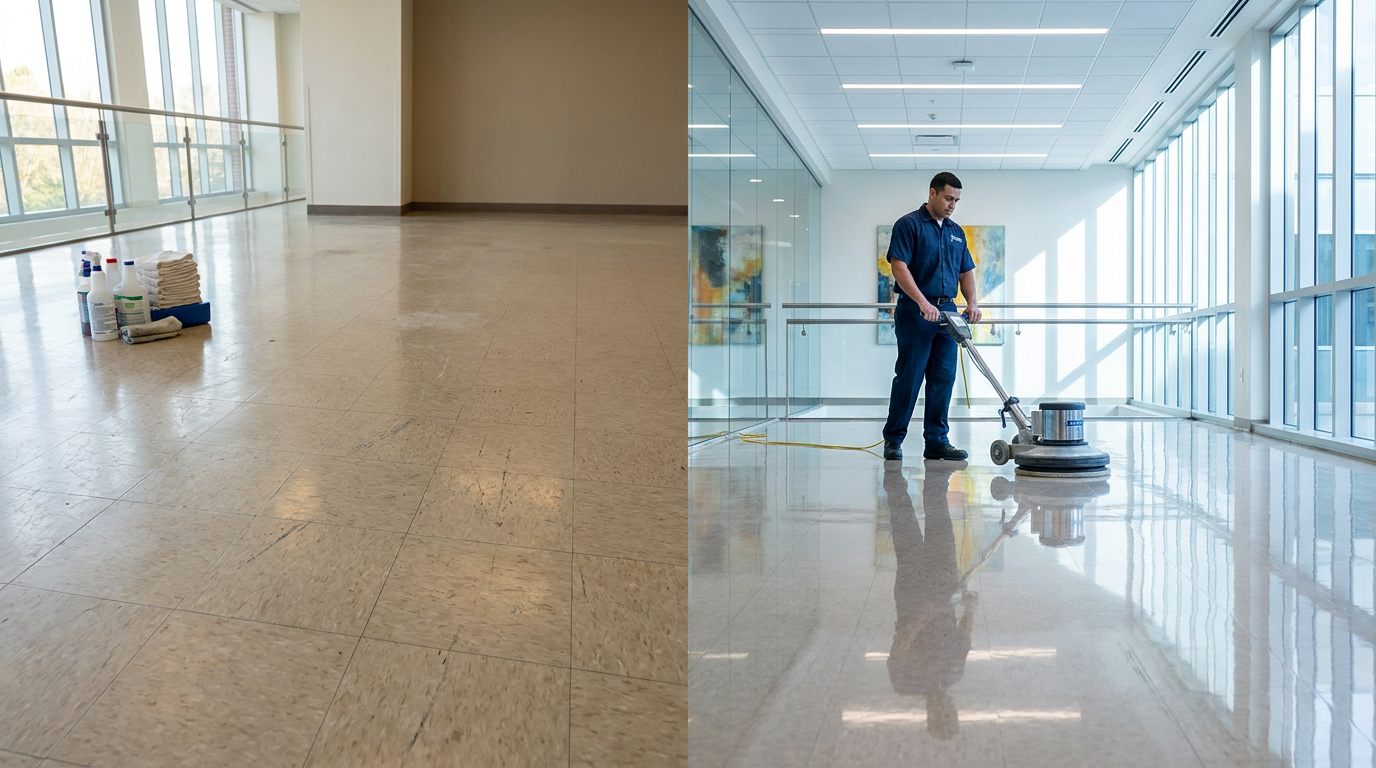
Commercial Floor Stripping and Waxing Cost Per Square Foot (2026)
Commercial floor stripping and waxing costs $0.25 to $1.80 per square foot. Get exact pricing factors, VCT rates, and maintenance schedules for your facility.
Read the guide
Should a Commercial Hardwood Floor Be Waxed? Identify the Finish First
Should a commercial hardwood floor be waxed? Compare Bruce finish-specific guidance and the records and service scope to check before approving the work.
Read the guide
Commercial Floor Polish vs Wax: Which Coating Is Right?
Compare commercial floor polish vs wax to find the right protective coating for your facility. Learn costs, maintenance needs, and which floors need which finish.
Read the guide
Ready for a Spotless Space?
Get a free, no-obligation estimate for your commercial cleaning project. Most quotes delivered within 24 hours.