Commercial Restroom Sanitation Frequency and Best Practices
COMMERCIAL RESTROOM SANITATION FREQUENCY AND BEST PRACTICES
Learn how often to clean commercial restrooms by facility type, plus proven sanitation protocols that reduce complaints by up to 80% and meet OSHA standards.
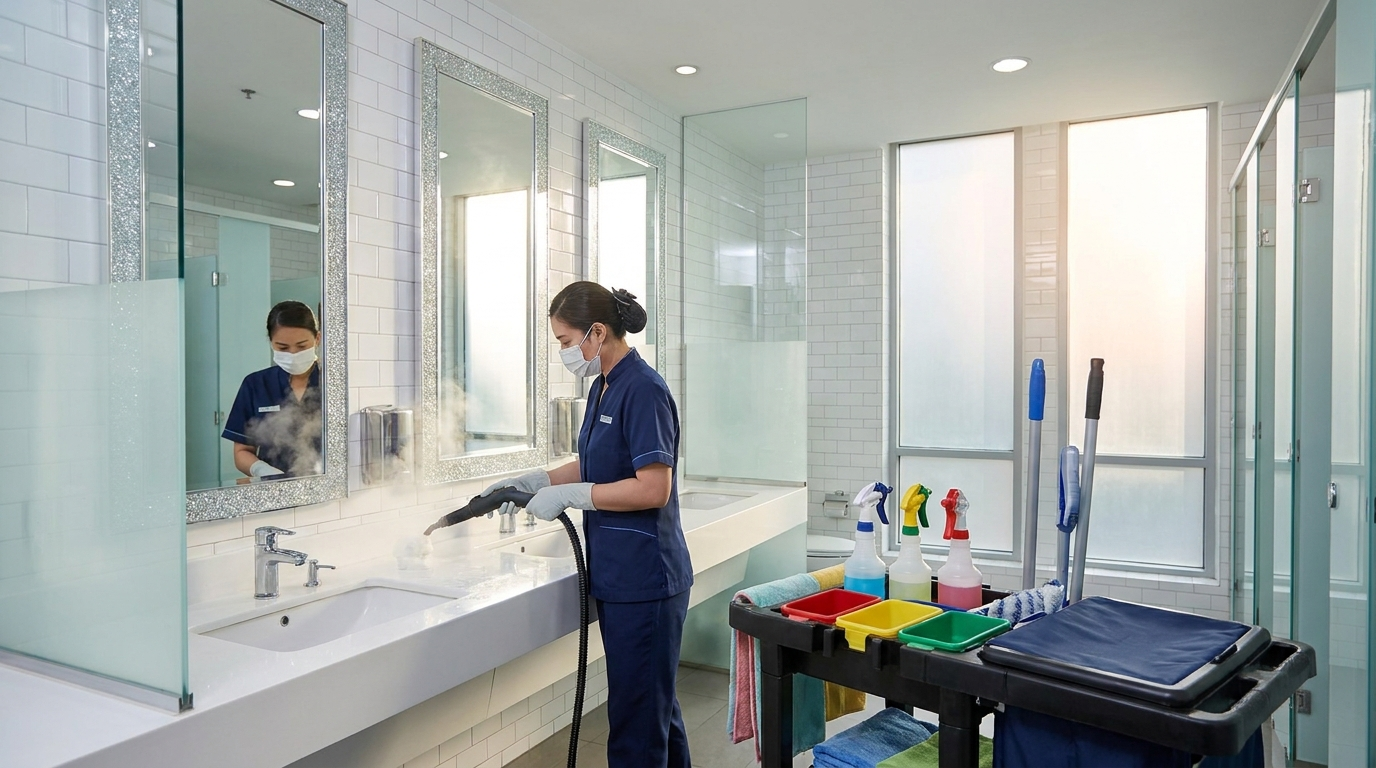
Commercial restrooms require cleaning at minimum once daily, with high-traffic facilities needing attention every 60 to 90 minutes during peak periods. According to Imperial Dade research, restrooms represent just 5% of facility space but generate 80% of cleanliness complaints, making proper sanitation frequency critical for tenant satisfaction and regulatory compliance.
- Office restrooms under 50 occupants need once-daily full cleaning; retail and hospitality require 2 to 4 cleanings daily
- OSHA mandates soap, running water, and drying methods in all workplace restrooms (29 CFR 1910.141)
- Deep cleaning should occur weekly, including floor scrubbing, grout treatment, and fixture descaling
- High-touch surfaces (door handles, flush levers, faucets) require disinfection every 2 to 4 hours during business hours
- Proper sanitation protocols reduce slip-and-fall incidents by 23% and complaint rates by up to 80%
Cleaning Frequency by Facility Type
Different commercial environments demand distinct cleaning schedules based on foot traffic, user demographics, and regulatory requirements. A medical office with 30 daily visitors has vastly different needs than a shopping center restroom serving 500 customers per hour. Understanding these distinctions prevents both under-cleaning (leading to complaints and health risks) and over-cleaning (wasting labor and supply budgets).
The Centers for Disease Control and Prevention (CDC) recommends cleaning frequency based on traffic volume rather than arbitrary time intervals. This evidence-based approach ensures resources align with actual contamination levels.
| Facility Type | Daily Users | Full Cleaning Frequency | Spot Checks |
|---|---|---|---|
| Small Office (under 50 occupants) | 20 to 50 | Once daily | Midday |
| Large Office (50+ occupants) | 50 to 200 | Twice daily | Every 4 hours |
| Retail Store | 100 to 500 | 2 to 3 times daily | Every 2 hours |
| Shopping Center | 500+ | 3 to 4 times daily | Every 60 to 90 minutes |
| Hotel Lobby | 200 to 400 | 3 times daily | Every 2 hours |
| School or Daycare | 100 to 300 | 2 to 3 times daily | After each class period |
| Medical Facility | 50 to 150 | 3 to 4 times daily | Every 2 hours |
According to Millennium Facility Services, office restrooms under 50 occupants typically require once-daily full cleaning, while venues with 500+ daily visitors need dedicated attendants or automated monitoring systems to maintain acceptable conditions.
The Four Basic Sanitation Practices for Commercial Restrooms
Effective restroom sanitation follows four foundational practices established by the Association for the Healthcare Environment (AHE) and adapted for commercial settings. These practices form the backbone of any compliant cleaning program.
1. Cleaning: Removing Visible Soil and Debris
Cleaning refers to the physical removal of dirt, dust, organic matter, and visible contamination from surfaces. This step must precede disinfection because organic material shields pathogens from chemical disinfectants. Use neutral pH cleaners (pH 6 to 8) on most surfaces to prevent damage to fixtures and finishes.
Start with higher, cleaner surfaces and work downward. Clean mirrors and dispensers before tackling fixtures and floors. This top-to-bottom approach prevents recontamination of already-cleaned areas.
2. Disinfecting: Killing Pathogens on Surfaces
Disinfection uses EPA-registered chemicals to eliminate bacteria, viruses, and fungi on hard surfaces. The EPA maintains a list of approved disinfectants (List N) effective against common pathogens including norovirus, influenza, and SARS-CoV-2. Contact time matters: most disinfectants require 1 to 10 minutes of wet contact to achieve stated kill rates.
High-touch surfaces require disinfection every 2 to 4 hours during operating hours. These include door handles, stall locks, flush levers, faucet handles, soap dispenser buttons, and paper towel dispenser levers.
3. Sanitizing: Reducing Microbial Counts
Sanitizing reduces bacterial counts to safe levels as determined by public health standards. While disinfection aims to kill all pathogens, sanitizing achieves a 99.9% reduction in bacteria within 30 seconds. Food service areas and surfaces that contact skin directly often require sanitizing rather than full disinfection.
4. Sterilizing: Eliminating All Microbial Life
Sterilization destroys all forms of microbial life, including bacterial spores. Commercial restrooms rarely require sterilization; it applies primarily to medical instrument processing. However, understanding this distinction helps facility managers avoid over-specification when developing cleaning protocols.
OSHA Requirements for Workplace Restrooms
The Occupational Safety and Health Administration (OSHA) establishes minimum restroom sanitation requirements under 29 CFR 1910.141. Non-compliance can result in citations ranging from $15,625 for serious violations to $156,259 for willful or repeated violations as of 2026.
OSHA mandates that every workplace restroom provides soap, running water, and hand-drying methods. Employers must maintain restrooms in a sanitary condition, though OSHA does not specify exact cleaning frequencies. State and local health departments often impose more specific requirements.
Florida facilities must comply with both OSHA federal standards and Florida Department of Health regulations. Licensed daycares face additional requirements from the Department of Children and Families (DCF), including documentation of cleaning schedules and product safety data sheets.
Five Daily Hygiene and Sanitation Practices
Beyond the four basic sanitation types, commercial restrooms require five daily maintenance practices to maintain acceptable conditions between full cleanings.
1. Supply Replenishment
Check and restock toilet paper, paper towels, soap, and seat covers at minimum twice daily. Empty dispensers generate more complaints than dirty floors. Automated dispensers with usage sensors reduce stockout incidents by 67% compared to manual monitoring.
2. Trash Removal
Empty waste receptacles when they reach 75% capacity. Overflowing trash creates unsanitary conditions and encourages improper disposal. Feminine hygiene receptacles require daily service in women's restrooms.
3. Spot Mopping and Spill Response
Address wet floors immediately to prevent slip-and-fall incidents. The National Floor Safety Institute reports that restroom floors account for 22% of workplace slip injuries. Keep absorbent materials and wet floor signs accessible to cleaning staff.
4. Fixture Wipe-Down
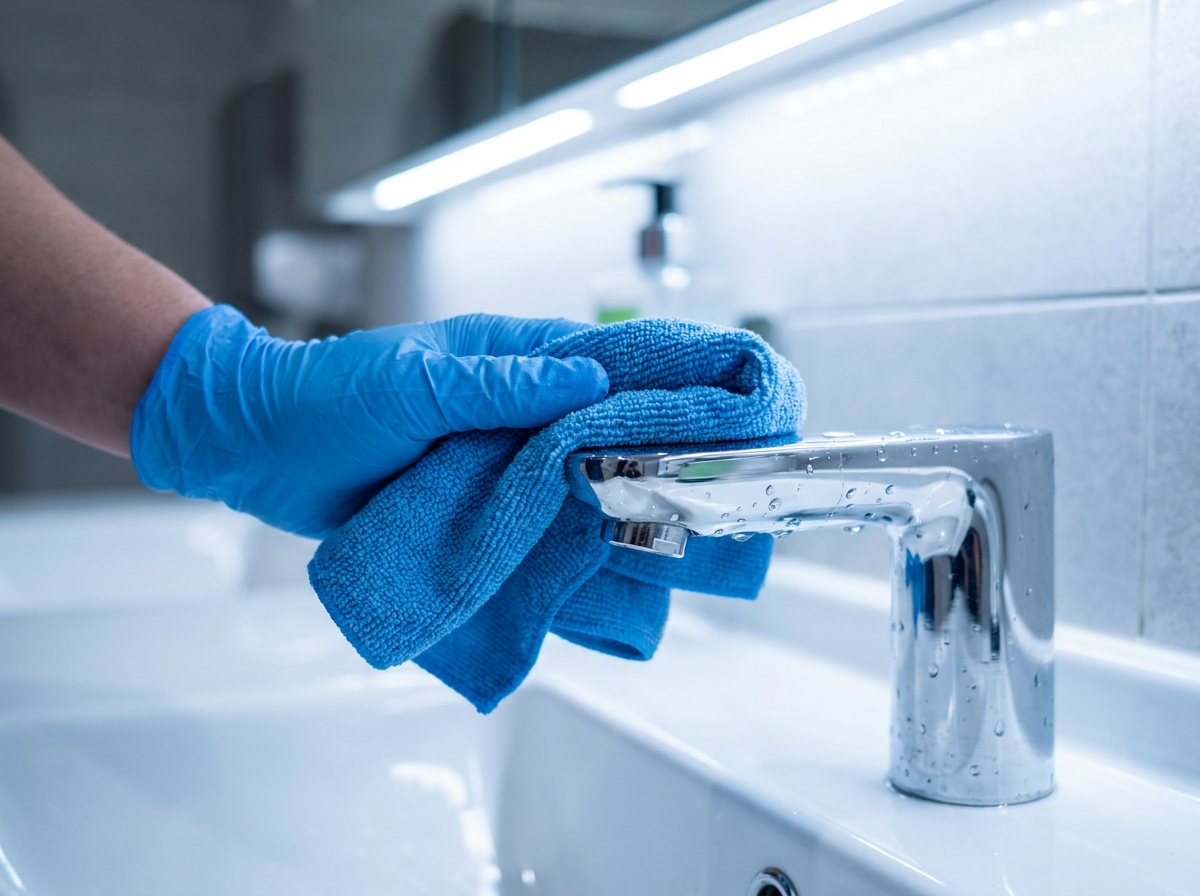
Wipe sinks, counters, and mirrors during each spot check. Water spots and soap residue create perception of uncleanliness even when surfaces are hygienically safe. Microfiber cloths remove 99% of bacteria with water alone.
5. Odor Control
Address odor sources rather than masking them. Check floor drains for dry P-traps (add water weekly), inspect for hidden leaks, and ensure ventilation systems operate properly. South Florida's humidity accelerates bacterial growth in drains, requiring more frequent attention than northern climates.
Deep Cleaning Protocols: Weekly and Monthly Tasks
Daily maintenance prevents surface-level problems, but deep cleaning addresses embedded contamination that accumulates over time. The International Sanitary Supply Association (ISSA) recommends weekly deep cleaning for high-traffic restrooms and monthly deep cleaning for lower-traffic facilities.
Weekly Deep Cleaning Checklist
Weekly tasks require 45 to 90 minutes per restroom depending on size and condition. Schedule these during low-traffic periods, typically early morning or after business hours.
- Floor scrubbing: Use auto-scrubbers or rotary machines with appropriate pads. VCT and vinyl floors require neutral cleaners; ceramic tile tolerates alkaline solutions.
- Grout cleaning: Apply grout-specific cleaners and agitate with stiff brushes. Grout harbors bacteria even when tile surfaces appear clean.
- Fixture descaling: Remove mineral deposits from faucets, drains, and toilet bowls using acidic cleaners (pH 2 to 4). Allow 5 to 10 minutes contact time.
- Partition cleaning: Wipe all surfaces of toilet partitions, including tops where dust accumulates.
- Vent cleaning: Remove and wash exhaust vent covers. Blocked vents reduce air exchange and concentrate odors.
Monthly Deep Cleaning Tasks
Monthly tasks address areas that degrade slowly but significantly impact long-term hygiene and appearance.
- Tile and grout sealing inspection: Check for deteriorating grout sealant that allows moisture penetration.
- Drain treatment: Apply enzymatic drain cleaners to break down organic buildup in P-traps and drain lines.
- Light fixture cleaning: Remove covers and clean accumulated dust and debris.
- Wall washing: Clean walls from ceiling to floor, paying attention to areas behind toilets and urinals.
Facilities requiring commercial deep cleaning services benefit from professional-grade equipment including HEPA-filtered vacuums, steam cleaners, and industrial auto-scrubbers that achieve results beyond typical janitorial capabilities.
South Florida Considerations: Humidity and Mold Prevention
Miami-Dade, Broward, and Palm Beach County facilities face unique challenges due to average humidity levels of 73% to 76% year-round. This moisture accelerates mold growth, bacterial proliferation, and fixture corrosion compared to drier climates.
Restrooms in South Florida commercial properties require 20% to 30% more frequent cleaning than national averages to maintain equivalent hygiene levels. Mold can begin growing on damp surfaces within 24 to 48 hours when humidity exceeds 60%.
Humidity-Specific Best Practices
Ensure exhaust fans operate continuously during business hours, not just when lights activate. Target 8 to 10 air changes per hour in restrooms. Install humidity sensors that trigger additional ventilation when levels exceed 65%.
Use mold-resistant grout and sealants during renovation projects. Standard grout absorbs moisture and provides substrate for mold colonies. Epoxy grout costs 40% to 60% more but resists moisture penetration and biological growth.
Schedule floor deep cleaning more frequently in humid months (May through October). Commercial floor deep cleaning using industrial equipment removes embedded moisture and organic matter that standard mopping misses.
Industry-Specific Compliance Requirements
Different industries face distinct regulatory frameworks governing restroom sanitation. Understanding these requirements prevents costly violations and protects public health.
Schools and Daycares
Florida DCF-licensed childcare facilities must maintain restrooms in sanitary condition with documented cleaning schedules available for inspection. Cleaning products must be stored in locked cabinets inaccessible to children. Low-VOC products are strongly recommended to protect developing respiratory systems.
Facilities serving children under age 5 require child-height fixtures cleaned at the same frequency as adult fixtures. Diaper changing areas need disinfection after each use with EPA-registered products effective against norovirus.
School and daycare deep cleaning services should include signed service completion records documenting scope, products used, and date of service for DCF inspection files.
Hotels and Hospitality
Guest-facing restrooms in hotels directly impact online reviews and repeat bookings. A 2024 J.D. Power study found that restroom cleanliness ranks as the third most important factor in hotel satisfaction, behind only bed comfort and room cleanliness.
Lobby restrooms require attendant service or monitoring every 30 to 60 minutes during peak check-in and check-out periods. Pool and fitness center restrooms need more frequent attention due to moisture and higher contamination potential.
Hotel and hospitality cleaning services should include brand standard compliance documentation with before-and-after photography for property management records.
Retail and Shopping Centers
Retail restrooms serve diverse populations including families with children, elderly customers, and individuals with disabilities. ADA compliance requires accessible fixtures, but cleanliness expectations remain consistent across all stalls and fixtures.
Food court restrooms require enhanced sanitation protocols due to proximity to dining areas. The FDA Food Code recommends restrooms within 200 feet of food service areas receive cleaning every 2 hours during operating hours.
Cost-Effective Cleaning Schedules
Balancing sanitation quality with budget constraints requires strategic scheduling. Labor typically represents 65% to 75% of restroom cleaning costs, with supplies and equipment comprising the remainder.
| Cleaning Level | Time Required | Estimated Cost | Frequency |
|---|---|---|---|
| Spot Check (supplies, quick wipe) | 5 to 10 minutes | $3 to $8 | Every 2 to 4 hours |
| Standard Cleaning (full protocol) | 20 to 35 minutes | $15 to $35 | 1 to 3 times daily |
| Deep Cleaning (floors, grout, fixtures) | 45 to 90 minutes | $75 to $200 | Weekly |
| Restoration (strip, seal, refinish) | 2 to 4 hours | $0.85 to $2.00/sq ft | Quarterly to annually |
Investing in proper deep cleaning reduces long-term costs by extending fixture life and preventing grout deterioration. Facilities that skip weekly deep cleaning typically require full floor restoration 40% more frequently than those maintaining consistent schedules.
Equipment and Supply Specifications
Professional restroom sanitation requires appropriate tools and chemicals. Consumer-grade products lack the concentration and durability needed for commercial applications.
Essential Equipment
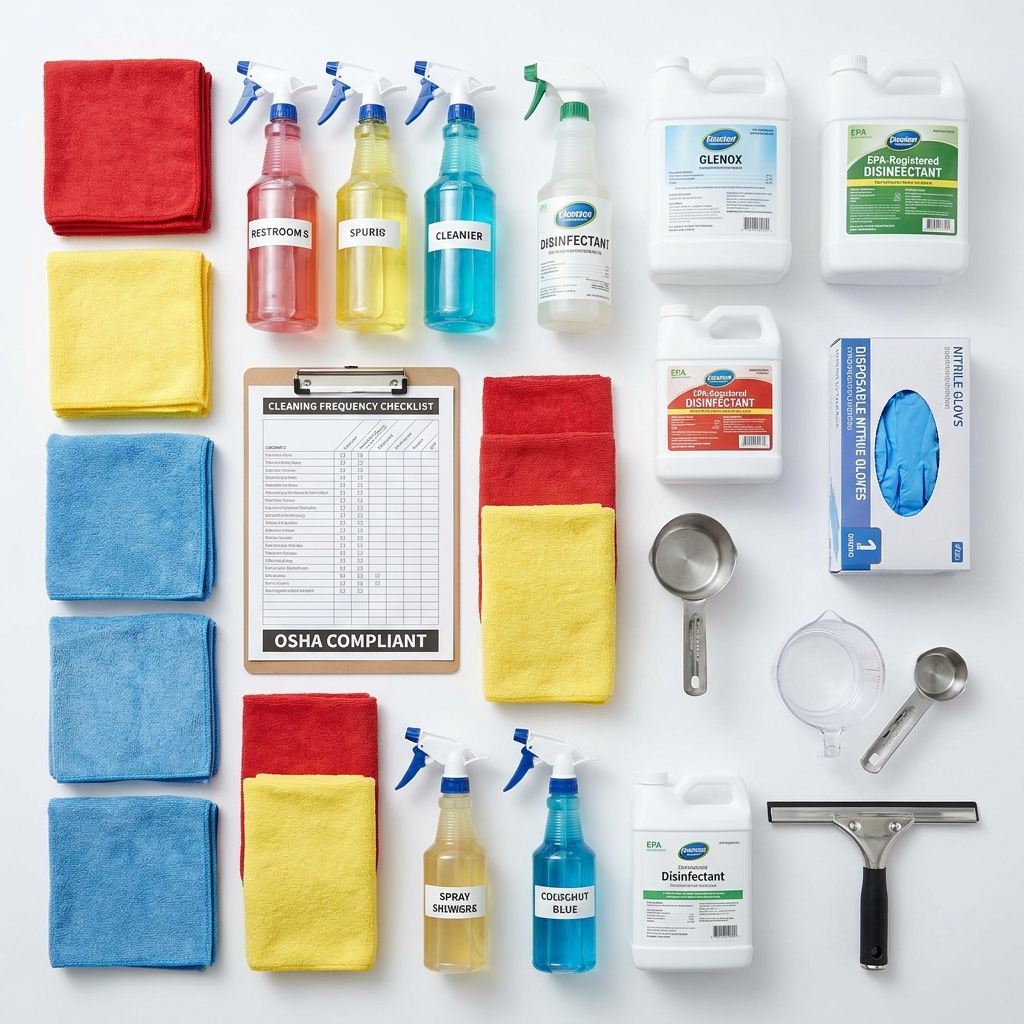
Color-coded microfiber systems prevent cross-contamination between restrooms and other facility areas. The ISSA recommends red for toilets and urinals, blue for general surfaces, and yellow for sinks and counters. Replace microfiber cloths after 300 to 500 wash cycles.
Mop systems should use flat microfiber heads rather than string mops. Flat mops cover more area per stroke and release soil more effectively during rinsing. Dual-bucket systems (clean solution and rinse water) prevent redepositing soil on floors.
Chemical Selection
Select EPA-registered disinfectants appropriate for your facility type. Healthcare settings require hospital-grade disinfectants; general commercial spaces can use standard commercial formulations. Always verify contact time requirements and train staff accordingly.
Avoid mixing chemicals, particularly bleach with ammonia-based cleaners. This combination produces toxic chloramine gas. Store chemicals in original containers with intact labels per OSHA Hazard Communication Standard requirements.
Documentation and Quality Assurance
Maintaining cleaning logs protects facilities from liability claims and demonstrates regulatory compliance. Digital logging systems provide timestamped records that paper logs cannot match.
Required Documentation
Record date, time, staff initials, and tasks completed for each cleaning session. Note any maintenance issues discovered (leaking fixtures, damaged partitions, ventilation problems) and report to facility management immediately.
Retain cleaning logs for minimum 3 years. Some industries (healthcare, food service, childcare) require longer retention periods. Consult your regulatory compliance officer for specific requirements.
Quality Inspection Protocols
Implement weekly supervisor inspections using standardized checklists. Score each restroom on a 1 to 5 scale across categories: fixtures, floors, supplies, odor, and overall appearance. Track scores over time to identify declining conditions before they generate complaints.
ATP (adenosine triphosphate) testing provides objective measurement of surface contamination. Readings above 100 RLU (relative light units) indicate inadequate cleaning. Monthly ATP testing on high-touch surfaces validates cleaning effectiveness.
When to Call Professional Deep Cleaning Services
Routine janitorial staff handle daily maintenance effectively, but certain situations require professional deep cleaning expertise and equipment.
Schedule professional intervention when you observe persistent odors despite regular cleaning, visible grout discoloration, floor finish deterioration, or recurring mold growth. These conditions indicate contamination beyond surface-level cleaning capabilities.
Post-construction restroom cleaning requires specialized techniques to remove drywall dust, adhesive residue, and construction debris without damaging new fixtures. Post-construction cleaning services follow three-phase protocols (rough clean, detail clean, touch-up) to achieve Certificate of Occupancy standards.
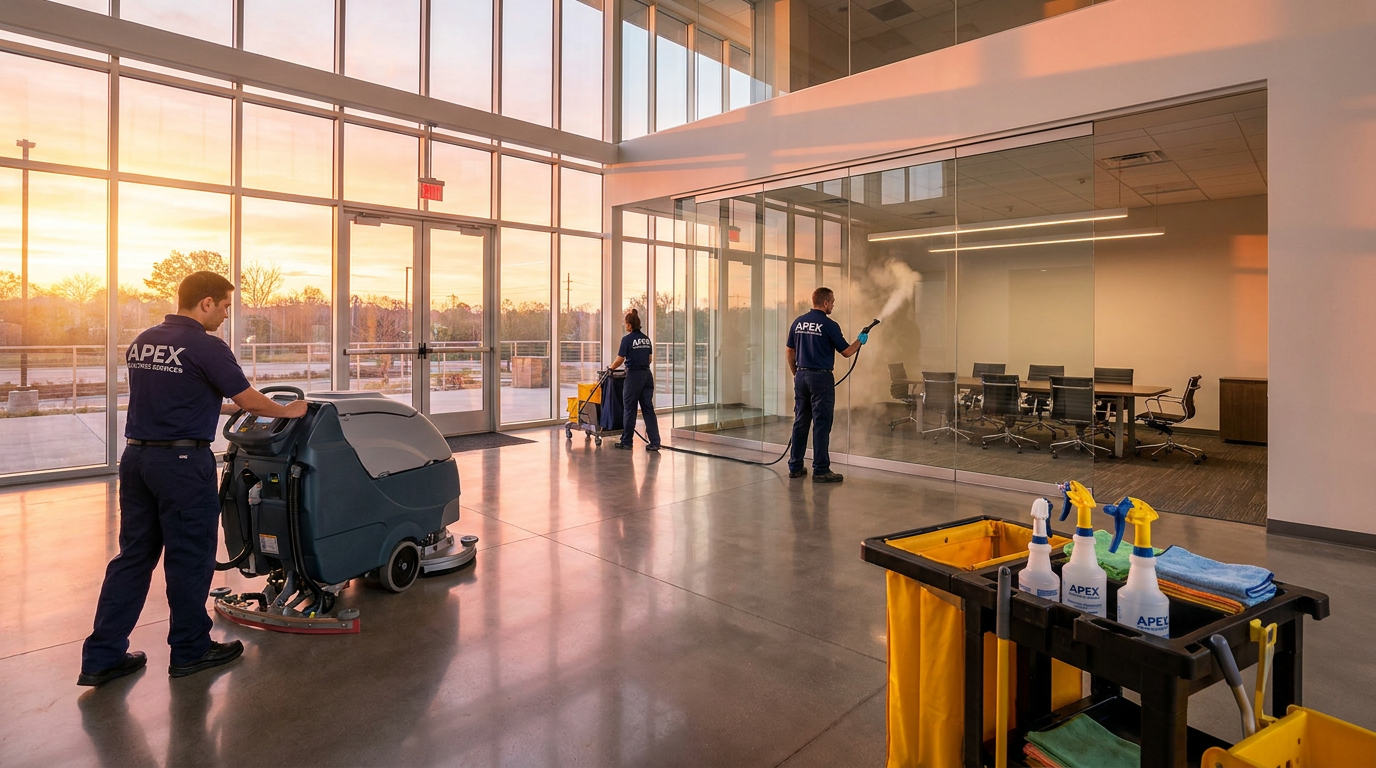
Facilities preparing for inspections, lease renewals, or property sales benefit from professional deep cleaning that addresses accumulated wear invisible during daily use. Professional services using industrial auto-scrubbers, steam cleaners, and commercial-grade chemicals achieve results that restore restrooms to near-original condition.
For South Florida commercial properties in Miami-Dade, Broward, or Palm Beach counties, requesting a free on-site assessment provides specific recommendations based on your facility type, traffic patterns, and current conditions. Professional evaluation identifies problem areas and establishes appropriate cleaning frequencies before minor issues become major expenses.
Need Professional Restroom Deep Cleaning?
MB Clean Solutions provides commercial deep cleaning services throughout Miami-Dade, Broward, and Palm Beach counties. Our industrial-grade equipment and trained technicians restore restrooms to inspection-ready condition.
Get a Free AssessmentKeep reading
More guides on the same topic from our team.
What to Expect During Commercial Deep Cleaning Service
Learn exactly what happens during a commercial deep cleaning service, from pre-cleaning assessment to final inspection. Includes timelines, costs, and preparation tips.
Read the guide
Commercial Deep Cleaning Cost by Square Footage and Building Type
Commercial deep cleaning costs $0.40 to $2.00 per square foot depending on building type, floor condition, and service scope. Get exact pricing breakdowns.
Read the guide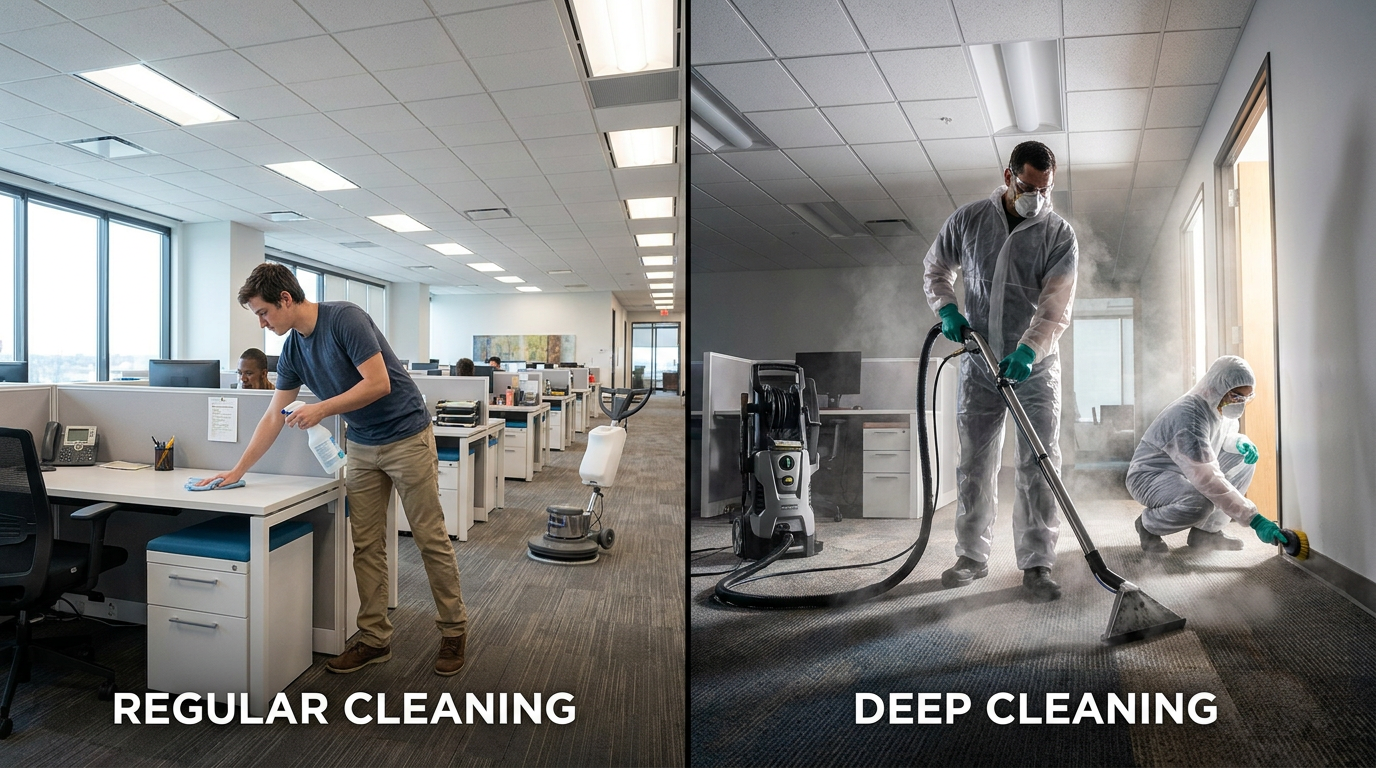
Commercial Deep Cleaning vs Regular Cleaning: Key Differences
Learn the exact differences between commercial deep cleaning and regular cleaning, including costs, frequency, tasks covered, and which service your business needs.
Read the guide
Ready for a Spotless Space?
Get a free, no-obligation estimate for your commercial cleaning project. Most quotes delivered within 24 hours.