Commercial Restroom Sanitation Checklist for Facility Managers
COMMERCIAL RESTROOM SANITATION CHECKLIST FOR FACILITY MANAGERS
Complete commercial restroom sanitation checklist with daily, weekly, and monthly tasks. OSHA compliance tips, supply tracking, and inspection protocols included.
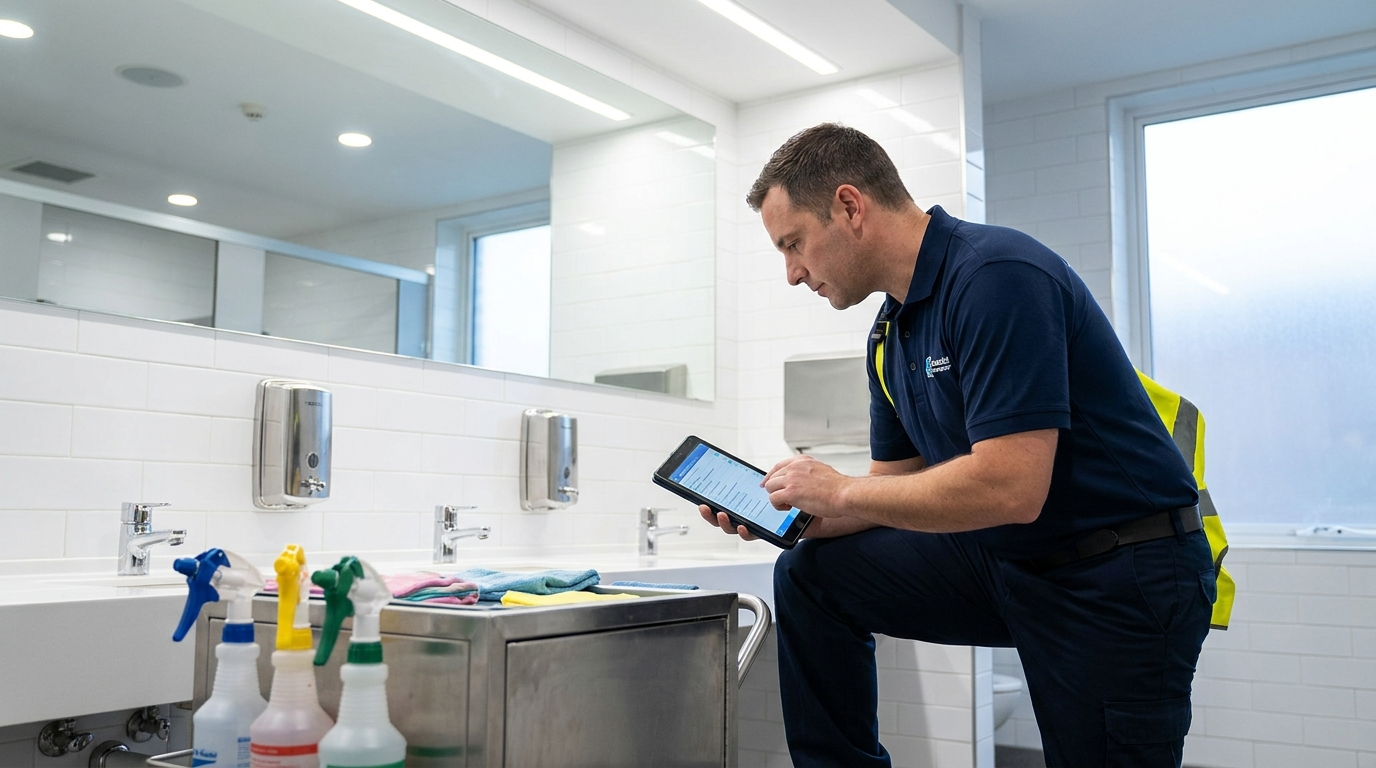
A comprehensive commercial restroom sanitation checklist requires 12 daily tasks, 8 weekly procedures, and 6 monthly deep cleaning protocols to maintain OSHA compliance and protect building occupants from the 77,000 distinct bacteria types found in average public restrooms. Facility managers who implement structured cleaning schedules reduce complaint tickets by 40% and extend fixture lifespans by 3 to 5 years.
- Daily cleaning requires 12 specific tasks including high-touch surface disinfection with EPA-registered products (contact time: 1 to 10 minutes)
- OSHA mandates restroom cleaning documentation with 3-year record retention for workplace safety compliance
- Supply restocking should maintain 72-hour buffer stock; average restroom uses 100 toilet paper rolls per 1,000 daily visitors
- Deep cleaning every 30 days reduces bacterial contamination by 89% compared to surface cleaning alone
- Professional restroom deep cleaning costs $0.40 to $2.00 per square foot depending on facility condition and floor type
Daily Restroom Cleaning Tasks: The 12-Point Protocol
Daily cleaning forms the foundation of commercial restroom sanitation. The CDC recommends disinfecting high-touch surfaces at least once daily in commercial settings, though high-traffic facilities like shopping centers and airports require cleaning every 2 to 4 hours. Each task should take trained staff 15 to 25 minutes per restroom depending on size and fixture count.
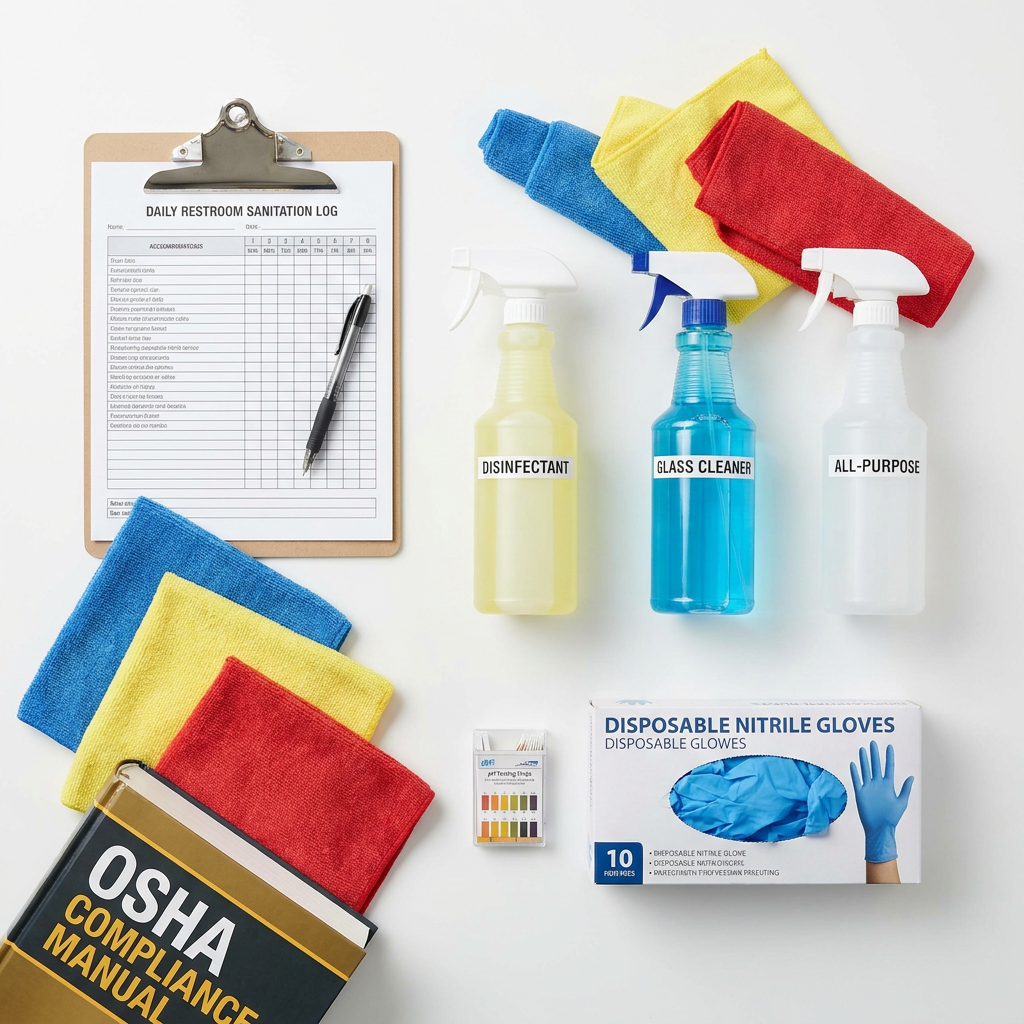
Start with supply assessment before any cleaning begins. Check toilet paper dispensers (maintain minimum 50% capacity), paper towel holders, soap dispensers (refill at 25% remaining), and seat cover dispensers. Document supply levels on your tracking sheet to identify consumption patterns and prevent stockouts.
High-Touch Surface Disinfection Protocol
High-touch surfaces harbor the highest bacterial loads and require EPA-registered disinfectants with proper contact time. According to Kaivac's restroom cleaning research, the average toilet flush handle contains 83 bacteria per square inch, while door handles average 203 bacteria per square inch.
Disinfect these surfaces in order: door handles (interior and exterior), light switches, toilet flush handles, stall locks, faucet handles, soap dispenser buttons, paper towel dispenser levers, and hand dryer activation buttons. Allow the disinfectant to remain wet for the manufacturer-specified contact time, typically 1 to 10 minutes for quaternary ammonium compounds.
| Daily Task | Frequency | Time Required | Priority |
|---|---|---|---|
| Supply restocking | Every 4 hours | 3 to 5 minutes | Critical |
| High-touch disinfection | Every 2 to 4 hours | 5 to 8 minutes | Critical |
| Toilet and urinal cleaning | Once daily minimum | 8 to 12 minutes | Critical |
| Mirror and sink cleaning | Once daily | 4 to 6 minutes | High |
| Floor sweeping and mopping | Once daily | 6 to 10 minutes | High |
| Trash removal | When 75% full | 2 to 3 minutes | High |
Toilet and Urinal Cleaning Sequence
Proper fixture cleaning follows a specific sequence to prevent cross-contamination. Apply bowl cleaner inside toilets and urinals first, allowing 5 to 10 minutes of dwell time while completing other tasks. Use a dedicated bowl brush for interior scrubbing, focusing on the waterline where mineral deposits accumulate.
Clean exterior surfaces top to bottom: flush handle, tank top, tank sides, seat hinges, seat top, seat bottom, bowl exterior, and base. The base area where the toilet meets the floor collects the highest concentration of urine splatter and requires extra attention. Replace cracked or stained toilet seats immediately; replacement costs $15 to $45 per seat.
Weekly Deep Cleaning Procedures: 8 Essential Tasks
Weekly cleaning addresses areas that daily maintenance cannot fully sanitize. According to Commercial Cleaning Depot's industry guidelines, weekly deep cleaning reduces odor complaints by 67% and extends fixture replacement intervals by 2 to 3 years. Schedule weekly tasks during low-traffic periods, typically early morning or late evening.
Partition cleaning ranks among the most neglected weekly tasks. Restroom partitions accumulate fingerprints, graffiti attempts, and airborne soil. Clean both sides of all partition panels using a neutral cleaner (pH 7 to 9) to prevent finish damage. Powder-coated steel partitions require different care than plastic laminate or solid surface materials.
Grout and Tile Maintenance
Tile grout absorbs moisture and organic matter, creating ideal conditions for mold and mildew growth. South Florida's humidity levels, averaging 74% year-round, accelerate grout deterioration in commercial restrooms. Weekly grout scrubbing with an alkaline cleaner (pH 10 to 12) prevents discoloration and extends resealing intervals from 6 months to 18 months.
For facilities with ceramic tile floors, professional commercial floor deep cleaning every quarter removes embedded soil that weekly maintenance cannot address. Industrial auto-scrubbers extract 3 to 5 times more soil than manual mopping methods.
Ventilation and Air Quality
Exhaust fan cleaning directly impacts restroom air quality and odor control. Dust accumulation reduces fan efficiency by 15% to 30%, allowing odors to linger. Remove vent covers weekly and vacuum dust from fan blades. Replace HVAC filters serving restroom areas every 30 to 60 days rather than the standard 90-day schedule.
Air freshener systems require weekly inspection and refill scheduling. Metered aerosol dispensers need cartridge replacement every 30 days; gel-based systems last 45 to 60 days. Position air fresheners near exhaust vents for optimal distribution, not near entry doors where fragrance escapes.
Monthly Restroom Deep Cleaning Protocol
Monthly deep cleaning addresses infrastructure elements that weekly cleaning cannot reach. The American Restroom Association recommends professional deep cleaning every 30 days for facilities exceeding 500 daily visitors. This service typically costs $0.40 to $2.00 per square foot depending on floor type, fixture count, and facility condition.
Drain maintenance prevents the sewer gas odors that plague commercial restrooms. Floor drains require monthly enzyme treatment to break down biofilm accumulation. Pour 4 to 8 ounces of enzyme drain cleaner into each drain, followed by 1 gallon of warm water. For facilities with persistent drain odors, professional drain jetting every 6 months removes root intrusions and scale buildup.
Fixture Descaling and Restoration
Hard water deposits affect 85% of U.S. commercial facilities, leaving white mineral scale on fixtures. Monthly descaling with phosphoric acid cleaners (concentration 9% to 15%) removes calcium and lime deposits from faucets, flush valves, and drain covers. Apply descaler, wait 5 to 10 minutes, then scrub with a non-abrasive pad.
Stainless steel fixtures require specialized monthly polishing to maintain appearance. Use a stainless steel cleaner with a light oil component to create a protective barrier against fingerprints and water spots. Always wipe in the direction of the grain to prevent scratching.
| Monthly Task | Products Required | Estimated Cost | Professional vs. DIY |
|---|---|---|---|
| Grout deep cleaning | Alkaline cleaner, rotary brush | $0.50 to $1.50/sq ft | Professional recommended |
| Drain enzyme treatment | Bio-enzyme cleaner | $8 to $15 per drain | DIY capable |
| Fixture descaling | Phosphoric acid cleaner | $25 to $50 per restroom | DIY capable |
| Exhaust fan deep clean | Degreaser, vacuum | $15 to $30 per unit | DIY capable |
| Wall washing | Neutral cleaner, microfiber | $0.25 to $0.75/sq ft | Either |
| Floor stripping and sealing | Stripper, sealer, equipment | $0.85 to $1.80/sq ft | Professional required |
OSHA Compliance Requirements for Commercial Restrooms
OSHA Standard 29 CFR 1910.141 establishes minimum sanitation requirements for workplace restrooms. Facilities must provide 1 toilet per 15 employees for the first 150 workers, with additional fixtures required at reduced ratios for larger workforces. Violation penalties range from $15,625 for serious violations to $156,259 for willful or repeated violations.
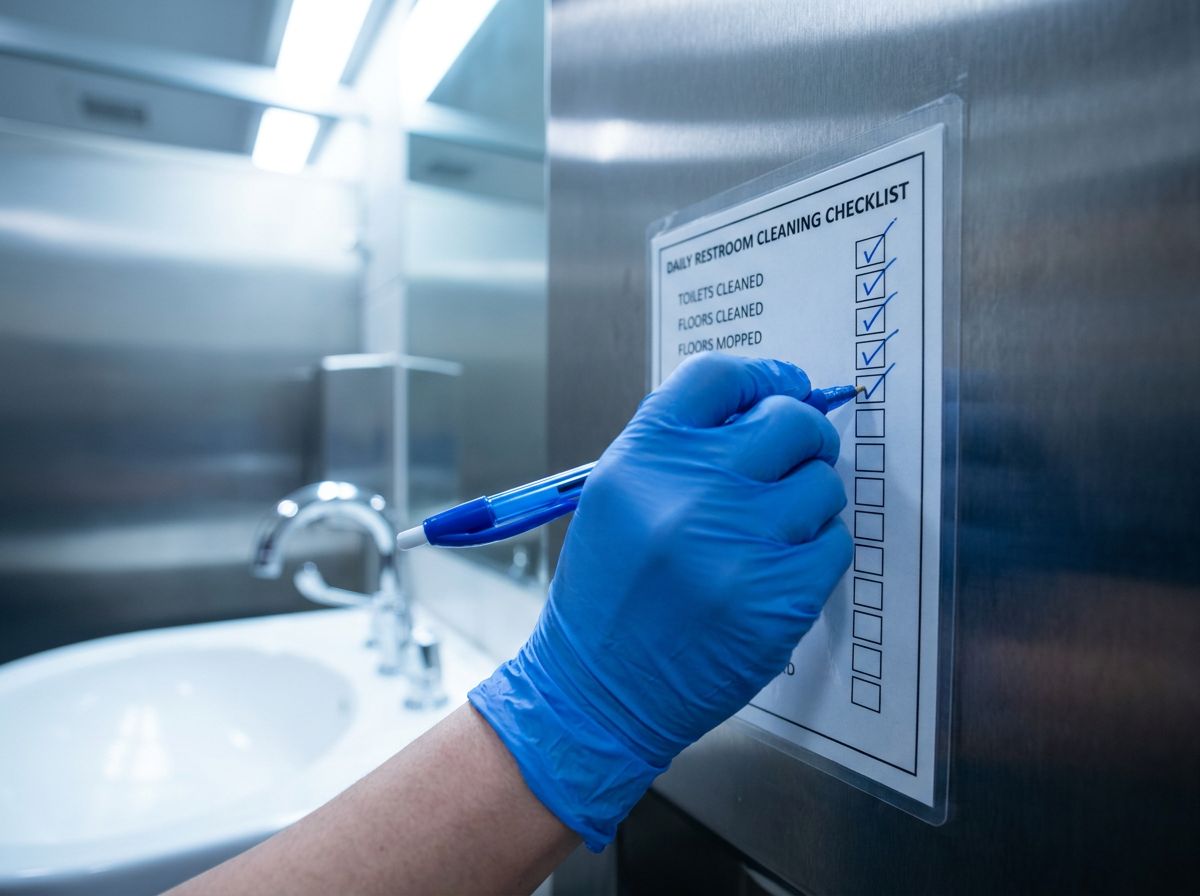
Documentation requirements extend beyond cleaning logs. OSHA mandates that employers maintain sanitation records for 3 years, including cleaning schedules, inspection reports, and corrective action documentation. Digital cleaning verification systems like those from Kaivac, TRAX Analytics, and Optisolve provide timestamped proof of compliance.
ADA Accessibility and Cleaning Considerations
Americans with Disabilities Act requirements affect restroom cleaning protocols. Accessible stalls require 60-inch turning radius clearance; cleaning equipment and supply carts cannot obstruct this space during service. Grab bars must be inspected monthly for secure mounting; loose grab bars present serious liability risks.
Floor surfaces in ADA-compliant restrooms must maintain slip resistance coefficients above 0.6 when wet. According to AM Northwest's compliance guidelines, improper floor cleaning products reduce slip resistance by up to 40%. Use neutral pH cleaners (pH 7 to 9) rather than alkaline products that leave slippery residues.
Supply Management and Inventory Control
Effective supply management prevents the stockouts that generate 35% of restroom-related complaints. Maintain a 72-hour buffer stock for all consumables, calculated based on average daily usage. A 500-visitor facility typically consumes 100 toilet paper rolls, 50 paper towel bundles, and 8 gallons of hand soap weekly.
Implement par-level inventory systems with visual indicators. Mark supply closet shelves with minimum quantity lines; when stock drops below the line, reorder immediately. Most janitorial supply distributors like Grainger, HD Supply, and Staples Business Advantage offer automatic reorder programs based on consumption patterns.
Cost Control Strategies
Restroom supply costs average $2.50 to $4.00 per building occupant annually. Controlled dispensing systems reduce consumption by 20% to 35% compared to open-access dispensers. Touchless paper towel dispensers limit users to one sheet per activation, while portion-control soap dispensers deliver consistent 0.4ml doses.
Bulk purchasing through group purchasing organizations (GPOs) like Premier, Vizient, or HealthTrust reduces supply costs by 15% to 25%. Many GPOs extend membership to commercial facilities outside healthcare, providing access to negotiated pricing on janitorial supplies and equipment.
Inspection and Quality Assurance Protocols
Formal inspection programs catch deficiencies before they become complaints. Implement twice-daily inspections during peak hours using standardized checklists. According to Bindy's facility management research, facilities with documented inspection programs receive 52% fewer negative reviews mentioning restroom cleanliness.
Digital inspection platforms like Bindy, ComplianceMate, and Jolt provide real-time visibility into restroom conditions across multiple locations. These systems enable photo documentation, automatic escalation of issues, and trend analysis to identify recurring problems. Monthly subscription costs range from $50 to $200 per location.
Staff Training Requirements
Untrained cleaning staff miss 40% of required sanitation tasks. New employees require 8 to 16 hours of initial training covering chemical safety, proper cleaning sequences, and compliance requirements. ISSA (International Sanitary Supply Association) offers the Cleaning Industry Management Standard (CIMS) certification program for facility managers and supervisors.
Bloodborne pathogen training is mandatory under OSHA 29 CFR 1910.1030 for any employee who may encounter blood or bodily fluids during cleaning. Annual refresher training maintains compliance and updates staff on new procedures. Training documentation must be retained for 3 years after employment ends.
South Florida Restroom Sanitation Challenges
South Florida's subtropical climate creates unique restroom sanitation challenges. Year-round humidity averaging 74% accelerates mold growth, requiring antimicrobial cleaners and increased ventilation. Facilities in Miami-Dade, Broward, and Palm Beach counties should schedule quarterly mold inspections and maintain exhaust fan operation 24/7.
Hurricane season (June through November) demands emergency sanitation protocols. Power outages disable ventilation systems, allowing mold to establish within 24 to 48 hours. Post-storm restroom recovery requires professional commercial deep cleaning to address water intrusion and mold remediation before reopening.
High-Traffic Facility Considerations
Tourist destinations, convention centers, and retail facilities in South Florida experience visitor volumes 3 to 5 times higher than national averages during peak season (December through April). These facilities require cleaning frequency increases to every 1 to 2 hours and dedicated day porter staffing.
Hotels and hospitality venues face brand standard compliance requirements beyond basic sanitation. Major chains like Marriott, Hilton, and Hyatt mandate specific cleaning products, inspection frequencies, and documentation formats. Professional hotel and hospitality cleaning services ensure compliance with these proprietary standards.
Technology Integration for Modern Restroom Management
Smart restroom technology reduces labor costs by 15% to 25% while improving cleanliness scores. IoT sensors from companies like TRAX Analytics, Infsoft, and Tork monitor traffic patterns, supply levels, and air quality in real time. These systems dispatch cleaning staff based on actual usage rather than fixed schedules.
Occupancy sensors trigger cleaning alerts when restrooms exceed usage thresholds. A restroom designed for 50 daily visitors that receives 100 visitors by noon requires immediate attention. Predictive algorithms learn facility patterns and pre-position cleaning staff before peak periods.
Touchless Fixture Benefits
Touchless fixtures reduce surface contamination by 80% compared to manual alternatives. Automatic flush valves, sensor faucets, and touchless soap dispensers eliminate the highest-contamination touch points. Retrofit kits convert existing fixtures to touchless operation for $75 to $200 per fixture, compared to $300 to $800 for full replacement.
Battery-powered touchless fixtures require quarterly battery replacement (4 AA batteries per fixture). Hardwired options eliminate battery maintenance but require licensed electrical work costing $150 to $300 per fixture. Calculate total cost of ownership over 5 years before selecting fixture types.
Downloadable Checklist Summary
Effective commercial restroom sanitation requires systematic execution of daily, weekly, and monthly protocols. Facility managers who implement documented cleaning programs, maintain OSHA compliance records, and leverage technology for quality assurance consistently outperform competitors in tenant satisfaction and health inspection scores.
For facilities requiring professional deep cleaning support, request a free on-site assessment to evaluate current conditions and develop a customized sanitation program. Professional cleaning partners provide the equipment, training, and documentation that in-house teams often lack, particularly for quarterly deep cleaning and floor restoration services.
Need Professional Restroom Deep Cleaning?
MB Clean Solutions provides commercial restroom deep cleaning, floor restoration, and tile and grout cleaning for facilities across Miami-Dade, Broward, and Palm Beach counties. Our industrial equipment and trained technicians deliver results that daily janitorial service cannot match.
Get Your Free AssessmentKeep reading
More guides on the same topic from our team.
What to Expect During Commercial Deep Cleaning Service
Learn exactly what happens during a commercial deep cleaning service, from pre-cleaning assessment to final inspection. Includes timelines, costs, and preparation tips.
Read the guide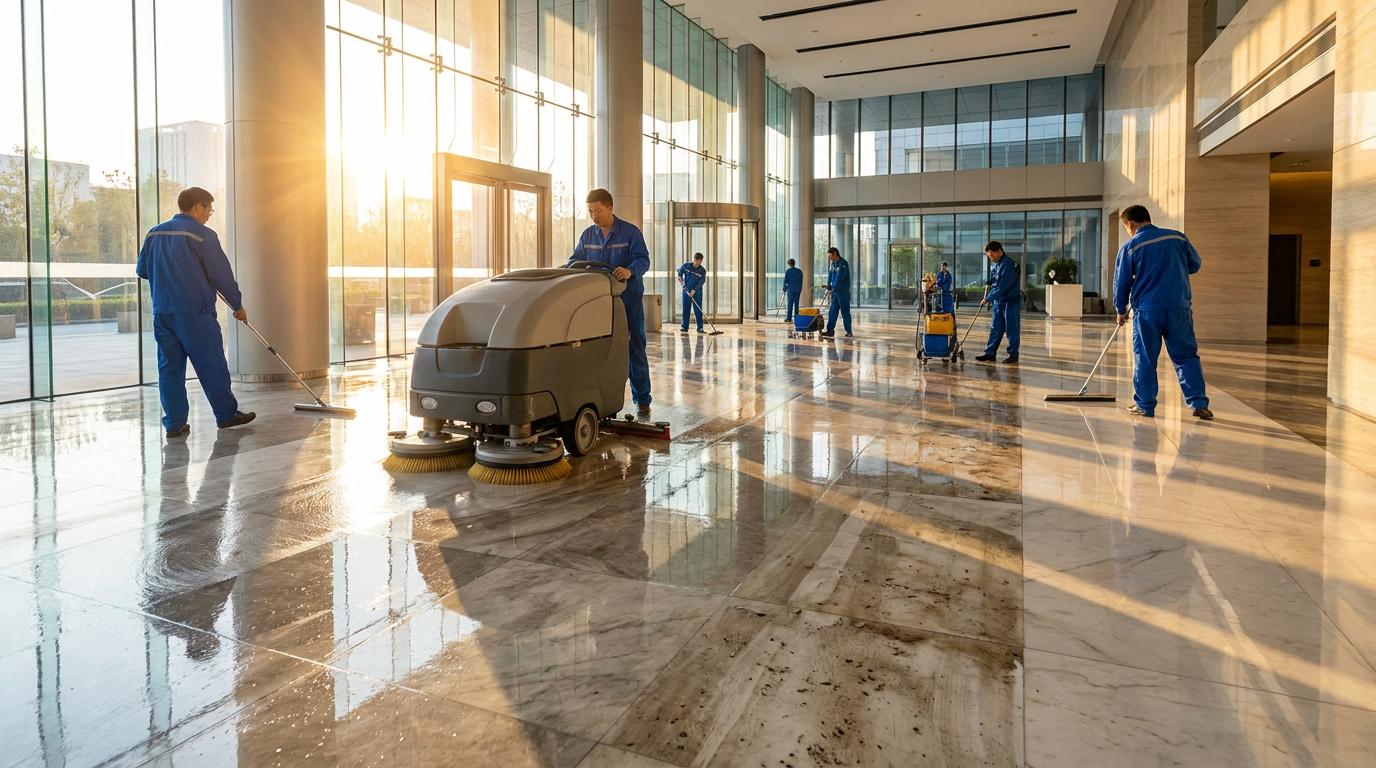
Commercial Deep Cleaning Cost by Square Footage and Building Type
Commercial deep cleaning costs $0.40 to $2.00 per square foot depending on building type, floor condition, and service scope. Get exact pricing breakdowns.
Read the guide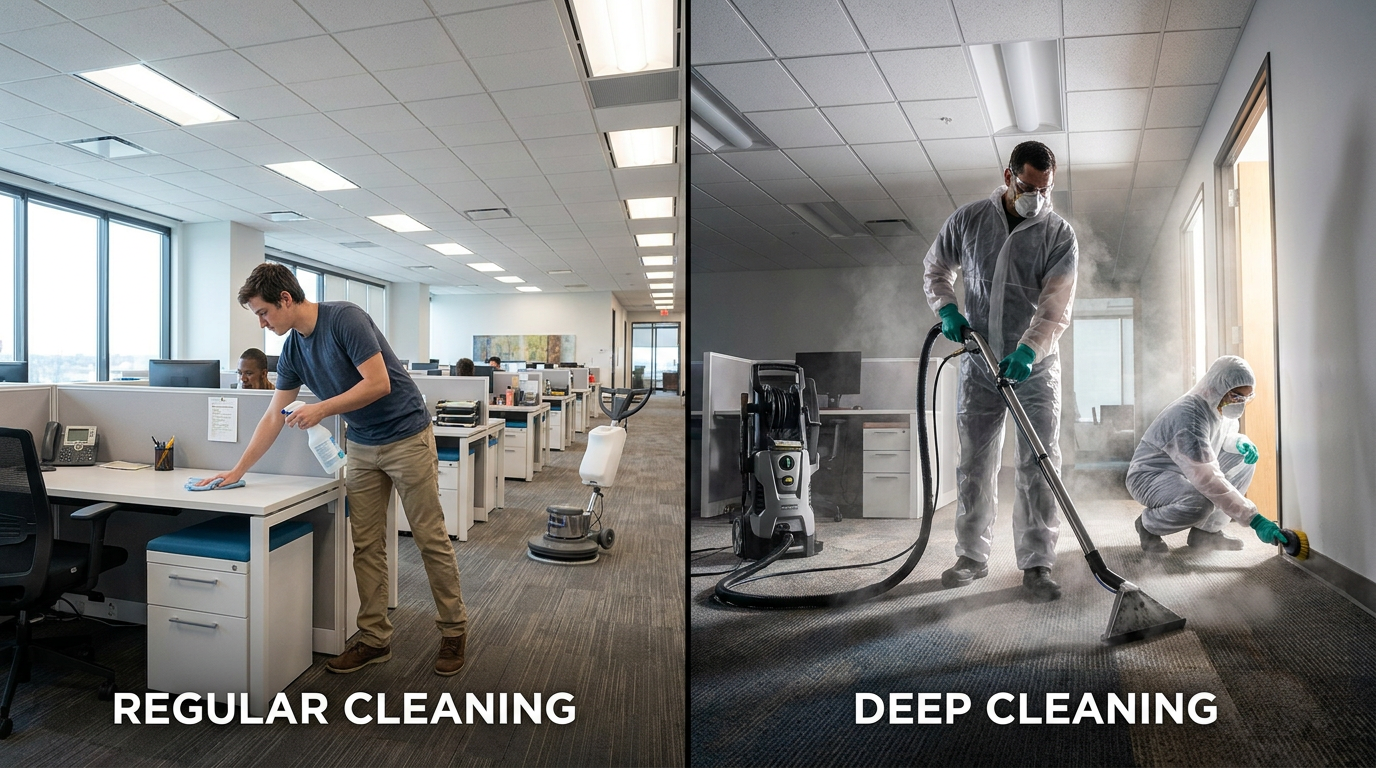
Commercial Deep Cleaning vs Regular Cleaning: Key Differences
Learn the exact differences between commercial deep cleaning and regular cleaning, including costs, frequency, tasks covered, and which service your business needs.
Read the guide
Ready for a Spotless Space?
Get a free, no-obligation estimate for your commercial cleaning project. Most quotes delivered within 24 hours.