Commercial Building Cleaning Schedule: Daily to Quarterly Guide
DAILY CLEANING VS DEEP CLEANING SCHEDULES: OPTIMAL FREQUENCY FOR COMMERCIAL BUILDINGS
Create an effective commercial building cleaning schedule with daily, weekly, and quarterly task breakdowns. Includes frequency tables by building type and area.
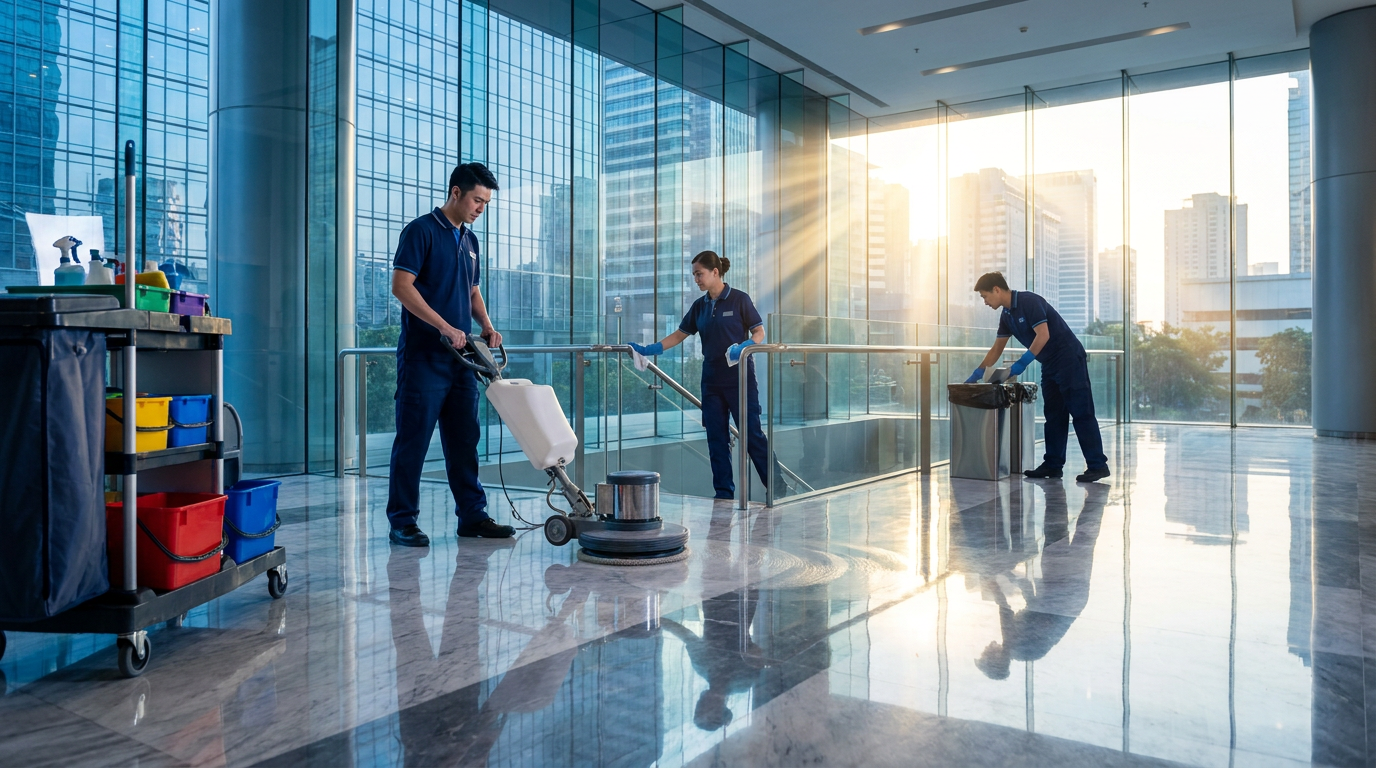
Commercial buildings require daily cleaning for high-touch surfaces and restrooms, weekly detail work for offices and common areas, and quarterly deep cleaning for carpets, floors, and HVAC systems. A three-tier schedule balances hygiene requirements with budget constraints, typically costing $0.05 to $0.20 per square foot monthly for routine maintenance plus $0.30 to $2.00 per square foot quarterly for deep cleaning services.
- Daily tasks include restroom disinfection, trash removal, and high-touch surface cleaning (handles, elevators, counters)
- Weekly tasks cover full vacuuming, mopping, conference room detail work, and break room appliance cleaning
- Quarterly deep cleaning addresses carpets, floor stripping and waxing, air ducts, and tile grout restoration
- High-traffic buildings (retail, medical, food service) require 2x to 3x more frequent service than standard offices
- OSHA 29 CFR 1910.22 requires documented cleaning schedules for workplace safety compliance
Why a Tiered Cleaning Schedule Outperforms Single-Frequency Approaches
According to industry research from Craddock's Cleaning, commercial buildings that use tiered scheduling reduce overall cleaning costs by 15% to 25% compared to daily-only or deep-clean-only approaches. The reason is simple: different surfaces accumulate soil at different rates.
Restrooms and entry mats need daily attention because they see 100% of building traffic. Carpets in private offices may only need quarterly extraction. Treating both the same wastes labor hours and budget.
The International Sanitary Supply Association (ISSA) recommends task-based frequency over calendar-based cleaning. This means matching cleaning intervals to actual soil accumulation rates rather than arbitrary schedules like "every Monday."
Daily Commercial Cleaning Tasks (Every Business Day)
Daily cleaning forms the foundation of any commercial building maintenance program. These tasks address hygiene-critical areas where soil, bacteria, and contaminants accumulate within 24 hours. For buildings in South Florida, high humidity accelerates bacterial growth, making daily disinfection even more critical.
Restroom Cleaning Protocol
Restrooms require complete daily service including toilet and urinal disinfection, sink and counter sanitization, mirror cleaning, floor mopping with EPA-registered disinfectants, and supply restocking. The CDC recommends cleaning restrooms at minimum once daily, with high-traffic facilities needing service every 4 to 6 hours.
Document each cleaning with time-stamped logs posted inside the restroom. This practice meets OSHA requirements and provides liability protection.
High-Touch Surface Disinfection
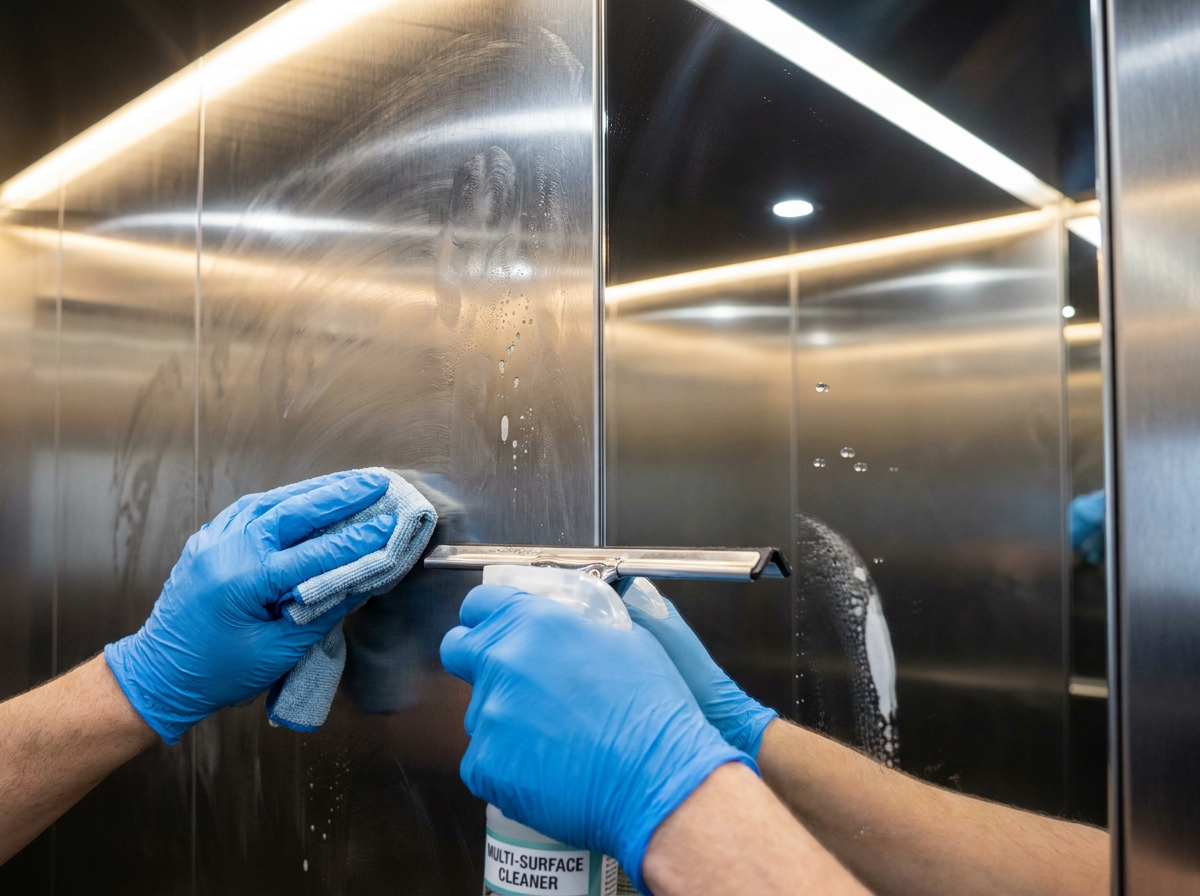
High-touch surfaces include door handles, elevator buttons, stair railings, light switches, shared equipment, and reception counters. According to Office Pride's commercial cleaning checklist, these surfaces should receive EPA List N disinfectant application with proper contact time (typically 1 to 10 minutes depending on product).
A 50,000 square foot office building typically has 200 to 400 high-touch points requiring daily attention. Budget 15 to 30 minutes of labor time for this task alone.
Entry and Lobby Maintenance
Building entries capture 80% of incoming soil through foot traffic. Daily tasks include vacuuming or shaking out entry mats, spot-mopping hard floors, emptying trash receptacles, and wiping down lobby furniture. In rainy seasons, entry maintenance may need twice-daily service.
Break Room and Kitchen Areas
Break rooms require daily counter wiping, appliance exterior cleaning, table sanitization, floor sweeping and mopping, and trash removal. Refrigerators need weekly interior cleaning to prevent mold growth, but exterior handles need daily disinfection.
Weekly Commercial Cleaning Tasks
Weekly tasks address areas that accumulate visible soil over 5 to 7 days but do not pose immediate hygiene risks. These tasks maintain professional appearance and prevent soil from becoming embedded in surfaces.
Full Facility Vacuuming and Mopping
While high-traffic corridors need daily vacuuming, private offices, conference rooms, and low-traffic areas can follow weekly schedules. Use HEPA-filtered vacuums to capture 99.97% of particles down to 0.3 microns. Hard floors should receive damp mopping with appropriate pH-neutral cleaners for the floor type.
Desk and Workstation Dusting
Horizontal surfaces accumulate dust at approximately 0.5 to 1 gram per square meter weekly in typical office environments. Weekly dusting of desks, shelving, window sills, and equipment prevents buildup that triggers allergies and degrades air quality.
Conference Room Detail Cleaning
Conference rooms require weekly attention to tables, chairs, presentation equipment, whiteboards, and glass partitions. These spaces often host clients and require higher appearance standards than general office areas.
Interior Glass and Mirror Cleaning
Interior glass partitions, office windows, and mirrors should receive weekly cleaning with streak-free glass cleaner. Exterior windows typically follow monthly or quarterly schedules depending on environmental conditions.
Monthly Commercial Cleaning Tasks
Monthly tasks bridge the gap between weekly maintenance and quarterly deep cleaning. These services address areas that accumulate soil more slowly but still require regular attention.
| Monthly Task | Areas Covered | Time Required (per 10,000 sqft) |
|---|---|---|
| Baseboard cleaning | All corridors and offices | 2 to 3 hours |
| Light fixture dusting | Accessible fixtures under 10 feet | 1 to 2 hours |
| Vent and grille cleaning | HVAC supply and return vents | 1.5 to 2.5 hours |
| Spot carpet treatment | Stains and high-traffic wear patterns | 1 to 2 hours |
| Floor buffing (hard surfaces) | Lobbies, corridors, common areas | 2 to 4 hours |
| Exterior entry cleaning | Sidewalks, entry doors, signage | 1 to 2 hours |
Quarterly Deep Cleaning Tasks (Every 90 to 120 Days)
Quarterly deep cleaning addresses embedded soil that routine maintenance cannot remove. According to Team Clean's facility management research, quarterly deep cleaning extends the lifespan of carpets by 3 to 5 years and hard floors by 5 to 10 years compared to buildings without periodic deep cleaning.
Carpet Deep Cleaning and Extraction
Commercial carpets require hot water extraction or professional bonnet carpet cleaning every 90 to 120 days. This removes embedded soil, allergens, and bacteria that vacuuming leaves behind. In South Florida's humid climate, quarterly carpet cleaning also prevents mold colonization in carpet backing.
Budget $0.30 to $0.80 per square foot for commercial carpet deep cleaning. A 20,000 square foot office with 60% carpet coverage costs approximately $3,600 to $9,600 annually for quarterly extraction.
Hard Floor Restoration
VCT, vinyl, and other hard floors require periodic scrub-and-recoat maintenance to maintain appearance and protect the substrate. Floors in good condition need scrubbing and 2 to 3 fresh wax coats quarterly, costing $0.60 to $1.50 per square foot.
Floors with yellowed, peeling, or heavily built-up wax require complete floor stripping and waxing annually, costing $0.85 to $1.80 per square foot. This process removes all old finish and applies 4 to 6 fresh coats.
Tile and Grout Restoration
Restroom, kitchen, and lobby tile requires quarterly commercial tile and grout cleaning to remove embedded soil from grout pores. Standard mopping cannot reach this contamination. Quarterly restoration prevents permanent staining and grout deterioration.
Air Duct and HVAC Cleaning
The National Air Duct Cleaners Association (NADCA) recommends commercial HVAC cleaning every 3 to 5 years, but quarterly vent and grille cleaning maintains air quality between full duct cleanings. This task removes dust accumulation from visible components without requiring full system access.
Cleaning Frequency by Building Type
Different commercial building types have vastly different cleaning requirements based on traffic patterns, regulatory requirements, and contamination risks. The following table provides frequency guidelines by industry.
| Building Type | Daily Cleaning | Deep Cleaning | Special Requirements |
|---|---|---|---|
| Standard Office | 5x per week | Quarterly | After-hours scheduling |
| Medical/Dental | Daily (7x per week) | Monthly | EPA List N disinfectants, AHCA compliance |
| Restaurant/Food Service | Daily (often 2x daily) | Monthly | Health code compliance, grease removal |
| Retail Store | Daily (7x per week) | Monthly to quarterly | Overnight scheduling, high-gloss floor finish |
| Warehouse/Industrial | 3x to 5x per week | Quarterly | OSHA compliance, industrial equipment |
| Gym/Fitness Center | Daily (often 2x daily) | Monthly | MRSA prevention, rubber floor care |
| Hotel/Hospitality | Daily (7x per week) | Monthly to quarterly | Brand standards, marble restoration |
| Condo/HOA Common Areas | Daily to 3x per week | Quarterly | Resident scheduling, lobby marble care |
South Florida Climate Considerations
Buildings in Miami-Dade, Broward, and Palm Beach counties face unique cleaning challenges due to the subtropical climate. Average humidity of 75% to 85% accelerates mold growth, while salt air corrodes exterior surfaces and degrades floor finishes faster than inland climates.
Humidity and Mold Prevention
South Florida's humidity makes mold prevention a year-round concern. Tile grout, carpet backing, and HVAC systems are particularly vulnerable. Buildings without quarterly tile and grout deep cleaning often develop visible mold colonies within 6 to 12 months.
The Florida Department of Health recommends maintaining indoor humidity below 60% and conducting regular inspections for water intrusion. Post-storm cleaning is especially critical, as hurricane season (June through November) frequently introduces moisture into building envelopes.
Salt Air and Exterior Deterioration
Coastal buildings within 5 miles of the Atlantic Ocean or Intracoastal Waterway experience accelerated exterior deterioration from salt deposits. Quarterly commercial pressure washing removes salt accumulation before it damages stucco, concrete, and painted surfaces.
Floor Finish Degradation
High humidity causes floor wax to yellow and degrade 30% to 50% faster in South Florida than in drier climates. Buildings that would need annual floor stripping in northern states often require service every 8 to 10 months in Miami or Fort Lauderdale. Scrub-and-recoat maintenance every 3 to 4 months extends the interval between full strip cycles.
Creating Your Building's Cleaning Schedule
Developing an effective cleaning schedule requires assessing traffic patterns, identifying high-risk areas, and matching task frequency to actual soil accumulation rates. Follow this framework to build a customized schedule.
Step 1: Conduct a Facility Assessment
Walk through the entire building and document square footage by floor type, traffic levels by area, restroom count and usage, special areas (kitchens, medical spaces, warehouses), and current condition of floors, carpets, and surfaces. This assessment takes 1 to 2 hours for most commercial buildings.
Step 2: Identify Regulatory Requirements
Determine which regulations apply to your facility. Medical offices must meet Florida AHCA standards. Restaurants must comply with Florida Division of Hotels and Restaurants requirements. Warehouses must meet OSHA 29 CFR 1910.22 for walking and working surfaces. These requirements often dictate minimum cleaning frequencies.
Step 3: Map Tasks to Frequencies
Assign each area and task to daily, weekly, monthly, or quarterly schedules based on traffic, risk, and regulatory requirements. High-touch surfaces and restrooms always require daily service. Low-traffic private offices may only need weekly attention.
Step 4: Build in Flexibility
Effective schedules accommodate seasonal variations, special events, and unexpected needs. Budget 10% to 15% additional capacity for post-event cleaning, illness outbreaks, or weather-related issues.
Frequently Asked Questions
How often should a commercial office building be cleaned?
Standard commercial offices require daily cleaning 5 days per week for restrooms, trash, and high-touch surfaces. Full vacuuming and detail work follows weekly schedules. Deep cleaning including carpet extraction and floor care occurs quarterly. High-traffic or client-facing offices may need daily service 6 to 7 days per week.
What is included in daily commercial cleaning?
Daily commercial cleaning typically includes restroom disinfection and restocking, trash and recycling removal, high-touch surface disinfection, break room and kitchen cleaning, entry mat vacuuming, lobby maintenance, and spot cleaning of spills. Daily service does not include deep cleaning tasks like carpet extraction or floor stripping.
How often should deep cleaning be done in an office?
Most offices benefit from quarterly deep cleaning (every 90 to 120 days) for carpets, hard floors, tile grout, and upholstery. Medical offices, food service facilities, and gyms typically require monthly deep cleaning due to higher contamination risks. According to Avanti Green's cleaning frequency analysis, quarterly deep cleaning combined with daily maintenance delivers optimal results for standard office environments.
What is the difference between routine cleaning and deep cleaning?
Routine cleaning addresses visible soil and hygiene-critical surfaces using standard equipment like vacuums, mops, and spray bottles. Deep cleaning removes embedded soil using specialized equipment like truck-mounted extractors, industrial auto-scrubbers, and floor stripping machines. Routine cleaning maintains appearance; deep cleaning restores surfaces to like-new condition.
Which areas in a building need daily disinfection?
Areas requiring daily disinfection include restrooms (toilets, sinks, counters, handles), high-touch surfaces (door handles, elevator buttons, light switches, stair railings), break rooms and kitchens (counters, appliance handles, tables), reception desks and shared equipment, and entry door handles and lobby furniture.
How do cleaning frequencies change for medical buildings?
Medical facilities require daily cleaning 7 days per week with EPA List N hospital-grade disinfectants. Deep cleaning occurs monthly rather than quarterly. Medical and dental facility cleaning must follow CDC, OSHA, and Florida AHCA protocols. Patient treatment areas may require disinfection between each patient visit.
Implementing Your Commercial Cleaning Schedule
A well-designed cleaning schedule protects building occupants, extends the life of flooring and furnishings, and maintains professional appearance. The key is matching task frequency to actual need rather than applying one-size-fits-all approaches.
For buildings across Miami-Dade, Broward, and Palm Beach counties, South Florida's climate demands more aggressive scheduling than national averages suggest. Quarterly deep cleaning is the minimum for most facilities, with monthly service recommended for medical, food service, and fitness environments.
Property managers and facility directors can request a free on-site assessment to identify specific cleaning requirements and develop a customized schedule that balances hygiene, appearance, and budget considerations.
Need a Customized Cleaning Schedule for Your Building?
MB Clean Solutions provides free on-site assessments for commercial properties throughout South Florida. Our team will evaluate your facility and recommend a cleaning schedule tailored to your building type, traffic patterns, and budget.
Request Your Free AssessmentKeep reading
More guides on the same topic from our team.
What to Expect During Commercial Deep Cleaning Service
Learn exactly what happens during a commercial deep cleaning service, from pre-cleaning assessment to final inspection. Includes timelines, costs, and preparation tips.
Read the guide
Commercial Deep Cleaning Cost by Square Footage and Building Type
Commercial deep cleaning costs $0.40 to $2.00 per square foot depending on building type, floor condition, and service scope. Get exact pricing breakdowns.
Read the guide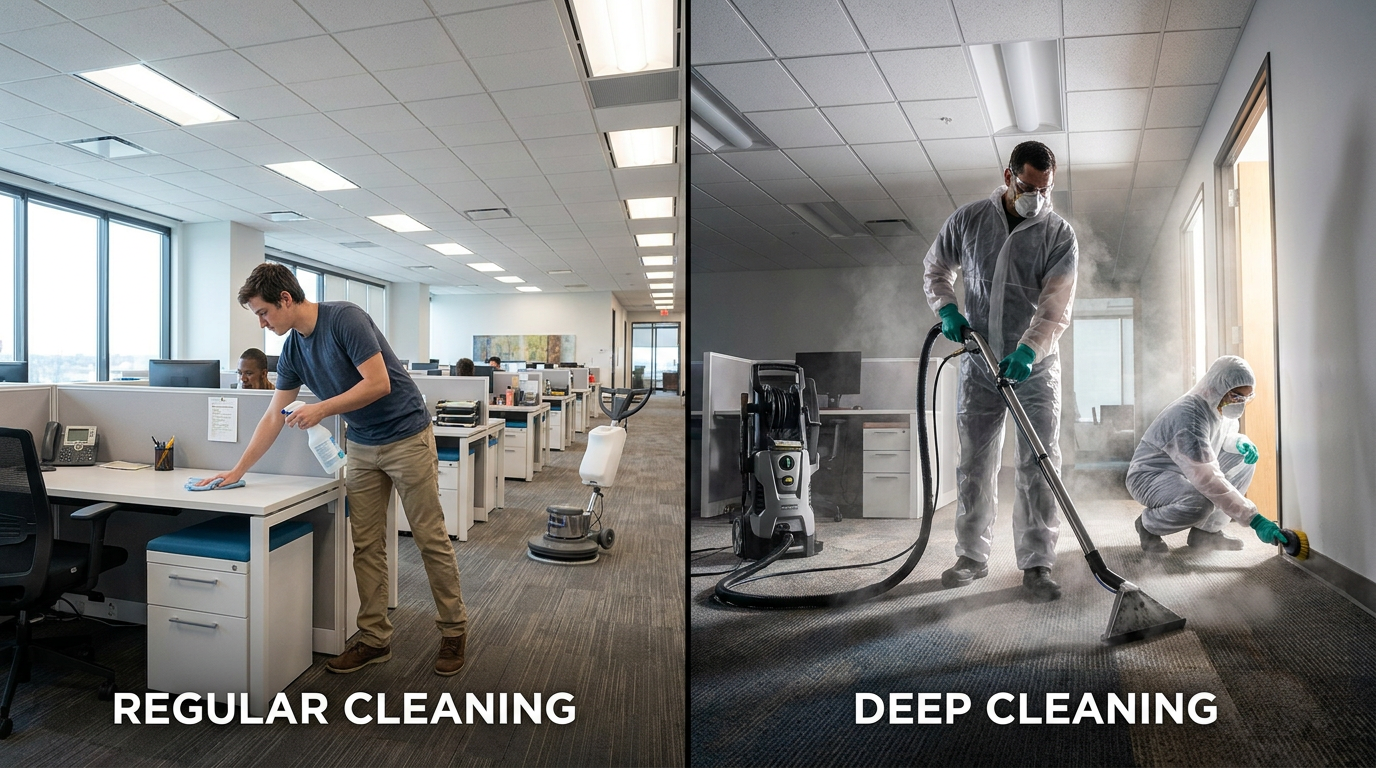
Commercial Deep Cleaning vs Regular Cleaning: Key Differences
Learn the exact differences between commercial deep cleaning and regular cleaning, including costs, frequency, tasks covered, and which service your business needs.
Read the guide
Ready for a Spotless Space?
Get a free, no-obligation estimate for your commercial cleaning project. Most quotes delivered within 24 hours.