Best Flooring for High-Traffic Commercial Spaces (2026 Guide)
BEST FLOORING TYPES FOR HIGH-TRAFFIC COMMERCIAL SPACES
Compare LVT, porcelain tile, polished concrete, and epoxy flooring for commercial spaces. Includes cost, durability, and maintenance data by industry type.
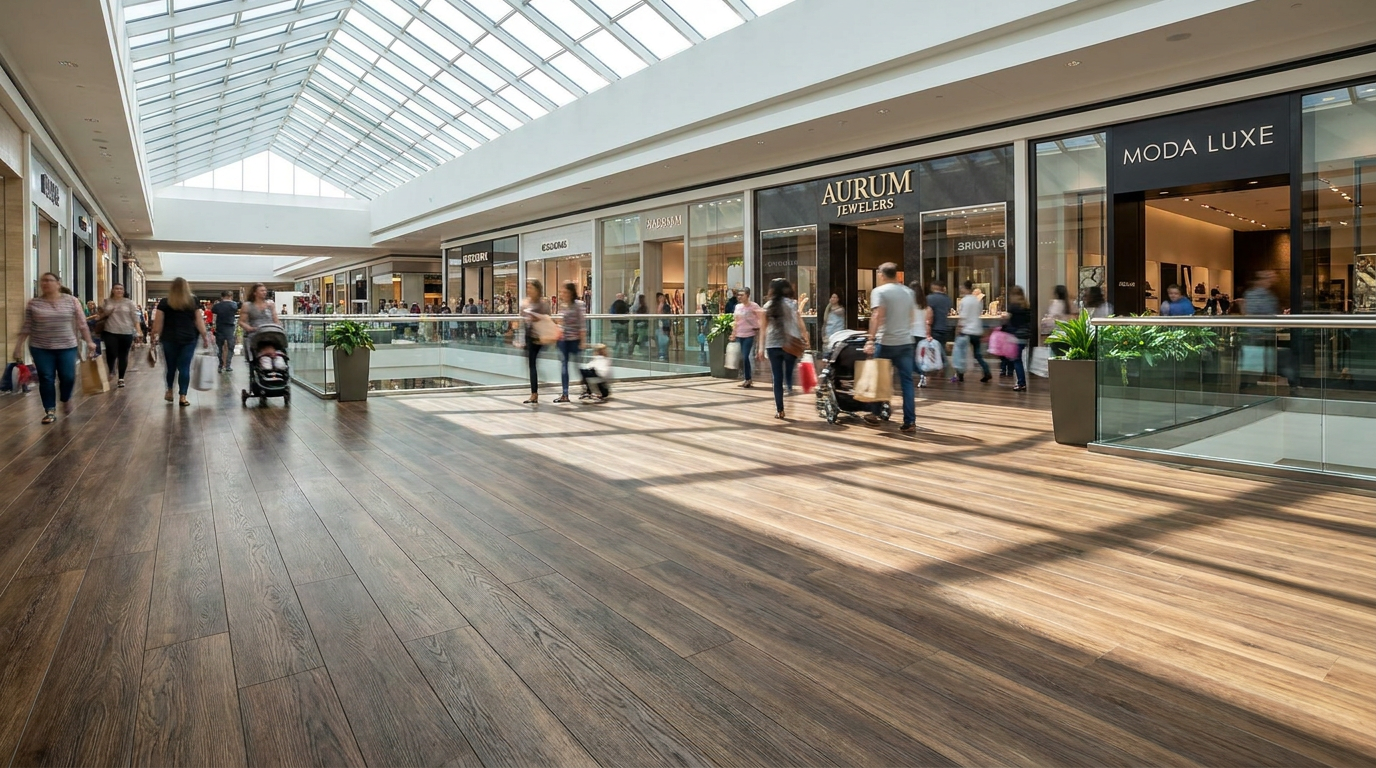
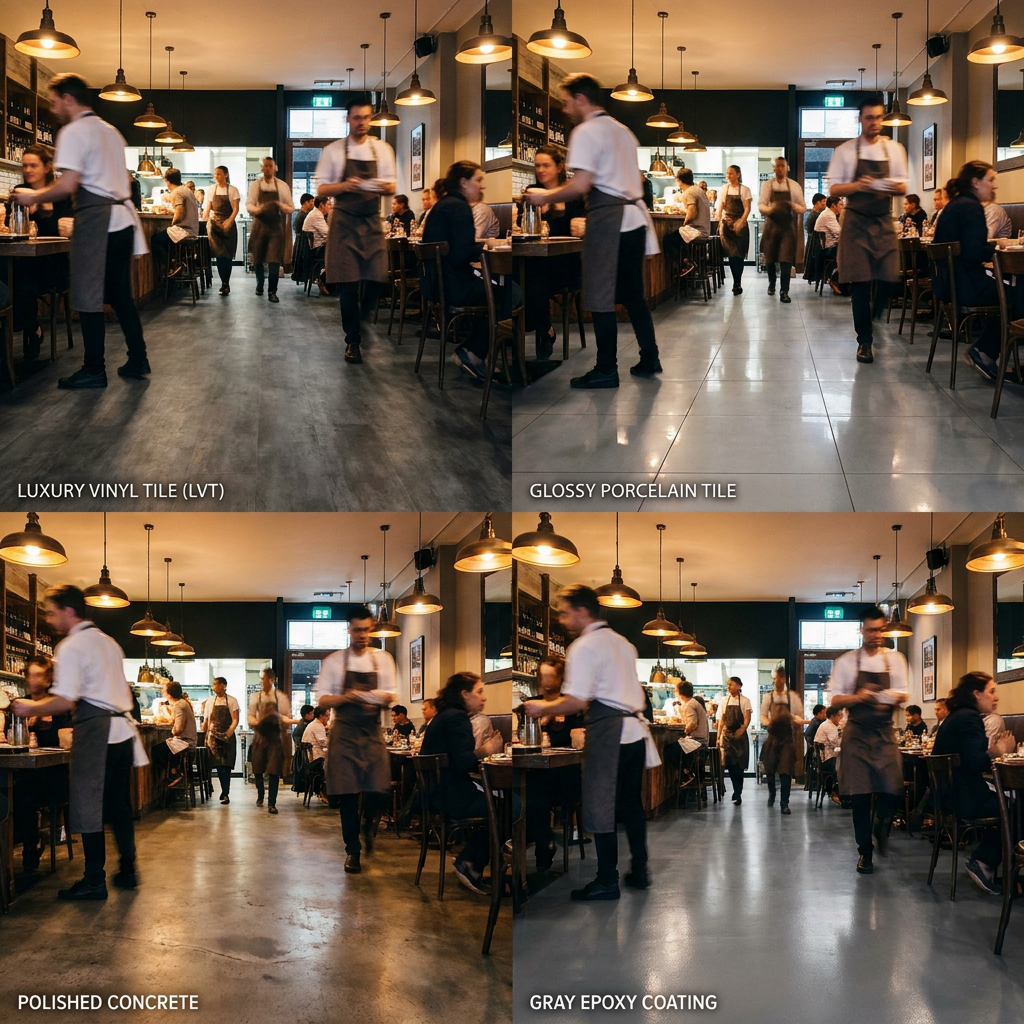
The best flooring for high-traffic commercial spaces is luxury vinyl tile (LVT) for most applications, porcelain tile for wet areas, and polished concrete or epoxy for industrial environments. Selection depends on traffic volume, moisture exposure, maintenance capacity, and budget, with costs ranging from $2 to $12 per square foot installed.
- LVT dominates commercial flooring with 55% market share due to its durability, appearance, and $3 to $7 per square foot installed cost
- Porcelain tile lasts 25 to 50 years in high-traffic areas and handles moisture better than any alternative
- Polished concrete costs $2 to $6 per square foot and requires minimal maintenance for 20+ years
- Floor maintenance costs vary dramatically: LVT requires $0.40 to $1.00 per square foot annually, while carpet tile needs $0.75 to $1.50
- South Florida's humidity accelerates floor finish deterioration, requiring climate-specific maintenance schedules
Commercial Flooring Comparison by Performance Metrics
According to the Resilient Floor Covering Institute (RFCI), commercial flooring decisions should prioritize lifecycle cost over initial installation price. A 2024 study by the International Facility Management Association found that flooring accounts for 8% to 12% of total facility maintenance budgets, making material selection critical for long-term operational costs.
| Flooring Type | Installed Cost (per sq ft) | Lifespan | Annual Maintenance Cost | Best For |
|---|---|---|---|---|
| Luxury Vinyl Tile (LVT) | $3 to $7 | 10 to 20 years | $0.40 to $1.00/sq ft | Retail, offices, healthcare |
| Porcelain Tile | $5 to $12 | 25 to 50 years | $0.30 to $0.75/sq ft | Lobbies, restrooms, restaurants |
| Polished Concrete | $2 to $6 | 20+ years | $0.15 to $0.40/sq ft | Warehouses, retail, showrooms |
| Epoxy Coating | $3 to $8 | 10 to 20 years | $0.20 to $0.50/sq ft | Industrial, kitchens, garages |
| Commercial Carpet Tile | $4 to $9 | 7 to 15 years | $0.75 to $1.50/sq ft | Offices, hotels, education |
| VCT (Vinyl Composition Tile) | $2 to $4 | 10 to 15 years | $0.60 to $1.50/sq ft | Schools, healthcare, retail |
| Rubber Flooring | $5 to $12 | 15 to 25 years | $0.25 to $0.60/sq ft | Gyms, healthcare, schools |
| Terrazzo | $15 to $30 | 75+ years | $0.60 to $2.00/sq ft | Airports, hospitals, universities |
The National Floor Covering Association reports that commercial-grade LVT with a 20-mil or thicker wear layer handles 500,000+ foot traffic cycles before showing significant wear. This durability rating makes LVT suitable for most retail and office environments without requiring the higher investment of porcelain or terrazzo.
Luxury Vinyl Tile: The Commercial Flooring Standard
LVT has captured approximately 55% of the commercial hard-surface flooring market according to Floor Covering Weekly's 2025 industry report. Major manufacturers including Shaw Contract, Mannington Commercial, and Tarkett offer commercial-grade products with warranties ranging from 10 to 20 years for high-traffic applications.
Commercial LVT differs significantly from residential products. The wear layer thickness determines durability: residential LVT uses 6 to 12 mil wear layers, while commercial-grade products require 20 to 28 mil minimum. This difference translates to 3x to 5x longer service life in high-traffic environments.
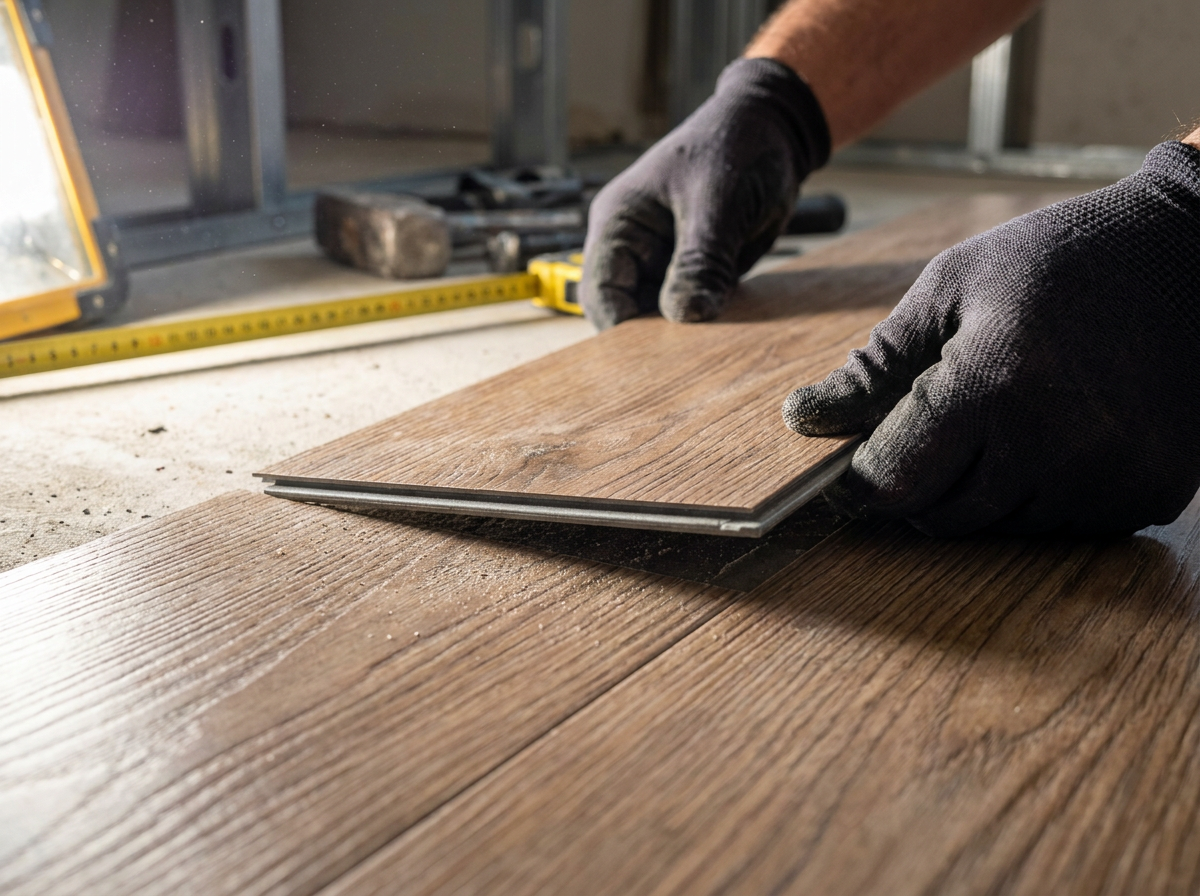
Installation methods also affect performance. Glue-down LVT provides superior stability in high-traffic areas compared to click-lock floating installations. The adhesive bond prevents tile shifting under rolling loads from carts, wheelchairs, and cleaning equipment. Most commercial specifications require full-spread adhesive installation for this reason.
LVT Maintenance Requirements
Proper LVT maintenance extends service life by 30% to 50% according to the Institute of Inspection, Cleaning and Restoration Certification (IICRC). Daily dust mopping removes abrasive particles that scratch the wear layer. Weekly damp mopping with pH-neutral cleaners maintains the factory finish without leaving residue.
Deep cleaning every 3 to 6 months removes embedded soil that daily cleaning misses. Professional commercial floor deep cleaning uses auto-scrubbers with appropriate pad pressure and cleaning solutions to restore the original appearance without damaging the wear layer.
Porcelain Tile: Maximum Durability for Wet Areas
Porcelain tile achieves a Porcelain Enaite Institute (PEI) rating of 4 or 5, indicating suitability for heavy commercial traffic. The American National Standards Institute (ANSI) A137.1 standard requires commercial porcelain to have water absorption below 0.5%, making it virtually impervious to moisture damage.
The Tile Council of North America reports that properly installed porcelain tile withstands 10,000+ pounds per square inch of compressive force. This strength makes porcelain ideal for areas with heavy equipment, rolling loads, and point loads from furniture and fixtures.
Grout Maintenance: The Hidden Cost Factor
Grout lines represent the weak point in any tile installation. Unsealed grout absorbs moisture, stains, and bacteria within 30 to 90 days of installation. Commercial environments require epoxy grout or sealed cementitious grout to maintain hygiene standards and appearance.
Professional grout cleaning and sealing costs $0.50 to $1.50 per square foot and should occur annually in high-traffic areas. Facilities that skip this maintenance often face complete grout replacement at $3 to $5 per square foot within 5 to 7 years.
Polished Concrete: Lowest Lifecycle Cost
The Concrete Polishing Association of America identifies polished concrete as having the lowest 25-year lifecycle cost of any commercial flooring option. Initial installation costs $2 to $6 per square foot depending on the level of polish and aggregate exposure desired.
Polished concrete achieves its durability through a multi-step process: grinding with progressively finer diamond abrasives, applying densifiers that chemically harden the surface, and burnishing to create a high-gloss finish. The resulting surface resists abrasion, staining, and moisture penetration.
Climate Considerations for Concrete
South Florida's humidity creates specific challenges for concrete flooring. Moisture vapor transmission from the slab can cause efflorescence (white salt deposits) and adhesive failures in coatings. The American Concrete Institute recommends moisture testing per ASTM F2170 before any concrete floor treatment.
Proper concrete polishing includes densifier application that reduces moisture vapor transmission by 50% to 70%. This treatment is essential for Florida commercial properties where relative humidity regularly exceeds 70% and slab moisture remains elevated year-round.
Epoxy and Urethane Coatings: Industrial Performance
Epoxy floor coatings provide seamless, chemical-resistant surfaces ideal for manufacturing, food service, and healthcare environments. The Society for Protective Coatings (SSPC) classifies commercial epoxy systems into three categories based on thickness: thin-film (2 to 10 mils), self-leveling (10 to 40 mils), and mortar systems (60+ mils).
Self-leveling epoxy, the most common commercial choice, costs $3 to $6 per square foot installed and provides 10 to 15 years of service in moderate-traffic environments. High-traffic or chemical-exposure areas require urethane topcoats that add $1 to $2 per square foot but extend service life by 50% to 100%.
Surface Preparation: The Critical Success Factor
The International Concrete Repair Institute (ICRI) reports that 80% of epoxy coating failures result from inadequate surface preparation. Proper preparation requires mechanical profiling (shot blasting or diamond grinding) to achieve ICRI Concrete Surface Profile (CSP) 3 to 5, depending on coating thickness.
Moisture testing is equally critical. Epoxy coatings fail when applied to concrete with moisture vapor emission rates exceeding 3 pounds per 1,000 square feet per 24 hours. This threshold is frequently exceeded in South Florida without proper moisture mitigation.
VCT Flooring: Budget-Friendly with Higher Maintenance
Vinyl Composition Tile remains popular in schools, healthcare facilities, and retail environments due to its low initial cost of $2 to $4 per square foot installed. Armstrong Flooring, Mannington, and Tarkett dominate this market with products meeting ASTM F1066 standards for commercial use.
VCT requires more intensive maintenance than LVT or polished concrete. The floor finish (wax) that protects VCT typically requires stripping and reapplication every 12 to 18 months in high-traffic areas. Between full strip-and-wax cycles, quarterly scrub and recoat services maintain appearance and extend finish life.
Strip and Wax vs. Scrub and Recoat
Understanding when to use each service saves significant maintenance dollars. Floor stripping and waxing removes all existing finish layers and applies fresh coats, costing $0.85 to $1.80 per square foot. This service is necessary when floors show yellowing, heavy buildup along edges, or peeling finish.
Scrub and recoat removes only the top finish layer and applies 2 to 3 fresh coats, costing $0.60 to $1.50 per square foot. This maintenance-level service works when floors have surface scuffing and soil but the underlying finish remains intact. Proper scheduling of these services can reduce annual VCT maintenance costs by 20% to 30%.
Best Flooring by Commercial Space Type
Flooring selection must match specific operational requirements. The Building Owners and Managers Association (BOMA) International recommends evaluating traffic patterns, cleaning protocols, and aesthetic requirements before specifying flooring materials.
Retail Stores and Shopping Centers
Retail environments prioritize appearance and durability equally. LVT with wood or stone visuals dominates this sector, with major retailers including Target, Nordstrom, and Whole Foods specifying commercial LVT for sales floors. Entry zones benefit from porcelain tile that handles moisture tracked in from outside.
Shopping center common areas see 10,000 to 50,000 foot traffic events daily. Retail floor cleaning services typically operate overnight to minimize disruption, with deep cleaning scheduled monthly and restoration services quarterly.
Office Buildings
Class A office buildings typically specify carpet tile in tenant spaces for acoustics and comfort, with LVT or porcelain in lobbies and common areas. The carpet tile market leader Interface reports that modular carpet allows replacement of worn sections without disrupting entire floors.
Office building cleaning programs should include quarterly hot water extraction for carpet and monthly deep cleaning for hard surfaces. This schedule maintains tenant satisfaction while controlling costs at $0.40 to $0.75 per square foot annually.
Healthcare Facilities
Healthcare flooring must meet CDC and Joint Commission infection control standards. Sheet vinyl and rubber flooring provide seamless, easily sanitized surfaces in clinical areas. LVT works well in administrative and waiting areas where infection risk is lower.
The Association for the Healthcare Environment (AHE) recommends daily cleaning with EPA-registered disinfectants and quarterly deep cleaning for all healthcare flooring. Rubber flooring in patient care areas reduces fatigue for staff who stand for extended periods.
Schools and Daycares
Educational facilities balance durability, safety, and maintenance costs. VCT remains common due to low initial cost and repairability, though LVT is gaining market share. Rubber flooring in gymnasiums and playrooms provides impact absorption that reduces injury risk.
Florida daycares must maintain DCF-compliant cleaning standards that specify floor sanitation protocols. Deep cleaning during school closures allows intensive restoration without disrupting operations or exposing children to cleaning chemicals.
Hotels and Hospitality
Hotels require flooring that conveys luxury while withstanding constant traffic. Marble and terrazzo dominate high-end lobbies, while LVT and carpet tile serve guest corridors and rooms. Hotel cleaning services must maintain brand standards while working around 24/7 operations.
Ballroom and event spaces require flooring that handles furniture moves, spills, and heavy foot traffic. Commercial carpet tile with stain-resistant treatments or high-end LVT provides the necessary durability with appropriate aesthetics.
Flooring Selection Decision Framework
Use this framework to narrow flooring choices based on your specific requirements. Each factor eliminates options that will not perform adequately in your environment.
Traffic Volume Assessment
Light traffic (under 1,000 foot traffic events daily): All flooring types suitable. Medium traffic (1,000 to 10,000 events): Eliminate residential-grade products; specify commercial LVT, porcelain, or polished concrete. Heavy traffic (10,000+ events): Specify porcelain, polished concrete, terrazzo, or industrial epoxy systems.
Moisture Exposure Evaluation
Dry environments allow maximum flexibility in material selection. Intermittent moisture (entryways, break rooms) requires LVT, porcelain, or sealed concrete. Constant moisture exposure (restrooms, commercial kitchens) demands porcelain tile, epoxy, or sheet vinyl with heat-welded seams.
Maintenance Capacity Assessment
Organizations with limited maintenance resources should prioritize polished concrete, porcelain tile, or high-quality LVT. These materials require less frequent intervention and forgive delayed maintenance better than VCT or carpet tile. Facilities with robust maintenance programs can successfully manage any flooring type.
Budget Constraints
Initial budget constraints often lead to VCT selection, but lifecycle cost analysis frequently favors LVT or polished concrete. A 10,000 square foot facility saves $15,000 to $25,000 over 10 years by selecting LVT over VCT due to reduced maintenance requirements.
South Florida Climate Considerations
Miami-Dade, Broward, and Palm Beach counties present unique flooring challenges. Average humidity of 74% to 76% accelerates floor finish deterioration and promotes mold growth in porous materials. Salt air exposure within 5 miles of the coast corrodes metal fixtures and degrades certain adhesives.
The Florida Building Code requires specific moisture mitigation for slab-on-grade construction common in South Florida. Concrete slabs without proper vapor barriers transmit moisture that damages adhesives, causes efflorescence, and promotes mold growth under flooring materials.
Humidity Impact on Floor Finishes
VCT floor finish deteriorates 30% to 50% faster in South Florida than in drier climates. The combination of high humidity and air conditioning creates condensation cycles that break down wax finishes. Facilities in South Florida typically require strip-and-wax service every 9 to 12 months rather than the 12 to 18 month interval standard elsewhere.
Professional floor restoration services in South Florida must account for these accelerated deterioration rates when developing maintenance schedules. Quarterly assessments help identify finish breakdown before it progresses to permanent floor damage.
Frequently Asked Questions
What is the most durable flooring for commercial use?
Terrazzo offers the longest service life at 75+ years, followed by porcelain tile at 25 to 50 years and polished concrete at 20+ years. For most commercial applications, porcelain tile or polished concrete provides the best balance of durability and cost. LVT with 20+ mil wear layers delivers 15 to 20 years of service in high-traffic environments.
What flooring is best for heavy foot traffic?
Porcelain tile rated PEI 4 or 5 handles the heaviest foot traffic with minimal wear. Polished concrete performs equally well and costs less to maintain. Commercial LVT with thick wear layers (20 to 28 mil) handles most retail and office traffic levels. Avoid residential-grade products, which fail within 2 to 5 years under commercial traffic loads.
Which flooring is easiest to maintain in busy commercial spaces?
Polished concrete requires the least maintenance: daily dust mopping and periodic burnishing. Porcelain tile needs similar care plus annual grout maintenance. LVT requires daily dust mopping, weekly damp mopping, and periodic deep cleaning. VCT and carpet tile demand the most intensive maintenance programs.
What is the cheapest durable flooring for commercial buildings?
VCT offers the lowest initial cost at $2 to $4 per square foot installed but requires $0.60 to $1.50 per square foot in annual maintenance. Polished concrete costs $2 to $6 per square foot initially with only $0.15 to $0.40 per square foot annual maintenance, making it cheaper over a 10-year period. LVT at $3 to $7 per square foot with moderate maintenance often provides the best value.
Is LVT or porcelain tile better for high-traffic areas?
Porcelain tile outperforms LVT in durability, moisture resistance, and service life. LVT offers easier installation, lower cost, better acoustics, and more comfortable feel underfoot. Choose porcelain for entryways, restrooms, and areas with heavy moisture exposure. Choose LVT for offices, retail sales floors, and areas where comfort and acoustics matter.
Getting Professional Floor Assessment
Flooring selection decisions benefit from professional evaluation of existing conditions, traffic patterns, and maintenance capabilities. Free on-site floor assessments identify current floor types, evaluate condition, and provide specific maintenance recommendations.
For commercial properties in Miami-Dade, Broward, and Palm Beach counties, local expertise matters. Understanding how South Florida's climate affects different flooring materials helps property managers make informed decisions and develop appropriate maintenance schedules.
Need Help Maintaining Your Commercial Floors?
MB Clean Solutions provides commercial floor deep cleaning, stripping and waxing, and restoration services throughout South Florida. Request a free on-site assessment with transparent pricing delivered within 24 hours.
Get Your Free Floor AssessmentKeep reading
More guides on the same topic from our team.
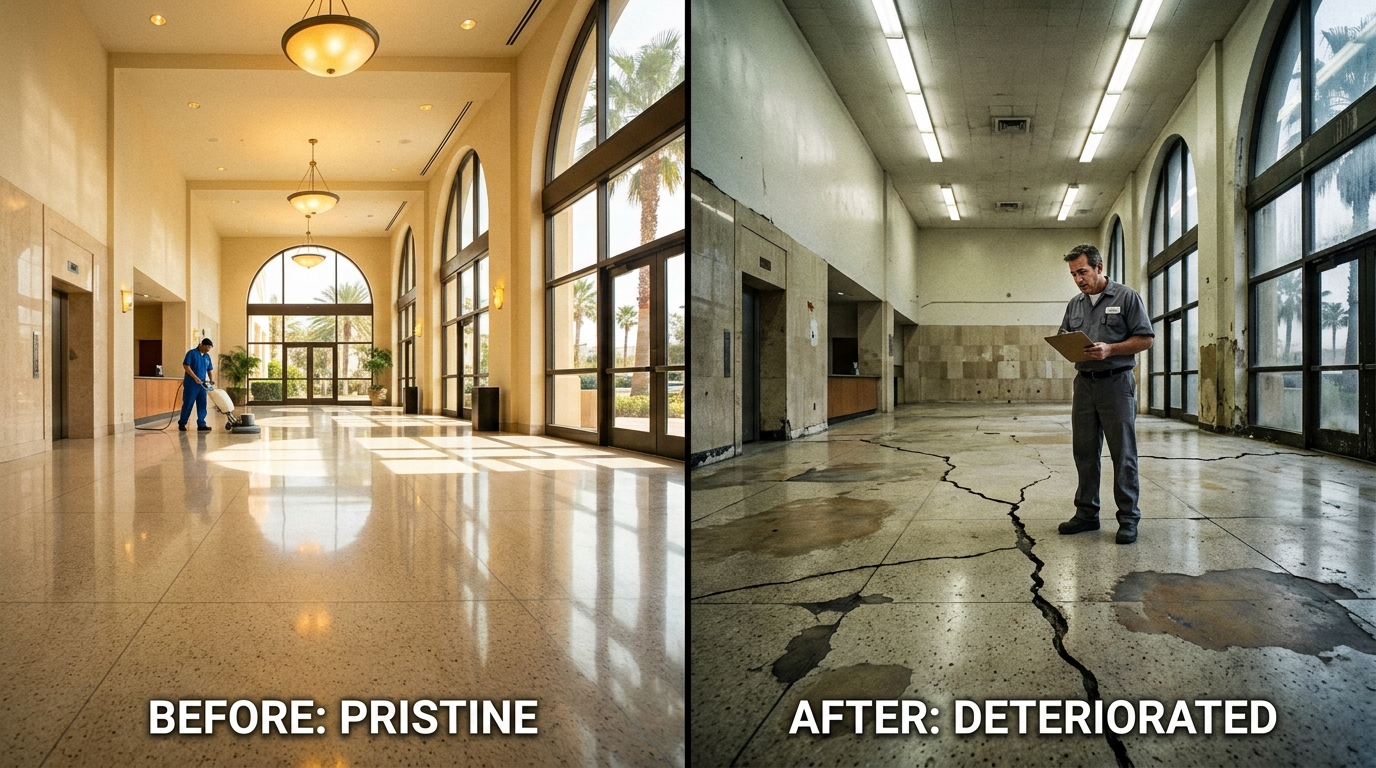
Floor Maintenance Program Cost vs Reactive Repairs: Full Analysis
Reactive floor repairs cost 3 to 5 times more than planned maintenance. See the full cost breakdown by floor type, plus ROI data for South Florida facilities.
Read the guide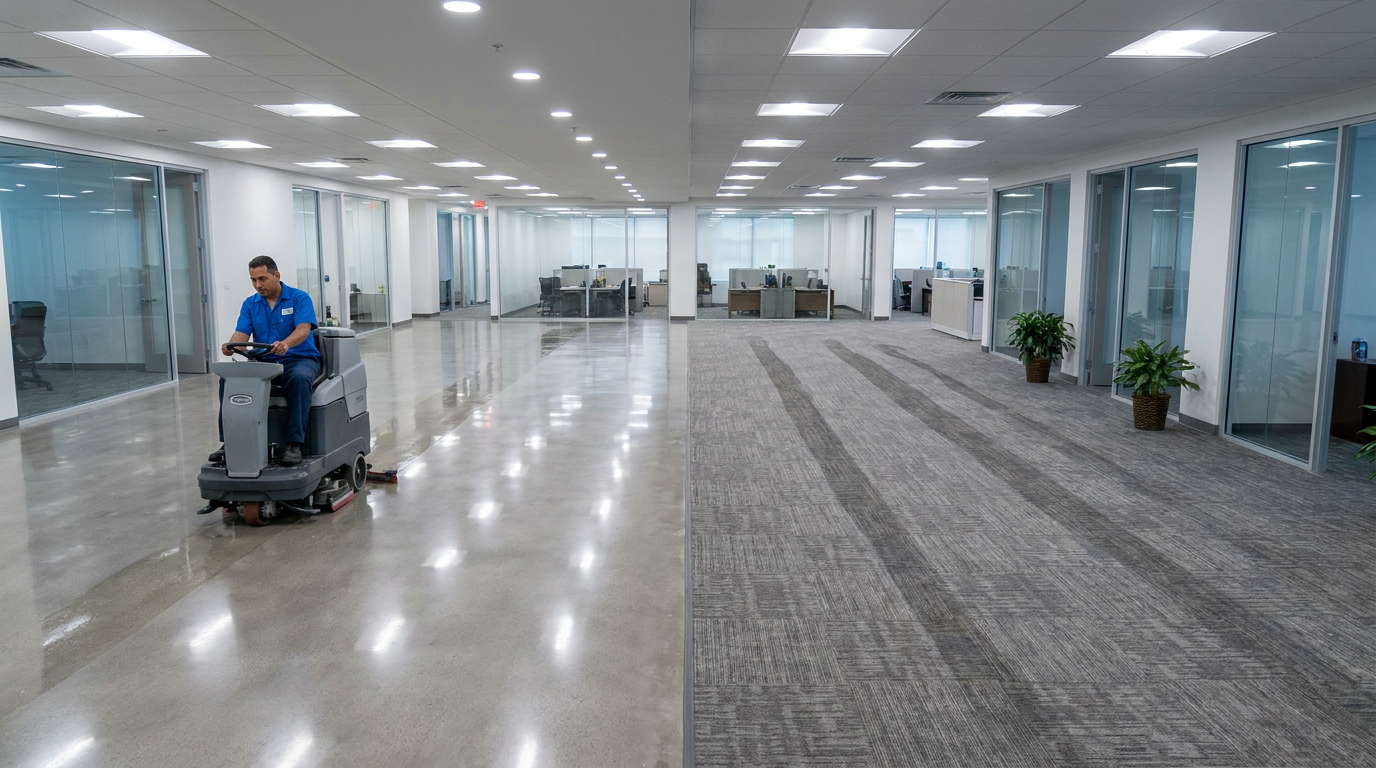
Commercial Carpet vs Hard Floor Maintenance Costs: 10-Year Analysis
Compare commercial carpet and hard floor maintenance costs over 10 years. Includes VCT, polished concrete, and carpet data with real pricing for South Florida facilities.
Read the guide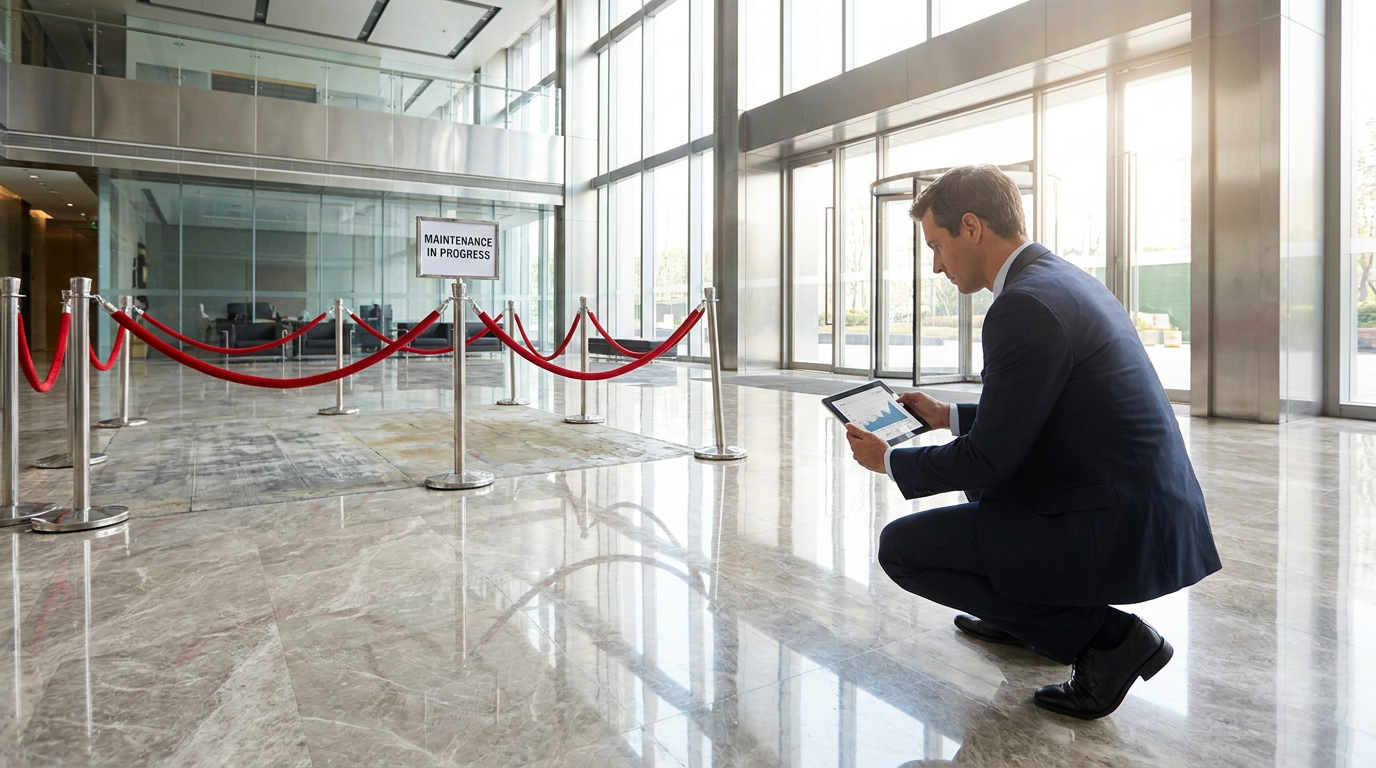
ROI of Professional Floor Maintenance Programs for Commercial Buildings
Professional floor maintenance programs deliver 9-18 month payback periods. Learn how to calculate ROI, reduce costs, and extend floor life in commercial facilities.
Read the guide
Ready for a Spotless Space?
Get a free, no-obligation estimate for your commercial cleaning project. Most quotes delivered within 24 hours.