Terrazzo Floor Maintenance: A Commercial Property Care Plan
FLOOR CARE
Plan terrazzo floor maintenance by material, traffic and condition. Separate cleaning from coating removal, polishing and sealing before requesting work.
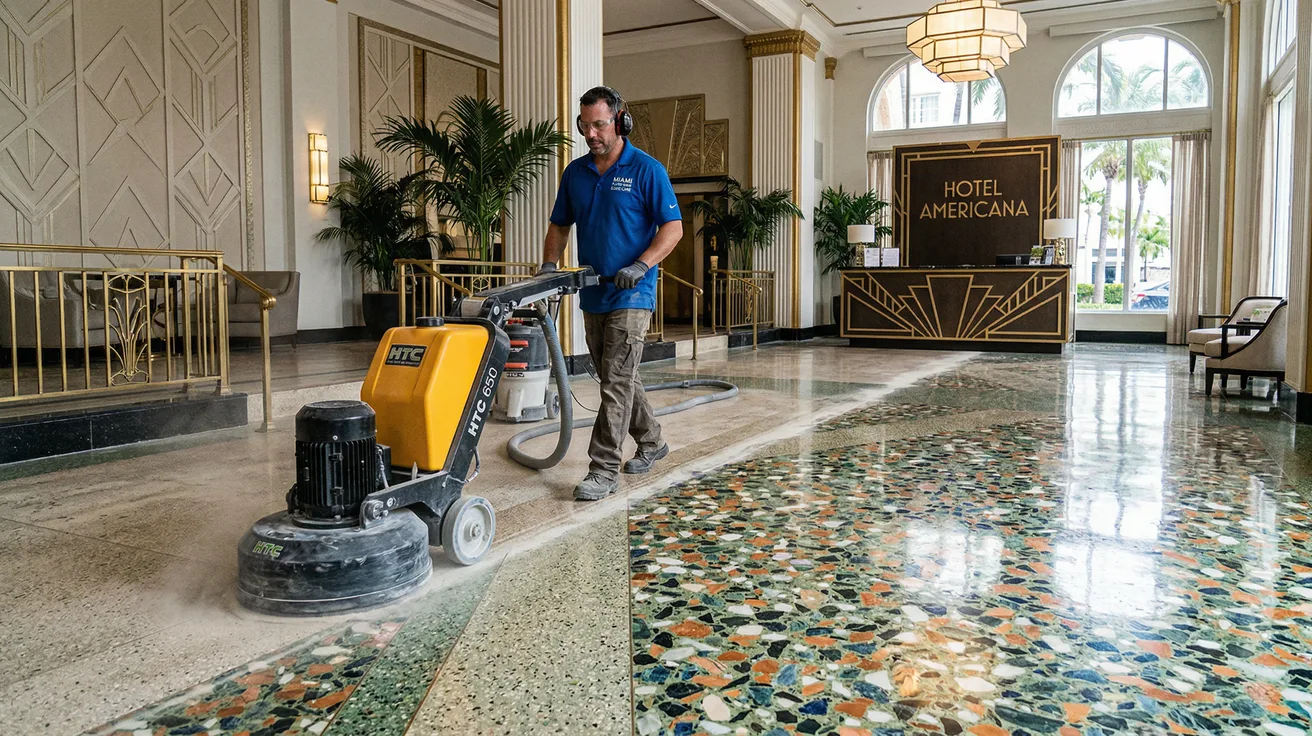
Terrazzo floor maintenance starts with identifying the installed system and the condition you are trying to address. A commercial lobby with cleaning residue, a corridor with worn finish and a floor with physical damage should not automatically receive the same treatment. Keep routine care, a cleaning project and surface restoration as separate decisions.
For a property manager, the useful first step is a short floor record: material, existing finish, approved care products, accessible area and recurring problems. This guide helps organize that record and prepare a commercial terrazzo cleaning assessment in Miami-Dade, Broward or Palm Beach.
Identify the system before changing the care routine
Terrazzo can use different binders and aggregates. The National Terrazzo & Mosaic Association explains that finish and sealing choices differ between terrazzo systems. Do not treat a general recommendation to wax or seal as an instruction for every floor. Start with the installer’s records and the applicable product guidance.
Record whether the floor is cement-based or epoxy-based if known, plus the last applied finish or sealer. If those details are unavailable, mark them unknown rather than guessing from the floor’s appearance. Include any nearby floor material so the same care process is not accidentally applied across both surfaces.
How to clean terrazzo floors without guessing the specification
Sherwin-Williams’ terrazzo maintenance guide emphasizes removing grit, selecting suitable neutral cleaning products and following system instructions. Use the approved dilution and residue-removal procedure for your installation. Choose equipment and pads with the installer or care provider; a pad suitable for another floor is not automatically suitable here.
Assign a person to keep the approved product information available to the cleaning team. When a product changes, update the record. If a cloudy area repeatedly returns after routine care, document where and when it appears before adding more product or scheduling polishing.
Use condition to decide what to request
| What you observe | What to record and ask |
|---|---|
| Traffic soil or residue | Location, cleaning history and whether it changes after approved routine cleaning. Ask for a cleaning assessment. |
| Unknown or old coating | Last known product and application. Ask whether coating review or removal is a separate item. |
| Uneven shine or scratches | Areas affected and desired appearance. Request a separate polishing assessment rather than assuming cleaning will correct it. |
| Cracks, damaged strips or recurring moisture | Location and history. Flag for separate assessment; do not describe these as ordinary cleaning tasks. |
Build a practical maintenance record
- List each lobby, entrance, corridor and room, with accessible square footage.
- Record traffic patterns and areas that need closer observation.
- Keep approved cleaner and finish information with the building’s operating records.
- Log unusual marks, previous treatments and the agreed result of any test area.
- Review the plan when use, traffic, products or floor condition changes.
There is no useful one-size-fits-all restoration interval for this worksheet. Agree inspection and service frequency from the actual condition and care requirements. Frequent work is not a substitute for choosing the right task.
Prepare a cleaning quote with clear boundaries
Send the city, property type, floor record, accessible area and preferred work window. Define who moves furniture and how occupants reach rooms while a section is closed. Ask for separate line items for cleaning and any proposed coating removal, polishing or sealing. Record reopening and follow-up care instructions for the selected work.
Request a terrazzo cleaning assessment. If your concern is a changed stone finish rather than soil, review the Miami stone polishing scope. The assessment determines the method and price; photographs or square footage alone do not establish a restoration result.
Siga leyendo
Más guías sobre el mismo tema.
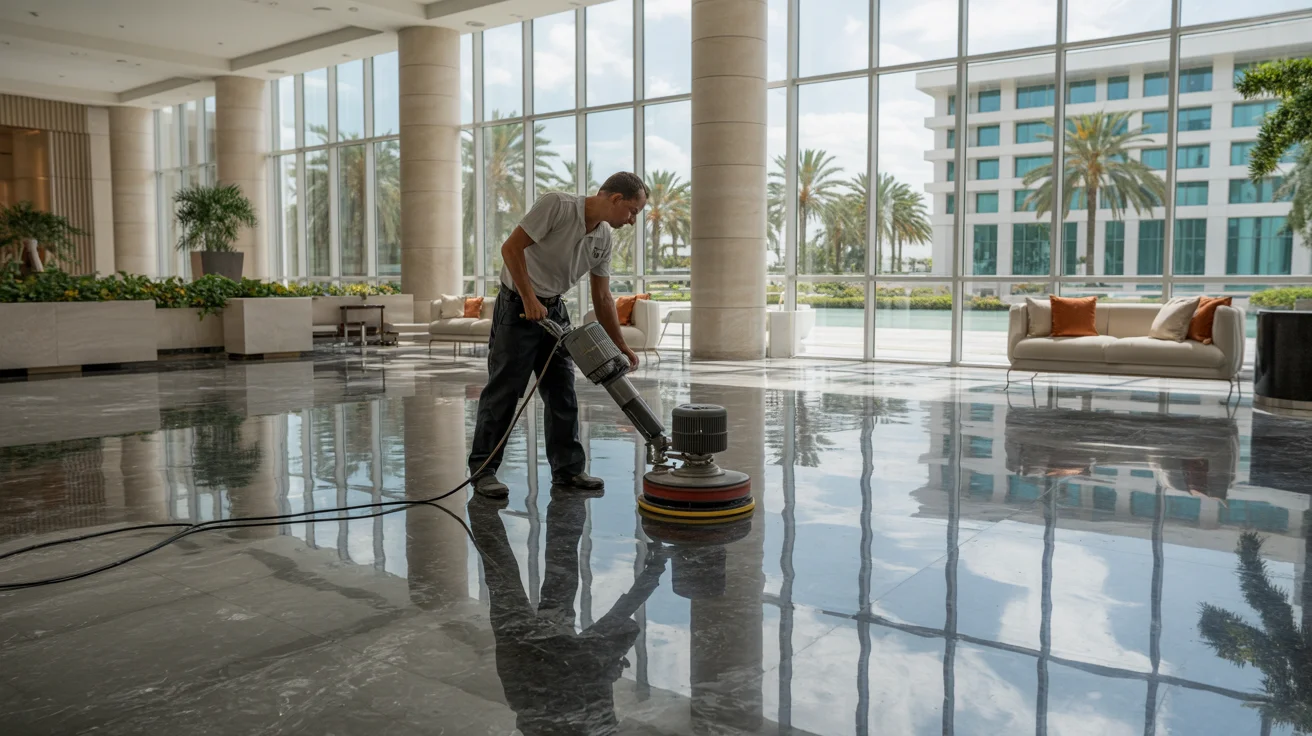
Etch Marks on Marble: Etching vs. Stains on Commercial Floors
A dull marble mark is not always a stain. Learn what to record, how cleaning differs from polishing, and how to scope a commercial stone assessment.
Leer la guía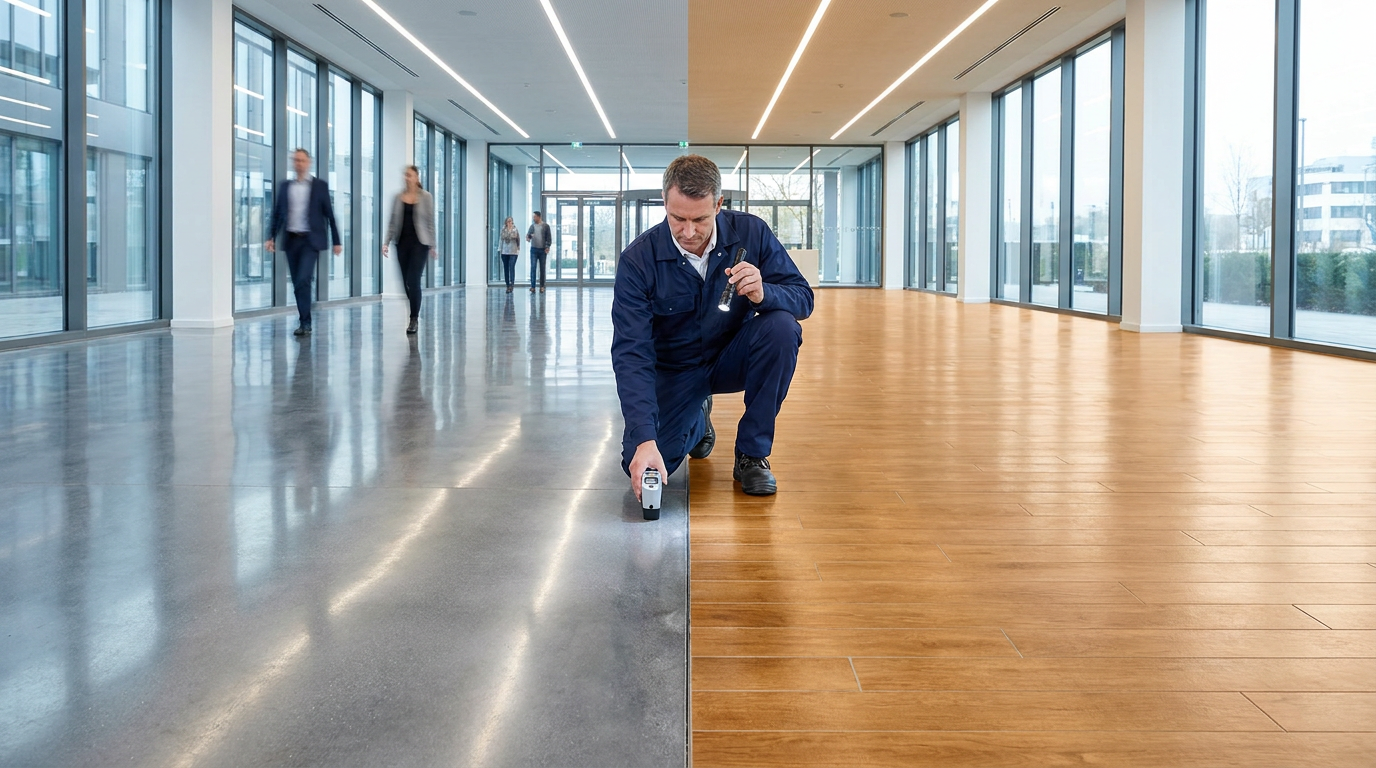
Commercial Floor Polish vs Wax: Which Coating Is Right?
Compare commercial floor polish vs wax to find the right protective coating for your facility. Learn costs, maintenance needs, and which floors need which finish.
Leer la guía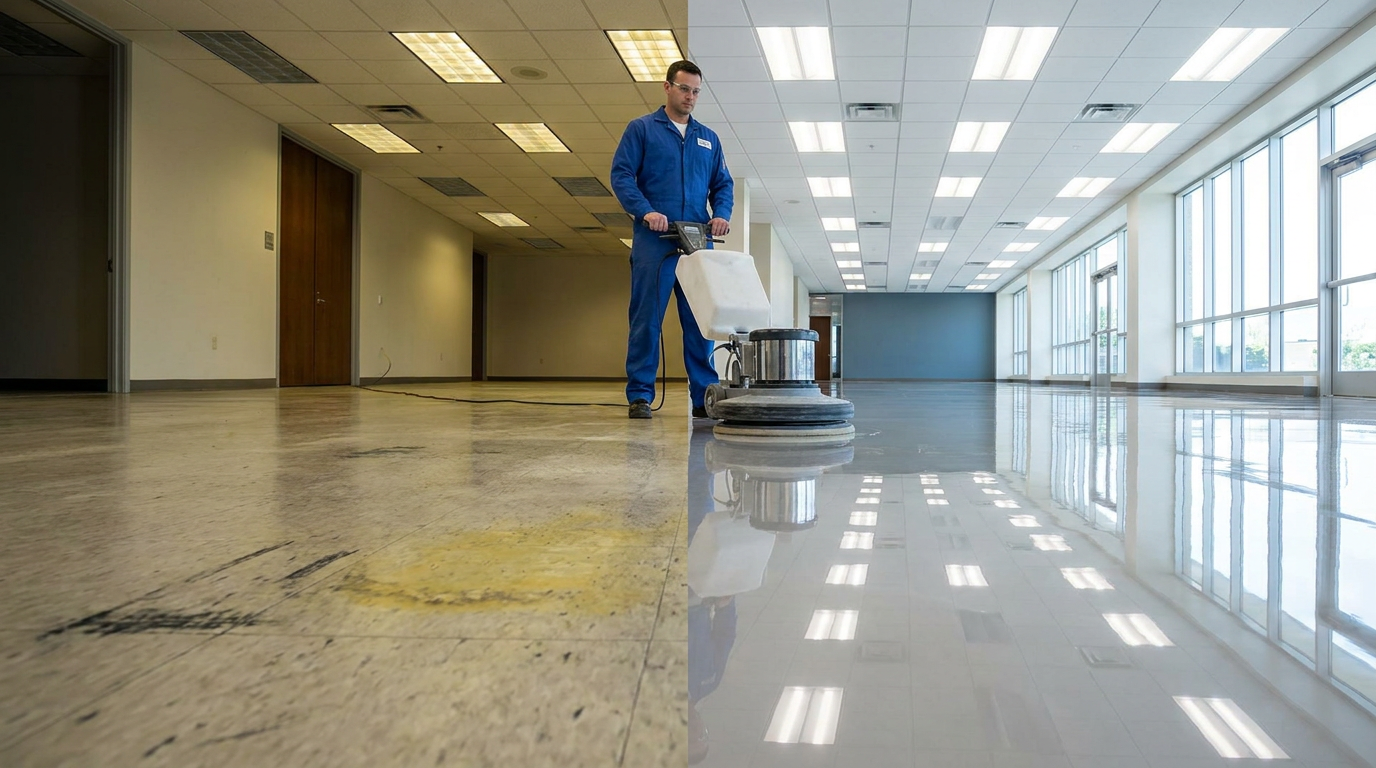
Floor Stripping vs Polishing: Which Service Your Building Needs
Learn when to choose floor stripping over polishing for commercial spaces. Compare costs, timelines, and results to make the right decision for your facility.
Leer la guía
¿Listo Para un Espacio Impecable?
Obtenga un estimado gratis y sin compromiso para su proyecto de limpieza comercial. La mayoría de las cotizaciones se entregan en 24 horas.