How to Remove Scuff Marks from Commercial VCT and Vinyl Floors
HOW TO REMOVE STUBBORN SCUFF MARKS FROM COMMERCIAL VCT AND VINYL FLOORS
Learn proven methods to remove stubborn scuff marks from commercial VCT and vinyl floors, from DIY techniques to professional restoration services.
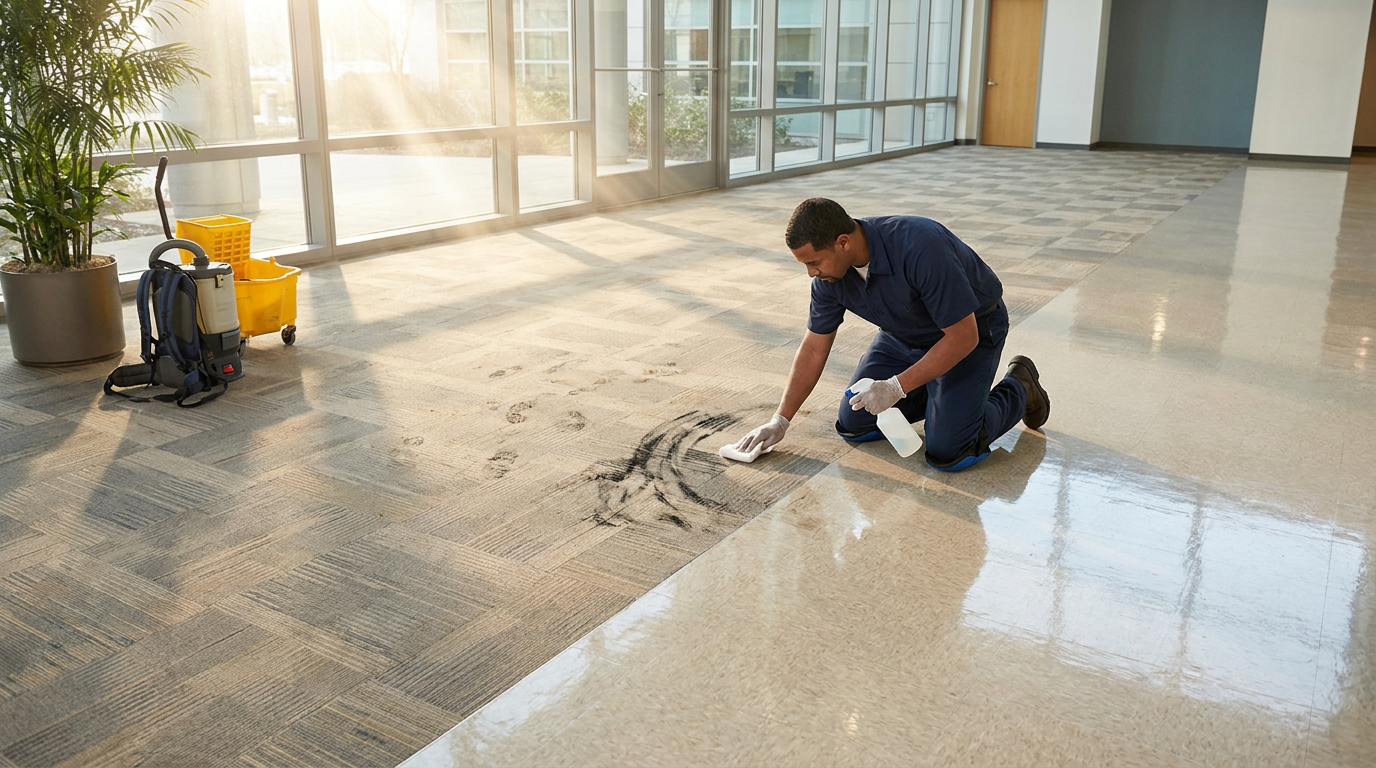
Stubborn scuff marks on commercial VCT and vinyl floors come off using tennis balls, melamine foam erasers, or commercial floor cleaners, depending on mark severity. Light scuffs typically take 30 seconds to remove with a tennis ball on a broom handle, while embedded marks require a floor buffer with a white polishing pad or professional commercial floor deep cleaning services.
- Tennis balls remove 80% of fresh scuff marks in under 60 seconds per mark
- Melamine foam erasers (Magic Eraser) work on moderate scuffs without damaging floor finish
- WD-40 or mineral spirits dissolve rubber-based marks but require immediate rinsing
- Embedded scuffs in wax layers require professional scrub and recoat ($0.60 to $1.50 per square foot)
- Prevention through walk-off mats and non-marking casters reduces scuff frequency by 60%
What Causes Scuff Marks on Commercial Floors
Scuff marks form when rubber, plastic, or synthetic materials transfer onto floor surfaces through friction. The Resilient Floor Covering Institute identifies black heel marks as the most common complaint from facility managers, accounting for 47% of floor appearance issues in commercial settings. Understanding the source helps you choose the right removal method.
Rubber-soled shoes create the majority of scuff marks in retail stores, schools, and office buildings. Forklift tires, pallet jack wheels, and rolling equipment leave heavier marks in warehouses and industrial facilities. Shopping cart wheels, chair casters, and furniture legs contribute to scuffing in retail and office environments.
VCT (vinyl composition tile) and sheet vinyl react differently to scuffing. VCT floors with multiple wax coats often trap scuff marks between layers, making removal more difficult. Sheet vinyl and luxury vinyl plank (LVP) floors with polyurethane coatings resist scuffing better but still accumulate marks in high-traffic areas.
DIY Methods for Light Scuff Marks
Fresh scuff marks that have not penetrated the floor finish respond well to simple DIY removal techniques. These methods cost under $5 in materials and require no special training. Start with the gentlest method and escalate only if needed.
Tennis Ball Method
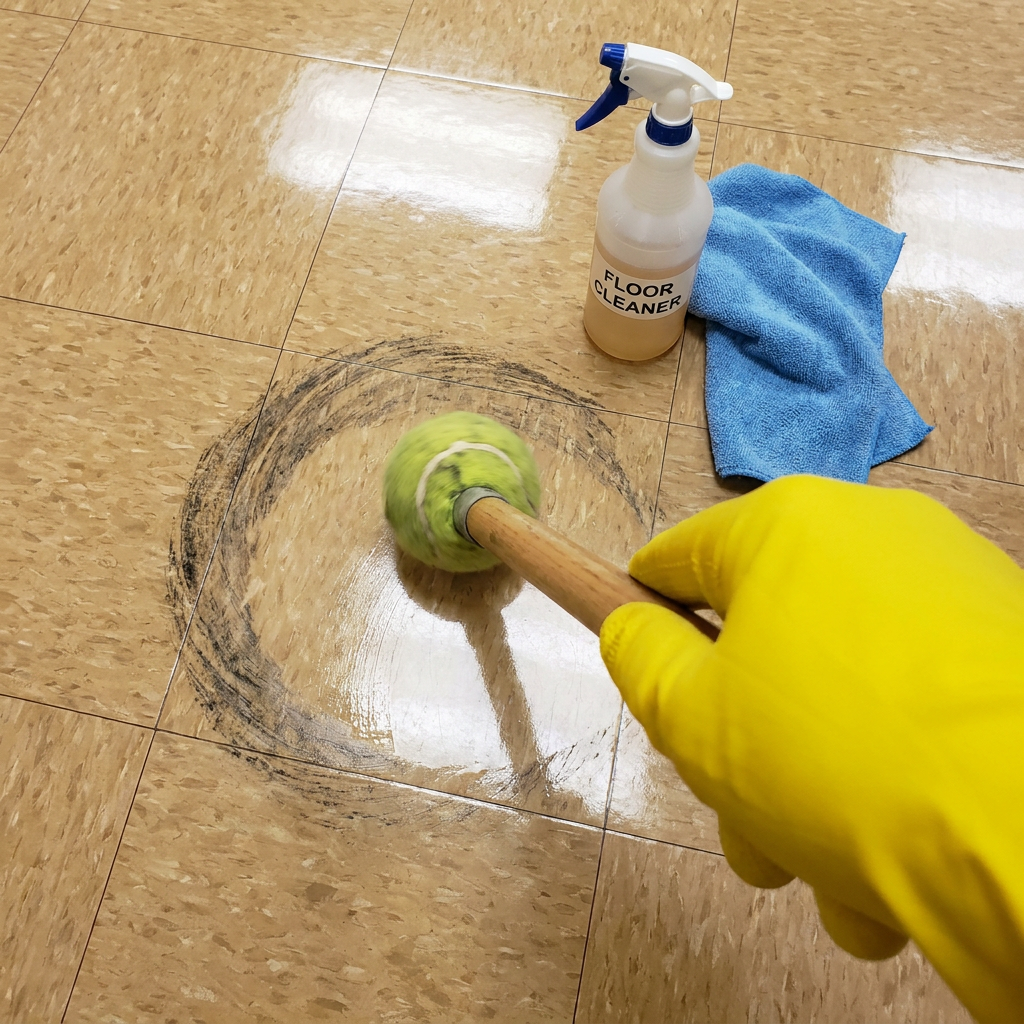
The tennis ball technique removes fresh scuffs in 30 to 60 seconds per mark. Cut an X-shaped slit in a tennis ball and attach it to a broom handle. Apply moderate pressure and rub the ball over the scuff mark in circular motions. The felt texture creates enough friction to lift rubber residue without scratching the floor finish.
According to Angelo's Cleaning, this method works on approximately 80% of standard heel marks. Keep several tennis balls on hand for maintenance staff to address marks immediately before they set into the finish.
Melamine Foam Erasers
Melamine foam products like Mr. Clean Magic Eraser function as micro-abrasives that lift scuff marks without chemicals. Dampen the eraser with plain water and rub gently over the mark. The foam's open-cell structure traps debris as it dissolves, making it effective for moderate scuffs.
Use caution on high-gloss finishes. Melamine foam can dull shine if applied too aggressively. Test in an inconspicuous area first, especially on luxury vinyl plank or newly waxed VCT. One eraser typically handles 15 to 20 scuff marks before replacement.
Baking Soda Paste
Mix two tablespoons of baking soda with one tablespoon of water to create a mild abrasive paste. Apply to the scuff mark with a soft cloth and rub in circular motions for 30 seconds. Wipe clean with a damp cloth and dry immediately. This method costs pennies and works well on white or light-colored vinyl floors.
Commercial Products for Stubborn Scuffs
When DIY methods fail, commercial cleaning products designed for resilient flooring provide stronger solutions. These products range from $8 to $45 per container and remove marks that have penetrated the floor finish.
| Product Type | Best For | Cost Range | Dwell Time |
|---|---|---|---|
| Neutral pH Floor Cleaner | Light daily scuffs | $8 to $15/gallon | 1 to 2 minutes |
| WD-40 or Mineral Spirits | Rubber-based marks | $6 to $12/can | 30 seconds max |
| Ecolab Scratch Repair | Scratches and scuffs | $25 to $35/kit | 3 to 5 minutes |
| Dr. Schutz Scratch Fix | LVP and luxury vinyl | $30 to $45/kit | 5 to 10 minutes |
| Zep High-Traffic Floor Polish | Scuff concealment | $18 to $25/gallon | Dry 30 minutes |
Using WD-40 Safely on Vinyl
WD-40 dissolves rubber residue effectively but requires careful application. Spray a small amount onto a clean cloth, not directly on the floor. Rub the scuff mark for 15 to 30 seconds maximum. Immediately clean the area with a neutral pH floor cleaner and rinse with water. Leaving petroleum-based products on vinyl causes finish degradation within 24 hours.
According to Imperial Dade, WD-40 ranks among the top four methods for commercial floor scuff removal. However, the company warns against using it near food preparation areas or in healthcare facilities where slip hazards pose liability concerns.
Specialty Floor Repair Kits
Products like Dr. Schutz Scratch Fix Kit and Ecolab Scratch Repair Concentrate address both scuffs and light scratches. These kits contain specialized polymers that fill micro-scratches while lifting surface marks. They work particularly well on luxury vinyl plank and high-end sheet vinyl installations in hotels, medical offices, and corporate lobbies.
Equipment-Based Removal for Large Areas
Facilities with more than 5,000 square feet of VCT or vinyl flooring benefit from equipment-based scuff removal. Manual spot treatment becomes impractical when scuff marks cover entire hallways, lobbies, or retail sales floors.
Floor Buffer with White Pad
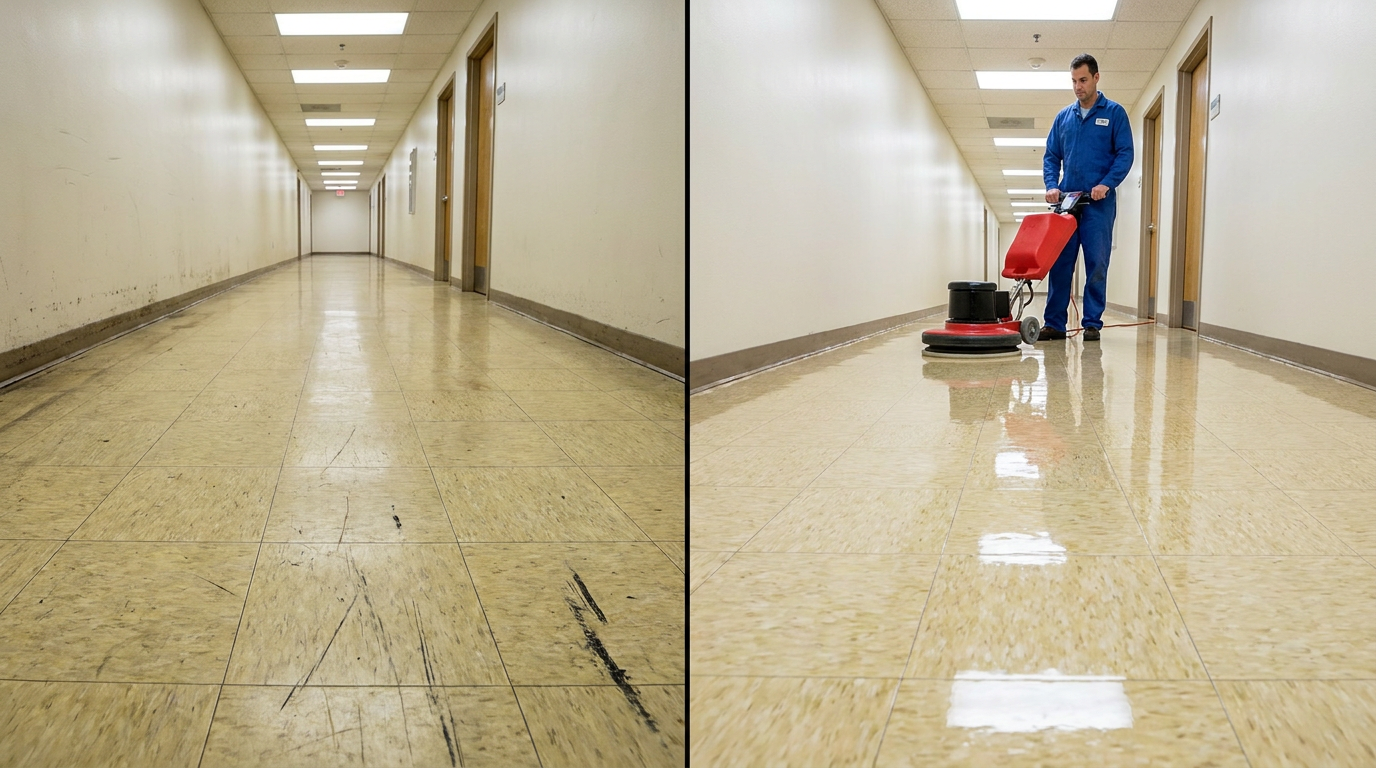
A standard 175 RPM floor buffer equipped with a white polishing pad removes surface scuffs without stripping floor finish. The white pad classification indicates the least aggressive buffing option. Run the machine over affected areas in overlapping passes, then dust mop to collect debris.
This method treats approximately 2,000 square feet per hour and costs $200 to $400 for equipment rental. Facility managers at schools, hospitals, and retail centers use this technique for weekly or bi-weekly maintenance between professional service visits.
Auto-Scrubber with Neutral Cleaner
Walk-behind or ride-on auto-scrubbers combine cleaning solution, mechanical agitation, and vacuum extraction in a single pass. Fill the solution tank with a neutral pH floor cleaner diluted according to manufacturer specifications. The scrubbing action lifts scuff marks while the squeegee system removes dirty solution.
Industrial auto-scrubbers from manufacturers like Tennant, Nilfisk, and Karcher process 10,000 to 50,000 square feet per hour depending on model size. This equipment represents a significant investment ($3,000 to $25,000 for purchase, $150 to $500 per day for rental) but delivers the most efficient results for large commercial spaces.
When Scuffs Require Professional Restoration
Some scuff marks cannot be removed through surface cleaning because they have penetrated into the floor finish or the flooring material itself. Recognizing when to call professionals saves time and prevents damage from aggressive DIY attempts.
Signs You Need Professional Help
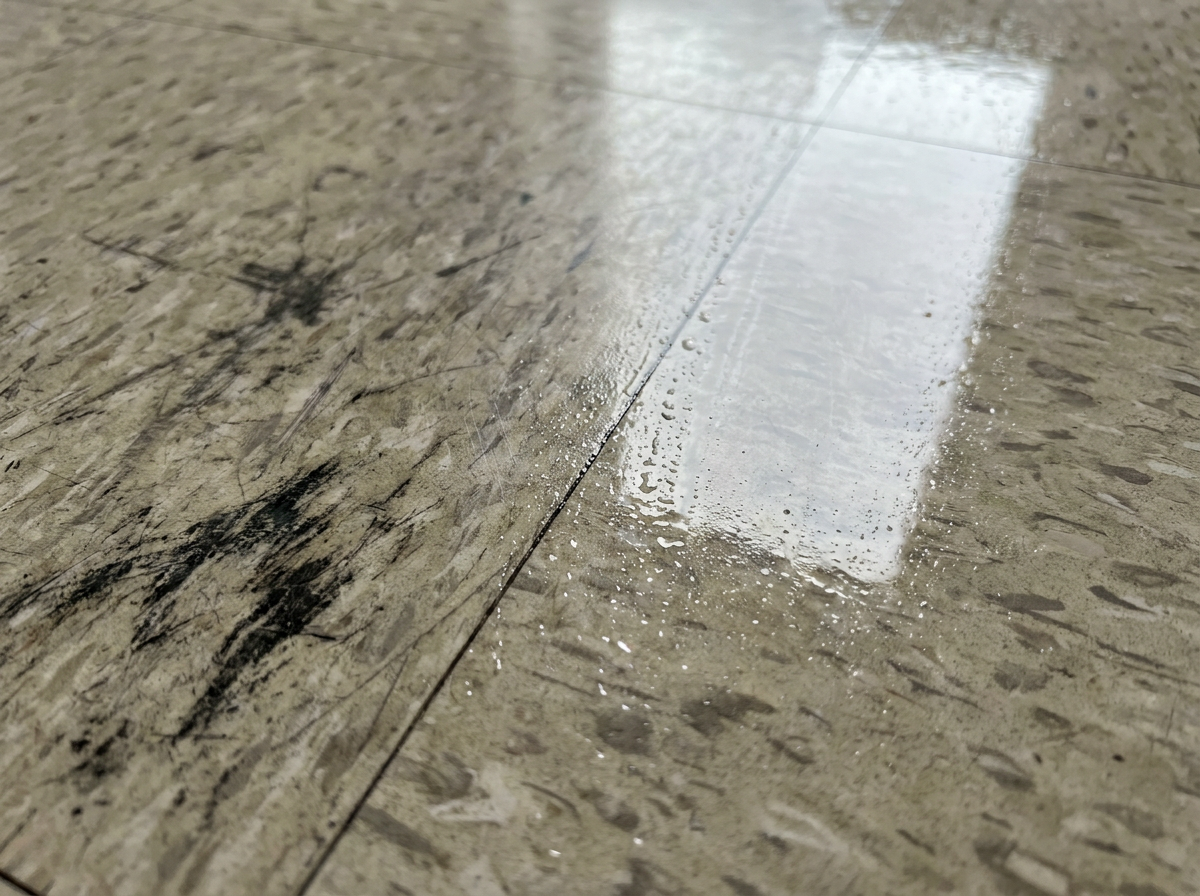
Scuff marks embedded in wax layers appear as dark lines visible through the floor finish. These marks accumulated over multiple wax applications and cannot be removed without stripping the finish. If you see scuffs that remain after buffing, the marks have bonded with the wax.
Yellowing around scuff marks indicates chemical reaction between rubber residue and floor finish. This discoloration requires complete finish removal and reapplication. Facilities in South Florida face accelerated yellowing due to humidity levels averaging 75% to 85%, which traps moisture under wax layers.
Scuffs that feel rough to the touch have scratched through the finish into the vinyl substrate. No amount of cleaning will restore the smooth surface. These areas require spot repair or full floor restoration.
Professional Scrub and Recoat Service
A scrub and recoat service machine-scrubs the top wax layer to remove embedded scuffs, then applies two to three fresh coats of commercial floor wax. This process costs $0.60 to $1.50 per square foot and takes 4 to 8 hours for a typical 5,000 square foot facility.
Scrub and recoat extends the life of existing floor finish by 6 to 12 months between full strip-and-wax cycles. The International Sanitary Supply Association recommends this service every 3 to 6 months for high-traffic commercial facilities.
Full Strip and Wax Restoration
When scuffs have accumulated in multiple wax layers over years of maintenance, floor stripping and waxing provides complete restoration. This process removes all finish layers down to bare VCT or vinyl, then builds up 4 to 6 fresh coats of commercial wax.
Strip and wax costs $0.85 to $1.80 per square foot and requires 8 to 16 hours of dry time before foot traffic. The result eliminates all embedded scuffs, yellowing, and uneven finish buildup. Most commercial facilities need full stripping every 12 to 24 months depending on traffic volume.
Scuff Prevention Strategies
Preventing scuff marks costs less than removing them. Implementing these strategies reduces scuff frequency by 40% to 60% according to facility management data from ISSA (International Sanitary Supply Association).
Walk-Off Mat Systems
Install commercial-grade walk-off mats at all entrances extending 10 to 15 feet into the building. These mats capture dirt, moisture, and debris that contribute to scuffing. Replace or clean mats weekly in high-traffic facilities. Quality walk-off systems from 3M, Cintas, or Milliken cost $3 to $8 per square foot but reduce overall floor maintenance expenses by 25%.
Non-Marking Casters and Wheels
Replace standard rubber casters on office chairs, carts, and equipment with polyurethane or nylon alternatives rated as non-marking. These products cost $15 to $40 per set of four casters. For forklifts and pallet jacks, specify non-marking tires during equipment purchase or replacement.
Regular Maintenance Schedule
Daily dust mopping removes abrasive particles that create micro-scratches where scuffs accumulate. Weekly damp mopping with neutral pH cleaner maintains the floor finish integrity. Monthly spray buffing restores shine and fills minor surface imperfections before they become scuff traps.
South Florida facilities face additional challenges from humidity and tracked-in sand. Properties in Miami, Fort Lauderdale, and coastal areas benefit from more frequent maintenance cycles to combat moisture-related finish degradation.
Industry-Specific Scuff Removal Considerations
Different commercial environments present unique scuff challenges requiring tailored approaches. The removal method that works in an office building may not suit a daycare or retail store.
Schools and Daycares
Educational facilities accumulate scuff marks from sneakers, strollers, and classroom furniture. School and daycare deep cleaning must use child-safe, low-VOC products that meet DCF compliance standards. Schedule intensive scuff removal during summer break, winter recess, or spring break when children are absent.
Tennis ball and melamine eraser methods work well for daily maintenance by custodial staff. Avoid petroleum-based products like WD-40 in spaces where children play on floors.
Retail and Shopping Centers
Shopping cart wheels and customer foot traffic create constant scuffing in retail environments. High-gloss VCT floors in retail stores show scuffs more prominently than matte finishes. Consider switching to satin or low-gloss finishes during the next strip-and-wax cycle to reduce visible marking.
Schedule scuff removal during overnight hours to avoid disrupting shoppers. Auto-scrubbers provide the most efficient solution for large retail footprints exceeding 10,000 square feet.
Healthcare and Medical Offices
Medical facilities require scuff removal products that do not compromise infection control protocols. Use hospital-grade neutral cleaners approved by the EPA for healthcare settings. Avoid leaving any residue that could create slip hazards in areas where patients walk with mobility aids.
Hotels and Hospitality
Hotel and hospitality facilities with VCT in back-of-house areas and luxury vinyl in guest corridors need differentiated approaches. Back-of-house areas tolerate aggressive scuff removal methods, while guest-facing spaces require careful technique to maintain aesthetic standards.
Cost Comparison: DIY vs. Professional Scuff Removal
Understanding the true cost of scuff removal helps facility managers budget appropriately and decide when professional services make financial sense.
| Method | Material Cost | Labor Time (5,000 sqft) | Total Cost Estimate |
|---|---|---|---|
| Tennis Ball (spot treatment) | $3 to $5 | 2 to 4 hours | $50 to $100 |
| Melamine Erasers | $15 to $25 | 3 to 5 hours | $75 to $150 |
| Floor Buffer Rental | $75 to $150/day | 2 to 3 hours | $150 to $250 |
| Professional Scrub and Recoat | Included | 4 to 6 hours | $3,000 to $7,500 |
| Professional Strip and Wax | Included | 8 to 12 hours | $4,250 to $9,000 |
DIY methods make sense for facilities with light scuffing and available staff time. Professional services become cost-effective when scuffs have penetrated floor finish, when facility size exceeds staff capacity, or when appearance standards require guaranteed results.
Frequently Asked Questions
Will Magic Eraser damage my VCT floor finish?
Melamine foam erasers can dull high-gloss finishes if used aggressively. Use light pressure and limit contact time to 30 seconds per area. Test in an inconspicuous spot first. For floors with multiple wax coats, the eraser removes only surface scuffs without penetrating to the wax layer.
How do I remove forklift tire marks from warehouse vinyl?
Forklift marks require stronger solutions than heel scuffs. Apply mineral spirits or a commercial degreaser to a clean cloth and rub the mark for 60 seconds. Follow immediately with neutral floor cleaner and water rinse. For persistent marks, use a floor buffer with a red scrubbing pad.
Can I use vinegar to remove scuff marks?
Vinegar works on some light scuffs but risks damaging floor finish with repeated use. The acetic acid in vinegar can etch wax coatings over time. Stick to neutral pH cleaners (pH 7 to 9) for regular maintenance. Reserve vinegar for occasional spot treatment only.
How often should commercial floors be professionally maintained?
High-traffic facilities (retail, schools, hospitals) benefit from professional scrub and recoat every 3 to 4 months with full strip and wax annually. Medium-traffic offices need scrub and recoat every 6 months with strip and wax every 18 to 24 months. Request a free on-site assessment to determine the right schedule for your facility.
Why do scuff marks keep coming back in the same spots?
Recurring scuffs indicate traffic pattern issues or damaged floor finish in those areas. The finish may have worn thin, allowing marks to penetrate more easily. Address the root cause by adding walk-off mats, rerouting traffic, or scheduling localized floor restoration for problem areas.
Need Professional Floor Restoration in South Florida?
MB Clean Solutions provides commercial floor deep cleaning, scrub and recoat, and full strip and wax services across Miami-Dade, Broward, and Palm Beach counties. Our industrial-grade equipment removes embedded scuffs that DIY methods cannot touch.
Get a Free Floor AssessmentSiga leyendo
Más guías sobre el mismo tema.
VCT Floor Restoration vs Replacement: 2026 Cost Analysis
VCT floor restoration costs $0.40-$1.80/sqft while replacement runs $2-$4/sqft. See the full cost breakdown and learn when each option makes financial sense.
Leer la guía
Commercial Floor Polish vs Wax: Which Coating Is Right?
Compare commercial floor polish vs wax to find the right protective coating for your facility. Learn costs, maintenance needs, and which floors need which finish.
Leer la guía
Commercial Floor Stripping and Waxing Cost Per Square Foot (2026)
Commercial floor stripping and waxing costs $0.25 to $1.80 per square foot. Get exact pricing factors, VCT rates, and maintenance schedules for your facility.
Leer la guía
¿Listo Para un Espacio Impecable?
Obtenga un estimado gratis y sin compromiso para su proyecto de limpieza comercial. La mayoría de las cotizaciones se entregan en 24 horas.