How to Choose a Commercial Cleaning Company: 10 Point Guide
HOW TO CHOOSE A COMMERCIAL CLEANING COMPANY FOR YOUR BUSINESS
Learn how to choose a commercial cleaning company with this 10-point evaluation guide covering licensing, equipment, pricing transparency, and industry expertise.
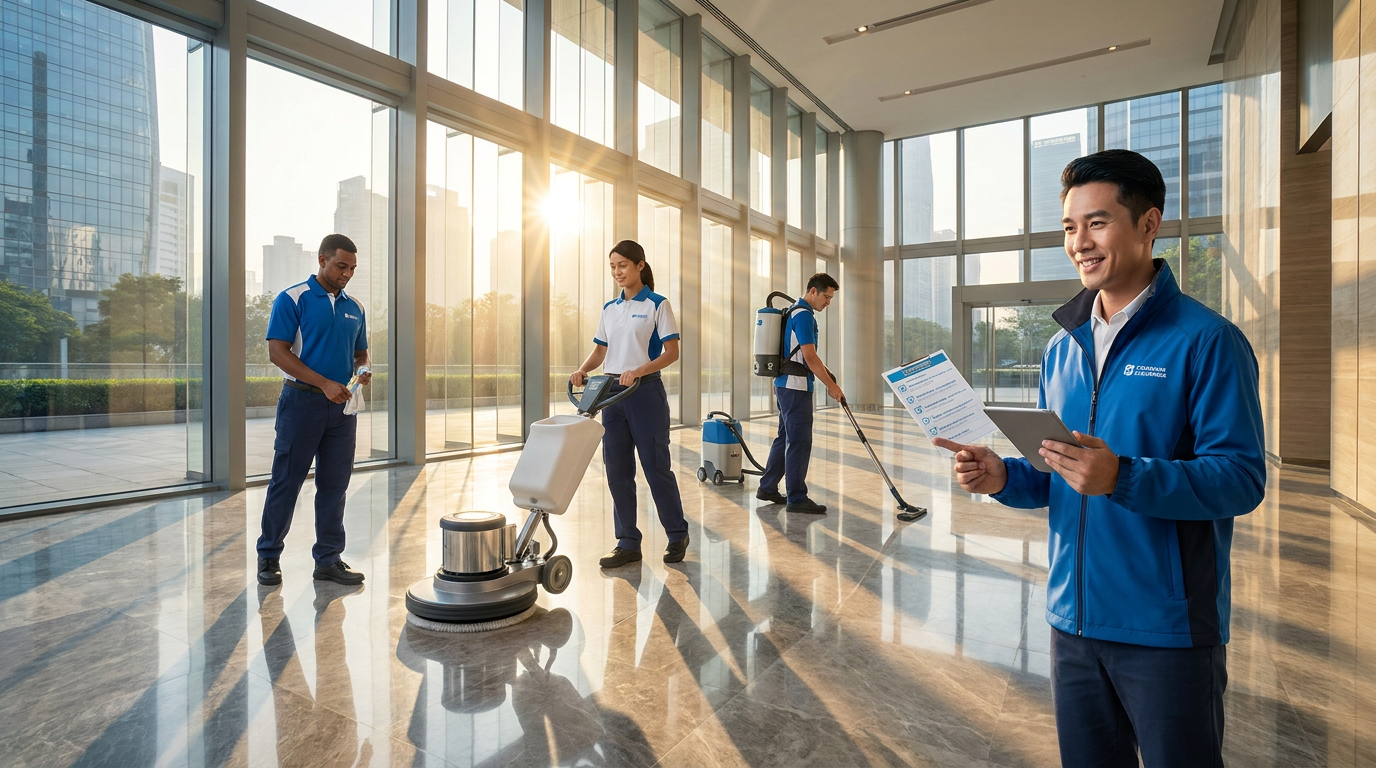
Choose a commercial cleaning company by verifying their insurance and licensing, evaluating their equipment quality, confirming industry-specific experience, and requesting transparent pricing with itemized quotes. The best commercial cleaners carry at least $1 million in general liability coverage, use commercial-grade equipment, and provide written scope-of-work documents before starting any project.
- Verify minimum $1 million general liability insurance and workers' compensation coverage before signing any contract
- Commercial-grade equipment (ride-on scrubbers, truck-mounted extractors) delivers 3-5x better results than residential tools
- Expect pricing between $0.40 and $2.00 per square foot for deep cleaning, depending on floor type and condition
- Request industry-specific references from businesses similar to yours (hotels, schools, offices, retail)
- Require written scope-of-work documents and before/after photo documentation for accountability
Why Choosing the Right Commercial Cleaning Company Matters
Poor cleaning decisions cost businesses an average of $15,000 to $25,000 annually in productivity losses, according to ServiceMaster Clean research. Dirty facilities increase employee sick days by 17% and reduce customer satisfaction scores by up to 22%. The cleaning company you select directly impacts your bottom line, employee retention, and brand reputation.
South Florida businesses face unique challenges that generic cleaning advice ignores. High humidity (averaging 75-80% year-round in Miami-Dade, Broward, and Palm Beach counties) accelerates mold growth, degrades floor finishes faster, and requires specialized equipment. A cleaning company that works well in Phoenix may fail completely in Fort Lauderdale.
The 10-Point Commercial Cleaning Company Evaluation Framework
Use this systematic framework to evaluate any commercial cleaning company. Each criterion includes specific questions to ask and red flags to watch for.
1. Verify Insurance and Licensing Requirements
Every legitimate commercial cleaning company must carry general liability insurance (minimum $1 million coverage), workers' compensation insurance, and appropriate state/local business licenses. In Florida, cleaning companies must register with the Department of State and maintain current occupational licenses in each county they serve.
Request certificates of insurance directly from the company's insurance provider, not just copies from the cleaning company. Verify the policy is current and lists your business as an additional insured. Companies without proper coverage expose you to liability if a worker is injured on your property or if cleaning causes property damage.
Red flags: Reluctance to provide insurance certificates, policies with coverage gaps, expired licenses, or insurance that does not cover the specific services quoted.
2. Evaluate Equipment Quality and Technology
The equipment a cleaning company uses determines the quality of results. Commercial-grade equipment includes ride-on auto-scrubbers, truck-mounted carpet extractors, industrial pressure washers (3,000+ PSI), HEPA-filtered vacuums, and rotary floor machines. These tools cost $5,000 to $50,000 each and deliver results impossible to achieve with consumer equipment.
Ask specifically what equipment will be used on your project. A company using residential-grade equipment (standard shop vacuums, consumer mops, handheld carpet cleaners) cannot deliver professional results regardless of their marketing claims. According to Stanley Steemer industry data, commercial extractors remove 40-60% more embedded soil than residential units.
| Equipment Type | Commercial Grade | Residential Grade | Performance Difference |
|---|---|---|---|
| Floor Scrubber | Ride-on, 26-34 inch path | Walk-behind, 14-18 inch path | 3x faster coverage, deeper clean |
| Carpet Extractor | Truck-mounted, 500+ PSI | Portable, 50-100 PSI | 5x extraction power, faster drying |
| Vacuum | HEPA-filtered, 99.97% capture | Standard filter, 80-90% capture | Better air quality, allergen removal |
| Pressure Washer | 3,000-4,000 PSI, hot water | 1,500-2,000 PSI, cold water | Removes grease, gum, stains effectively |
3. Confirm Industry-Specific Experience
A company that excels at office cleaning may lack expertise in hotel marble restoration, daycare DCF compliance requirements, or post-construction dust removal. Ask for references from businesses in your specific industry. A qualified cleaning company should provide at least three references from similar facilities cleaned within the past 12 months.
Industry-specific expertise matters because each sector has unique requirements. Schools and daycares in Florida must meet DCF sanitation standards with documented service completion records. Hotels require brand-standard compliance and before/after photography for corporate audits. Medical facilities need OSHA-compliant cleaning protocols. General contractors need Certificate of Occupancy-ready cleaning that passes final inspection.
For specialized cleaning needs like DCF-compliant daycare cleaning or post-construction cleaning, verify the company has documented experience meeting those specific regulatory requirements.
4. Demand Transparent, Itemized Pricing
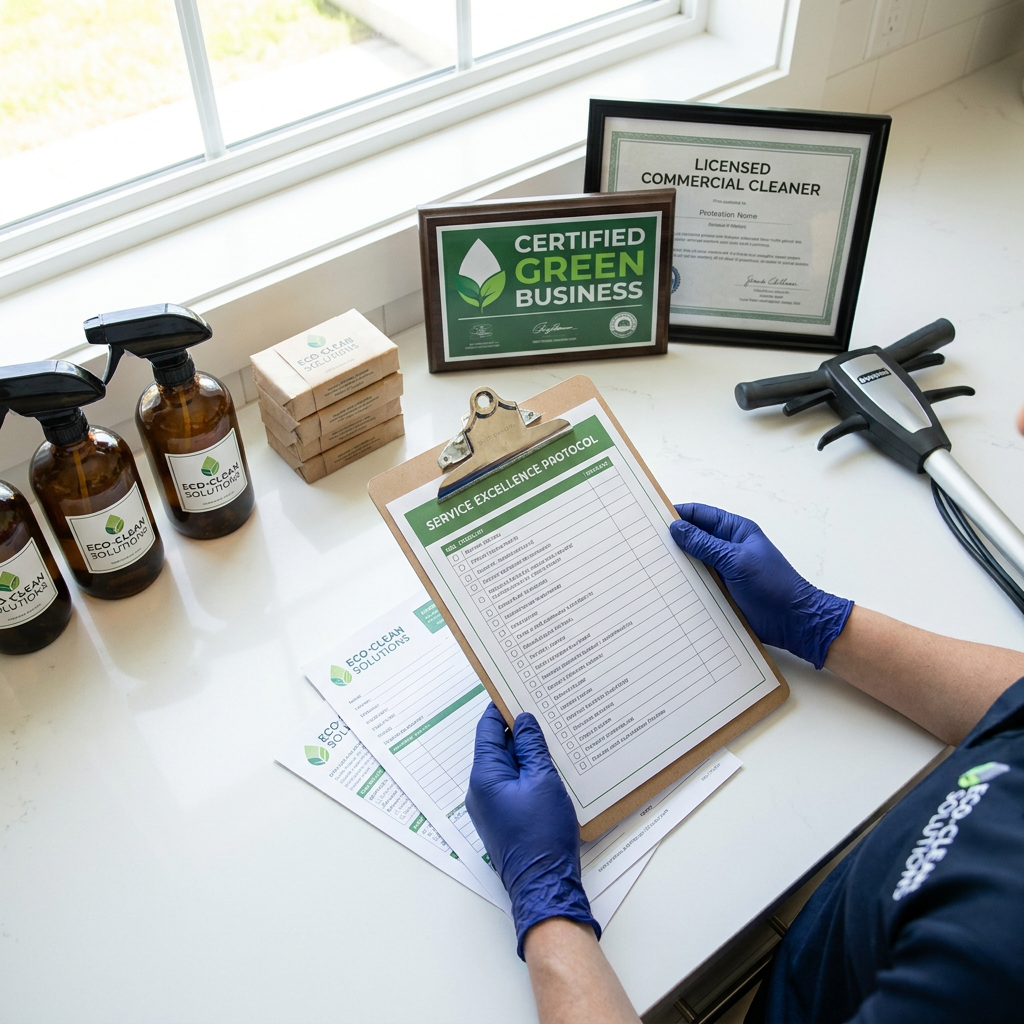
Reputable commercial cleaning companies provide detailed, itemized quotes after an on-site assessment. Pricing should be based on square footage, floor type, condition, and specific services required. Expect to pay between $0.40 and $2.00 per square foot for deep cleaning services, with the range depending on floor material and current condition.
According to Atlas Facilities research, businesses that accept quotes without on-site assessments experience 35% more disputes over scope and pricing. Always require a written scope-of-work document that specifies exactly what is included, excluded, and priced separately.
| Service Type | Price Range (per sq ft) | Typical Frequency |
|---|---|---|
| Commercial Deep Cleaning | $0.40 - $2.00 | Quarterly to annually |
| VCT Floor Scrub and Recoat | $0.60 - $1.50 | Every 3-6 months |
| Floor Stripping and Waxing | $0.85 - $1.80 | Annually |
| Terrazzo Floor Restoration | $0.60 - $2.00 | Every 1-3 years |
| Post-Construction Cleaning | $0.40 - $2.00 | One-time (3-phase process) |
Red flags: Quotes given over the phone without site visits, flat-rate pricing without square footage measurement, reluctance to provide itemized breakdowns, or prices significantly below market rates (often indicates cut corners or hidden fees).
5. Understand the Difference Between Janitorial and Deep Cleaning
Many businesses confuse janitorial services with commercial deep cleaning. Janitorial services include daily or weekly maintenance tasks: emptying trash, vacuuming, restroom restocking, and surface wiping. Deep cleaning involves intensive, specialized work: stripping and waxing floors, cleaning behind equipment, grout restoration, air duct cleaning, and high-pressure extraction.
A company excellent at janitorial services may lack the equipment, training, or expertise for deep cleaning projects. When evaluating companies, clarify whether you need recurring janitorial maintenance, periodic deep cleaning, or both. The companies that excel at one service type often do not perform the other.
6. Verify Certifications and Professional Standards
Look for certifications that indicate professional standards and accountability. Relevant certifications include SBE (Small Business Enterprise), WOSB (Women-Owned Small Business), ISSA CIMS (Cleaning Industry Management Standard), and Green Seal certification for eco-friendly practices. These certifications require documented processes, insurance verification, and ongoing compliance.
For government contracts or large commercial projects, SBE and WOSB certifications can provide procurement advantages while ensuring the company meets established business standards. An SBE and WOSB certified cleaning company has undergone verification of ownership structure, business practices, and operational standards.
7. Assess Communication and Accountability Systems
The best cleaning companies provide documented accountability through before/after photography, service completion reports, and designated account managers. Ask how the company communicates about completed work, handles complaints, and addresses issues that arise during service.
Request sample service reports from previous projects. Quality companies provide detailed documentation including: date and time of service, specific tasks completed, products and equipment used, before/after photos, and technician signatures. This documentation protects both parties and ensures consistent service quality.
Questions to ask: Who is my primary contact? How quickly do you respond to service issues? Do you provide before/after photos? What is your satisfaction guarantee policy?
8. Evaluate Scheduling Flexibility and Response Time
Commercial cleaning often must occur outside business hours, on weekends, or during specific windows (school breaks, hotel room turnover, construction phases). Confirm the company can accommodate your scheduling requirements before signing any agreement.
For South Florida businesses, response time matters during emergencies. Ask about availability for urgent requests, typical lead time for scheduled projects, and capacity during peak seasons. Companies serving Miami-Dade, Broward, and Palm Beach counties should offer same-county response times of 24-48 hours for standard requests.
9. Review Contract Terms and Satisfaction Guarantees
Read contracts carefully before signing. Key terms to review include: cancellation policies, payment schedules, scope change procedures, liability limitations, and satisfaction guarantees. Reputable companies offer 100% satisfaction guarantees with clear processes for addressing concerns.
Avoid contracts that lock you into long-term commitments without performance guarantees. Month-to-month agreements with clear scope documents provide flexibility while protecting both parties. If a company requires a 12-month commitment, ensure the contract includes performance benchmarks and termination clauses for non-performance.
10. Request an On-Site Assessment Before Committing
Never hire a commercial cleaning company without an on-site assessment. During the walkthrough, the company should identify floor types, measure square footage, note condition issues, and discuss specific requirements. This assessment should be free and result in a detailed, written quote within 24-48 hours.
Use the assessment visit to evaluate professionalism. Does the representative arrive on time? Do they take notes and measurements? Do they ask questions about your specific needs and concerns? A free on-site cleaning assessment reveals how the company will handle your actual project.

The Five Principles of Professional Commercial Cleaning
Understanding how professional cleaning works helps you evaluate companies more effectively. The five principles that guide quality commercial cleaning are:
1. Soil Identification: Different soils (organic matter, grease, mineral deposits, adhesives) require different removal methods. Professional cleaners identify soil types before selecting products and equipment.
2. Chemical Selection: The right cleaning chemical for each surface and soil type. Using incorrect chemicals damages surfaces, fails to remove soils, or creates safety hazards. Professionals match pH levels and chemical compositions to specific cleaning tasks.
3. Temperature Control: Heat increases cleaning effectiveness by 2x for every 18-degree Fahrenheit increase. Commercial equipment uses heated water and solutions for superior results.
4. Agitation: Mechanical action breaks the bond between soil and surface. Commercial equipment provides consistent, powerful agitation impossible to achieve manually.
5. Contact Time: Cleaning solutions need adequate dwell time to work. Professional cleaners understand required contact times for different products and applications.
South Florida-Specific Considerations
Businesses in Miami-Dade, Broward, and Palm Beach counties face cleaning challenges that companies from other regions may not understand. South Florida's climate creates unique requirements:
Humidity damage: Average humidity of 75-80% accelerates mold growth, degrades floor finishes, and requires more frequent maintenance cycles. Floor wax that lasts 12 months in Arizona may need replacement every 6-8 months in Miami.
Salt air exposure: Coastal properties experience accelerated corrosion and mineral deposits. Exterior surfaces require more frequent pressure washing, and interior surfaces need specialized products to combat salt residue.
Hurricane preparedness: Cleaning companies should understand post-storm cleanup requirements, water extraction procedures, and mold remediation protocols common after tropical weather events.
Tourism seasonality: Hotels, retail centers, and restaurants experience dramatic seasonal swings. Cleaning companies must scale capacity during peak season (November through April) and accommodate intensive deep cleaning during slower periods.
Questions to Ask During Your Evaluation
Use these specific questions when interviewing commercial cleaning companies:
- What specific equipment will you use on my floors? (Expect brand names and specifications)
- Can you provide three references from businesses similar to mine?
- What is your insurance coverage, and will you add my business as additional insured?
- How do you price your services, and what determines the per-square-foot rate?
- What is included in your satisfaction guarantee?
- How do you handle scheduling conflicts or emergency requests?
- What documentation do you provide after service completion?
- How long have you been serving businesses in [your specific area]?
- What certifications or professional affiliations do you maintain?
- Can you accommodate after-hours or weekend scheduling?
How Much Should You Pay for Commercial Cleaning?
For a 2,000 square foot office, expect to pay between $800 and $4,000 for deep cleaning services, depending on floor type, condition, and specific services required. Standard VCT floor cleaning costs approximately $800-$2,000, while terrazzo restoration or heavy-duty stripping and waxing reaches $1,700-$4,000.
Janitorial services (recurring maintenance) typically cost $0.05-$0.20 per square foot per visit, or $100-$400 monthly for a 2,000 square foot office with weekly service. Deep cleaning is priced separately and typically performed quarterly to annually depending on traffic levels and floor types.
Companies offering significantly lower prices often cut corners on equipment quality, insurance coverage, or labor. The lowest bid rarely delivers the best value. Focus on value per dollar rather than absolute price when comparing quotes.
Making Your Final Decision
After evaluating multiple companies using this framework, compare your findings across all ten criteria. The right commercial cleaning company will demonstrate strong performance in most areas, not just price competitiveness.
Prioritize companies that offer on-site assessments, transparent pricing, documented accountability, and industry-specific experience. A slightly higher price from a qualified, insured, well-equipped company delivers better long-term value than the cheapest option available.
For South Florida businesses seeking commercial floor deep cleaning, floor stripping and waxing, or industry-specific services, start with a free on-site assessment to get accurate pricing and scope documentation before making your decision.
Ready to Get a Free Commercial Cleaning Assessment?
MB Clean Solutions provides free on-site assessments with transparent, itemized quotes delivered within 24 hours. Serving Miami-Dade, Broward, and Palm Beach counties with commercial-grade equipment and a 100% satisfaction guarantee.
Get Your Free QuoteKeep reading
More guides on the same topic from our team.
How to Choose a Commercial Cleaning Service for Office Buildings
Learn the 7 essential criteria for selecting a commercial cleaning service for office buildings, including pricing, certifications, and evaluation checklists.
Read the guide
Office Building Cleaning Checklist: Complete Guide for 2026
Comprehensive office building cleaning checklist covering daily, weekly, and monthly tasks. Includes high-touch surfaces, restrooms, floors, and deep cleaning schedules.
Read the guide
How to Prepare Your Office for Post-Construction Cleaning
Learn the exact steps to prepare an office for post-construction cleaning. Covers the 3 phases, common mistakes, and GC coordination for faster CO approval.
Read the guide
Ready for a Spotless Space?
Get a free, no-obligation estimate for your commercial cleaning project. Most quotes delivered within 24 hours.