Signs Your Commercial Floors Need Professional Restoration
SIGNS YOUR COMMERCIAL FLOORS NEED PROFESSIONAL RESTORATION
Learn the 7 warning signs your commercial floors need professional restoration. Includes cost comparisons, floor type guides, and when to restore vs replace.
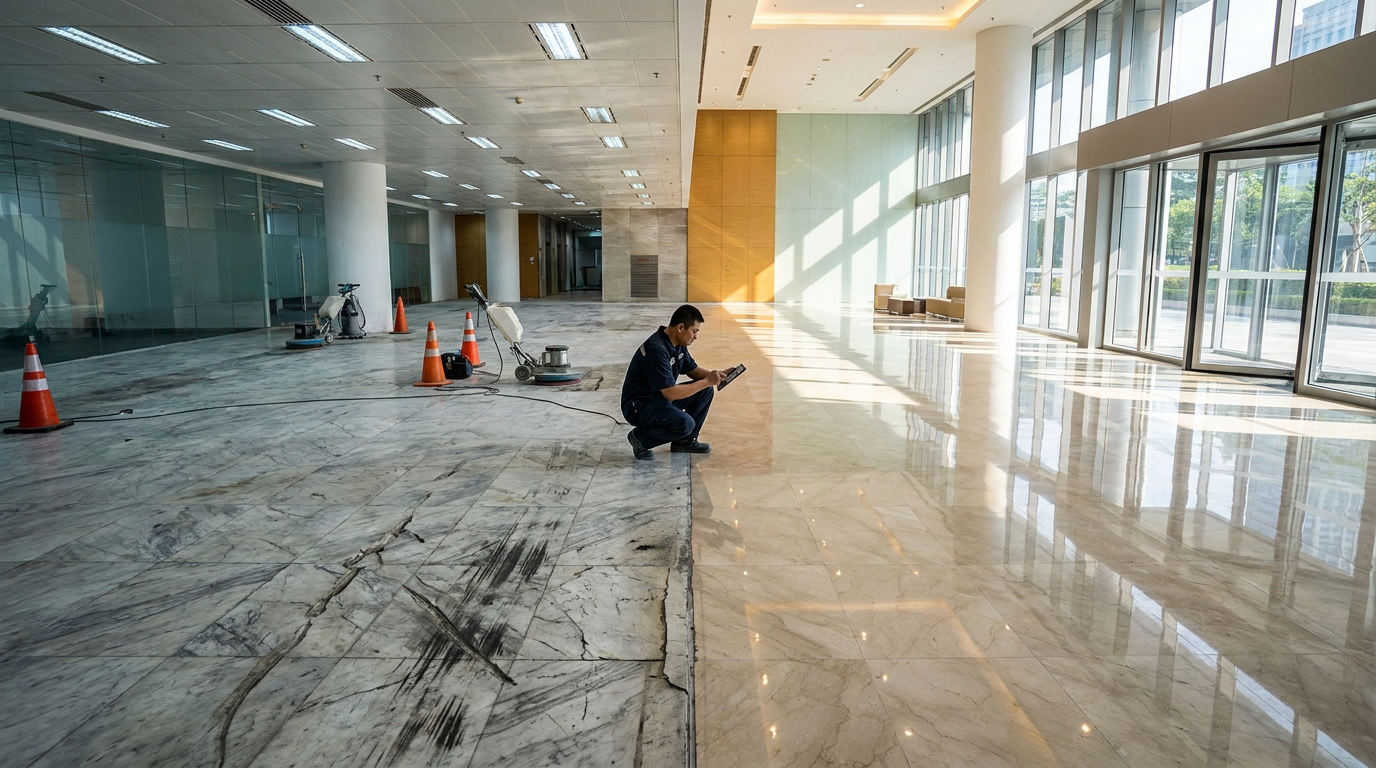
Commercial floors need professional restoration when they show persistent dullness after cleaning, visible scratches that catch light, yellowing or discoloration in wax layers, sticky residue that remains after mopping, uneven sheen across the surface, embedded stains that standard cleaning cannot remove, or peeling and flaking finish along edges and high traffic areas.
- Floors that stay dull after mopping indicate finish breakdown, not dirt accumulation
- Professional restoration costs $0.40 to $2.00 per square foot, while full replacement runs $3 to $12 per square foot
- VCT floors need stripping and waxing every 12 to 18 months in high traffic commercial environments
- South Florida humidity accelerates finish degradation by 30 to 40 percent compared to dry climates
- Early restoration intervention extends floor lifespan by 5 to 10 years versus waiting until replacement is necessary
The 7 Warning Signs That Indicate Restoration Is Needed
According to Corporate Care's floor coating analysis, the most reliable indicator of floor deterioration is when surfaces fail to achieve their original appearance even after thorough cleaning. This distinction separates floors that need deeper cleaning from those requiring professional restoration services.
Sign 1: Persistent Dullness After Cleaning
Healthy floor finishes reflect 70 to 85 percent of overhead light. When your VCT, terrazzo, or polished concrete floors absorb light instead of reflecting it, the protective finish has degraded beyond what regular maintenance can address. This occurs because microscopic scratches in the finish scatter light rather than bouncing it back uniformly.
Test this yourself: after your janitorial team mops, check the floor under fluorescent lighting within 30 minutes. If the surface appears hazy or cloudy rather than glossy, the finish layer has failed. A professional scrub and recoat service can restore reflectivity without the cost of full stripping.
Sign 2: Visible Scratches That Catch Light
Surface scratches become visible when they penetrate through the top wax layer into lower finish coats or the flooring material itself. According to Jenson Natural Stone Cleaning, scratches that remain visible after cleaning indicate the protective barrier has been compromised. This exposes the underlying floor material to moisture, chemicals, and accelerated wear.
In retail environments with shopping cart traffic, scratches typically appear within 6 to 9 months of a fresh wax application. Office buildings with chair casters see similar damage patterns in reception areas and conference rooms where furniture movement concentrates.
Sign 3: Yellowing or Discoloration
Wax buildup along baseboards, corners, and low traffic areas creates a yellowed, aged appearance. This happens when cleaning crews apply new wax coats over old finish without proper stripping. Each layer traps dirt particles and oxidizes over time, creating a sandwich effect of discolored material.
The International Sanitary Supply Association (ISSA) recommends complete floor stripping and waxing when yellowing extends more than 6 inches from walls or when color variation between high and low traffic areas exceeds two shades. This process removes all finish layers down to bare flooring before applying fresh coats.
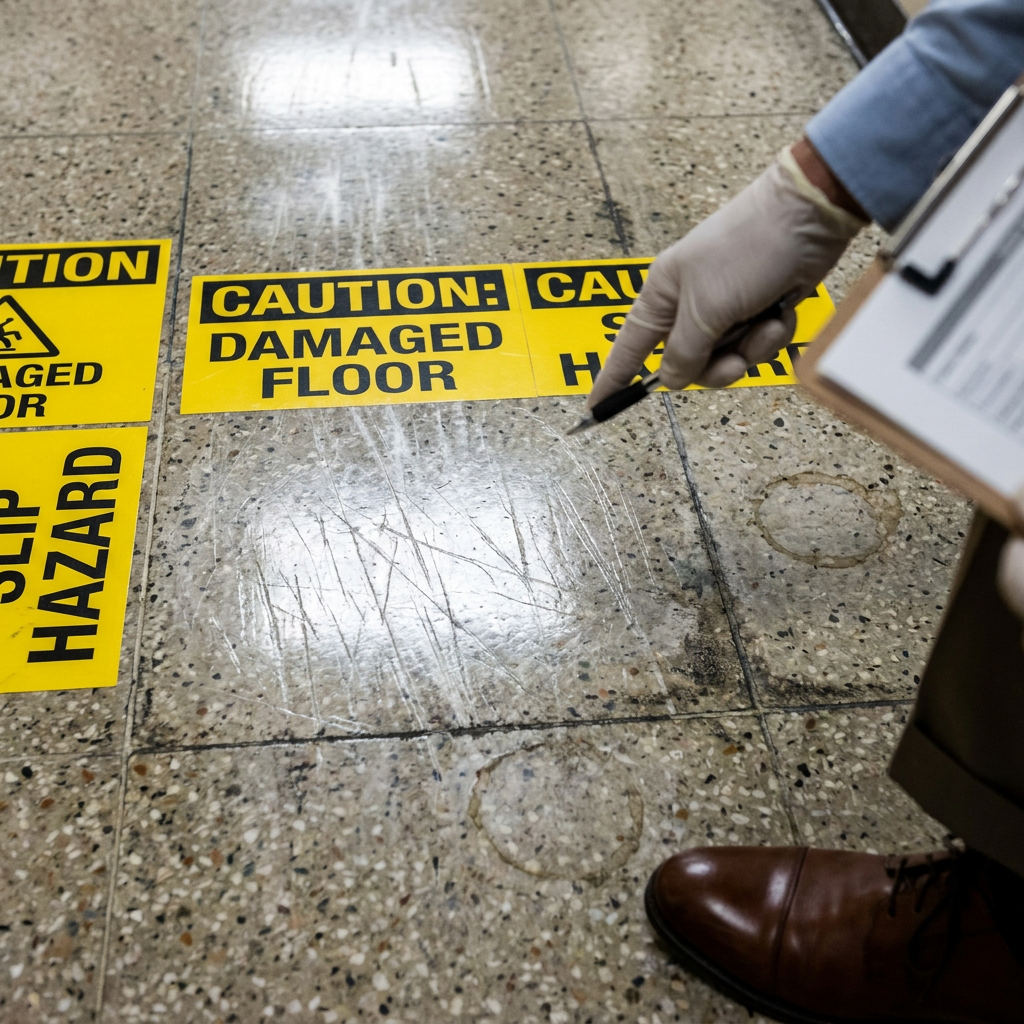
Sign 4: Sticky Residue After Mopping
Floors that feel tacky or sticky 20 to 30 minutes after mopping indicate chemical buildup or finish breakdown. This occurs when cleaning solutions interact with degraded wax, creating a gummy surface that attracts more dirt. The problem compounds with each cleaning cycle.
Common causes include using the wrong dilution ratio of floor cleaner, applying finish over improperly cleaned surfaces, or using products incompatible with the existing wax type. Professional restoration begins with chemical stripping to remove all residue before applying compatible finish products.
Sign 5: Uneven Sheen Across the Surface
When some areas appear glossy while others look flat, the floor finish has worn unevenly. High traffic paths between entrances, elevators, and workstations wear 3 to 5 times faster than peripheral areas. This creates visible "trails" that make even clean floors look neglected.
The National Floor Safety Institute reports that uneven floor finishes also create slip hazards, with worn areas showing friction coefficients 15 to 25 percent lower than properly maintained sections. Restoration addresses both aesthetic and safety concerns simultaneously.
Sign 6: Embedded Stains and Marks
Stains that persist through multiple cleaning attempts have penetrated below the finish layer. Coffee spills, grease marks, and chemical drips can etch through wax within 30 minutes if not addressed immediately. Once embedded, these marks require mechanical removal through scrubbing or stripping.
Black heel marks from rubber soled shoes present a particular challenge. While fresh marks respond to buffing, marks left for more than 72 hours often bond chemically with floor finish. Professional auto scrubbers with appropriate pads remove these marks without damaging surrounding finish.
Sign 7: Peeling and Flaking Finish
Finish that chips, peels, or flakes indicates adhesion failure between layers or between finish and flooring. This commonly occurs when new wax is applied over contaminated surfaces, when humidity exceeds 65 percent during application, or when incompatible products are layered together.
In South Florida's climate, humidity related adhesion failures occur 40 percent more frequently than in dry regions, according to flooring industry data. Professional restoration teams use moisture meters to verify conditions before application and select products formulated for high humidity environments.
Floor Type Comparison: Restoration Needs by Material
Different commercial flooring materials show wear in distinct ways and require specific restoration approaches. Understanding your floor type helps you identify problems earlier and choose appropriate restoration services.
| Floor Type | Common Warning Signs | Restoration Method | Cost per Sq Ft |
|---|---|---|---|
| VCT (Vinyl Composition Tile) | Yellowing, scuff marks, dull patches, edge buildup | Strip and wax or scrub and recoat | $0.40 to $1.80 |
| Polished Concrete | Loss of reflection, staining, surface pitting | Diamond polishing, sealer application | $0.50 to $1.50 |
| Terrazzo | Dullness, etching, visible aggregate, cracks | Grinding, honing, polishing, crystallizing | $0.60 to $2.00 |
| Ceramic Tile | Grout discoloration, haze, embedded dirt in texture | Deep scrubbing, grout cleaning, sealing | $0.40 to $1.50 |
| Luxury Vinyl Plank (LVP) | Scratches, wear layer damage, edge lifting | Deep cleaning, specialized coating | $0.40 to $1.00 |
| Natural Stone (Marble, Granite) | Etching, dullness, lippage, staining | Diamond grinding, honing, polishing | $1.00 to $2.00 |
Restoration vs Replacement: Making the Right Decision
According to Jack Laurie Group's commercial flooring analysis, restoration makes financial sense when damage affects only the finish layer rather than the flooring substrate. This applies to approximately 85 percent of floors that appear worn or damaged.
Replacement becomes necessary when structural damage exists: cracked tiles, delaminating layers, significant chips or gouges, or moisture damage to subflooring. Water intrusion under VCT or vinyl causes permanent warping that no restoration process can correct.
Cost Comparison: Restoration vs Replacement
For a 10,000 square foot commercial space, the numbers favor restoration significantly. Professional floor restoration costs between $4,000 and $20,000 depending on floor type and condition. Full replacement of the same area runs $30,000 to $120,000 for materials and installation, plus 3 to 7 days of business disruption.
Restoration typically completes in 1 to 2 days with after hours scheduling available. MB Clean Solutions performs most commercial floor restoration projects overnight or on weekends, eliminating operational downtime for Miami-Dade, Broward, and Palm Beach County businesses.
Industry Specific Floor Restoration Indicators
Different commercial environments create unique wear patterns. Recognizing industry specific signs helps facility managers schedule restoration before minor issues become major problems.
Retail and Shopping Centers
Shopping cart wheels create linear scratch patterns that concentrate in main aisles. Food court areas show grease penetration and chemical etching from spills. Entrance areas experience 10 times more wear than interior spaces due to tracked in grit acting as abrasive under foot traffic.
Retail floors typically need restoration every 6 to 12 months in high traffic locations. Retail floor restoration services often schedule during overnight hours to avoid disrupting shopping hours and sales.
Office Buildings
Chair caster damage creates circular wear patterns around workstations. Elevator lobbies and reception areas show concentrated traffic wear. Break rooms and kitchens develop grease buildup and staining around appliances and vending machines.
Class A office buildings require quarterly maintenance and annual restoration to maintain tenant satisfaction. Property managers serving multiple tenants benefit from coordinated office building cleaning programs that address common areas and individual suites systematically.
Hotels and Hospitality
Lobby marble floors show etching from luggage wheels and acidic spills within 3 to 6 months of polishing. Ballroom floors require event ready restoration between major functions. Pool deck areas need pressure washing and sealing every 6 months in South Florida's climate.
Guest perception directly impacts occupancy rates and room pricing. Hotel floor restoration typically includes before and after documentation for brand standard compliance verification.
Schools and Daycares
Educational facilities face unique challenges: heavy foot traffic from students, frequent spills, and strict regulatory requirements. Florida Department of Children and Families (DCF) licensed daycares must maintain sanitary floor conditions documented through inspection records.
School floors need complete restoration during summer break, winter recess, or spring break when facilities are empty. DCF compliant daycare cleaning includes signed service completion documentation for inspection files.
How South Florida Climate Accelerates Floor Deterioration
Miami-Dade, Broward, and Palm Beach counties experience average humidity levels of 73 to 76 percent year round. This moisture rich environment affects floor finishes in ways that facilities in drier climates never encounter.
High humidity prevents floor finish from curing properly, creating soft surfaces that scratch easily. Salt air from coastal proximity accelerates oxidation of wax layers. Temperature fluctuations between air conditioned interiors and outdoor heat cause expansion and contraction that breaks finish bonds.
South Florida commercial floors require 30 to 40 percent more frequent restoration than identical floors in Phoenix, Denver, or other low humidity markets. Facilities within 5 miles of the coast experience even faster degradation due to salt content in the air.
The Professional Restoration Process
Understanding what professional restoration involves helps facility managers evaluate quotes and set realistic expectations for results and timelines.
Assessment Phase
Professional restoration begins with on site evaluation of floor type, current condition, square footage, and access constraints. Technicians identify the flooring material, measure finish thickness where applicable, and document problem areas with photographs.
MB Clean Solutions provides free on site floor assessments with quotes delivered within 24 hours. This evaluation determines whether scrub and recoat, full strip and wax, or specialized restoration is appropriate.
Preparation Phase
Furniture and obstacles are moved or protected. Adjacent surfaces receive masking to prevent chemical contact. Ventilation is assessed and supplemented if needed for product application.
Restoration Phase
For VCT and vinyl floors, restoration involves either scrubbing the top finish layer and applying 2 to 3 fresh wax coats, or completely stripping all finish layers before applying 4 to 6 new coats. Industrial auto scrubbers, rotary machines, and professional grade chemicals achieve results impossible with standard janitorial equipment.
Stone and concrete floors undergo diamond grinding at progressively finer grits (typically 50, 100, 200, 400, 800, 1500, 3000) followed by polishing compounds and sealers. This multi step process restores reflectivity and creates a new protective surface.
Curing and Completion
Fresh floor finish requires 30 to 60 minutes drying time between coats and 24 to 48 hours before normal traffic. Professional crews schedule application to maximize curing time before business operations resume.
Maintenance Schedules to Extend Restoration Results
Professional restoration delivers optimal results when supported by appropriate ongoing maintenance. The following schedule applies to most commercial environments in South Florida.
| Frequency | Service | Purpose |
|---|---|---|
| Daily | Dust mopping, spot cleaning | Remove abrasive grit before it scratches finish |
| Weekly | Damp mopping with neutral cleaner | Remove surface soil without damaging finish |
| Monthly | Auto scrubbing or spray buffing | Restore surface gloss, remove light scuffs |
| Quarterly | Scrub and recoat (2 to 3 coats) | Rebuild finish layer, extend time between full restoration |
| Annually | Full strip and wax (4 to 6 coats) | Complete finish replacement, address accumulated damage |
High traffic environments like retail stores, schools, and medical facilities may require quarterly scrub and recoat services and semi annual strip and wax cycles. Low traffic areas like executive offices may extend to annual scrub and recoat with strip and wax every 18 to 24 months.
Questions Facility Managers Ask About Floor Restoration
How Do I Know If Floors Need Replacement Instead of Restoration?
Floors need replacement when damage extends beyond the finish into the flooring material itself. According to Sealwell Inc's flooring analysis, indicators include cracks that extend through tiles, warping from moisture damage, significant chips or gouges, loose or missing tiles, and subfloor damage visible through the flooring surface. Restoration addresses finish problems; replacement addresses structural problems.
Do Floor Scratches Count as Normal Wear and Tear?
Light surface scratches that affect only the top wax layer qualify as normal wear and respond to buffing or recoating. Deep scratches that penetrate through finish layers or into flooring material indicate accelerated wear from inadequate maintenance, improper cleaning methods, or environmental factors. Lease agreements typically distinguish between these conditions for security deposit purposes.
Can Hardwood Floors Be Refinished Instead of Replaced?
Solid hardwood floors can typically be refinished 3 to 5 times before replacement becomes necessary. Engineered hardwood with veneer layers of 2mm or more can usually be refinished once or twice. The determining factor is remaining wood thickness above the tongue and groove. Professional assessment with a moisture meter and thickness gauge provides accurate refinishing potential evaluation.
Should Commercial Hardwood Floors Be Professionally Cleaned?
Commercial hardwood floors benefit from professional cleaning every 6 to 12 months depending on traffic levels. Professional equipment extracts embedded dirt that daily cleaning misses and applies protective treatments that extend finish life. DIY cleaning with consumer products often leaves residue that dulls appearance and attracts more soil.
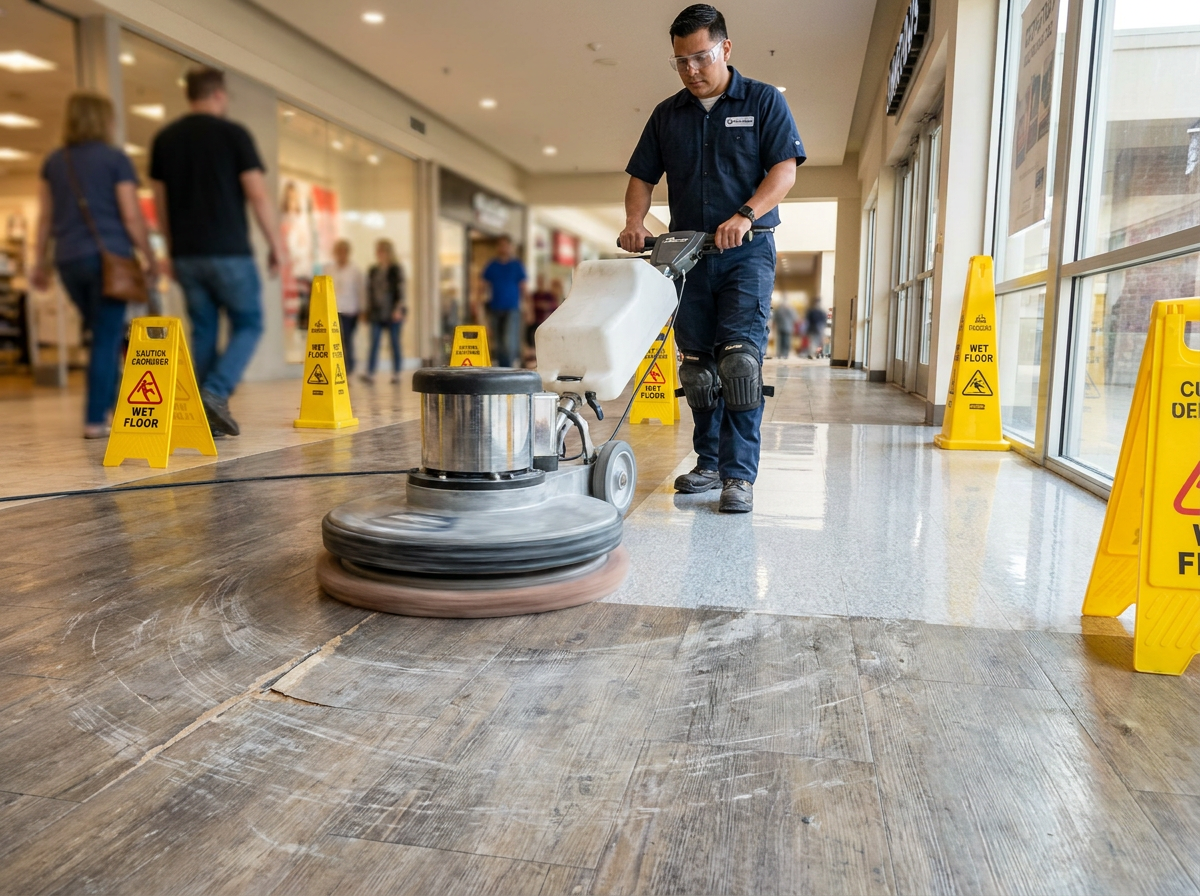
Choosing a Commercial Floor Restoration Provider
Not all floor restoration services deliver equal results. Key differentiators include equipment quality, product selection, technician training, and service guarantees.
Industrial grade equipment like ride on scrubbers, truck mounted extractors, and professional rotary machines achieve results impossible with standard janitorial tools. Commercial grade floor finishes from manufacturers like Betco, Diversey, and Johnson Professional provide durability that consumer products cannot match.
MB Clean Solutions, an SBE and WOSB certified cleaning company based in Aventura, Florida, serves commercial properties across Miami-Dade, Broward, and Palm Beach counties. Services include VCT floor stripping and waxing, terrazzo restoration, polished concrete maintenance, and specialty floor care for hotels, retail centers, office buildings, schools, and post construction projects.
All work includes a 100 percent satisfaction guarantee with transparent, upfront pricing. Most projects complete overnight or on weekends to minimize business disruption. Before and after documentation provides verification for property managers and building owners.
Schedule Your Free Floor Assessment
MB Clean Solutions provides complimentary on site evaluations for commercial properties in South Florida. Receive a detailed assessment and transparent quote within 24 hours.
Request Your Free QuoteSiga leyendo
Más guías sobre el mismo tema.
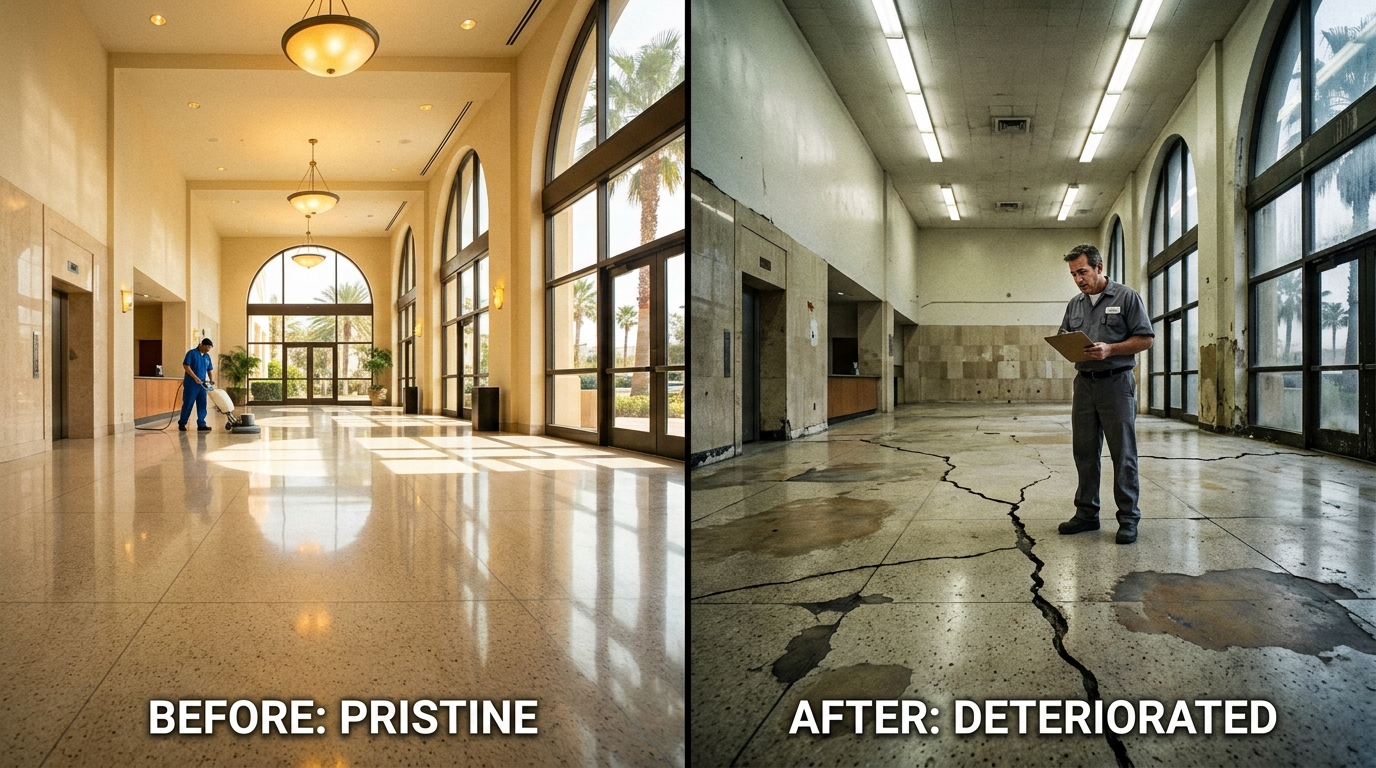
Floor Maintenance Program Cost vs Reactive Repairs: Full Analysis
Reactive floor repairs cost 3 to 5 times more than planned maintenance. See the full cost breakdown by floor type, plus ROI data for South Florida facilities.
Leer la guía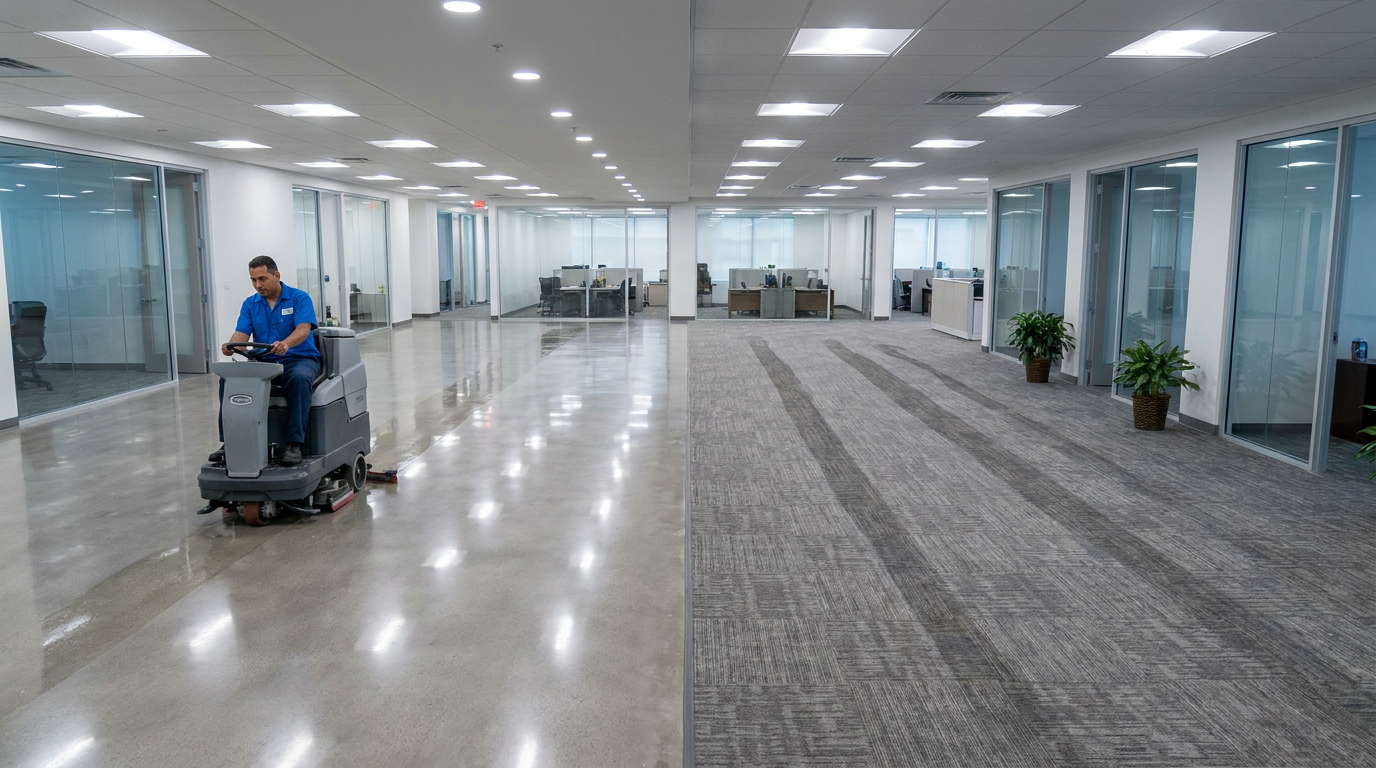
Commercial Carpet vs Hard Floor Maintenance Costs: 10-Year Analysis
Compare commercial carpet and hard floor maintenance costs over 10 years. Includes VCT, polished concrete, and carpet data with real pricing for South Florida facilities.
Leer la guía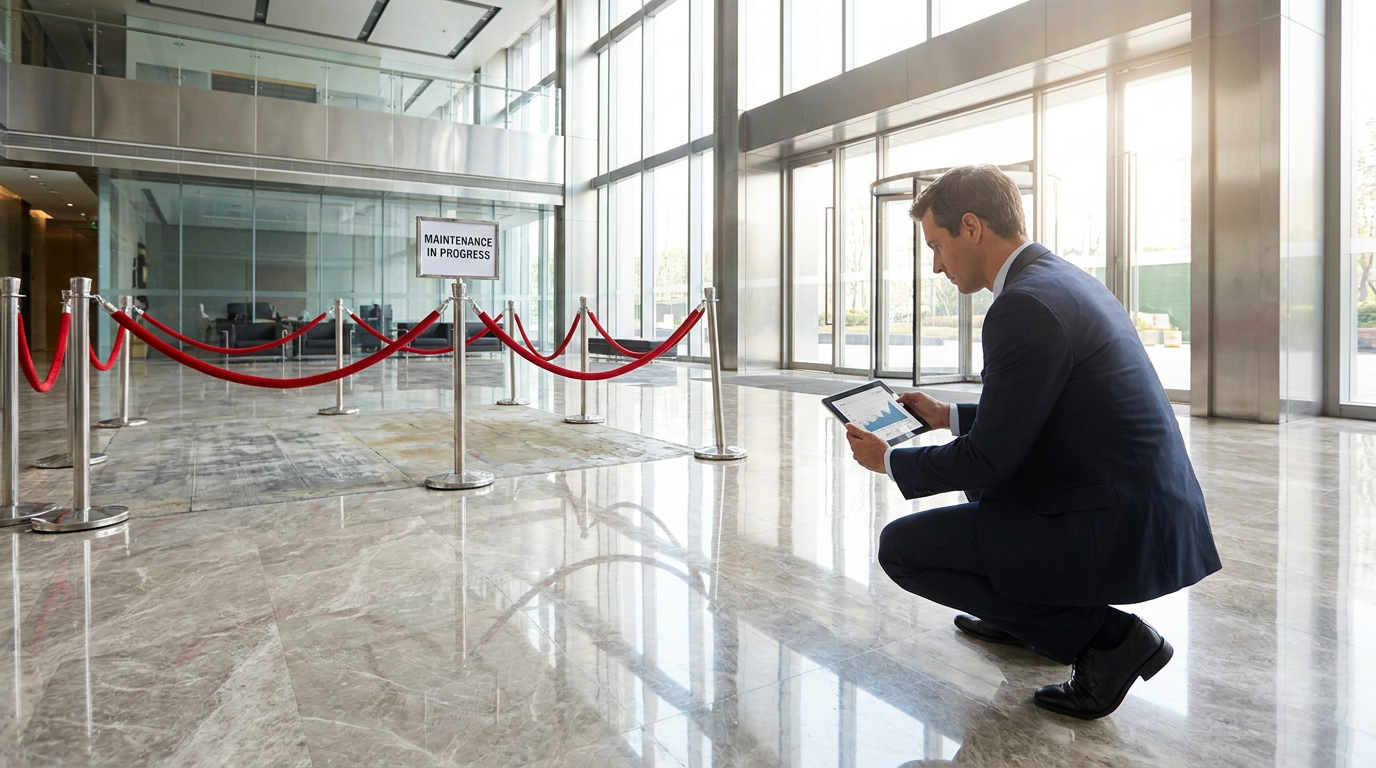
ROI of Professional Floor Maintenance Programs for Commercial Buildings
Professional floor maintenance programs deliver 9-18 month payback periods. Learn how to calculate ROI, reduce costs, and extend floor life in commercial facilities.
Leer la guía
¿Listo Para un Espacio Impecable?
Obtenga un estimado gratis y sin compromiso para su proyecto de limpieza comercial. La mayoría de las cotizaciones se entregan en 24 horas.