Signs Your Commercial Floor Needs Professional Restoration
SIGNS YOUR COMMERCIAL FLOOR NEEDS PROFESSIONAL RESTORATION
Learn the 8 warning signs that indicate your commercial floor needs professional restoration, from yellowing wax to safety hazards. Free assessment available.
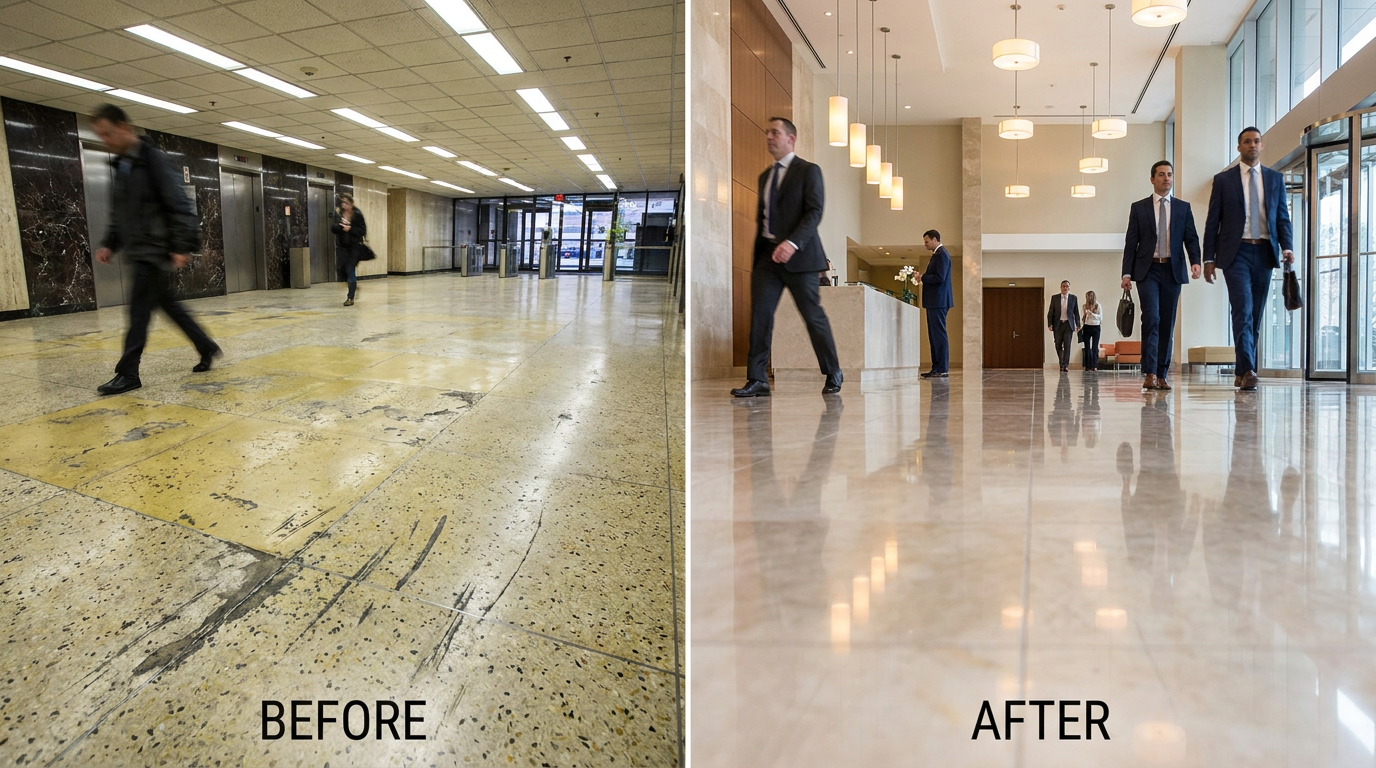
Commercial floors need professional restoration when they show yellowing finish, embedded stains that resist cleaning, visible scratches in high-traffic areas, or peeling wax along edges. These conditions indicate the protective finish has failed, leaving the substrate vulnerable to permanent damage and creating potential safety hazards.
- Yellowing or discoloration signals oxidized finish requiring full strip and wax ($0.85 to $1.80 per square foot)
- Floors that look dirty after cleaning indicate finish breakdown, not cleaning failure
- South Florida humidity accelerates finish degradation by 30 to 40 percent compared to dry climates
- Restoration costs 60 to 80 percent less than full floor replacement
- Most VCT floors need scrub and recoat every 3 to 6 months, full restoration annually
Why Floor Condition Matters for Commercial Properties
According to the CentiMark facility maintenance guidelines, early identification of floor damage prevents costly substrate repairs and extends floor lifespan by 5 to 10 years. Facility managers who address warning signs promptly spend 40 to 60 percent less on floor maintenance over a 10-year period compared to reactive approaches.
Commercial flooring represents a significant capital investment. VCT installation costs $3 to $5 per square foot, terrazzo runs $15 to $30 per square foot, and polished concrete averages $6 to $12 per square foot. Professional restoration at $0.40 to $2.00 per square foot protects this investment while maintaining the professional appearance tenants and customers expect.
Sign 1: Yellowing or Discoloration Across the Floor Surface
Yellowing occurs when floor wax oxidizes from UV exposure, chemical reactions, or age. This problem appears most prominently in areas receiving direct sunlight, near windows, or under fluorescent lighting. The International Facility Management Association (IFMA) reports that yellowed floors reduce perceived cleanliness ratings by 35 percent in tenant satisfaction surveys.
In South Florida, the combination of intense UV exposure and high humidity accelerates yellowing. Floors that might last 18 months between restorations in northern climates often require attention every 9 to 12 months in Miami-Dade, Broward, and Palm Beach counties.
What to look for: Compare floor color near walls (protected areas) to high-traffic zones. A noticeable difference indicates oxidation. Check corners where wax buildup creates darker, amber-toned deposits.
Sign 2: Embedded Dirt That Will Not Clean Away
When standard mopping and scrubbing fail to remove visible dirt, the protective finish has degraded. Dirt particles penetrate the compromised wax layer and become trapped beneath the surface. According to Corporate Care's floor coating analysis, this condition indicates the floor coating has reached end-of-life and requires professional intervention.
This issue commonly appears in entryways, hallways, and checkout areas where foot traffic concentrates. The embedded dirt creates a perpetually dirty appearance regardless of cleaning frequency or intensity.
The business impact: A 2024 retail industry study found that 67 percent of customers form quality judgments about a business within 7 seconds of entering, with floor condition ranking among the top three visual factors influencing perception.
Sign 3: Visible Scratches, Scuff Marks, and Surface Damage
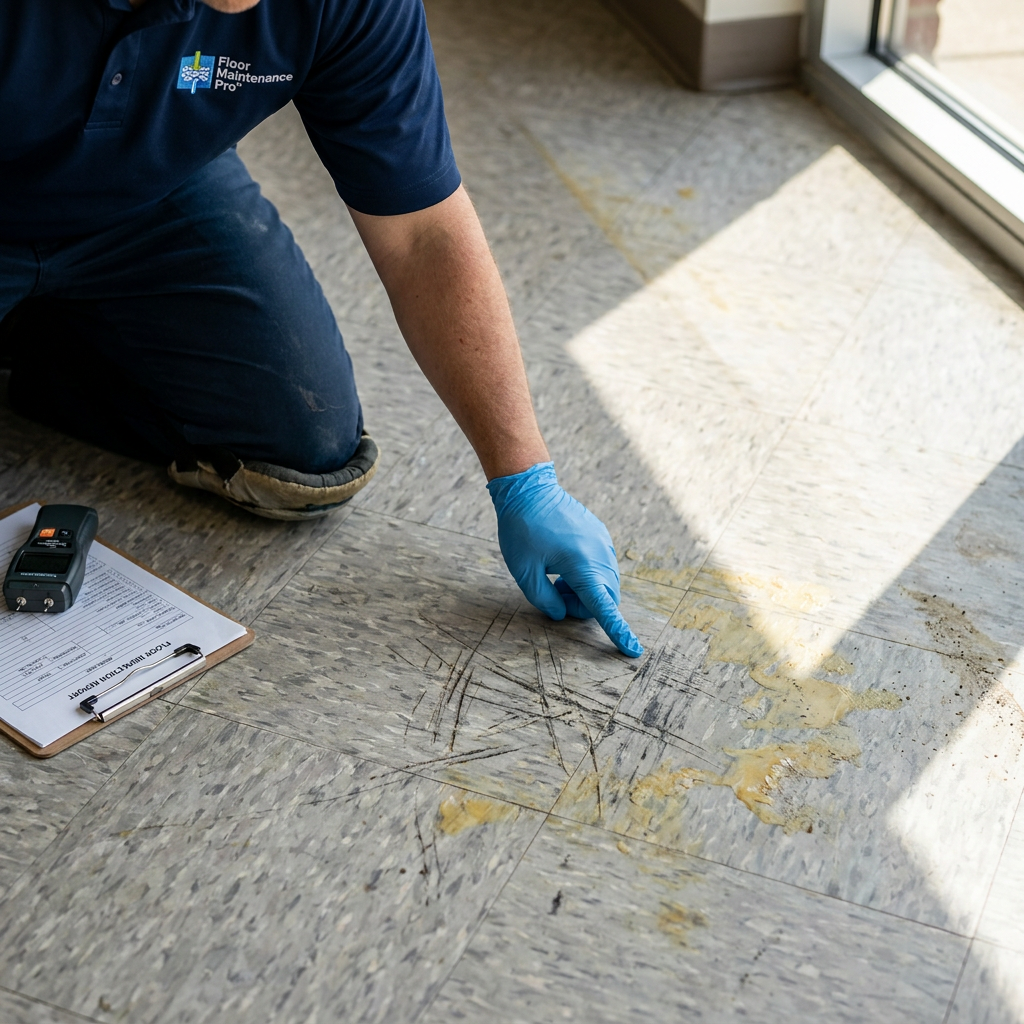
Surface scratches indicate the protective finish has worn through to the substrate. Light scratches affect only the wax layer and respond well to scrub and recoat services. Deep scratches that expose the underlying VCT, concrete, or terrazzo require full stripping before restoration can begin.
According to Brenner Floor Services' restoration guide, high-traffic commercial environments accumulate 200 to 400 micro-scratches per square foot annually. Without periodic restoration, these scratches compound into visible wear patterns within 6 to 12 months.
Common scratch sources: Rolling chairs without floor protectors, pallet jacks, shopping carts, high-heeled shoes, and grit tracked in from parking lots. South Florida's sandy soil creates particularly abrasive conditions for commercial floors.
Sign 4: Peeling, Flaking, or Bubbling Floor Finish
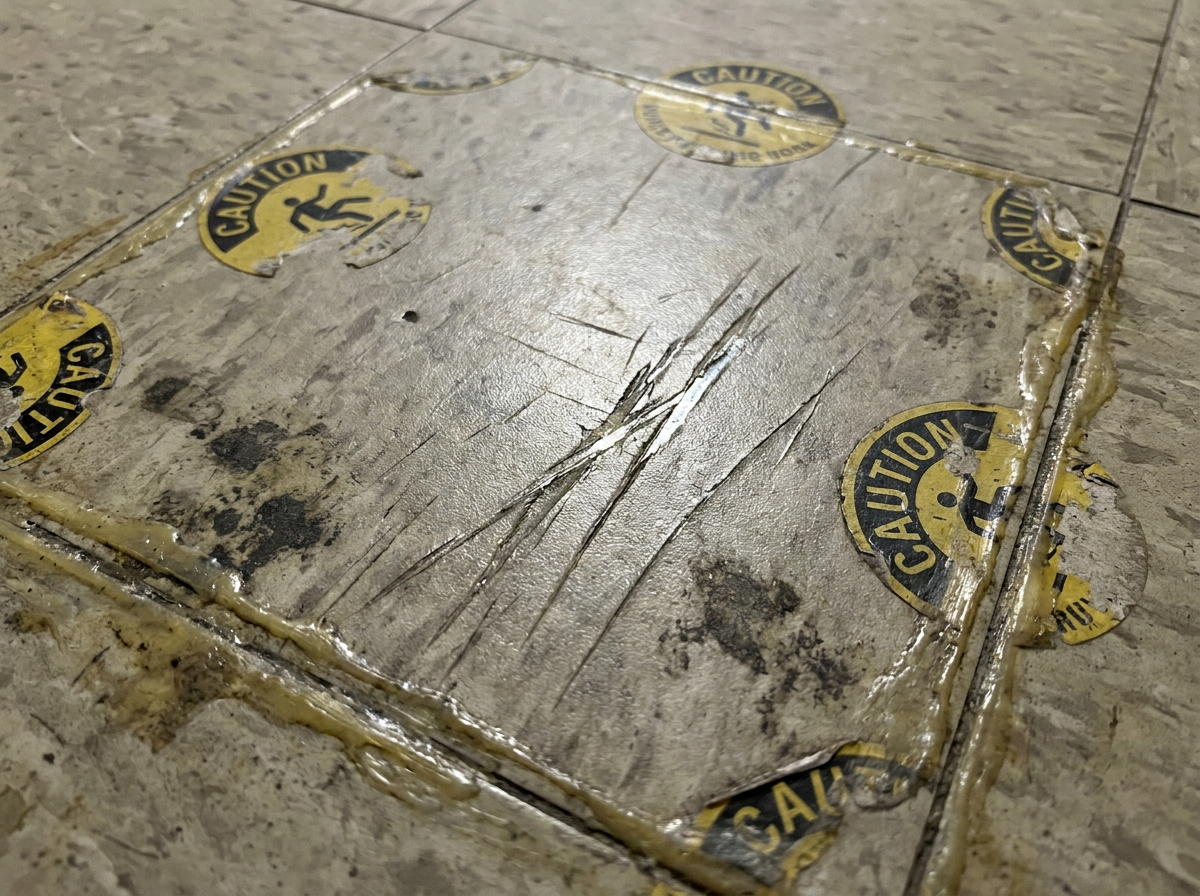
Peeling finish indicates adhesion failure between wax layers or between the finish and substrate. This problem often starts along edges, under furniture, and in corners where moisture accumulates. Once peeling begins, it spreads rapidly across adjacent areas.
Humidity plays a significant role in adhesion failure. South Florida's average 75 to 80 percent relative humidity creates challenging conditions for floor finishes. Moisture trapped beneath wax layers causes bubbling and eventual delamination.
Inspection technique: Run a fingernail along floor edges and transition strips. If finish lifts or flakes away, the floor needs professional floor stripping and waxing to remove all compromised layers and rebuild the protective coating.
Sign 5: Loss of Shine and Gloss Despite Regular Maintenance
New floor finish typically measures 80 to 90 on the gloss meter scale. When readings drop below 50, or when floors appear dull despite buffing, the finish has degraded beyond what maintenance can restore. The Resilient Floor Covering Institute (RFCI) recommends restoration when gloss levels fall below 60 percent of original readings.
Dull floors absorb rather than reflect light, making spaces appear darker and less inviting. Retail environments report 8 to 12 percent decreases in dwell time when floor gloss drops below acceptable thresholds.
Maintenance versus restoration: A quarterly scrub and recoat service can restore moderate gloss loss at $0.60 to $1.50 per square foot. Severely degraded finishes require full strip and wax at $0.85 to $1.80 per square foot.
Sign 6: Water Damage, Staining, or Discoloration Patterns
Water damage manifests as white hazing, dark staining, or warped sections depending on floor type. VCT shows white bloom patterns when moisture penetrates the finish. Concrete develops dark patches where water has carried minerals to the surface. Terrazzo may exhibit efflorescence, a white crystalline deposit indicating moisture migration.
South Florida properties face elevated water damage risk from tropical storms, air conditioning condensation, and plumbing issues. The National Floor Safety Institute reports that water-damaged floors increase slip-and-fall incidents by 45 percent.
Immediate action required: Water damage worsens rapidly. Floors showing water damage signs need assessment within 48 to 72 hours to prevent substrate damage that escalates restoration costs by 200 to 300 percent.
Sign 7: Uneven Surfaces, Lippage, or Tripping Hazards
Uneven floor surfaces create liability exposure and ADA compliance concerns. The Americans with Disabilities Act (ADA) specifies that floor level changes exceeding 1/4 inch require ramping or correction. Lippage between tiles exceeding 1/16 inch constitutes a tripping hazard under OSHA workplace safety standards.
Unevenness develops from substrate settling, improper installation, or differential wear patterns. High-traffic paths often wear faster than surrounding areas, creating subtle depressions that collect dirt and moisture.
Safety implications: The National Floor Safety Institute documents over 1 million slip-and-fall injuries annually in commercial settings, with uneven surfaces contributing to 22 percent of incidents. Average settlement costs for commercial slip-and-fall claims exceed $30,000.
Sign 8: Wax Buildup in Corners and Along Edges
Dark, thick deposits along baseboards and in corners indicate excessive wax buildup from improper application or inadequate stripping during previous maintenance. This buildup traps dirt, creates an unprofessional appearance, and signals that the entire floor likely has uneven finish thickness.
Proper floor restoration removes all existing finish layers down to bare substrate before applying fresh coats. When corners show heavy buildup, previous services likely applied new wax over old without proper stripping, a practice that degrades floor appearance and shortens finish lifespan.
The solution: Full strip and wax removes all accumulated layers, levels the finish across the entire surface, and establishes a proper foundation for ongoing maintenance programs.
Restoration Options by Floor Condition
| Floor Condition | Recommended Service | Cost per Sq Ft | Timeframe |
|---|---|---|---|
| Light scuffing, minor dullness | Scrub and Recoat | $0.60 to $1.50 | Every 3 to 6 months |
| Yellowing, embedded dirt, peeling | Full Strip and Wax | $0.85 to $1.80 | Annually |
| Heavy wear, substrate exposure | Deep Clean + Strip and Wax | $1.00 to $2.00 | As needed |
| Terrazzo haze, marble etching | Diamond Polishing | $0.60 to $2.00 | Every 12 to 24 months |
Floor Type Considerations for South Florida Properties
Different floor materials exhibit different warning signs and require specialized restoration approaches. Understanding your specific floor type helps identify problems early and select appropriate restoration services.
VCT (Vinyl Composition Tile)
VCT remains the most common commercial flooring in South Florida retail, schools, and healthcare facilities. This material shows wear through yellowing, scuffing, and finish breakdown. VCT responds well to both scrub and recoat maintenance and full strip and wax restoration. Commercial floor deep cleaning services address VCT at $0.40 to $1.00 per square foot.
Polished Concrete
Polished concrete in warehouses, retail showrooms, and modern office spaces loses reflectivity over time. Staining from oil, chemicals, or organic matter requires specialized treatment. Restoration costs range from $0.50 to $1.50 per square foot depending on condition and desired finish level.
Terrazzo
Terrazzo floors in South Florida hotels, schools, and historic buildings require specialized diamond polishing for restoration. This multi-step process (grind, hone, polish, crystallize) restores the characteristic high-gloss finish. Hotel and hospitality cleaning services include terrazzo restoration at $0.60 to $2.00 per square foot.
Industry-Specific Restoration Considerations
Different commercial environments create unique floor challenges that influence restoration timing and approach.
Retail and Shopping Centers: High foot traffic, shopping cart damage, and food court spills accelerate floor degradation. According to Jack Laurie Group's commercial flooring analysis, retail floors require restoration 40 percent more frequently than office environments. Retail floor cleaning services accommodate overnight scheduling to avoid business disruption.
Schools and Daycares: Educational facilities face strict regulatory requirements. Florida DCF-licensed daycares must maintain floors in sanitary, safe condition. Summer break, winter recess, and spring break provide ideal windows for comprehensive restoration. School and daycare deep cleaning includes documentation for inspection compliance.
Office Buildings: Tenant satisfaction correlates directly with common area appearance. Office building cleaning programs typically schedule lobby and corridor restoration quarterly, with full-building services annually.
What Is the Best Flooring for a Commercial Building?
The best commercial flooring depends on traffic volume, industry requirements, and maintenance budget. VCT offers the lowest installation cost ($3 to $5 per square foot) with moderate maintenance requirements. Polished concrete provides durability and low long-term maintenance costs for warehouses and industrial spaces. Luxury vinyl plank (LVP) delivers aesthetic appeal with easier maintenance than natural materials.
For South Florida's humid climate, porcelain tile and polished concrete resist moisture damage better than wood or laminate options. Properties prioritizing appearance often choose terrazzo for lobbies and public areas despite higher installation costs.
What Is a Floor Defect?
A floor defect is any condition that compromises the floor's intended function, appearance, or safety. Common defects include cracks, chips, delamination, lippage between tiles, and finish failure. The Hoffman Floor Covering warehouse floor guide categorizes defects as cosmetic (affecting appearance only), functional (impacting use), or safety-related (creating hazards).
Safety defects require immediate attention under OSHA regulations. Cosmetic defects may be acceptable in back-of-house areas but unacceptable in customer-facing spaces. Professional assessment determines defect severity and appropriate remediation.
How to Justify Floor Restoration to Leadership
Facility managers often need to build business cases for floor restoration budgets. Focus on these quantifiable factors when presenting to decision-makers:
Liability reduction: Slip-and-fall claims average $30,000 to $50,000 in settlement costs. Documented floor maintenance reduces liability exposure and may lower insurance premiums.
Asset preservation: Restoration at $0.85 to $1.80 per square foot costs 70 to 85 percent less than replacement at $3 to $30 per square foot depending on material.
Tenant retention: Class A office buildings with well-maintained common areas command 10 to 15 percent higher rents and experience 20 percent lower tenant turnover.
Customer perception: Retail studies consistently link floor condition to purchase behavior, with clean, well-maintained floors increasing average transaction values by 5 to 8 percent.
Scheduling Floor Restoration for Minimal Disruption
Professional floor restoration requires 8 to 24 hours of cure time depending on products used and humidity levels. South Florida's humidity extends cure times by 20 to 30 percent compared to drier climates.
Most commercial properties schedule restoration during off-hours. Retail centers use overnight windows between 10 PM and 6 AM. Office buildings often schedule weekend work. Schools utilize breaks and holidays. Free on-site assessments include scheduling recommendations based on your specific operation.
The Cost of Delayed Floor Restoration
Postponing floor restoration increases long-term costs significantly. Minor finish degradation addressed with $0.60 per square foot scrub and recoat escalates to $1.80 per square foot strip and wax when ignored. Substrate damage from prolonged finish failure can require $5 to $15 per square foot repairs or complete replacement.
The Building Owners and Managers Association (BOMA) recommends allocating $0.15 to $0.25 per square foot annually for floor maintenance in commercial properties. Properties that maintain this investment avoid the costly cycle of deferred maintenance and emergency restoration.
Schedule Your Free Floor Assessment
MB Clean Solutions provides complimentary on-site floor assessments for commercial properties throughout Miami-Dade, Broward, and Palm Beach counties. Our team identifies floor types, documents conditions, and delivers transparent quotes within 24 hours.
Request Your Free Assessment¿Listo Para un Espacio Impecable?
Obtenga un estimado gratis y sin compromiso para su proyecto de limpieza comercial. La mayoría de las cotizaciones se entregan en 24 horas.