School Deep Cleaning During Summer Break: Best Practices Guide
SCHOOL DEEP CLEANING DURING SUMMER BREAK BEST PRACTICES
Complete guide to school deep cleaning during summer break. Learn scheduling strategies, floor restoration, DCF compliance, and room-by-room checklists.
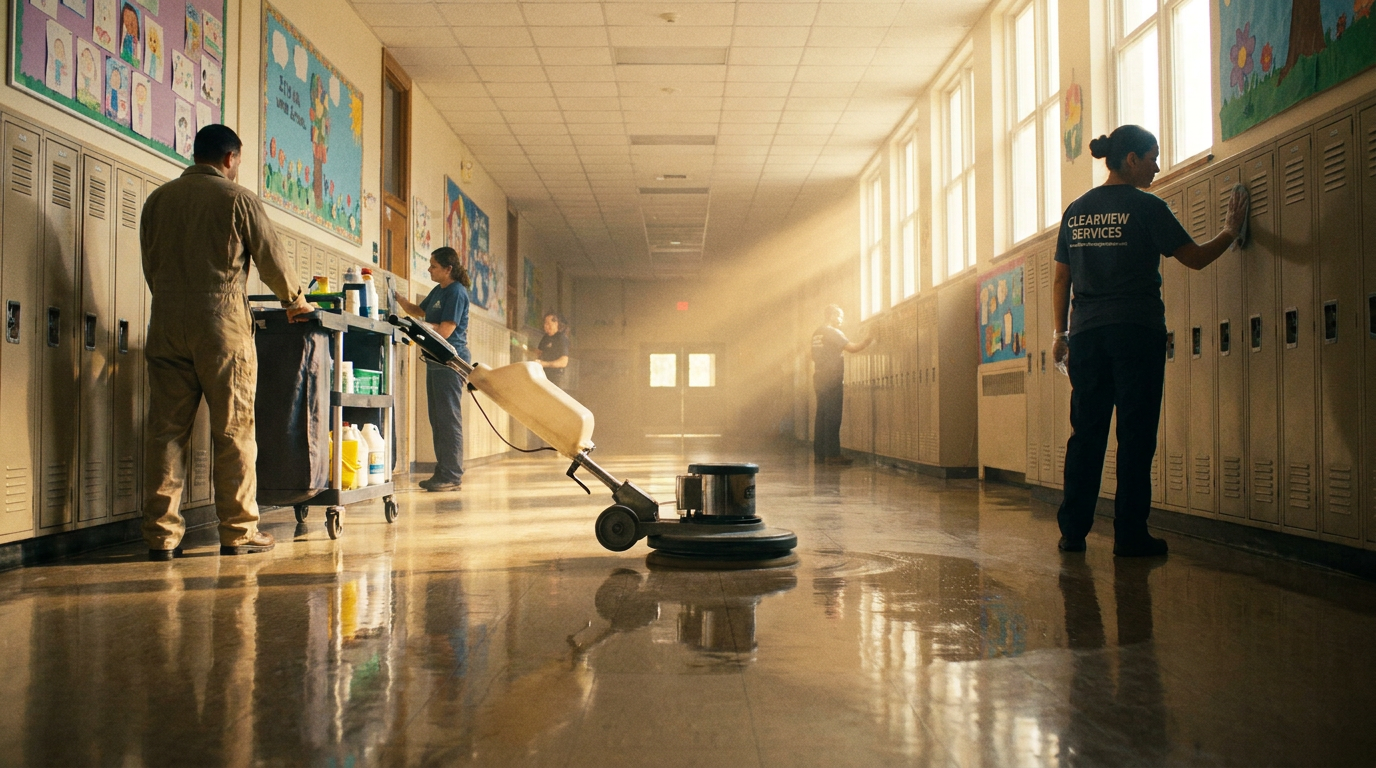
School deep cleaning during summer break requires a systematic approach that addresses 10 to 12 weeks of accumulated grime, restores VCT floors to inspection-ready condition, and ensures compliance with Florida Department of Children and Families (DCF) standards. The most effective summer cleaning programs follow a phased timeline, starting with high-touch surfaces and ending with floor restoration, allowing adequate drying time before students return.
- Begin deep cleaning within 48 hours of the last student day to maximize the 10 to 12 week window
- VCT floor stripping and waxing costs $0.85 to $1.80 per square foot and requires 24 to 48 hours of cure time
- DCF-licensed facilities must document cleaning scope, products used, and completion dates for inspection files
- South Florida humidity (averaging 75% in summer) requires industrial dehumidification during floor restoration
- Professional deep cleaning reduces fall absenteeism by up to 46% according to EPA indoor air quality studies
Why Summer Break Is the Only Window for Comprehensive School Cleaning
The 10 to 12 week summer break provides the uninterrupted access that deep cleaning requires. During the school year, classrooms remain occupied from 7:00 AM to 6:00 PM (including after-school programs), leaving only overnight hours for maintenance. This constraint limits cleaning to surface-level tasks like vacuuming and trash removal.
Summer allows for chemical dwell times that surface cleaning cannot achieve. Floor stripping chemicals require 10 to 15 minutes of contact time to dissolve old wax layers. Carpet extraction needs 8 to 24 hours of drying time to prevent mold growth. HVAC duct cleaning produces airborne particles that must settle before students occupy the building.
According to the Cleaning and Maintenance Management industry publication, schools that complete deep cleaning by mid-July see 23% fewer maintenance emergencies during the first month of classes compared to facilities that rush cleaning in August.
The Complete Summer Deep Cleaning Timeline
Effective school cleaning follows a strict sequence. Starting tasks out of order creates rework. For example, cleaning floors before high dusting deposits debris onto freshly finished surfaces.
Week 1 to 2: Assessment and Preparation
Walk every room with a digital checklist. Document floor conditions with photographs. Identify VCT tiles showing yellowing, edge wax buildup, or embedded scuff marks. These areas need full stripping rather than simple scrub and recoat.
Inventory cleaning supplies and equipment. Industrial auto-scrubbers require pad replacement every 40 to 60 hours of use. HEPA vacuum filters need inspection. Order supplies now to avoid mid-project delays that compress your timeline.
Coordinate with contractors. HVAC duct cleaning, exterior pressure washing, and pest control services should be scheduled for weeks 2 through 4 while interior deep cleaning proceeds in parallel zones.
Week 3 to 5: High Areas and Overhead Surfaces
Start at ceiling level and work down. This sequence ensures debris falls onto surfaces not yet cleaned. Target these overhead areas first:
- HVAC vents and return air grilles (remove, soak in degreaser, reinstall)
- Light fixtures and lens covers (dust accumulation reduces light output by 15 to 30%)
- Ceiling tiles (inspect for water stains indicating roof leaks)
- Top of lockers, cabinets, and door frames
- Wall-mounted clocks, speakers, and emergency equipment
Use HEPA-filtered vacuums for overhead work. Standard vacuums recirculate fine particles, spreading dust throughout the HVAC system. HEPA filtration captures 99.97% of particles down to 0.3 microns.
Week 5 to 7: Walls, Windows, and Fixed Surfaces
Wash walls from top to bottom using microfiber flat mops and neutral pH cleaner diluted at 1:64 ratio. Pay attention to areas behind classroom doors where hand oils accumulate at 3 to 4 feet height.
Clean windows inside and out. Exterior window cleaning in South Florida requires scheduling around afternoon thunderstorms (typically 2:00 to 6:00 PM from June through September). Morning cleaning between 7:00 and 11:00 AM provides the most consistent conditions.
Disinfect all fixed surfaces: door handles, light switches, drinking fountains, and restroom fixtures. The CDC recommends EPA-registered disinfectants with contact times of 1 to 10 minutes depending on the product formulation.
Week 7 to 9: Furniture and Equipment Deep Cleaning
Remove all furniture from classrooms. This step is non-negotiable for proper floor restoration. Furniture legs trap moisture during floor waxing, creating adhesion failures that appear as white spots within weeks of school reopening.
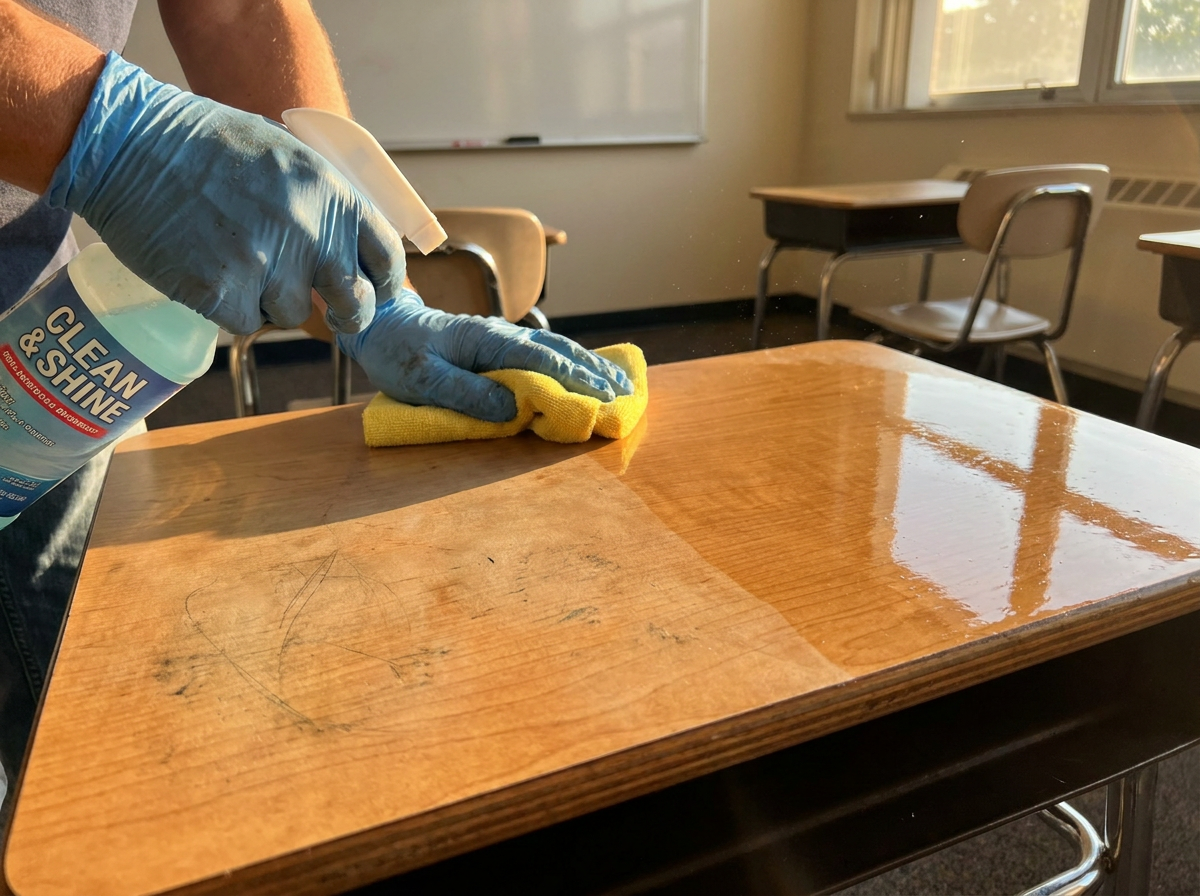
Clean desks, chairs, and tables with all-purpose cleaner. Inspect chair glides and replace worn plastic caps that scratch floor finishes. A single damaged glide can create visible scratches within days of student return.
Deep clean specialty equipment: computer keyboards (compressed air and disinfectant wipes), science lab surfaces (appropriate chemical neutralizers), and cafeteria equipment (commercial degreasers meeting NSF standards).
Week 9 to 11: Floor Restoration
Floor work requires the longest cure times and must happen after all other cleaning. Foot traffic on uncured wax creates permanent scuff marks and adhesion failures.
For VCT floors in fair condition (light scuffing, no yellowing), a scrub and recoat service removes surface damage and adds 2 to 3 fresh wax coats. This maintenance-level service costs $0.60 to $1.50 per square foot and requires 4 to 8 hours of cure time per coat.
For VCT floors showing yellowing, heavy buildup along edges, or peeling finish, full floor stripping and waxing is required. This process removes all old finish down to bare tile, then applies 4 to 6 coats of commercial-grade floor wax. Cost ranges from $0.85 to $1.80 per square foot with 24 to 48 hours total cure time.
Week 11 to 12: Final Inspection and Documentation
Walk every space with your original assessment checklist. Photograph completed work for before-and-after documentation. This record proves valuable for budget justification and contractor accountability.
For DCF-licensed facilities, compile signed service completion records documenting scope, products used, and completion dates. DCF inspectors specifically request this documentation during licensing reviews.
Room-by-Room Deep Cleaning Checklist
Different spaces require different approaches. A chemistry lab has different needs than a kindergarten nap room. The following checklists address the specific requirements of each school environment.
Classroom Deep Cleaning Protocol
Standard classrooms represent 60 to 70% of total school square footage. Efficient classroom cleaning follows this sequence:
- Remove all furniture to hallway or central staging area
- High dust ceiling vents, light fixtures, and wall-mounted items
- Wipe walls, whiteboards, and bulletin boards
- Clean windows (interior and exterior if accessible)
- Deep clean carpet (hot water extraction) or strip/wax hard floors
- Return furniture after floors cure completely
- Final disinfection of high-touch surfaces
Budget 45 to 60 minutes per 900 square foot classroom for deep cleaning, excluding floor restoration time. A 30-classroom elementary school requires approximately 25 to 30 labor hours for classroom deep cleaning alone.
Restroom Deep Cleaning Standards
School restrooms see 200 to 400 uses per day during the academic year. Summer deep cleaning must address biofilm buildup invisible to casual inspection.
Remove and soak floor drains in enzymatic cleaner for 30 minutes minimum. Biofilm in drain lines causes persistent odors that surface cleaning cannot eliminate. Flush drain lines with hot water (140°F minimum) after soaking.
Deep clean grout lines using rotary scrubbers with stiff bristle brushes. Grout in school restrooms typically shows visible discoloration after 9 months of use. Professional grout cleaning restores original color and removes embedded bacteria.
Inspect and reseal grout if sealant has degraded. Properly sealed grout resists staining for 12 to 18 months. Unsealed grout absorbs moisture and bacteria within days.
Cafeteria and Kitchen Areas
Food service areas require NSF-compliant cleaning products and methods. Standard classroom cleaners are not appropriate for food contact surfaces.
Degrease exhaust hoods and ductwork. Commercial kitchen hoods accumulate grease at rates of 2 to 4 pounds per month during active use. This buildup creates fire hazards and must be removed by certified hood cleaning contractors.
Deep clean floor drains with enzymatic products designed for food service grease. Cafeteria floor drains clog 3 times more frequently than restroom drains due to food particle accumulation.
Strip and wax cafeteria floors using products rated for food service environments. Standard floor wax can release VOCs that contaminate food. NSF-registered floor finishes cost 15 to 20% more but meet health department requirements.
Gymnasium and Multi-Purpose Rooms
Gym floors require specialized care. Wood gymnasium floors need screening and recoating every 1 to 2 years, with full sanding and refinishing every 10 to 15 years. Summer break provides the 5 to 7 day cure time that gym floor refinishing requires.
Rubber gym flooring needs deep scrubbing with neutral pH cleaners. Acidic or alkaline products degrade rubber compounds, causing premature cracking and color fading.
Clean bleachers and seating areas, including undersides where debris accumulates. Pressure wash concrete areas under bleachers where spilled drinks create sticky residue.
Florida-Specific Considerations for School Deep Cleaning
South Florida's climate creates unique challenges that national cleaning guides often overlook. Humidity, heat, and regulatory requirements differ significantly from northern states.
Managing Humidity During Floor Restoration
Miami-Dade, Broward, and Palm Beach counties average 75% relative humidity during summer months. Floor wax requires humidity below 50% for proper curing. Without climate control, wax remains tacky and collects dust.
Run building HVAC continuously during floor work, maintaining 68 to 72°F and 40 to 50% relative humidity. If HVAC is insufficient, deploy portable dehumidifiers rated for 70+ pints per day in each work zone.
Schedule floor work for early morning hours when humidity is lowest (typically 6:00 to 10:00 AM). Afternoon humidity spikes can extend cure times by 50% or more.
DCF Compliance for Licensed Childcare Facilities
Florida DCF-licensed daycares and preschools face specific documentation requirements. Inspectors review cleaning records during annual licensing visits and unannounced inspections.
Required documentation includes: cleaning service provider name and license number, date and time of service, specific areas cleaned, products used (including Safety Data Sheets), and signature of responsible party confirming completion.
DCF standards require child-safe, low-VOC products in spaces where children under 5 years old are present. Products must meet EPA Safer Choice or equivalent certification. Standard commercial cleaning chemicals may trigger compliance violations.
DCF-compliant school and daycare deep cleaning services include signed service completion records formatted for DCF inspection files. This documentation protects administrators during licensing reviews.
Hurricane Season Preparation
Florida's hurricane season runs June 1 through November 30, overlapping with summer cleaning schedules. Deep cleaning should include hurricane preparedness tasks.
Clear exterior drains and gutters of debris. Blocked drainage causes flooding during heavy rain events common in South Florida summers. A single afternoon thunderstorm can drop 2 to 4 inches of rain in one hour.
Inspect and clean emergency equipment: exit signs, emergency lighting, fire extinguishers, and first aid stations. Document inspection dates for safety compliance records.
Create inventory of portable items that require securing before storms. Summer cleaning provides an opportunity to tag and catalog items for efficient pre-storm preparation.
School Deep Cleaning Cost Analysis
Understanding cost structures helps administrators budget effectively and evaluate contractor proposals. The following table compares typical costs for South Florida school cleaning services.
| Service | Cost Range (per sq ft) | Typical School Cost | Frequency |
|---|---|---|---|
| Comprehensive Deep Cleaning | $0.40 to $2.00 | $20,000 to $100,000 | Annually |
| VCT Floor Stripping and Waxing | $0.85 to $1.80 | $25,500 to $54,000 | Every 12 to 18 months |
| VCT Scrub and Recoat | $0.60 to $1.50 | $18,000 to $45,000 | Every 3 to 6 months |
| Carpet Hot Water Extraction | $0.15 to $0.35 | $3,000 to $7,000 | Annually |
| HVAC Duct Cleaning | $25 to $35 per vent | $5,000 to $15,000 | Every 3 to 5 years |
| Pressure Washing (exterior) | $0.08 to $0.20 | $2,000 to $8,000 | Annually |
Cost estimates assume a 50,000 square foot elementary school with 30,000 square feet of VCT flooring. Actual costs vary based on facility condition, access constraints, and geographic location within South Florida.
Answering Common Questions About School Summer Cleaning
What Do School Janitors Do During the Summer?
School custodial staff shift from daily maintenance to project-based deep cleaning during summer months. Daily tasks like trash removal and restroom restocking give way to intensive work: stripping and waxing floors, deep cleaning carpets, and addressing maintenance backlogs accumulated during the school year.
Many districts supplement in-house staff with contract cleaning crews during summer. This approach provides specialized equipment (ride-on scrubbers, truck-mounted carpet extractors) and expertise that school custodians may lack. Contract crews typically handle floor restoration while in-house staff focus on classroom preparation.
According to Brenner Facility Services' research on school cleaning, districts that combine in-house and contract labor complete summer cleaning 35% faster than those relying solely on internal staff.
What Is the 3:30 Rule for Cleaning?
The 3:30 rule refers to scheduling deep cleaning tasks to complete by 3:30 PM, allowing floors and surfaces to cure before evening activities. In school settings, this rule ensures that after-school programs, sports practices, and community events do not compromise fresh cleaning work.
During summer break, the 3:30 rule becomes less critical since buildings typically remain unoccupied. However, summer school programs, sports camps, and maintenance contractors may still require access. Coordinate cleaning schedules with building use calendars to avoid conflicts.
What Is the 20/10 Rule in Cleaning?
The 20/10 rule structures cleaning work into 20-minute focused cleaning sessions followed by 10-minute breaks. This approach prevents fatigue-related quality decline during intensive deep cleaning projects.
For school deep cleaning, the 20/10 rule applies particularly to physically demanding tasks: scrubbing grout on hands and knees, operating heavy floor equipment, and working in hot, non-air-conditioned spaces. South Florida summer temperatures inside closed buildings can exceed 90°F, making regular breaks essential for worker safety.
How to Deep Clean a School Effectively?
Effective school deep cleaning requires systematic planning, proper equipment, and adequate time. The process begins with assessment (documenting conditions and creating task lists), proceeds through phased cleaning (top to bottom, back to front), and concludes with inspection and documentation.
Key success factors include: removing all furniture before floor work, using commercial-grade equipment rather than residential products, allowing proper chemical dwell times, and scheduling adequate cure time before building reoccupation.
Professional commercial deep cleaning services bring industrial equipment including ride-on scrubbers, truck-mounted extractors, and HEPA-filtered vacuums that dramatically improve efficiency and results compared to manual methods.
Equipment Requirements for School Deep Cleaning
The right equipment determines cleaning quality and efficiency. Consumer-grade products cannot achieve the results that school environments require.
Floor Care Equipment
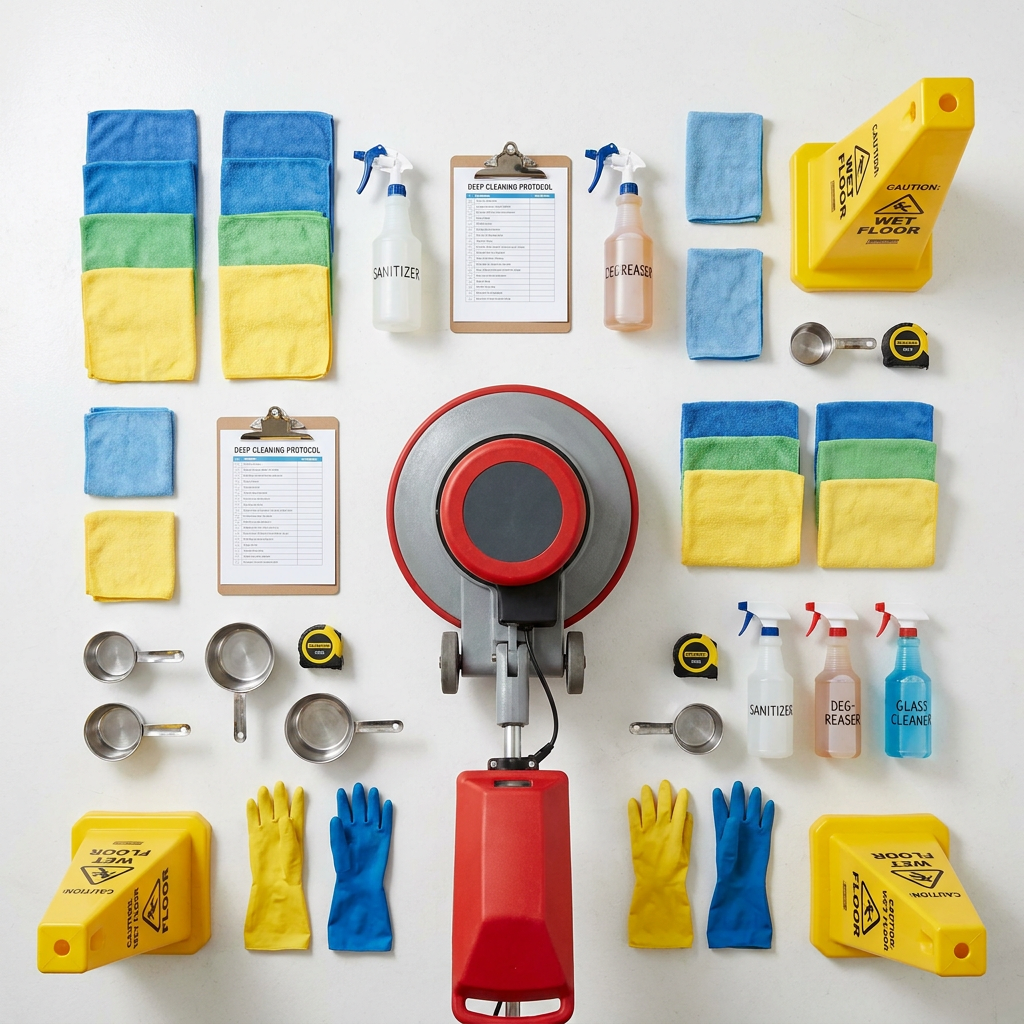
VCT floor restoration requires specific equipment at each stage:
- Floor stripper application: Mop and bucket for small areas; automatic floor scrubber with solution tank for large spaces
- Stripping: Low-speed rotary machine (175 RPM) with black stripping pad
- Rinsing: Wet vacuum or auto-scrubber in recovery mode
- Wax application: Microfiber flat mop or wax applicator; 18-inch width minimum for efficiency
- Burnishing (optional): High-speed burnisher (1500+ RPM) with natural hair pad for high-gloss finish
Ride-on auto-scrubbers clean 20,000 to 40,000 square feet per hour compared to 3,000 to 5,000 square feet per hour with walk-behind units. For schools over 30,000 square feet, ride-on equipment reduces floor cleaning time by 60 to 70%.
Carpet Care Equipment
School carpets require hot water extraction (steam cleaning) rather than bonnet cleaning or dry cleaning methods. Hot water extraction removes embedded soil and allergens that surface cleaning leaves behind.
Truck-mounted extractors provide water temperatures of 200 to 250°F and extraction power that portable units cannot match. This equipment removes 95% or more of soil and moisture, allowing carpets to dry within 4 to 6 hours rather than 24 to 48 hours with portable equipment.
Air Quality Equipment
HEPA-filtered vacuums and air scrubbers protect indoor air quality during deep cleaning. Standard vacuums recirculate fine particles, potentially worsening air quality despite visible cleaning progress.
Air scrubbers with HEPA filtration should run continuously during and after deep cleaning, capturing airborne particles dislodged by cleaning activities. Run air scrubbers for 24 to 48 hours after major cleaning projects to ensure particle settling before building reoccupation.
Selecting a School Deep Cleaning Contractor
Contractor selection significantly impacts cleaning quality, timeline adherence, and budget management. Evaluate potential contractors using these criteria:
Essential Qualifications
- Insurance: General liability ($1 million minimum), workers compensation, and commercial auto coverage
- Licensing: State and local business licenses; specialty licenses for regulated work (pest control, hood cleaning)
- Experience: Minimum 3 years serving educational facilities; references from similar-sized schools
- Equipment: Commercial-grade equipment appropriate for project scope; not residential or consumer products
- Certifications: ISSA CIMS certification indicates adherence to industry standards; IICRC certification for carpet and floor care
Red Flags to Avoid
Beware of contractors who cannot provide proof of insurance, offer prices significantly below market rates (indicating corner-cutting), or refuse to provide detailed written proposals specifying scope, timeline, and products.
Request and verify references from schools of similar size and type. A contractor experienced with office buildings may lack understanding of school-specific requirements like DCF compliance, child-safe products, and coordination with academic calendars.
Contract Essentials
Written contracts should specify: detailed scope of work by area, timeline with milestone dates, products and equipment to be used, insurance certificate requirements, payment schedule tied to completion milestones, and remediation procedures for unsatisfactory work.
Include liquidated damages clauses for timeline failures. A contractor who delivers late forces administrators to compress final preparations, potentially compromising readiness for the first day of school.
Measuring Deep Cleaning Success
Objective measurement ensures cleaning meets standards and justifies budget expenditure. Implement these measurement approaches:
Visual Inspection Standards
Develop written standards defining acceptable conditions for each surface type. For VCT floors: no visible scuff marks, uniform gloss level, no wax buildup along edges, no debris trapped under finish. For carpets: no visible stains, uniform pile direction, no odors.
Photograph conditions before and after cleaning using consistent lighting and angles. These records document improvement and provide baseline for future comparison.
Quantitative Measurements
ATP (adenosine triphosphate) testing measures biological contamination on surfaces. ATP readings below 100 RLU (relative light units) indicate effective cleaning and disinfection. Readings above 300 RLU suggest inadequate cleaning.
Gloss meter readings quantify floor finish condition. New VCT floor wax produces readings of 80 to 90 gloss units. Readings below 40 indicate finish degradation requiring restoration.
Air quality testing measures particulate levels before and after cleaning. PM2.5 (fine particulate) readings should decrease by 50% or more following comprehensive deep cleaning with HEPA filtration.
Planning Your School's Summer Deep Cleaning Program
Successful summer cleaning requires advance planning, not last-minute scrambling. Begin planning in March or April for summer execution.
Assess current conditions and prioritize needs. Not every space requires the same level of attention every year. High-traffic areas like main hallways and cafeterias need annual floor restoration. Low-traffic spaces like storage rooms may need deep cleaning every 2 to 3 years.
Request contractor proposals by April 15 to allow adequate time for evaluation, negotiation, and contract execution before school dismissal. Late contracting limits contractor availability and may result in higher prices due to rush scheduling.
Coordinate with other summer projects. HVAC maintenance, painting, and construction projects all impact cleaning schedules. Sequence work to avoid conflicts: complete construction dust-generating work before final cleaning, schedule painting after wall washing but before floor finishing.
For South Florida schools seeking free on-site cleaning assessments, professional evaluation identifies specific needs and provides accurate cost estimates for budgeting purposes. Most assessments include detailed recommendations prioritized by urgency and impact.
Ready to Plan Your Summer Deep Cleaning?
MB Clean Solutions provides DCF-compliant deep cleaning for schools and daycares across Miami-Dade, Broward, and Palm Beach counties. Request your free on-site assessment and receive a detailed proposal within 24 hours.
Get Your Free Assessment¿Listo Para un Espacio Impecable?
Obtenga un estimado gratis y sin compromiso para su proyecto de limpieza comercial. La mayoría de las cotizaciones se entregan en 24 horas.