School and Daycare Deep Cleaning Requirements for Summer Breaks
SCHOOL AND DAYCARE DEEP CLEANING REQUIREMENTS DURING SUMMER BREAKS
Complete guide to summer deep cleaning for schools and daycares in Florida. DCF compliance, VCT floor restoration, and scheduling requirements explained.
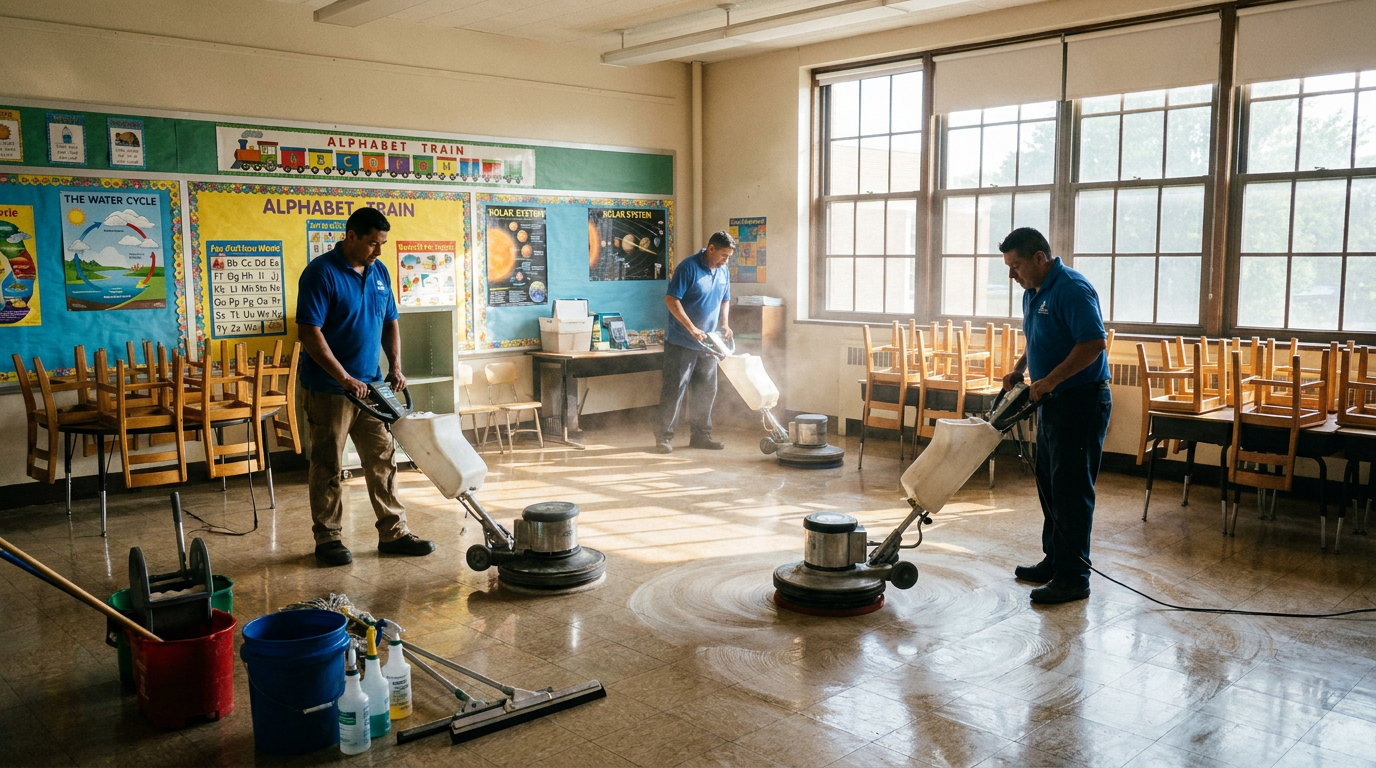
Summer break provides the only 8 to 10 week window when schools and daycares can complete comprehensive deep cleaning without disrupting daily operations. Florida facilities must address VCT floor restoration, HVAC sanitation, restroom deep cleaning, and nap area disinfection to meet Department of Children and Families (DCF) licensing requirements before students return in August.
- Florida DCF requires documented cleaning records with dates, products used, and scope of work for licensed childcare facilities
- VCT floor stripping and waxing costs $0.85 to $1.80 per square foot and requires 24 to 48 hours of cure time before foot traffic
- Summer deep cleaning should begin within 72 hours of the last student day to maximize the available maintenance window
- HVAC duct cleaning removes 6 to 10 pounds of dust per typical classroom, improving indoor air quality by 40 to 60 percent
- Child-safe, low-VOC cleaning products are mandatory for daycare environments per EPA Safer Choice guidelines
Why Summer Break Is the Critical Deep Cleaning Window
Educational facilities operate 180 to 200 days per year, leaving limited opportunities for intensive maintenance. According to Cleaning and Maintenance Management magazine, summer break represents the only practical window for floor stripping, HVAC cleaning, and other services requiring extended cure times or building vacancy.
South Florida's climate compounds this challenge. Miami-Dade, Broward, and Palm Beach County schools face humidity levels averaging 75 to 85 percent during summer months. This moisture accelerates mold growth in HVAC systems and degrades floor finishes faster than facilities in drier climates.
The Florida Department of Education mandates that public schools complete all major maintenance before the first day of instruction. Private schools and licensed daycares face DCF inspection requirements that include documented sanitation records. Failing to complete deep cleaning during summer break often means operating out of compliance until the next extended closure.
DCF Compliance Requirements for Florida Daycares
Licensed childcare facilities in Florida must maintain cleaning documentation that DCF inspectors review during announced and unannounced visits. The Florida Administrative Code 65C-22 specifies sanitation standards including daily cleaning of food preparation areas, weekly sanitization of toys, and documented deep cleaning of all surfaces.
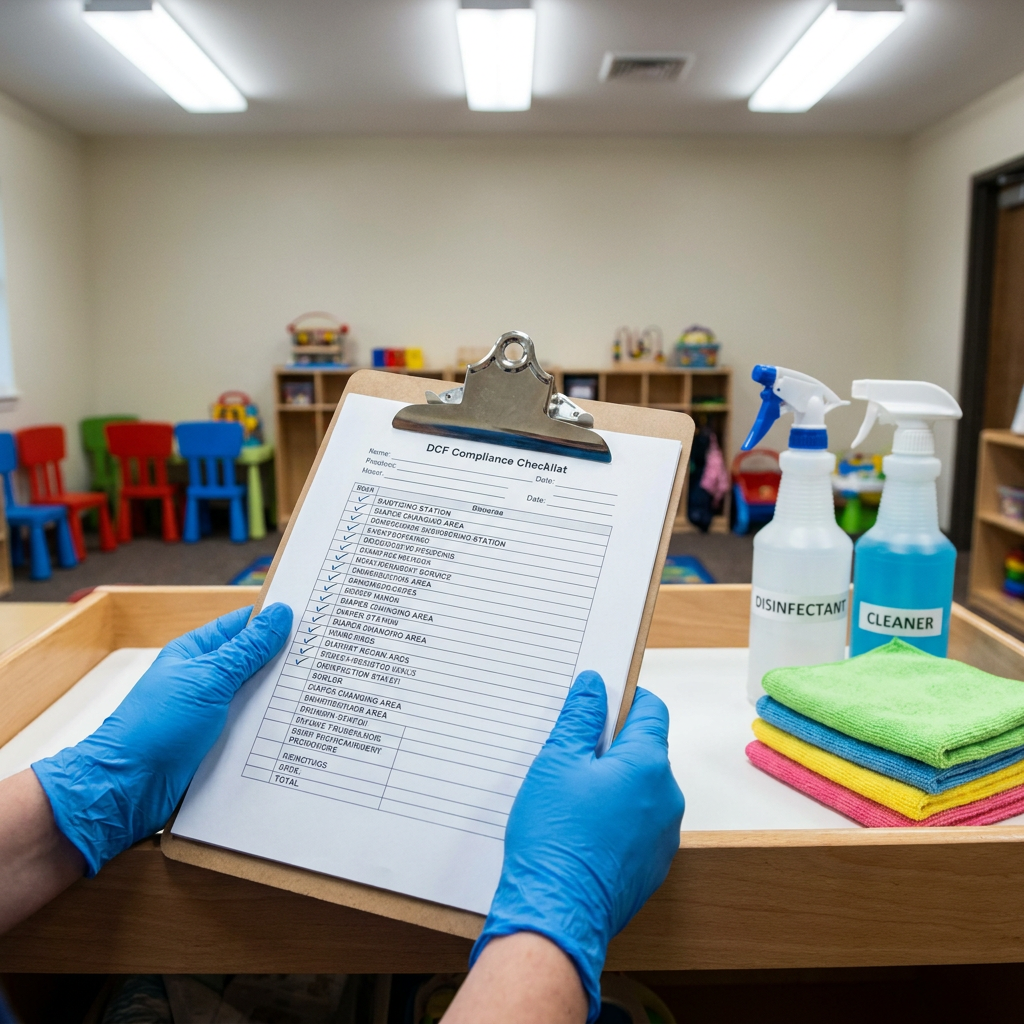
Professional cleaning companies serving daycares should provide signed service completion records that document the date of service, specific areas cleaned, products used with Safety Data Sheets, and the technician's name. These records become part of the facility's DCF inspection file and demonstrate compliance with licensing requirements.
The brightwheel childcare management platform identifies five core deep cleaning areas for childcare programs: floors and carpets, walls and surfaces, toy sanitation, HVAC and air quality systems, and restroom facilities. Each area requires specific protocols and documentation.
Required Documentation for DCF Inspections
DCF inspectors look for specific documentation during facility reviews. Cleaning service providers should furnish records that include the facility name and address, date and time of service, detailed scope of work completed, product names and EPA registration numbers for disinfectants, and the signature of the service provider representative.
Facilities using DCF-compliant daycare cleaning services receive this documentation automatically as part of the service completion process. This paperwork protects administrators during inspections and demonstrates due diligence in maintaining safe environments for children.
Complete Summer Deep Cleaning Checklist by Area
Effective summer deep cleaning follows a systematic approach that addresses every zone within the facility. The checklist below covers requirements for classrooms, restrooms, common areas, and specialized spaces like nap rooms and food preparation areas.
Classroom Deep Cleaning Requirements
Classrooms accumulate significant contamination during the school year. According to research from the American Journal of Infection Control, classroom desks harbor 400 times more bacteria than toilet seats. Summer deep cleaning must address surfaces that daily janitorial services cannot reach.
Classroom cleaning includes high dusting of ceiling vents, light fixtures, and top shelves above 6 feet. Wall washing removes fingerprints, crayon marks, and accumulated grime below 4 feet where children touch surfaces. Baseboard cleaning and window track vacuuming complete the wall-to-wall approach.
Furniture receives individual attention during summer cleaning. Desks, chairs, and cubbies are emptied, wiped with EPA-registered disinfectants, and allowed to air dry. Soft furnishings like reading corner cushions require hot water extraction or replacement if staining cannot be removed.
Restroom Deep Cleaning Standards
School and daycare restrooms require the most intensive summer cleaning protocols. The HTX Facility Services guide specifies deep cleaning and sanitizing all fixtures including toilets, urinals, and sinks. Grout lines between floor tiles harbor bacteria that routine mopping cannot remove.
Professional restroom deep cleaning includes descaling toilets and urinals to remove mineral deposits, pressure washing tile and grout, replacing damaged caulk around fixtures, and applying antimicrobial sealant to grout lines. Partition walls require disinfection on both sides, and hardware like door handles and locks need replacement if corroded.
Nap Area Sanitation for Daycares
Nap areas in licensed daycares face specific DCF requirements. Cots and mats must be sanitized between each use during the school year, but summer break allows for deep cleaning of the underlying flooring and wall surfaces. Carpeted nap areas require hot water extraction with child-safe, low-VOC solutions.
Cot storage areas accumulate dust and allergens that affect children with asthma. Summer cleaning should include vacuuming storage shelves with HEPA-filtered equipment, wiping down cot frames with disinfectant, and laundering or replacing fabric cot covers.
VCT Floor Restoration: The Centerpiece of Summer Cleaning
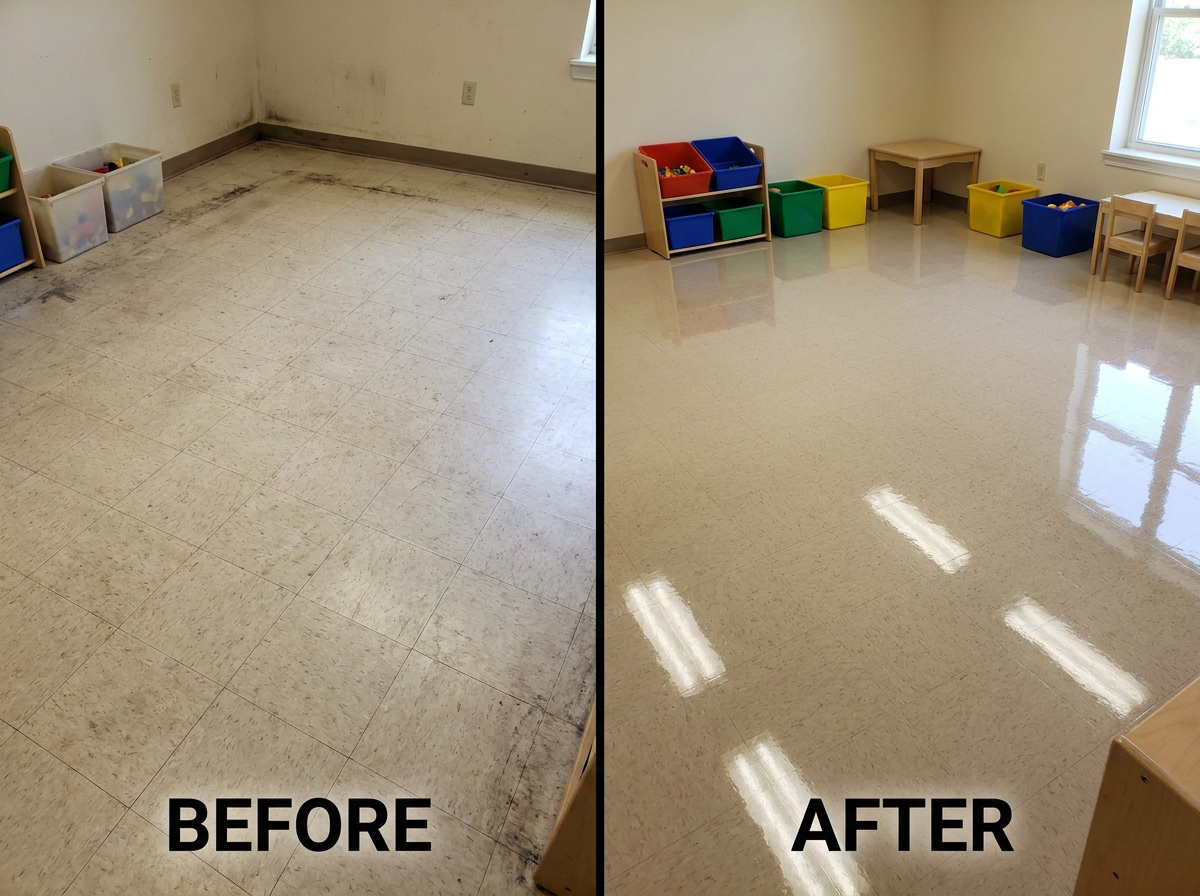
Vinyl composition tile (VCT) covers approximately 70 percent of classroom floors in American schools, according to the Resilient Floor Covering Institute. This durable, affordable flooring requires annual stripping and waxing to maintain appearance and protect the underlying tile from damage.
Floor stripping removes all existing wax layers down to the bare tile surface. This process uses chemical strippers applied with auto-scrubbing machines, followed by wet vacuuming to extract the dissolved finish. Professional floor stripping and waxing services then apply 4 to 6 coats of commercial-grade floor finish, allowing 30 to 45 minutes of drying time between coats.
| Floor Service Type | Cost Per Square Foot | Cure Time Required | Recommended Frequency |
|---|---|---|---|
| Full Strip and Wax | $0.85 to $1.80 | 24 to 48 hours | Annually (summer) |
| Scrub and Recoat | $0.60 to $1.50 | 4 to 8 hours | Every 3 to 6 months |
| Auto-Scrub Deep Clean | $0.40 to $1.00 | 1 to 2 hours | Monthly |
| Carpet Hot Water Extraction | $0.25 to $0.50 | 6 to 12 hours | Annually (summer) |
A typical 50,000 square foot elementary school requires 3 to 5 days for complete floor restoration when using a two-person crew with industrial equipment. Scheduling this work during the first two weeks of summer break allows time for any necessary touch-ups before other maintenance projects begin.
HVAC and Air Quality Deep Cleaning
School HVAC systems circulate air to 20 to 30 occupants per classroom for 7 hours daily. The National Air Duct Cleaners Association (NADCA) recommends duct cleaning every 3 to 5 years, but schools with high occupancy and Florida's humidity often require annual service.
Professional air duct cleaning removes 6 to 10 pounds of accumulated dust, allergens, and biological growth from a typical classroom's ductwork. This process uses negative air machines that create suction while technicians agitate debris with rotating brushes. The EPA notes that duct cleaning can improve indoor air quality by 40 to 60 percent in buildings with contaminated systems.
Summer HVAC maintenance also includes coil cleaning, drain pan treatment, and filter replacement. South Florida's humidity creates ideal conditions for mold growth in air handling units. Applying antimicrobial treatments to coils and drain pans prevents biological growth during the humid summer months when systems run continuously.
Answering Common Questions About School Deep Cleaning
Do School Janitors Work During the Summer?
Most school districts employ custodial staff year-round, but summer responsibilities differ significantly from the school year. According to discussions among education professionals, in-house custodians typically handle routine summer tasks like trash removal, basic floor care, and facility monitoring.
Deep cleaning services requiring specialized equipment, such as floor stripping machines, truck-mounted carpet extractors, and duct cleaning systems, are usually contracted to professional cleaning companies. This division allows custodial staff to focus on maintenance tasks while specialists handle intensive cleaning that requires commercial-grade industrial equipment.
What Is the 20-10 Rule in Cleaning?
The 20-10 rule refers to dwell time requirements for disinfectants. Most EPA-registered disinfectants require 10 to 20 minutes of wet contact time on surfaces to achieve the kill claims listed on their labels. This means applying disinfectant, waiting the specified time, then wiping or allowing to air dry.
In school and daycare settings, this rule affects how surfaces are cleaned. Simply spraying and immediately wiping does not disinfect. Professional cleaning crews apply disinfectant to one area, move to the next, then return to wipe after the required contact time has elapsed. This systematic approach ensures actual disinfection rather than surface-level cleaning.
How Many Types of Cleaning Are Required in Childcare Facilities?
DCF and the CDC identify three distinct cleaning levels for childcare facilities: routine cleaning, sanitizing, and disinfecting. Routine cleaning removes visible dirt and debris. Sanitizing reduces bacteria to safe levels as determined by public health standards. Disinfecting destroys or inactivates most pathogens on surfaces.
Different areas require different cleaning levels. Food preparation surfaces require sanitizing after each use. Diaper changing areas require disinfecting after each use. General classroom surfaces require daily cleaning and weekly sanitizing. Summer deep cleaning addresses all three levels across the entire facility.
What Should Be Included in a Deep Cleaning Checklist?
A comprehensive commercial deep cleaning checklist for schools and daycares includes high dusting above 6 feet, wall washing, baseboard cleaning, floor stripping and refinishing, carpet extraction, restroom fixture descaling, HVAC duct cleaning, window and track cleaning, furniture sanitization, and playground equipment disinfection.
The checklist should also specify products used, with preference for EPA Safer Choice certified cleaners in childcare environments. Documentation requirements, cure times, and re-entry protocols complete the checklist and ensure work meets regulatory standards.
Scheduling and Coordination for Summer Deep Cleaning
Effective summer deep cleaning requires coordination between facility administrators, cleaning contractors, and other maintenance vendors. The Beeline Support summer cleaning guide recommends beginning deep cleaning within 72 hours of the last student day to maximize the available window.
Work sequencing matters for efficiency. Floor work should occur after wall washing and high dusting to prevent debris from falling on freshly finished floors. HVAC cleaning should precede final surface cleaning to prevent redistributed dust from contaminating cleaned areas. Carpet cleaning should occur last in each zone to allow maximum drying time.
South Florida schools face additional scheduling considerations. Hurricane season runs June through November, potentially disrupting planned maintenance. Facilities should complete critical work during June and early July, leaving August for touch-ups and final inspections before students return.
Selecting a Deep Cleaning Partner for Educational Facilities
Schools and daycares require cleaning partners with specific qualifications beyond general commercial cleaning capabilities. Key requirements include experience with DCF documentation, child-safe product certifications, insurance coverage appropriate for educational environments, and equipment capable of handling large floor areas efficiently.
Industrial equipment makes a significant difference in project timelines and results. Ride-on auto-scrubbers clean 20,000 to 40,000 square feet per hour compared to 5,000 square feet per hour for walk-behind units. Truck-mounted carpet extractors provide more powerful suction and faster drying times than portable units.
Local ownership provides accountability that national franchises cannot match. When issues arise, facility administrators need direct access to decision-makers who can resolve problems immediately. Women-owned and SBE-certified businesses often provide this direct accountability while meeting diversity requirements for public school contracts.
Request a free on-site cleaning assessment before committing to a summer deep cleaning contract. This assessment allows the cleaning company to identify floor types, measure square footage accurately, and note any special requirements like security protocols or access restrictions.
Schedule Your Summer Deep Cleaning Now
MB Clean Solutions provides DCF-compliant deep cleaning for schools and daycares across Miami-Dade, Broward, and Palm Beach counties. Our team uses industrial equipment and child-safe products to prepare your facility for the new school year.
Get Your Free AssessmentSiga leyendo
Más guías sobre el mismo tema.
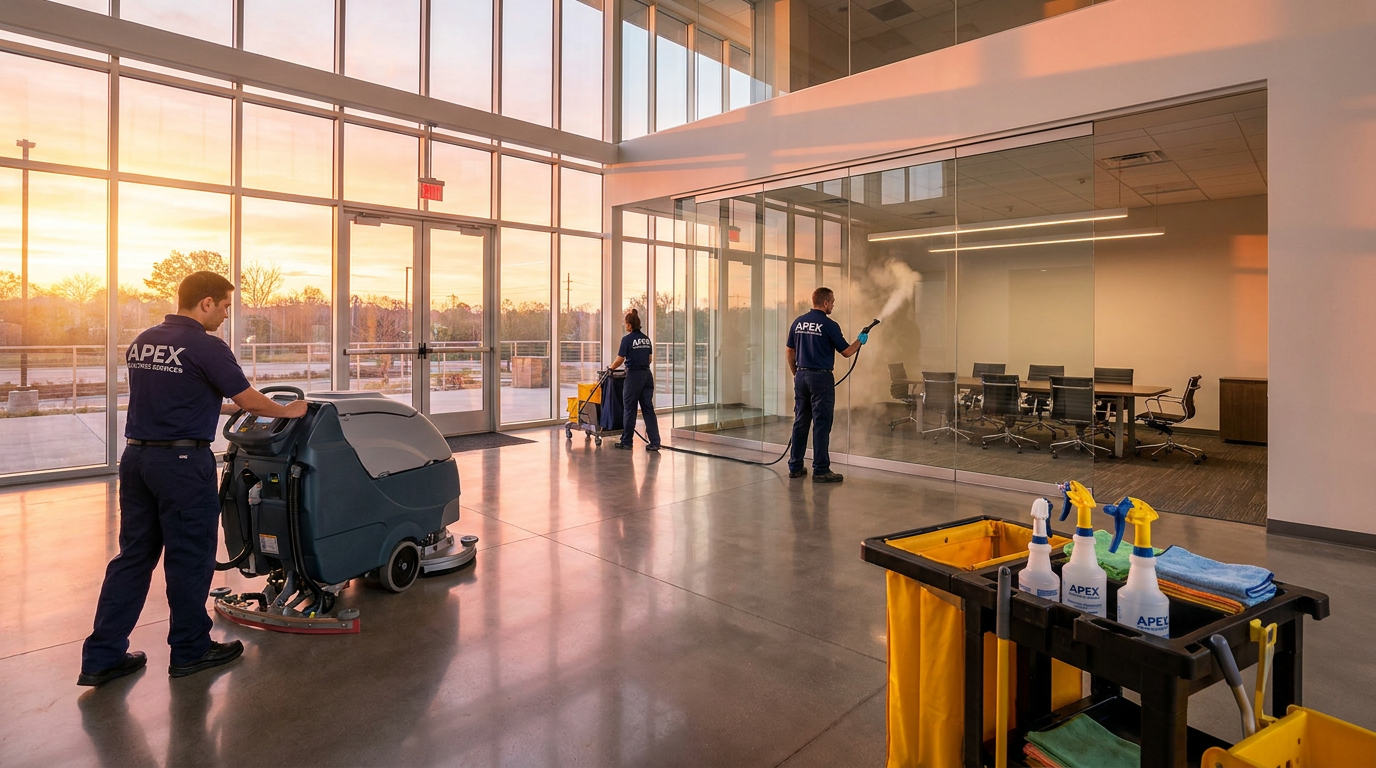
What to Expect During Commercial Deep Cleaning Service
Learn exactly what happens during a commercial deep cleaning service, from pre-cleaning assessment to final inspection. Includes timelines, costs, and preparation tips.
Leer la guía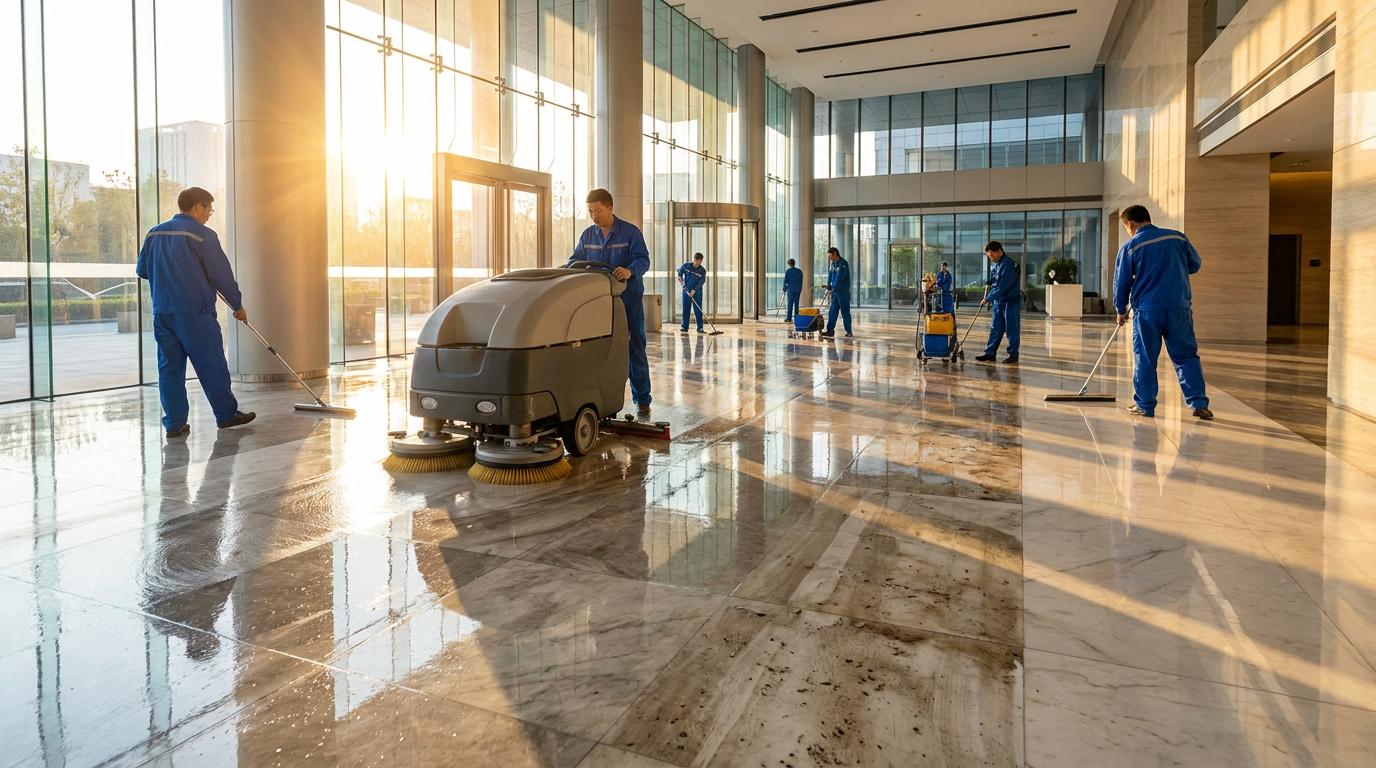
Commercial Deep Cleaning Cost by Square Footage and Building Type
Commercial deep cleaning costs $0.40 to $2.00 per square foot depending on building type, floor condition, and service scope. Get exact pricing breakdowns.
Leer la guía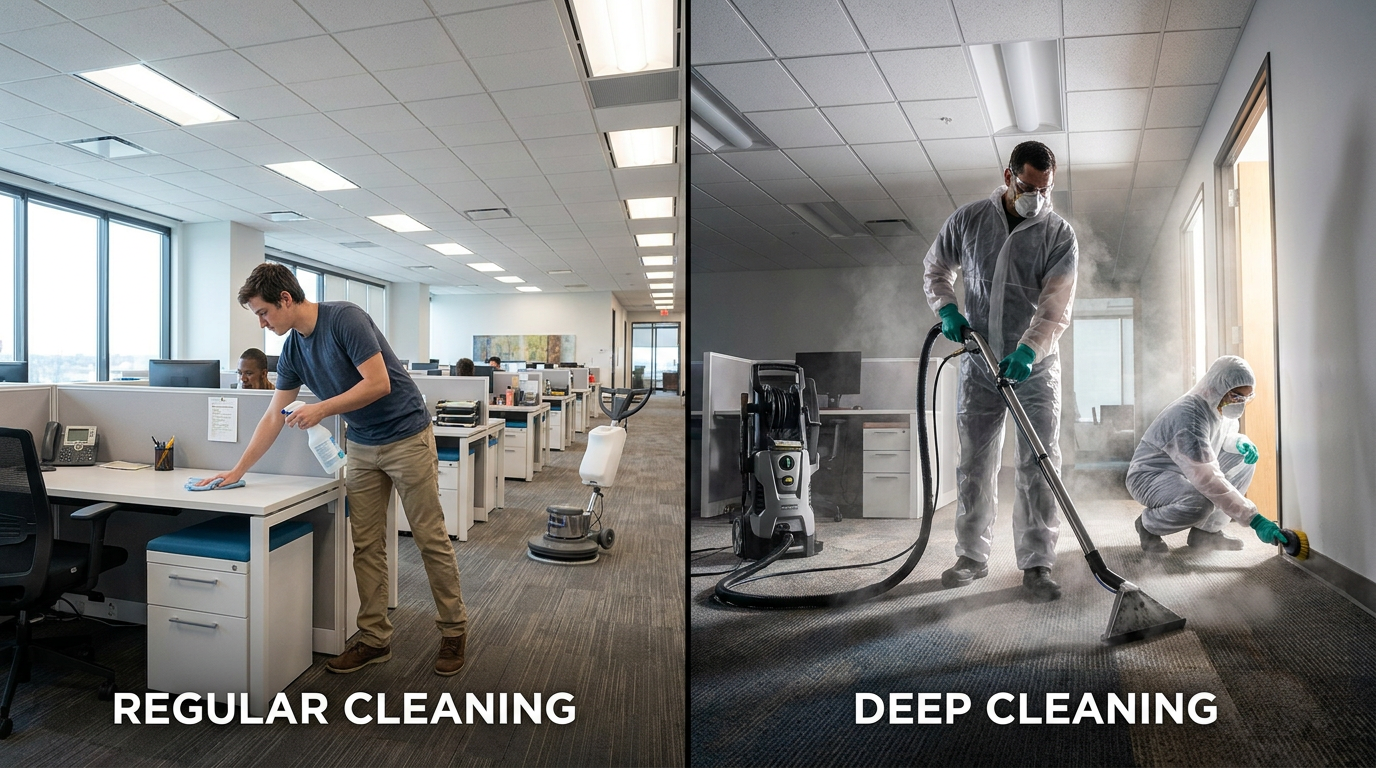
Commercial Deep Cleaning vs Regular Cleaning: Key Differences
Learn the exact differences between commercial deep cleaning and regular cleaning, including costs, frequency, tasks covered, and which service your business needs.
Leer la guía
¿Listo Para un Espacio Impecable?
Obtenga un estimado gratis y sin compromiso para su proyecto de limpieza comercial. La mayoría de las cotizaciones se entregan en 24 horas.