Daycare Cleaning Requirements: Health Department Standards Guide
DAYCARE CLEANING REQUIREMENTS AND HEALTH DEPARTMENT STANDARDS
Complete guide to daycare cleaning requirements and health department standards. Covers DCF compliance, sanitizing protocols, inspection checklists, and documentation for licensed childcare facilities.
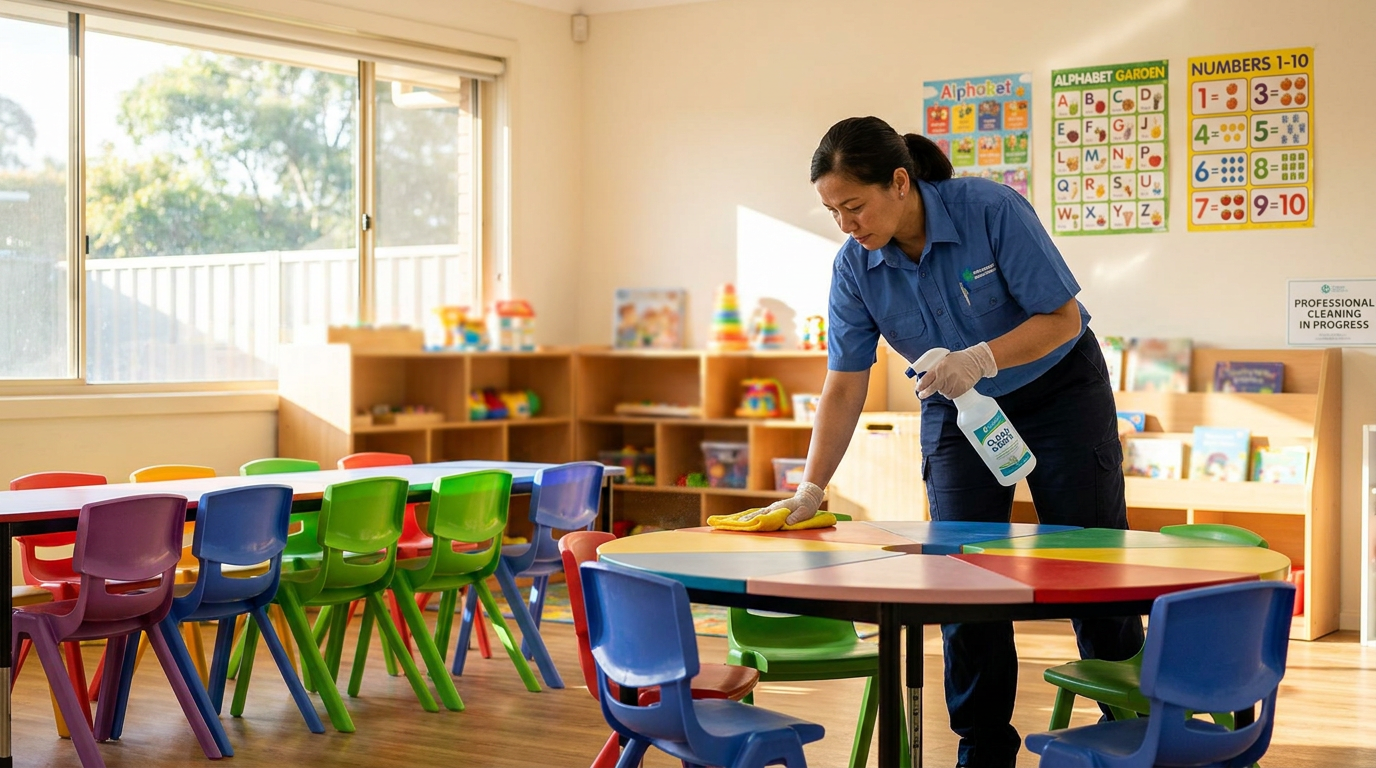
Licensed daycare facilities must follow a three-tier cleaning system: routine cleaning with soap and water, sanitizing food-contact and mouthed surfaces, and disinfecting diaper areas and bodily fluid spills. Florida DCF requires daily cleaning logs, child-safe EPA-registered products stored in locked cabinets, and signed documentation for inspection files.
- Florida DCF mandates daily cleaning, sanitizing after meals, and disinfecting diaper areas after each use
- Handwashing requires 20 seconds with soap and water at 10 specific times throughout the day
- Cleaning products must be EPA-registered, child-safe, and stored in locked cabinets inaccessible to children
- Documentation including cleaning logs, staff training records, and product lists is required for inspections
- Health department inspections check 47 sanitation points covering hygiene, food safety, and facility maintenance
Understanding the Three Levels of Daycare Cleaning
Health departments across all 50 states distinguish between cleaning, sanitizing, and disinfecting. According to the CDC guidelines for early care settings, each process serves a different purpose and applies to specific surfaces and situations. Confusing these terms is one of the most common violations during health inspections.
Cleaning removes visible dirt, debris, and some germs using soap, water, and physical scrubbing. This process does not kill pathogens but prepares surfaces for sanitizing or disinfecting. All surfaces require cleaning before any chemical treatment.
Sanitizing reduces bacteria to safe levels on food-contact surfaces and mouthed toys. The standard solution is 1 tablespoon of unscented bleach per gallon of water, requiring 2 minutes of contact time. This applies to highchair trays, eating utensils, and toys children put in their mouths.
Disinfecting kills nearly all germs including viruses and fungi. The typical solution uses 1/4 cup of bleach per gallon of water with 10 minutes of contact time. Reserve disinfecting for diaper changing surfaces, toilets, and areas contaminated with blood, vomit, or feces.
| Process | Solution Strength | Contact Time | When to Use |
|---|---|---|---|
| Cleaning | Soap and water | Until visibly clean | All surfaces, always first |
| Sanitizing | 1 tbsp bleach/gallon | 2 minutes | Food surfaces, mouthed toys |
| Disinfecting | 1/4 cup bleach/gallon | 10 minutes | Diaper areas, toilets, bodily fluids |
Florida DCF Cleaning Requirements for Licensed Daycares
The Florida Department of Children and Families enforces specific sanitation standards under Chapter 65C-22 of the Florida Administrative Code. These requirements apply to all licensed child care facilities in Miami-Dade, Broward, and Palm Beach counties.
Florida DCF requires facilities to maintain premises that are "clean, safe, sanitary, and in good repair" at all times. This standard applies during operating hours, not just at opening. Inspectors can arrive unannounced between 7 AM and 6 PM on any business day.
Daily Cleaning Requirements
Florida regulations mandate specific cleaning frequencies that exceed general commercial standards. Floors must be swept and mopped daily using EPA-registered disinfectants. Restrooms require cleaning and disinfecting at minimum twice daily, with additional cleaning after visible soiling.
Nap areas present unique requirements. Cots and mats need sanitizing weekly at minimum, with immediate cleaning after any illness. Bedding including sheets and blankets requires weekly laundering at 140 degrees Fahrenheit or higher. Each child must have individually assigned bedding stored separately.
Diaper Changing Area Standards
Diaper changing surfaces require the most rigorous protocols. The surface must be cleaned and disinfected after every single diaper change, not just at the end of the day. Florida DCF specifies a six-step diaper changing procedure that includes surface disinfection as steps one and six.
The changing table must be non-porous, easily cleanable, and dedicated solely to diapering. Paper liners are recommended but do not replace surface disinfection. Diaper disposal containers must have hands-free lids and require emptying when three-quarters full or at minimum daily.
Health Department Inspection Checklist
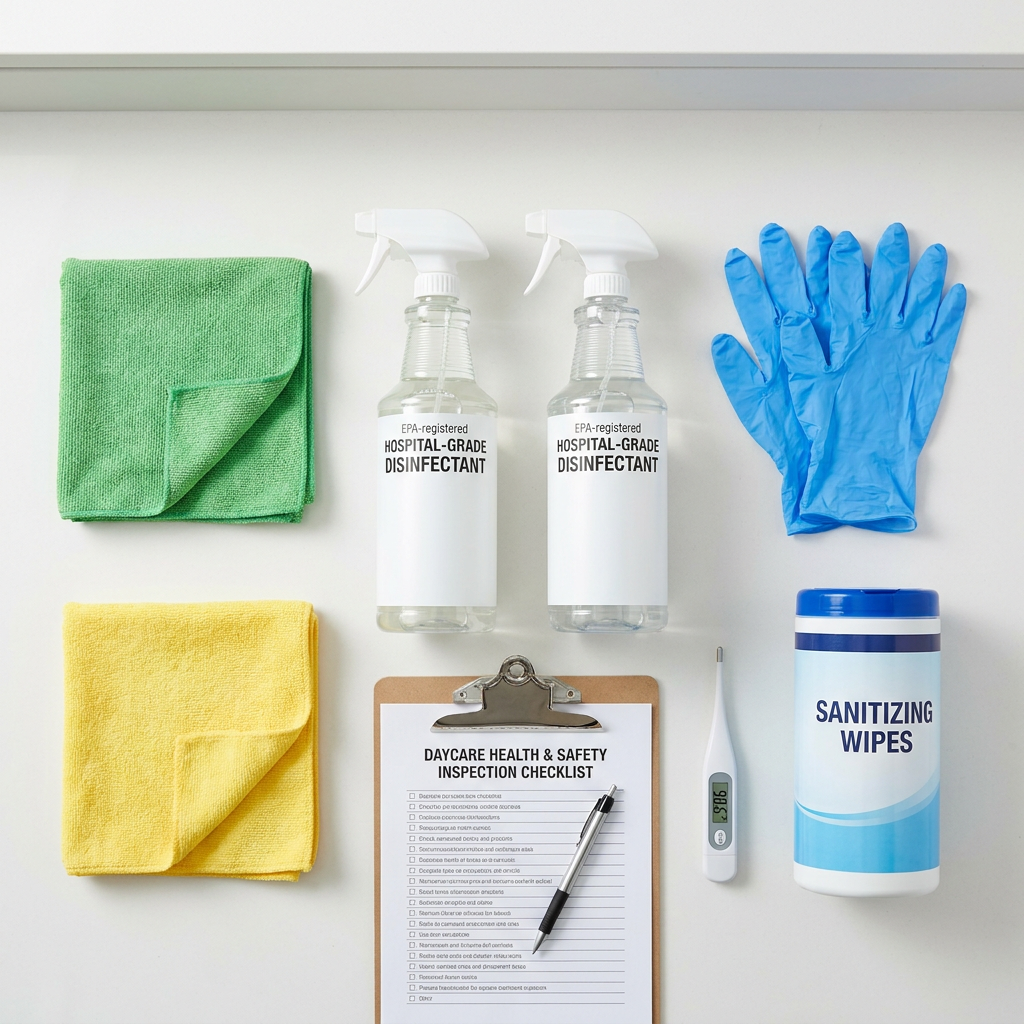
Florida health department inspectors evaluate 47 specific sanitation points during routine daycare inspections. Understanding these checkpoints helps facilities prepare and maintain continuous compliance. Inspections occur at minimum annually, with follow-up visits for any violations.
Handwashing Station Requirements
Each classroom must have a handwashing sink accessible to children without adult assistance. Water temperature must range between 80 and 110 degrees Fahrenheit. Soap dispensers require liquid or foam soap; bar soap is prohibited due to cross-contamination risks.
Posted handwashing procedures must be visible at every sink. These signs need to specify the 20-second duration and the 10 required handwashing times: arrival, before and after meals, after toileting, after diapering, after handling bodily fluids, after outdoor play, after handling animals, before food preparation, and before giving medication.
Food Service and Kitchen Standards
Food preparation areas require commercial-grade sanitation. Cutting boards must be color-coded: green for produce, red for raw meat, yellow for poultry. All food-contact surfaces need sanitizing before and after each use with solutions testing between 50-100 ppm chlorine concentration.
Refrigerators must maintain temperatures at or below 40 degrees Fahrenheit, with freezers at 0 degrees or below. Temperature logs require twice-daily documentation. Food storage follows the FIFO method: first in, first out. All containers need labels showing contents and date.
Toy and Equipment Sanitation
Toys fall into three categories with different cleaning requirements. Mouthed toys require sanitizing before another child uses them. Hard plastic toys need daily sanitizing. Soft toys including stuffed animals and dress-up clothes require weekly laundering and immediate washing after illness exposure.
Outdoor equipment including climbing structures and sandboxes requires weekly inspection and cleaning. Sandboxes need covers when not in use and complete sand replacement every 6 months. Water tables require draining, cleaning, and sanitizing daily.
Are Daycares Required to Sanitize?
Yes, all licensed daycares must sanitize specific surfaces at defined intervals. The California Department of Pesticide Regulation standards, which mirror federal guidelines, specify that food-contact surfaces require sanitizing after every meal service and mouthed toys need sanitizing before reuse by another child.
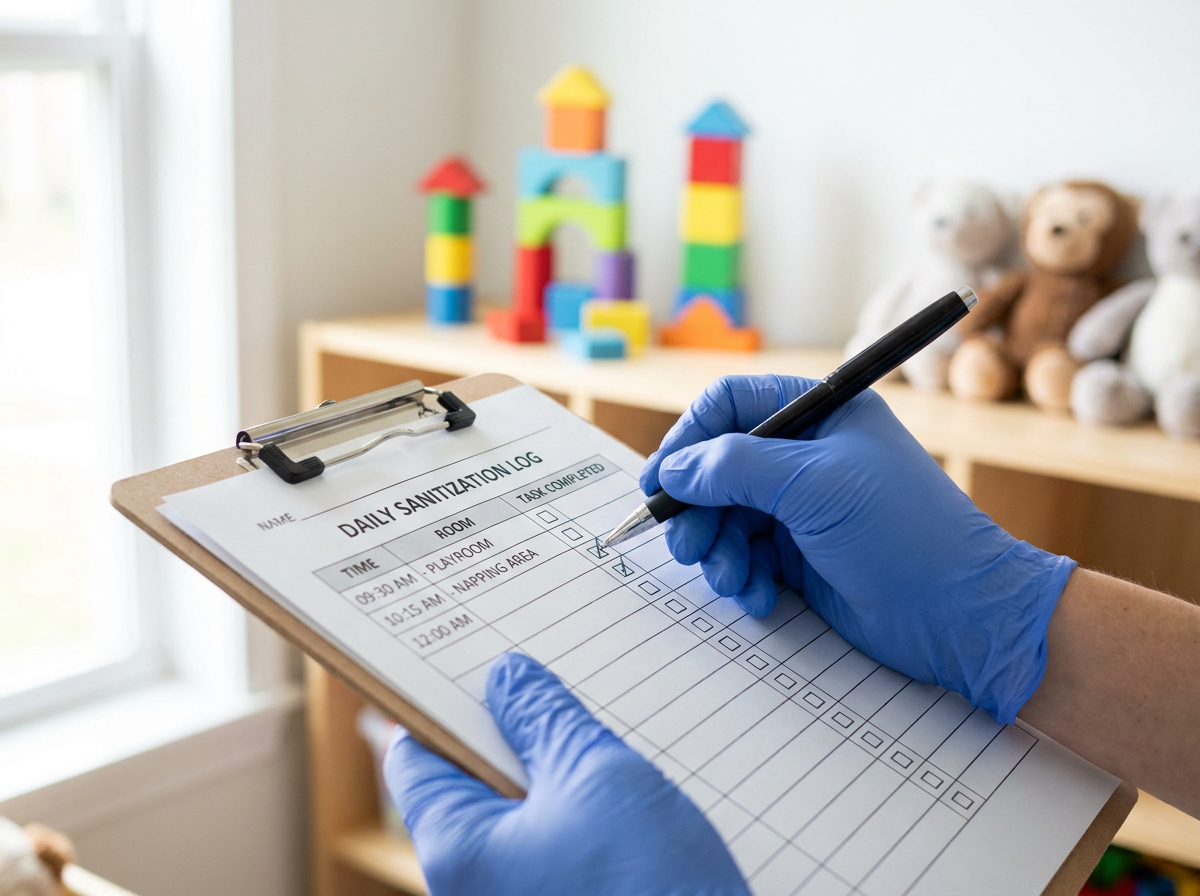
Sanitizing differs from general cleaning in both method and documentation. Facilities must maintain logs showing which surfaces were sanitized, the time, the solution used, and staff initials. These records require retention for 2 years and must be available during inspections.
How Many Types of Cleaning Are Required in Childcare?
Childcare facilities require four distinct cleaning frequencies: continuous cleaning throughout the day, end-of-day deep cleaning, weekly intensive cleaning, and quarterly or seasonal deep cleaning. Each frequency targets different surfaces and contamination levels.
Continuous cleaning addresses immediate needs: spills, visible dirt, and contamination events. Staff must clean surfaces within 5 minutes of soiling. This includes wiping tables after activities, cleaning up food spills, and addressing any bodily fluid incidents immediately.
End-of-day cleaning covers all surfaces children contacted. This includes mopping floors, sanitizing toys used that day, wiping door handles, and disinfecting restrooms. Most facilities allocate 45-60 minutes after children leave for this cleaning phase.
Weekly cleaning targets items not addressed daily: laundering soft goods, deep cleaning carpets, washing windows at child height, and sanitizing storage areas. This phase typically requires 2-3 hours beyond daily cleaning.
Quarterly deep cleaning addresses areas that accumulate dirt over time: air ducts, ceiling fixtures, behind furniture, and floor stripping and waxing. Licensed daycares can maintain DCF compliance with school and daycare deep cleaning services that include signed service completion documentation for inspection files.
What Does OSHA Require Every Childcare Facility to Have?
OSHA requires childcare facilities to maintain specific safety and sanitation equipment. Every facility needs a bloodborne pathogen exposure control plan, personal protective equipment including gloves and eye protection, and proper hazardous waste disposal containers. These requirements protect both staff and children.
Chemical storage represents a critical OSHA requirement. All cleaning products must be stored in original containers or properly labeled secondary containers. Storage areas require locks preventing child access, ventilation, and separation from food storage. Material Safety Data Sheets must be accessible to all staff within 15 minutes of request.
First aid supplies must include specific items: adhesive bandages in multiple sizes, sterile gauze, medical tape, disposable gloves, antiseptic wipes, and a CPR breathing barrier. Kits require monthly inspection and immediate restocking after use. Each classroom needs an accessible kit, plus one portable kit for outdoor activities.
What Are Red Flags in Daycare Cleaning?
Parents and inspectors look for specific warning signs indicating inadequate sanitation. Strong chemical odors suggest improper dilution or ventilation issues. Conversely, facilities that smell like nothing may not be cleaning adequately. A properly maintained daycare has a neutral, clean scent.
Visual red flags include sticky floors, dusty surfaces at child height, grimy door handles, and visible dirt in corners. Restrooms should never have standing water, stained fixtures, or empty soap dispensers. Diaper changing areas with visible stains indicate inadequate disinfection protocols.
Documentation red flags concern inspectors most. Missing cleaning logs, incomplete staff training records, or unlabeled chemical containers result in immediate violations. Facilities should maintain 90 days of cleaning logs on-site with older records archived but accessible within 24 hours.
Procedural red flags include staff not washing hands between diaper changes, toys shared between rooms without sanitizing, and food preparation in classrooms without proper sanitation supplies. These indicate systemic training failures rather than isolated incidents.
Florida-Specific Compliance Documentation
Florida DCF requires specific documentation that other states may not mandate. Facilities must maintain written cleaning policies, staff training records, product inventory lists, and daily cleaning logs. Inspectors request these documents during every visit.
Required Written Policies
Your facility needs written protocols for: daily cleaning schedules, sanitizing and disinfecting procedures, bloodborne pathogen response, illness outbreak procedures, and chemical storage. These policies require annual review and staff signature acknowledging receipt.
Cleaning schedules must specify which surfaces get cleaned, sanitized, or disinfected; the frequency; the products used; and responsible staff. Generic schedules fail inspections. Your schedule needs room-by-room specificity including exact times for restroom checks.
Staff Training Documentation
All staff require documented training on cleaning procedures within 30 days of hire. Training must cover proper dilution ratios, contact times, personal protective equipment use, and emergency procedures. Annual refresher training requires documentation with dates and signatures.
Training records must include the topics covered, trainer qualifications, date, duration, and attendee signatures. Video training alone does not satisfy requirements; facilities must document comprehension through written tests or observed demonstrations.
Cleaning Product Requirements for Childcare
Florida DCF and EPA regulate which products daycares can use. All sanitizers and disinfectants must appear on the EPA's List N for childcare settings. Products must be EPA-registered, which means they display an EPA registration number on the label.
Bleach solutions remain the most common and cost-effective option. However, bleach degrades within 24 hours of mixing, requiring fresh solutions daily. Pre-mixed commercial sanitizers offer convenience but cost 3-5 times more than bleach solutions. Quaternary ammonium compounds provide an alternative for facilities with bleach sensitivities.
Low-VOC and fragrance-free products protect children with respiratory sensitivities. Florida does not mandate these products, but best practices recommend them. Products labeled "green" or "natural" still require EPA registration for sanitizing or disinfecting claims.
Product Storage Requirements
All cleaning chemicals require locked storage inaccessible to children. Cabinets must be at least 4 feet high or have childproof locks. Storage areas need ventilation and cannot share space with food, medications, or personal items.
Products must remain in original containers or clearly labeled secondary containers. Labels need the product name, dilution ratio if applicable, and hazard warnings. Spray bottles of diluted solutions require labels matching the original product information.
Professional Deep Cleaning for DCF Compliance
Many Florida daycares schedule professional deep cleaning during school closures to maintain compliance without disrupting operations. Summer break, winter recess, and spring break provide ideal windows for intensive floor care, air duct cleaning, and facility-wide sanitation.
VCT floors common in daycare facilities require floor stripping and waxing every 12-18 months to maintain sanitary conditions. Worn floor finish traps bacteria in scratches and worn areas that daily mopping cannot address. Fresh floor finish creates a sealed, easily sanitized surface.
Professional cleaning provides documentation that satisfies DCF requirements. Service completion records should include the date, scope of work, products used, and technician certification. These records demonstrate proactive compliance during inspections.
Creating a Daycare Cleaning Schedule That Passes Inspection
Effective cleaning schedules balance thoroughness with operational reality. Staff cannot clean constantly while supervising children. Strategic scheduling ensures compliance without compromising child safety or staff burnout.
| Frequency | Tasks | Time Required |
|---|---|---|
| After each use | Diaper changing surface, potty chairs, mouthed toys | 2-5 minutes |
| After meals | Tables, highchairs, food prep surfaces | 10-15 minutes |
| Twice daily | Restroom cleaning, door handle wipe-down | 15-20 minutes each |
| End of day | Floor mopping, toy sanitizing, surface disinfecting | 45-60 minutes |
| Weekly | Laundry, deep carpet cleaning, window washing | 2-3 hours |
| Quarterly | Air ducts, floor restoration, behind furniture | Professional service |
Request a free on-site cleaning assessment to evaluate your facility's current condition and develop a compliance-focused cleaning plan. Professional assessments identify problem areas before inspectors do.
Preparing for Health Department Inspections
Inspection readiness requires consistent daily practices, not last-minute scrambling. Facilities that maintain compliance daily pass inspections without stress. Those that clean intensively before scheduled inspections often fail surprise visits.
Create an inspection binder containing all required documentation: cleaning logs, staff training records, product lists with Safety Data Sheets, written policies, and previous inspection reports. Keep this binder in a consistent location accessible to any staff member.
Conduct monthly self-inspections using the same checklist health departments use. The North Carolina sanitation standards provide a comprehensive checklist applicable to Florida facilities. Document self-inspection results and corrective actions taken.
Address violations immediately rather than waiting for follow-up inspections. Document corrections with dated photographs and updated procedures. Proactive correction demonstrates commitment to child safety and often results in reduced scrutiny during future inspections.
Need DCF-Compliant Deep Cleaning for Your Daycare?
MB Clean Solutions provides professional deep cleaning for licensed daycares across Miami-Dade, Broward, and Palm Beach counties. We schedule around your operations, use child-safe products, and provide signed documentation for your DCF inspection files.
Get Your Free AssessmentSiga leyendo
Más guías sobre el mismo tema.
What to Expect During Commercial Deep Cleaning Service
Learn exactly what happens during a commercial deep cleaning service, from pre-cleaning assessment to final inspection. Includes timelines, costs, and preparation tips.
Leer la guía
Commercial Deep Cleaning Cost by Square Footage and Building Type
Commercial deep cleaning costs $0.40 to $2.00 per square foot depending on building type, floor condition, and service scope. Get exact pricing breakdowns.
Leer la guía
Commercial Deep Cleaning vs Regular Cleaning: Key Differences
Learn the exact differences between commercial deep cleaning and regular cleaning, including costs, frequency, tasks covered, and which service your business needs.
Leer la guía
¿Listo Para un Espacio Impecable?
Obtenga un estimado gratis y sin compromiso para su proyecto de limpieza comercial. La mayoría de las cotizaciones se entregan en 24 horas.