Hurricane Season Commercial Cleaning Checklist for Florida Businesses
SEASONAL COMMERCIAL CLEANING CHECKLIST FOR FLORIDA BUSINESSES DURING HURRICANE SEASON
Complete 3-phase hurricane season cleaning checklist for Florida commercial properties. Pre-storm prep, emergency response, and post-storm recovery protocols.
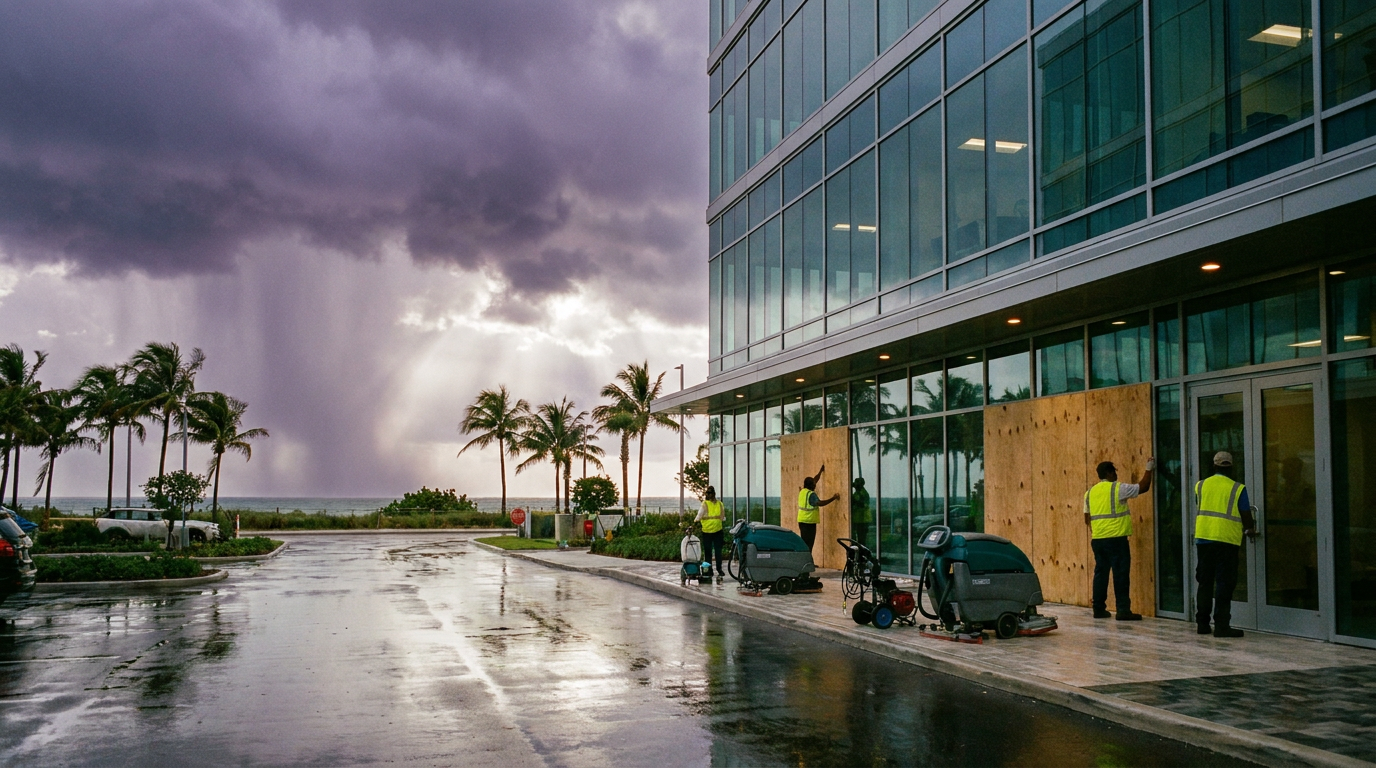
Florida businesses need a three-phase commercial cleaning checklist for hurricane season: pre-storm preparation (complete by May 31), emergency response protocols during active storms, and post-storm recovery cleaning within 24 to 48 hours of water intrusion. According to FEMA guidelines, mold begins growing within 24 to 48 hours after flooding, making rapid response the difference between minor cleanup and major remediation costing $10,000 to $50,000 or more.
- Complete all pre-storm exterior cleaning by May 31, before Atlantic hurricane season officially begins June 1
- Water extraction must begin within 24 hours of intrusion; mold remediation costs increase 300% after 72 hours
- Pre-storm cleaning budgets range from $2,000 to $8,000 for most South Florida commercial properties
- HVAC systems require inspection before restart; contaminated ductwork spreads mold spores building-wide
- Document all property conditions with timestamped photos before and after storms for insurance claims
Why Florida Businesses Need a Hurricane Season Cleaning Protocol
The Insurance Institute for Business and Home Safety (IBHS) reports that commercial properties with documented pre-storm maintenance experience 40% fewer insurance disputes after hurricane damage. Florida's unique combination of high humidity (averaging 74% annually), salt air corrosion, and an average of 7.4 tropical systems per season creates cleaning challenges no other state faces.
Standard janitorial services do not address hurricane preparedness. According to the Florida Department of Environmental Protection's Facility Hurricane Preparedness guidelines, commercial buildings require specific drainage maintenance, debris removal, and contamination prevention protocols that differ significantly from routine cleaning schedules.
The National Hurricane Center's 2026 forecast predicts above-average activity with 17 to 22 named storms. For businesses across Miami-Dade, Broward, and Palm Beach counties, this means scheduling commercial deep cleaning services before vendor availability becomes limited in late May.
Pre-Storm Commercial Cleaning Checklist: Complete by May 31
Pre-storm preparation is the most cost-effective phase of hurricane readiness. The CDC recommends completing all exterior cleaning and maintenance before tropical activity threatens, as conditions deteriorate rapidly once watches are issued. Waiting until June typically means 20% to 35% higher vendor costs and limited scheduling availability.
Exterior Debris Removal and Drainage Maintenance
Loose debris becomes projectile hazards at wind speeds above 45 mph. The IBHS estimates that 30% of commercial hurricane damage comes from debris impact rather than direct wind damage. Remove all items from parking lots, loading docks, walkways, and exterior storage areas.
Drainage system cleaning prevents the ponding and water intrusion that causes 60% of post-hurricane mold claims. Clear all gutters, roof drains, scuppers, and downspouts of accumulated debris. South Florida properties accumulate approximately 2 to 4 inches of organic debris annually from palm fronds, leaves, and airborne particulates.
| Exterior Task | Frequency | Cost Range |
|---|---|---|
| Parking lot and walkway debris removal | Monthly May through November | $150 to $400 |
| Gutter and downspout cleaning | Twice during season | $200 to $600 |
| Roof drain and scupper clearing | Monthly during season | $300 to $800 |
| Pressure washing (sidewalks, facades) | Once pre-season | $0.15 to $0.50 per sqft |
| Dumpster area cleaning and securing | Before each storm threat | $100 to $250 |
Building Envelope Inspection and Cleaning
Window and door seals fail at rates 3 to 5 times higher in coastal Florida compared to inland regions, according to ASHRAE building performance data. Clean all window tracks, door thresholds, and weatherstripping to identify deterioration before storms test their integrity. Remove accumulated sand, salt residue, and organic buildup that compromises seal effectiveness.
Entry mat areas require special attention. Florida commercial buildings track in significant sand and moisture that accumulates in threshold channels. This buildup prevents proper door closure and creates water intrusion pathways during heavy rain events common in tropical systems.
Storm shutter tracks and hurricane film application surfaces must be clean for proper installation. Dirty tracks cause shutters to jam, while dust and debris prevent hurricane film from adhering properly. Schedule track cleaning 2 to 3 weeks before peak season to allow time for any necessary repairs.
Interior Pre-Storm Deep Cleaning
Interior preparation focuses on reducing contamination risk and protecting assets. Move all floor-level inventory, documents, and electronics to elevated positions at least 12 inches above floor level. The EPA recommends this minimum elevation based on typical commercial flood water depths during moderate flooding events.
Storage rooms, utility closets, and mechanical areas often contain forgotten items that become contaminated during flooding. A thorough commercial deep cleaning before hurricane season identifies these problem areas and removes unnecessary items that complicate post-storm recovery.
Janitorial supply storage requires specific attention. Chemical containers must be secured, elevated, and inventoried. Mixing of cleaning chemicals during flooding creates toxic conditions that require hazmat response. The Florida Department of Health recommends maintaining a chemical inventory with Safety Data Sheets accessible off-site.
HVAC and Mechanical System Preparation
HVAC systems represent both a vulnerability and a contamination vector during hurricanes. According to ASHRAE guidelines for post-flood building recovery, contaminated HVAC systems spread mold spores throughout entire buildings within 24 to 48 hours of restart. Pre-storm preparation reduces this risk significantly.
Rooftop Unit and Exterior Equipment Cleaning
Clear all debris from around rooftop HVAC units, condensate drains, and air intakes. South Florida properties accumulate palm debris, bird nesting materials, and airborne particulates that clog condensate lines and restrict airflow. Blocked condensate drains cause interior water damage even without direct storm impact.
Inspect and clean condenser coils before hurricane season. Salt air corrosion reduces HVAC efficiency by 15% to 25% annually in coastal Florida locations. Clean coils also recover faster after storm exposure and require less extensive post-storm remediation.
Filter Replacement and Documentation
Replace all HVAC filters before hurricane season and document the installation date. Post-storm recovery often requires HEPA filtration for 48 to 72 hours, and knowing your baseline filter condition simplifies insurance documentation. Standard commercial filters should be MERV 8 or higher for Florida properties.
Photograph all mechanical equipment before storm season. Timestamped images establish pre-loss condition for insurance claims and help technicians identify storm-related damage versus pre-existing issues during post-storm inspections.
Emergency Response Protocols During Active Storms
Active storm periods require limited intervention focused on safety, documentation, and damage control. The Florida Division of Emergency Management recommends that non-essential personnel remain away from commercial properties during tropical storm or hurricane conditions.
Water Intrusion Response During Storm Events
If water intrusion occurs while a storm is active, focus on documentation rather than cleanup. Photograph visible water entry points, measure water depth if safely accessible, and note the time of intrusion. This documentation supports insurance claims and helps remediation teams prioritize response areas.
Isolate affected areas from unaffected spaces by closing doors and shutting off HVAC zones if safely possible. Running HVAC systems during active water intrusion spreads contamination throughout the building. According to EPA mold remediation guidelines, containment during the event reduces total remediation costs by 20% to 40%.
Post-Storm Access and Safety Assessment
Do not enter commercial properties until local authorities clear the area for return. Downed power lines, structural damage, and contaminated standing water create life-threatening hazards. The CDC reports that 25% of hurricane-related injuries occur during post-storm cleanup rather than during the storm itself.
Before entering any building after a hurricane, verify that electrical systems are safe. Standing water and energized electrical systems cause electrocution deaths every hurricane season in Florida. Have a licensed electrician inspect and clear the building before cleanup crews enter.
Post-Storm Recovery Cleaning: The Critical 48-Hour Window
Post-storm cleaning operates on strict timelines dictated by mold biology. FEMA and CDC guidelines establish that mold colonization begins within 24 to 48 hours of water intrusion in Florida's warm, humid conditions. Every hour of delay increases remediation scope and cost.
First 24 Hours: Water Extraction and Documentation
Professional water extraction must begin within 24 hours of intrusion. Industrial extraction equipment removes 95% or more of standing water, compared to 60% to 70% removal with consumer-grade equipment. For commercial properties, this difference determines whether materials can be salvaged or require replacement.
Document everything before, during, and after extraction. Insurance adjusters require photographic evidence of water levels, affected materials, and extraction processes. The Insurance Information Institute reports that documented claims settle 40% faster than undocumented claims.
| Timeline | Priority Actions | Consequences of Delay |
|---|---|---|
| 0 to 24 hours | Water extraction, air movement, dehumidification | Mold colonization begins |
| 24 to 48 hours | Remove wet materials, HEPA filtration, disinfection | Visible mold growth appears |
| 48 to 72 hours | Deep cleaning, HVAC inspection, humidity monitoring | Mold spreads to adjacent materials |
| 72+ hours | Full remediation assessment, structural drying verification | Major remediation required; costs increase 300% |
24 to 48 Hours: Material Assessment and Removal
Porous materials that remain wet beyond 48 hours generally cannot be salvaged. This includes carpet, ceiling tiles, insulation, and unsealed drywall. The EPA recommends removing these materials rather than attempting to dry them, as mold growth within porous materials cannot be fully remediated.
Non-porous surfaces can be cleaned and disinfected if addressed within the 48-hour window. Hard floors, sealed concrete, metal surfaces, and glass respond well to professional cleaning when treated promptly. Commercial floor deep cleaning using industrial equipment removes contamination that standard mopping leaves behind.
Check hidden moisture in walls, under cabinets, behind baseboards, and above ceiling tiles. Moisture meters detect water that visual inspection misses. The IICRC S500 Standard for Professional Water Damage Restoration requires moisture mapping before any drying verification can occur.
48 to 72 Hours: Deep Cleaning and System Restoration
Once water extraction and material removal are complete, deep cleaning addresses remaining contamination. Flood water contains sewage, chemicals, petroleum products, and biological contaminants that standard cleaning does not address. Professional-grade disinfection is required for any surface that contacted flood water.
HEPA filtration should run continuously for 48 to 72 hours after water extraction. HEPA filters capture 99.97% of particles 0.3 microns and larger, including mold spores that become airborne during drying. According to ASHRAE guidelines, this filtration period prevents secondary contamination of unaffected areas.
HVAC systems require professional inspection before restart. Contaminated ductwork, wet filters, and flooded air handlers spread mold throughout buildings within hours of system activation. The National Air Duct Cleaners Association (NADCA) recommends full duct inspection and cleaning after any flooding event.
Industry-Specific Hurricane Cleaning Considerations
Different commercial property types face unique hurricane season challenges. Compliance requirements, operational timelines, and contamination risks vary significantly across industries.
Hotels and Hospitality Properties
Hotels face guest safety obligations and brand standard requirements that intensify hurricane preparation needs. Lobby marble floors, ballroom carpeting, and pool deck surfaces require specific pre-storm and post-storm protocols. Hotel and hospitality cleaning services must address both aesthetic standards and health code compliance.
Post-storm recovery timelines for hotels are compressed by revenue loss. Every day of closure costs Miami Beach hotels an average of $15,000 to $50,000 in lost revenue, according to the Greater Miami Convention and Visitors Bureau. Rapid response cleaning services that restore operations within 48 to 72 hours minimize financial impact.
Schools and Daycare Facilities
Florida DCF-licensed childcare facilities face strict sanitation requirements that become more complex after flooding. The Florida Department of Children and Families requires documented cleaning protocols and signed service completion records for post-storm remediation. School and daycare deep cleaning services must use child-safe, low-VOC products while meeting DCF compliance standards.
Schools typically schedule hurricane season deep cleaning during summer break, but post-storm recovery may require emergency cleaning during the academic year. Facilities should maintain relationships with cleaning vendors who can mobilize within 24 hours and provide the documentation DCF inspectors require.
Retail and Shopping Centers
Multi-tenant retail properties face coordination challenges during hurricane recovery. Property managers must communicate with multiple tenants, coordinate access schedules, and ensure common areas meet reopening standards. Retail and shopping center cleaning services that operate under single contracts simplify this coordination.
Food court areas require enhanced sanitation protocols after any water intrusion. Florida Department of Business and Professional Regulation health codes mandate specific cleaning and inspection procedures before food service can resume. Contaminated tile and grout in food service areas may require replacement rather than cleaning.
Office Buildings
Class A, B, and C office buildings face tenant satisfaction and lease compliance pressures during hurricane recovery. Office building cleaning programs should include documented response protocols that property managers can share with tenants before hurricane season begins.
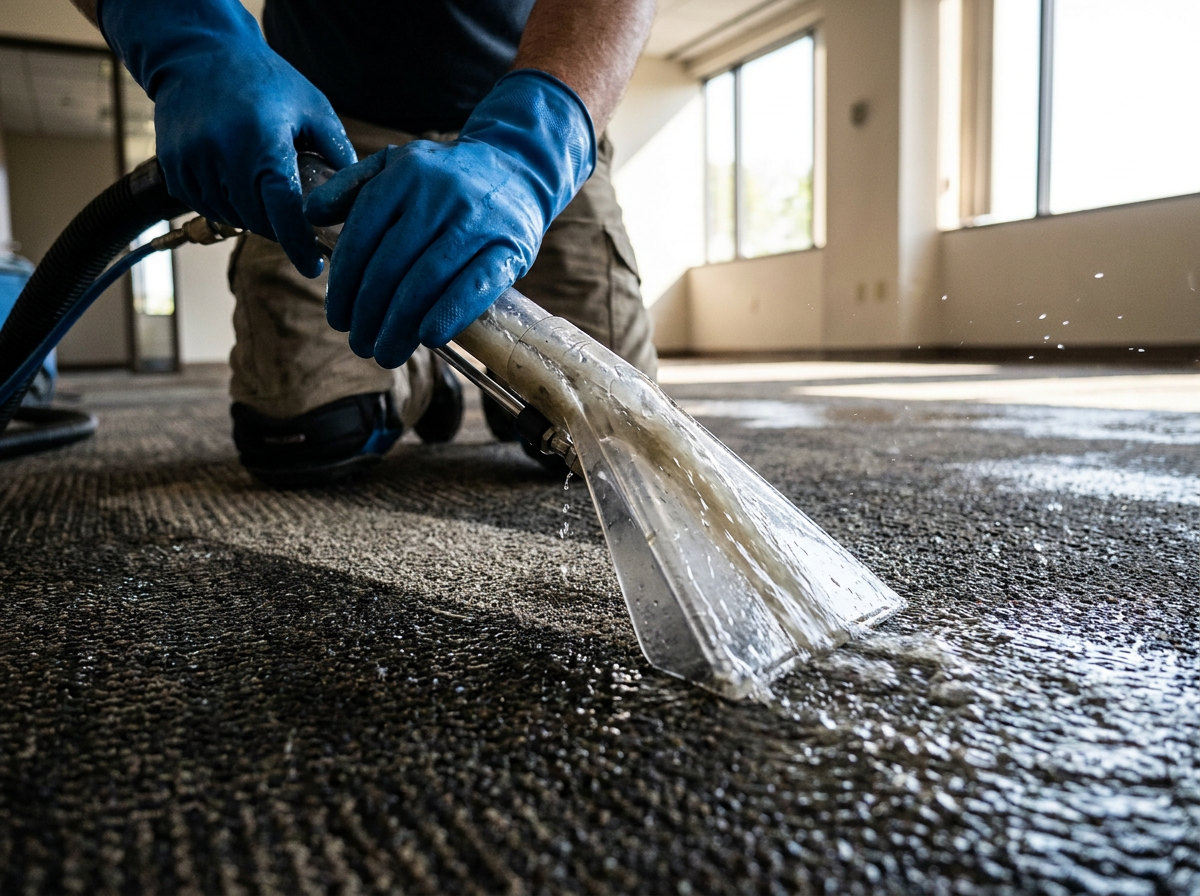
Carpet care presents particular challenges in office settings. Commercial carpet that remains wet beyond 24 to 48 hours typically requires replacement. Hot water extraction within the first 24 hours can salvage carpet, but this requires immediate vendor response that must be arranged before storm season.
Floor Restoration After Hurricane Damage
Commercial floors sustain significant damage during hurricanes, from water saturation to debris impact and contamination. Post-storm floor restoration often determines whether spaces can reopen quickly or require extended closure.
VCT and Vinyl Floor Recovery
VCT (vinyl composition tile) floors can often be salvaged if water extraction occurs within 24 hours. However, flood water strips existing wax finishes and leaves contamination that standard mopping cannot remove. Floor stripping and waxing services restore VCT floors to pre-storm condition while removing embedded contamination.
Signs that VCT requires full stripping rather than scrub and recoat include: visible discoloration, soft or spongy tiles, lifting edges, and persistent odor after surface cleaning. Attempting to recoat over contaminated floors traps moisture and contaminants, leading to adhesive failure and mold growth beneath the flooring.
Polished Concrete and Terrazzo Recovery
Polished concrete and terrazzo floors resist water damage better than porous flooring but still require professional post-storm treatment. Flood water deposits minerals and contaminants that etch sealed surfaces and dull polish. Professional cleaning using diamond polishing equipment restores shine while removing contamination.
Salt water intrusion, common in coastal Florida flooding, accelerates concrete deterioration. The Portland Cement Association reports that salt contamination can reduce concrete service life by 50% if not properly cleaned and treated. Post-flood concrete cleaning should include salt removal and resealing.
Carpet Assessment and Restoration
Commercial carpet contaminated by flood water generally requires replacement. The IICRC classifies flood water as Category 3 (grossly contaminated), and their S500 Standard recommends against cleaning carpet exposed to Category 3 water. Insurance typically covers carpet replacement in documented flood claims.
If carpet was only exposed to clean rainwater (Category 1) and extraction began within 24 hours, professional hot water extraction may salvage the carpet. This determination requires professional assessment; attempting to dry contaminated carpet spreads mold and bacteria throughout the building.
Cost Planning for Hurricane Season Cleaning
Budgeting for hurricane season cleaning requires understanding both pre-storm preparation costs and potential post-storm recovery expenses. Pre-storm investment typically reduces post-storm costs by preventing damage and enabling faster recovery.
Pre-Storm Preparation Budget
Most South Florida commercial properties should budget $2,000 to $8,000 for comprehensive pre-storm cleaning and preparation. This includes exterior debris removal, drainage cleaning, building envelope inspection, interior deep cleaning, and HVAC preparation. Properties with larger footprints, multiple buildings, or deferred maintenance may exceed this range.
Scheduling pre-storm cleaning in April or early May typically costs 15% to 25% less than waiting until late May or June. Vendor availability decreases as hurricane season approaches, and emergency pricing applies once tropical systems threaten the region.
Post-Storm Recovery Cost Factors
Post-storm cleaning costs vary dramatically based on damage extent and response timing. Water extraction within 24 hours for a 5,000 square foot commercial space typically costs $1,500 to $3,500. Waiting 72 hours or more can increase total remediation costs to $15,000 to $50,000 or more due to mold remediation requirements.
Insurance coverage affects out-of-pocket costs significantly. Commercial property policies typically cover flood damage cleaning when properly documented, but deductibles and coverage limits apply. Maintain relationships with cleaning vendors who provide the documentation insurance adjusters require.
Vendor Selection and Emergency Response Planning
Establishing relationships with cleaning vendors before hurricane season ensures availability when emergencies occur. During active storm periods, cleaning companies prioritize existing clients over new requests.
What to Look for in a Hurricane Response Cleaning Partner
Commercial cleaning vendors should offer 24-hour emergency response capability, industrial-grade extraction and drying equipment, IICRC-certified technicians, and insurance documentation support. Local vendors familiar with South Florida conditions respond faster than national franchises that deploy from out of state.
Verify that vendors carry adequate insurance coverage, including general liability and workers compensation. Post-storm cleanup involves hazardous conditions, and property owners can face liability exposure if uninsured workers are injured on their premises.
Request a free on-site cleaning assessment before hurricane season to establish baseline property conditions and discuss emergency response protocols. This pre-season relationship ensures faster response when storms threaten.
Creating an Emergency Contact Protocol
Document emergency contacts for cleaning vendors, insurance adjusters, property managers, and building maintenance personnel. Store this information both on-site and in cloud-accessible locations that remain available during power outages.
Establish authorization protocols that allow cleaning vendors to begin work without delays for approval. Post-storm conditions deteriorate rapidly; a 6-hour delay waiting for authorization can mean the difference between salvage and replacement for water-damaged materials.
Frequently Asked Questions
What should commercial businesses clean before hurricane season in Florida?
Commercial businesses should complete exterior debris removal, drainage system cleaning, building envelope inspection, interior deep cleaning, and HVAC preparation before June 1. Priority tasks include clearing gutters, roof drains, and downspouts; removing loose items from parking areas and loading docks; cleaning window and door tracks; and elevating floor-level inventory at least 12 inches.
How soon should mold inspection start after storm water intrusion?
Mold inspection should begin within 24 hours of water intrusion. According to FEMA and CDC guidelines, mold colonization begins within 24 to 48 hours in Florida's warm, humid conditions. Visible mold growth typically appears within 48 to 72 hours, and waiting beyond 72 hours increases remediation costs by approximately 300%.
How much does hurricane preparation cleaning cost for a Florida business?
Pre-storm preparation cleaning costs $2,000 to $8,000 for most South Florida commercial properties, depending on square footage, building condition, and scope of work. Post-storm recovery costs range from $1,500 to $3,500 for prompt water extraction to $15,000 to $50,000 or more for delayed remediation requiring mold treatment.
Should a business turn off HVAC before a hurricane?
Businesses should turn off HVAC systems if water intrusion occurs or is imminent. Running HVAC during active water intrusion spreads contamination throughout the building via ductwork. After storms pass, HVAC systems should not restart until professional inspection confirms no water damage to air handlers, ductwork, or filters.
How do you clean a commercial building after flooding?
Commercial flood cleanup follows a specific sequence: water extraction within 24 hours, removal of unsalvageable porous materials within 48 hours, HEPA filtration for 48 to 72 hours, surface disinfection, HVAC inspection, and humidity monitoring until levels return to normal (below 60% relative humidity). All Category 3 (flood) water cleanup should be performed by professionals with appropriate PPE.
What is the difference between pre-storm cleaning and post-storm restoration cleaning?
Pre-storm cleaning focuses on prevention: removing debris that becomes projectiles, clearing drainage to prevent water intrusion, and protecting assets from damage. Post-storm restoration cleaning addresses contamination: extracting flood water, removing damaged materials, disinfecting surfaces, and restoring air quality. Pre-storm cleaning costs significantly less than post-storm restoration.
Prepare Your Business for Hurricane Season
MB Clean Solutions provides commercial deep cleaning, floor restoration, and emergency response services throughout Miami-Dade, Broward, and Palm Beach counties. Schedule your pre-storm assessment before vendor availability becomes limited.
Request Your Free AssessmentSiga leyendo
Más guías sobre el mismo tema.
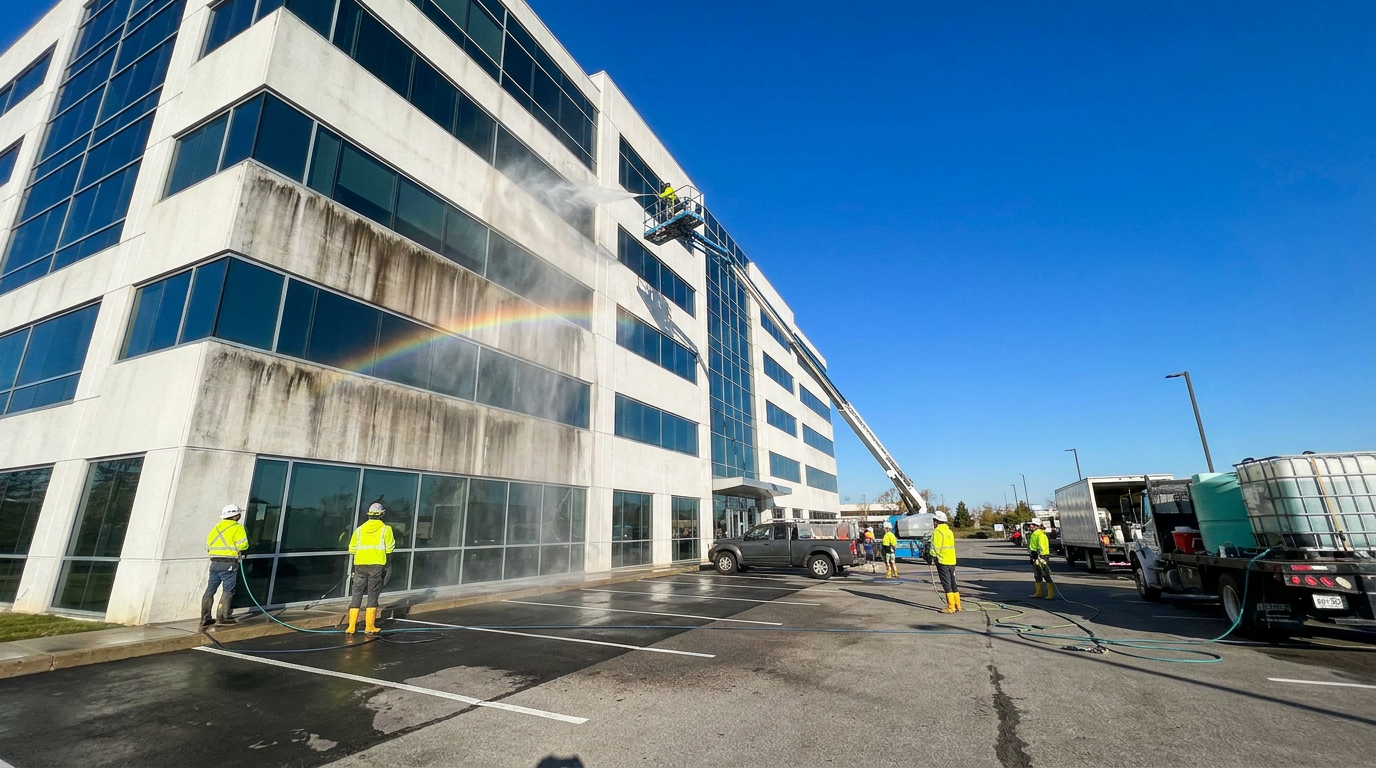
Commercial Pressure Washing Prices for Buildings and Parking Lots
Commercial pressure washing costs $0.10 to $0.50 per square foot for buildings and $0.08 to $0.25 for parking lots. Get 2026 pricing by surface type.
Leer la guía
Free Commercial Cleaning Consultation: What to Expect in 2026
Learn exactly what happens during a free commercial cleaning consultation, how to prepare, and what questions to ask. Get transparent pricing and scope clarity.
Leer la guía
What to Expect During Commercial Deep Cleaning Service
Learn exactly what happens during a commercial deep cleaning service, from pre-cleaning assessment to final inspection. Includes timelines, costs, and preparation tips.
Leer la guía
¿Listo Para un Espacio Impecable?
Obtenga un estimado gratis y sin compromiso para su proyecto de limpieza comercial. La mayoría de las cotizaciones se entregan en 24 horas.