ROI of Professional Floor Maintenance Programs for Commercial Buildings
ROI OF PROFESSIONAL FLOOR MAINTENANCE PROGRAMS FOR COMMERCIAL BUILDINGS
Professional floor maintenance programs deliver 9-18 month payback periods. Learn how to calculate ROI, reduce costs, and extend floor life in commercial facilities.
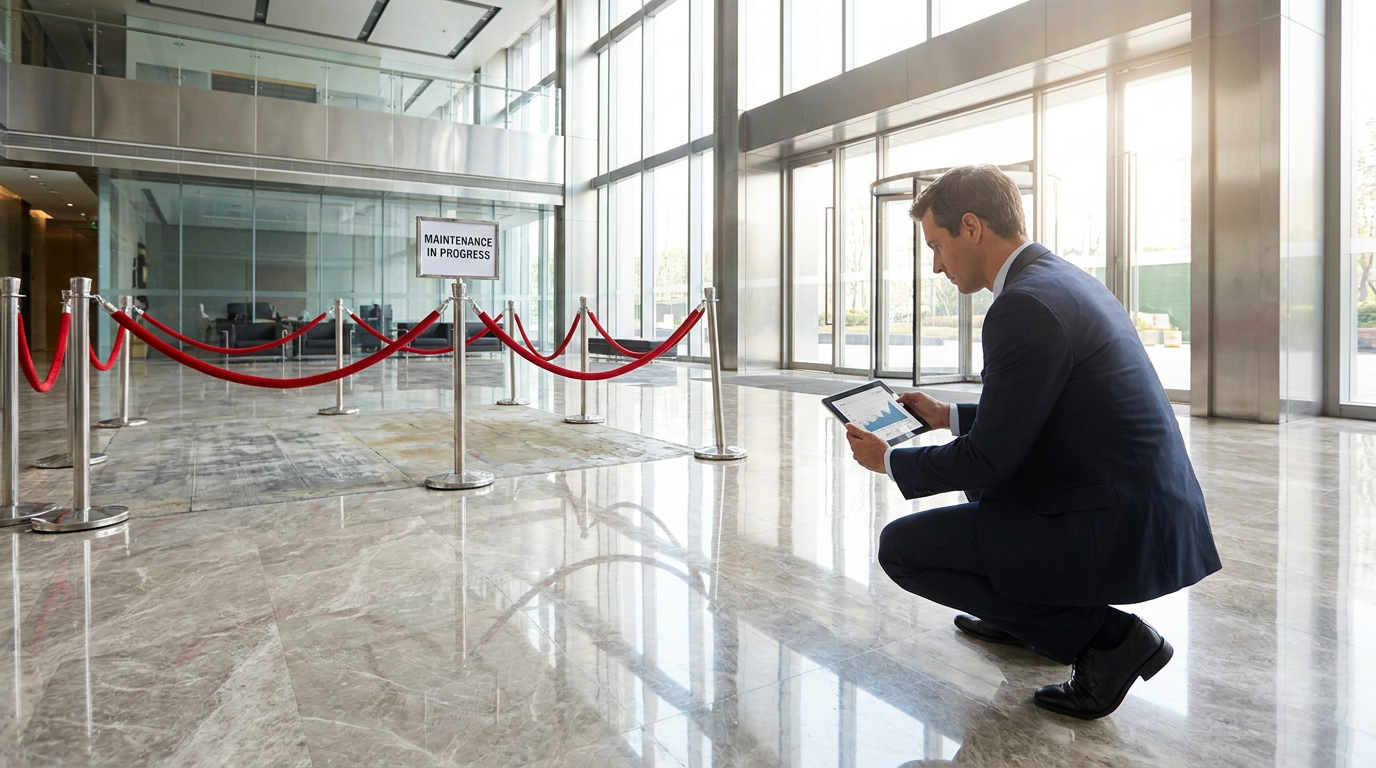
Professional floor maintenance programs for commercial buildings typically deliver ROI through 9 to 18 month payback periods, with annual savings of 15 to 40 percent on total flooring lifecycle costs. The strongest returns come from facilities with 10,000 or more square feet of hard flooring and daily cleaning requirements, where labor reduction, extended floor life, and reduced replacement costs compound over time.
- Payback period ranges from 9 to 18 months for professional floor maintenance programs in high-traffic facilities
- Regular maintenance extends commercial floor lifespan by 5 to 10 years, delaying $3 to $12 per square foot replacement costs
- Labor savings of 20 to 35 percent are achievable through optimized maintenance schedules and professional equipment
- Slip-and-fall claims average $20,000 to $50,000 per incident; proper floor care reduces liability exposure by up to 60 percent
- Buildings with professional floor programs report 12 to 18 percent higher tenant satisfaction scores
What Drives ROI in Commercial Floor Maintenance
According to the International Facility Management Association (IFMA), flooring represents 8 to 12 percent of a commercial building's total maintenance budget. Professional floor maintenance programs generate returns across five primary categories: labor efficiency, asset preservation, risk reduction, operational continuity, and tenant retention.
The Building Owners and Managers Association (BOMA) reports that reactive floor care costs 3 to 5 times more than preventive maintenance over a 10 year period. This multiplier effect makes the ROI case compelling for property managers, facility directors, and building owners evaluating maintenance investments.
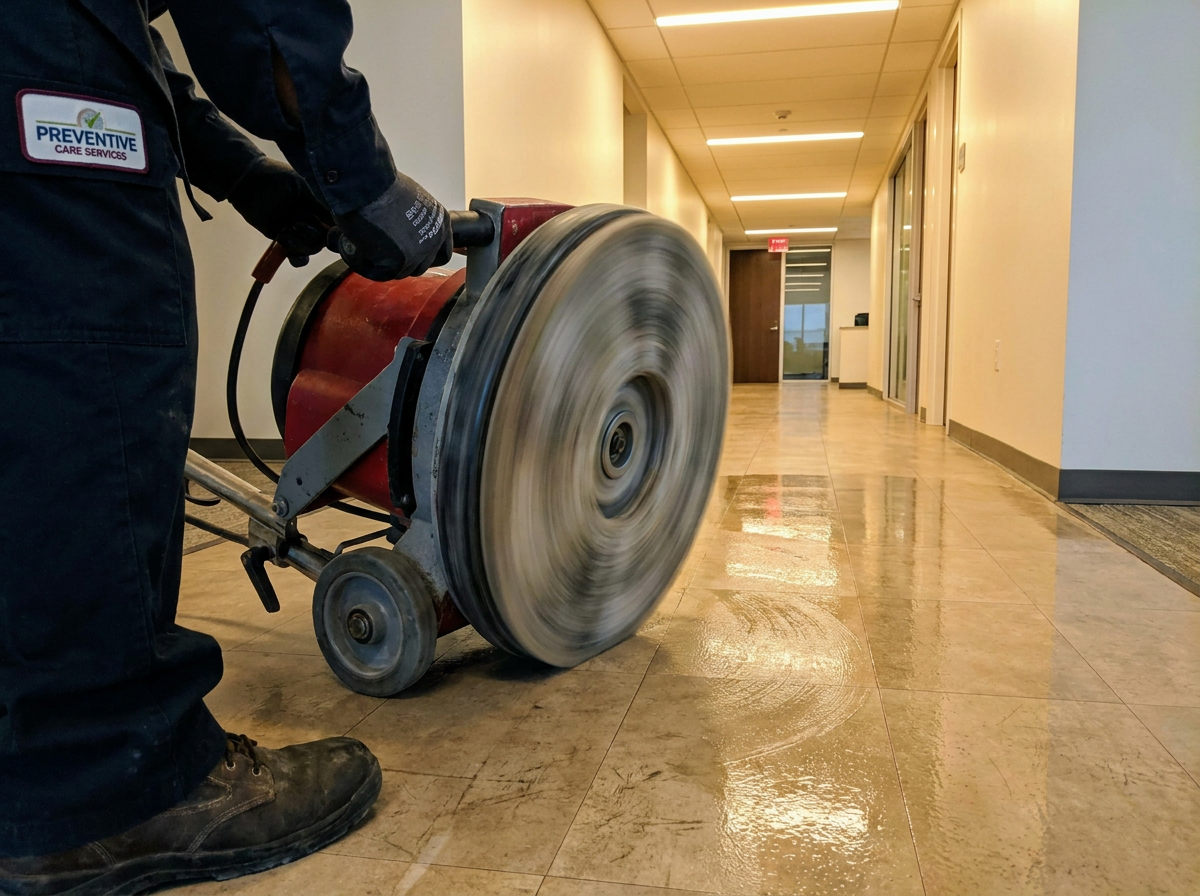
Labor costs typically account for 60 to 70 percent of total floor maintenance expenses. Professional programs using industrial auto-scrubbers, ride-on equipment, and optimized chemical systems reduce labor hours by 20 to 35 percent compared to manual cleaning methods. A 50,000 square foot facility cleaning floors daily can save $15,000 to $25,000 annually in labor costs alone.
Calculating Your Floor Maintenance ROI
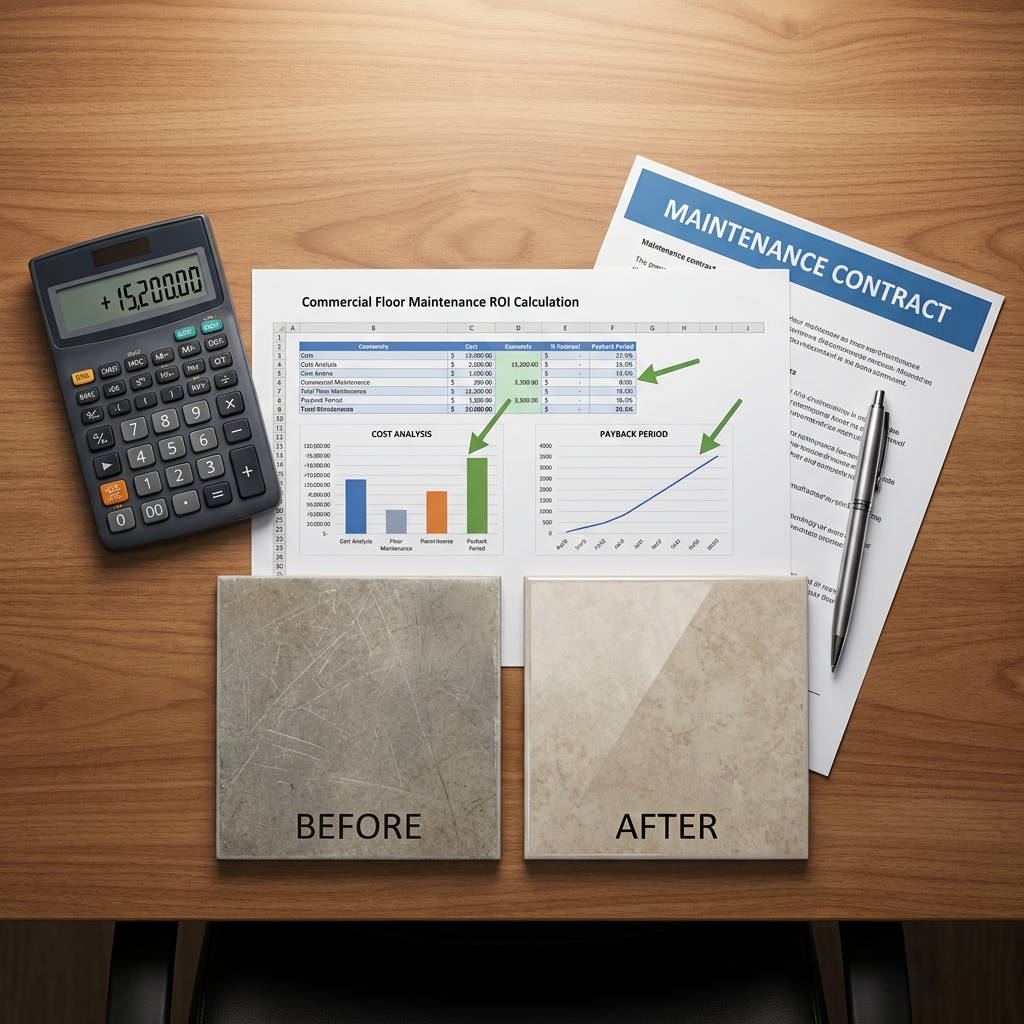
The standard ROI formula for floor maintenance programs compares annual benefits against annual costs. Benefits include labor savings, reduced repair frequency, extended floor life, lower liability exposure, and decreased tenant turnover. Costs include service contracts, equipment, chemicals, and administrative overhead.
Use this calculation framework:
Annual ROI = (Annual Benefits minus Annual Costs) divided by Annual Costs, multiplied by 100
For payback period, divide the initial investment by annual net savings. A $30,000 professional maintenance contract generating $24,000 in annual savings produces a 15 month payback period.
| ROI Component | Typical Annual Value (50,000 sq ft facility) | Calculation Method |
|---|---|---|
| Labor Savings | $15,000 to $25,000 | Hours reduced x hourly rate |
| Deferred Replacement | $8,000 to $15,000 | Replacement cost divided by extended years |
| Reduced Repairs | $3,000 to $8,000 | Historical repair costs x reduction percentage |
| Liability Reduction | $2,000 to $10,000 | Average claim cost x risk reduction |
| Tenant Retention Value | $5,000 to $20,000 | Turnover cost x retention improvement |
| Total Annual Benefit | $33,000 to $78,000 | Sum of all components |
ROI by Building Type and Floor Material
Different commercial environments produce varying returns based on traffic patterns, floor materials, and operational requirements. According to data from the Carpet and Rug Institute and the Resilient Floor Covering Institute, floor type significantly impacts maintenance frequency and cost structure.
VCT Floors in Retail and Schools
Vinyl composition tile (VCT) requires floor stripping and waxing every 12 to 18 months and scrub and recoat service every 3 to 6 months. A 25,000 square foot retail space spending $0.60 to $1.50 per square foot on quarterly scrub and recoat services invests $15,000 to $37,500 annually. The return comes from extending full strip cycles by 6 to 12 months, saving $0.85 to $1.80 per square foot in avoided stripping costs.
Schools and daycare facilities see additional ROI through DCF compliance documentation and reduced inspection failures. A failed inspection can cost $500 to $2,000 in reinspection fees plus potential enrollment losses.
Polished Concrete in Warehouses
Distribution centers and warehouses with polished concrete floors achieve the fastest payback periods. The National Floor Safety Institute reports that properly maintained polished concrete reduces forklift tire wear by 15 to 25 percent and decreases dust accumulation by up to 80 percent compared to untreated concrete.
A 100,000 square foot warehouse investing $50,000 to $150,000 in initial concrete polishing and $15,000 to $30,000 annually in maintenance typically sees full payback within 18 to 24 months through reduced cleaning labor, lower dust-related equipment maintenance, and extended floor life of 20 to 25 years versus 8 to 12 years for unsealed concrete.
Terrazzo and Marble in Hotels
Hotels and hospitality properties with terrazzo or marble lobby floors face higher per-square-foot maintenance costs of $0.60 to $2.00 but generate proportionally higher returns through guest perception and brand value. Cornell University's School of Hotel Administration research indicates that lobby appearance ranks in the top three factors influencing guest satisfaction scores.
A 5,000 square foot hotel lobby investing $10,000 to $15,000 annually in professional marble restoration can attribute 2 to 5 percent of positive review mentions to facility cleanliness, translating to $20,000 to $50,000 in additional booking revenue for a 200 room property.
Hidden Costs of Neglected Floor Maintenance
The true ROI of professional floor maintenance becomes clearer when examining the costs of deferred or reactive approaches. The National Safety Council reports that slip-and-fall incidents cost U.S. businesses over $70 billion annually, with commercial property claims averaging $20,000 to $50,000 per incident including medical expenses, legal fees, and settlements.
Floor replacement costs vary significantly by material. VCT replacement runs $3 to $5 per square foot installed. Terrazzo costs $15 to $50 per square foot. Polished concrete overlays range from $3 to $12 per square foot. These costs exclude business disruption, which the IFMA estimates at $2 to $8 per square foot for tenant relocation and productivity losses during replacement projects.
South Florida Climate Considerations
Facilities in Miami-Dade, Broward, and Palm Beach counties face accelerated floor degradation from humidity levels averaging 75 to 85 percent. The Florida Building Commission notes that high humidity causes floor finish failure 30 to 50 percent faster than in drier climates. Salt air in coastal areas further accelerates corrosion of metal floor components and degradation of adhesives.
Professional commercial floor deep cleaning programs in South Florida should account for 20 to 30 percent higher maintenance frequency compared to national averages. A quarterly scrub and recoat schedule in Phoenix might translate to every 8 to 10 weeks in Fort Lauderdale or Miami.
Professional vs. In-House Floor Maintenance: Cost Comparison
Facility managers often debate between outsourcing floor maintenance and building internal capabilities. The Institute of Real Estate Management (IREM) provides benchmarking data suggesting that the breakeven point typically occurs around 75,000 to 100,000 square feet of floor space requiring regular professional-grade maintenance.
| Cost Factor | In-House Program | Professional Service |
|---|---|---|
| Equipment (ride-on scrubber) | $15,000 to $45,000 capital | Included in service |
| Labor (trained technician) | $35,000 to $55,000 annually | Included in service |
| Chemicals and supplies | $3,000 to $8,000 annually | Included in service |
| Training and certification | $1,500 to $3,000 annually | Included in service |
| Equipment maintenance | $2,000 to $5,000 annually | Included in service |
| Insurance and liability | Additional coverage required | Provider carries coverage |
| Year 1 Total (50,000 sq ft) | $56,500 to $116,000 | $20,000 to $50,000 |
Smaller facilities under 50,000 square feet almost always achieve better ROI through professional services. The capital equipment costs and specialized labor requirements create unfavorable economics for in-house programs at smaller scales.
Maintenance Frequency and ROI Optimization
The Cleaning Industry Research Institute (CIRI) has established evidence-based maintenance intervals that maximize floor life while minimizing total cost of ownership. Deviating from these intervals in either direction reduces ROI: too-frequent maintenance wastes resources while too-infrequent maintenance accelerates wear.
Optimal Maintenance Schedule by Floor Type
VCT floors perform best with daily dust mopping, weekly wet mopping with neutral cleaner, monthly spray buffing, quarterly scrub and recoat, and annual strip and wax. This schedule extends VCT life from an average of 10 to 15 years to 18 to 25 years, representing $150,000 to $250,000 in avoided replacement costs for a 50,000 square foot facility.
Polished concrete requires daily dust mopping, weekly auto-scrubbing, quarterly burnishing, and annual re-densification treatment. Properly maintained polished concrete can last 25 to 30 years with minimal restoration needs.
Carpet in office buildings benefits from daily vacuuming, monthly spot treatment, quarterly hot water extraction, and annual deep restoration. The Carpet and Rug Institute reports that this schedule extends carpet life by 50 to 100 percent compared to vacuum-only maintenance.
Measuring and Documenting Floor Maintenance ROI
Effective ROI tracking requires baseline measurements and ongoing documentation. Property managers should establish the following metrics before implementing a professional floor maintenance program:
Baseline measurements: Current floor condition score (1 to 10 scale), annual maintenance spending, repair incident frequency, slip-and-fall claims history, tenant satisfaction scores related to facility cleanliness, and floor age versus expected replacement timeline.
Ongoing tracking: Monthly maintenance costs, quarterly condition assessments with photographic documentation, incident reports, and annual tenant surveys. Professional services like those offered by MB Clean Solutions typically provide before-and-after documentation and service completion records for compliance files.
The IFMA recommends reviewing floor maintenance ROI quarterly for the first year and annually thereafter. Adjustments to maintenance frequency or service scope should be data-driven based on condition trends and cost-per-square-foot metrics.
Building Types with Highest Floor Maintenance ROI
Research from the Urban Land Institute and BOMA identifies specific property types where professional floor maintenance delivers above-average returns:
Healthcare facilities: Infection control requirements and regulatory compliance create 40 to 60 percent higher ROI through avoided citations and reduced healthcare-associated infection rates. The CDC estimates that proper floor hygiene contributes to 10 to 15 percent reductions in surface-transmitted infections.
Retail environments: Retail and shopping center floors directly impact customer dwell time and purchase behavior. The Journal of Retailing research indicates that store cleanliness ranks in the top five factors influencing purchase decisions, with clean floors contributing to 8 to 12 percent longer shopping visits.
Educational facilities: Schools and universities with professional floor programs report 15 to 25 percent lower absenteeism rates according to the Environmental Protection Agency's IAQ Tools for Schools program. Reduced dust and allergens from proper floor maintenance improve indoor air quality measurably.
Post-construction properties: New construction cleaning that includes proper floor treatment protects warranty coverage and establishes optimal baseline conditions. Improper initial cleaning can void manufacturer warranties worth $1 to $3 per square foot.
Frequently Asked Questions About Floor Maintenance ROI
What is the typical payback period for professional floor maintenance?
Most commercial facilities achieve payback within 9 to 18 months, with larger facilities and higher-traffic environments reaching breakeven faster. Warehouses and retail spaces often see payback in under 12 months due to high labor savings and extended floor life.
How much does commercial floor maintenance cost per square foot?
Professional floor maintenance typically costs $0.40 to $2.00 per square foot depending on floor type, condition, and service frequency. VCT scrub and recoat services range from $0.60 to $1.50 per square foot, while full strip and wax runs $0.85 to $1.80 per square foot. A free on-site assessment provides accurate pricing based on your specific facility.
Does professional floor maintenance really extend floor life?
Yes. According to the Resilient Floor Covering Institute, proper maintenance extends VCT life by 50 to 100 percent, polished concrete by 30 to 50 percent, and carpet by 50 to 75 percent. These extensions translate directly to deferred replacement costs of $3 to $50 per square foot depending on floor material.
Is it better to outsource floor maintenance or do it in-house?
Facilities under 75,000 square feet typically achieve better ROI through professional services due to equipment costs, training requirements, and labor efficiency. Larger facilities may benefit from hybrid approaches combining in-house daily maintenance with professional deep cleaning services.
How often should commercial floors be professionally maintained?
Optimal frequency varies by floor type and traffic level. VCT requires quarterly scrub and recoat plus annual strip and wax. Polished concrete needs quarterly burnishing and annual re-densification. Carpet benefits from quarterly hot water extraction. High-traffic areas may require 30 to 50 percent more frequent service.
What documentation should I expect from a professional floor maintenance provider?
Quality providers deliver before-and-after photography, service completion records documenting scope and products used, condition assessments, and compliance documentation for regulated industries. This documentation supports ROI tracking and satisfies inspection requirements for healthcare, childcare, and food service facilities.
Calculate Your Floor Maintenance ROI
MB Clean Solutions provides free on-site assessments for commercial properties throughout Miami-Dade, Broward, and Palm Beach counties. Get transparent pricing and a customized maintenance plan within 24 hours.
Request Your Free AssessmentSiga leyendo
Más guías sobre el mismo tema.
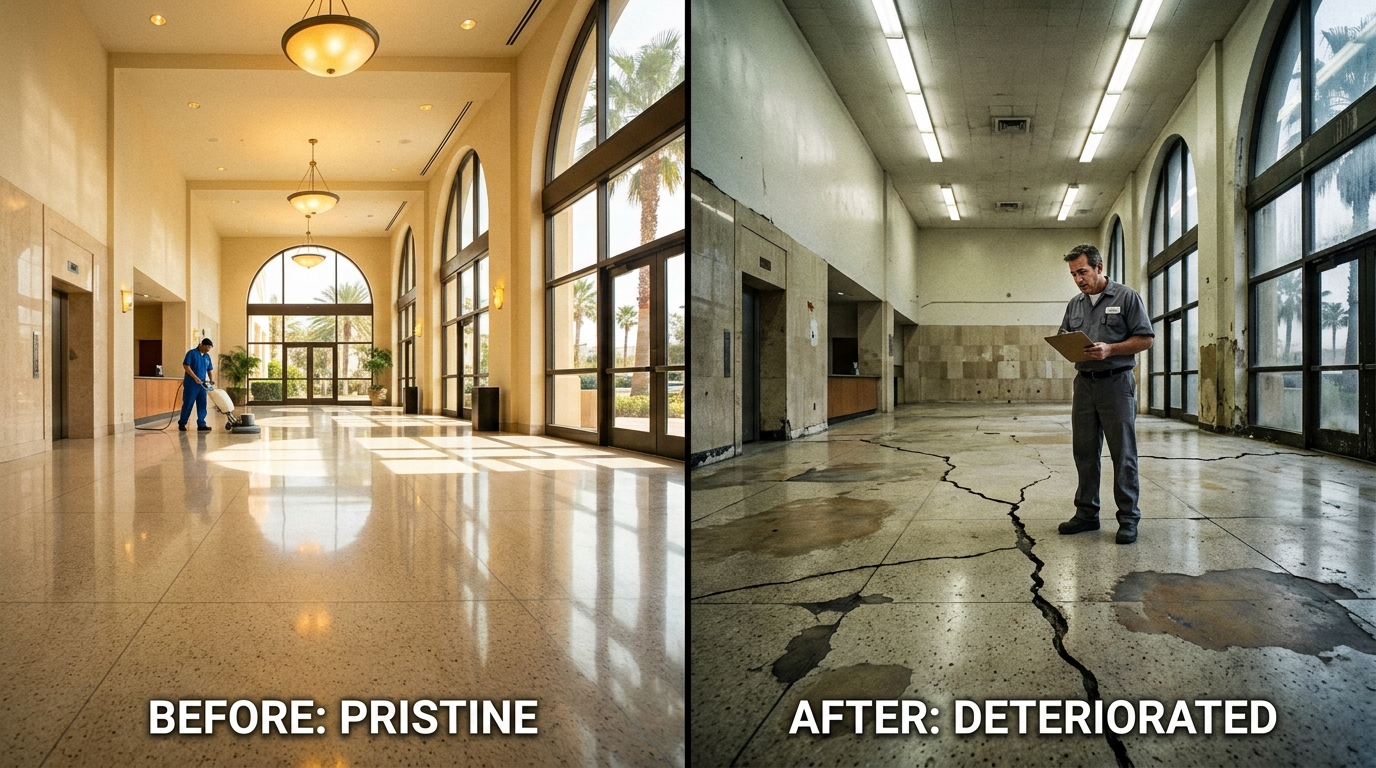
Floor Maintenance Program Cost vs Reactive Repairs: Full Analysis
Reactive floor repairs cost 3 to 5 times more than planned maintenance. See the full cost breakdown by floor type, plus ROI data for South Florida facilities.
Leer la guía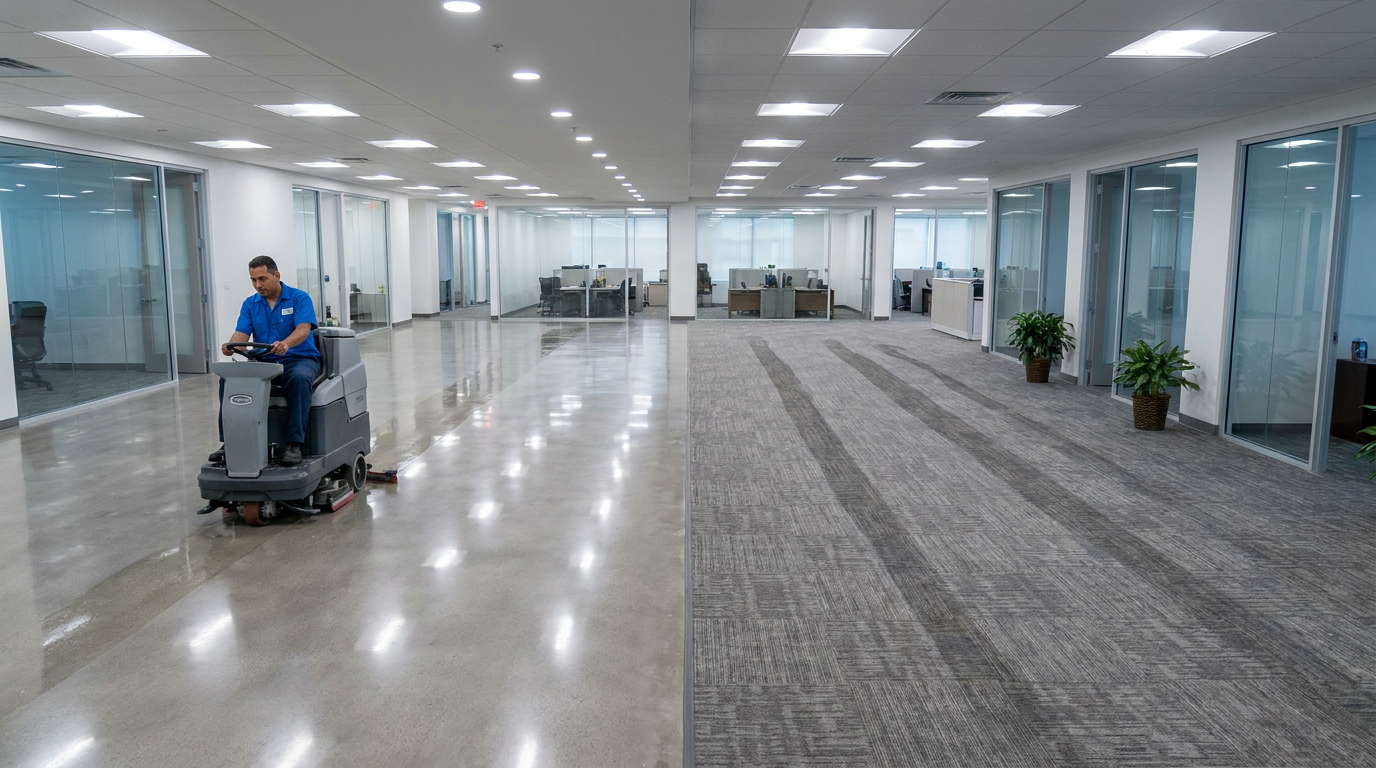
Commercial Carpet vs Hard Floor Maintenance Costs: 10-Year Analysis
Compare commercial carpet and hard floor maintenance costs over 10 years. Includes VCT, polished concrete, and carpet data with real pricing for South Florida facilities.
Leer la guía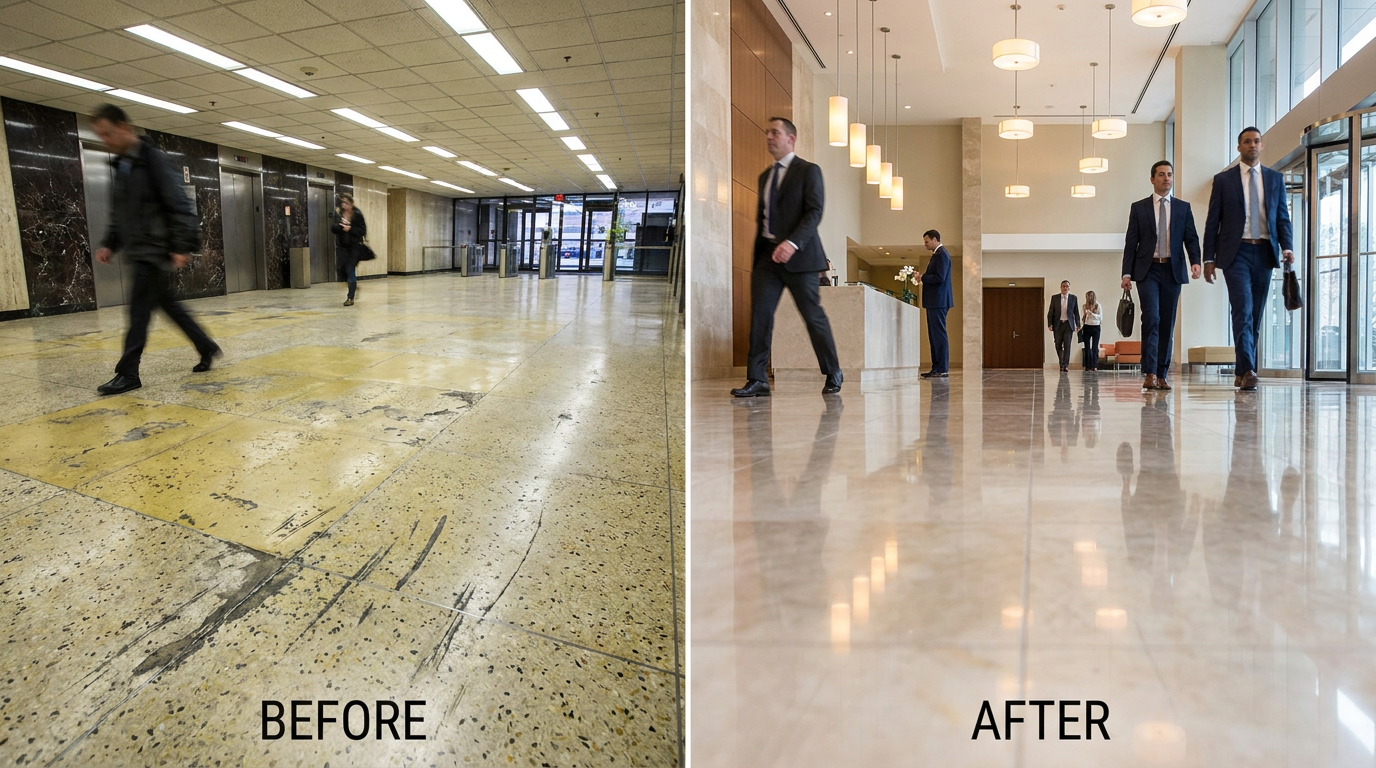
Signs Your Commercial Floor Needs Professional Restoration
Learn the 8 warning signs that indicate your commercial floor needs professional restoration, from yellowing wax to safety hazards. Free assessment available.
Leer la guía
¿Listo Para un Espacio Impecable?
Obtenga un estimado gratis y sin compromiso para su proyecto de limpieza comercial. La mayoría de las cotizaciones se entregan en 24 horas.