Polished Concrete vs Epoxy Flooring for Commercial Spaces
CONCRETE FLOOR POLISHING VS EPOXY COATING FOR COMMERCIAL SPACES
Compare polished concrete and epoxy coating for commercial floors. Learn costs, durability, maintenance needs, and which option suits your South Florida business.
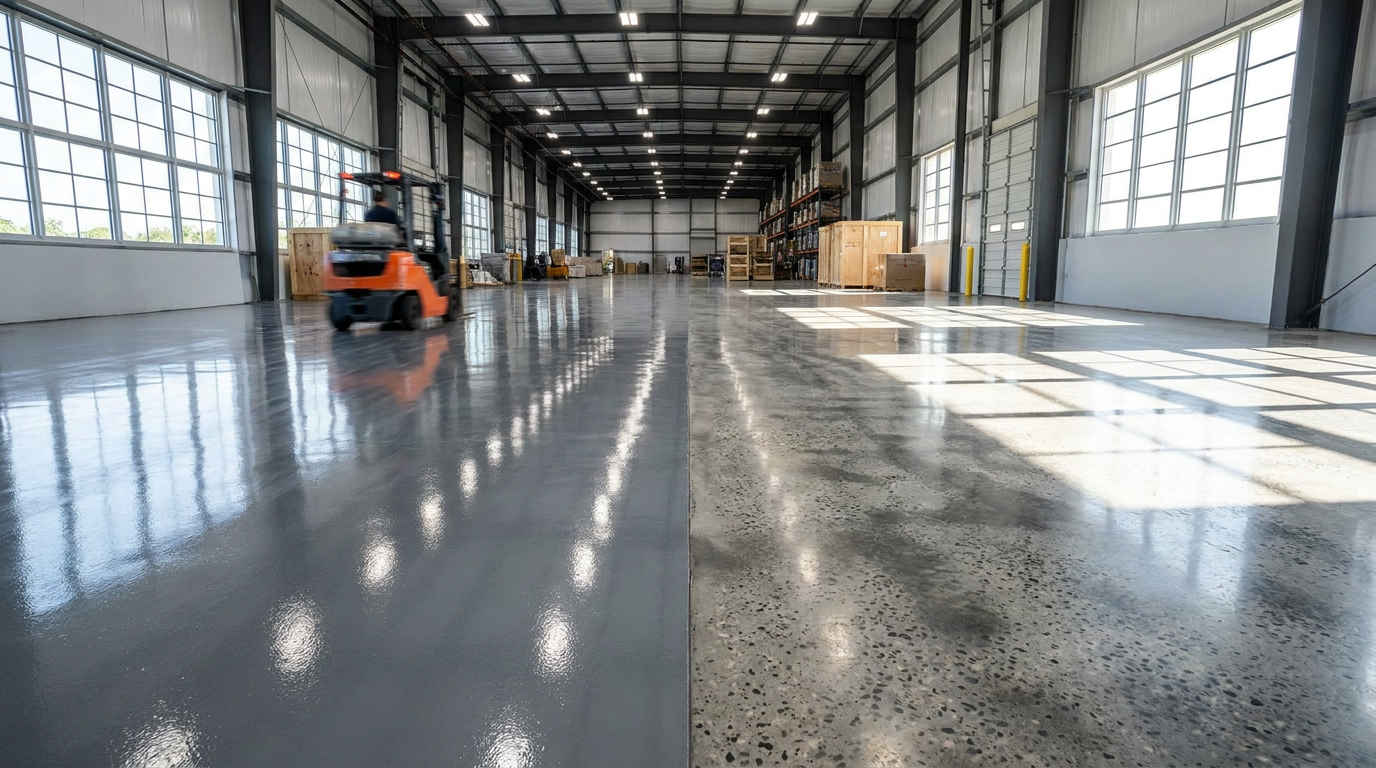
Polished concrete costs $3 to $12 per square foot and lasts 20+ years with minimal maintenance, while epoxy coating runs $3 to $7 per square foot and typically needs recoating every 5 to 10 years. Polished concrete works best for retail, offices, and warehouses seeking a durable, low-maintenance surface. Epoxy excels in commercial kitchens, manufacturing plants, and spaces requiring chemical resistance or custom colors.
- Polished concrete installation costs $3 to $12 per square foot; epoxy coating costs $3 to $7 per square foot
- Polished concrete requires resealing every 5 to 10 years; epoxy needs full recoating every 5 to 10 years
- Epoxy provides superior chemical resistance for kitchens and industrial spaces
- South Florida's humidity (averaging 75%) makes moisture testing critical before epoxy installation
- Both options require 2 to 5 days of downtime during installation
Understanding the Core Difference Between These Flooring Systems
Polished concrete and epoxy coating solve different problems for commercial property managers. According to industry analysis from Treadwell, polished concrete mechanically grinds and densifies the existing slab, while epoxy applies a protective resin layer on top. This fundamental distinction affects every aspect of performance, maintenance, and long-term costs.
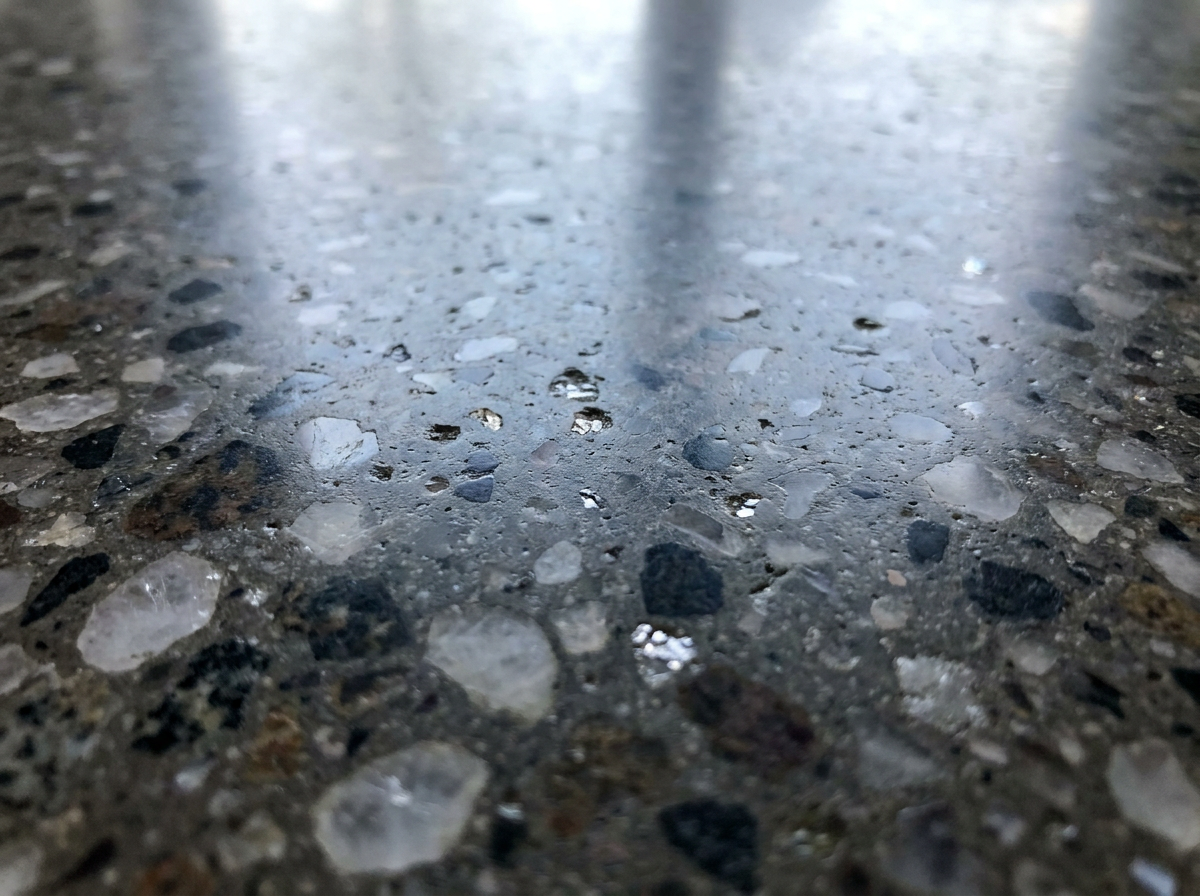
Polished concrete transforms the existing slab through a multi-step grinding process using progressively finer diamond abrasives. Contractors then apply a chemical densifier that penetrates the concrete, creating a hardened, dust-resistant surface. The result is a floor that becomes part of the structure itself rather than a coating that sits on top.
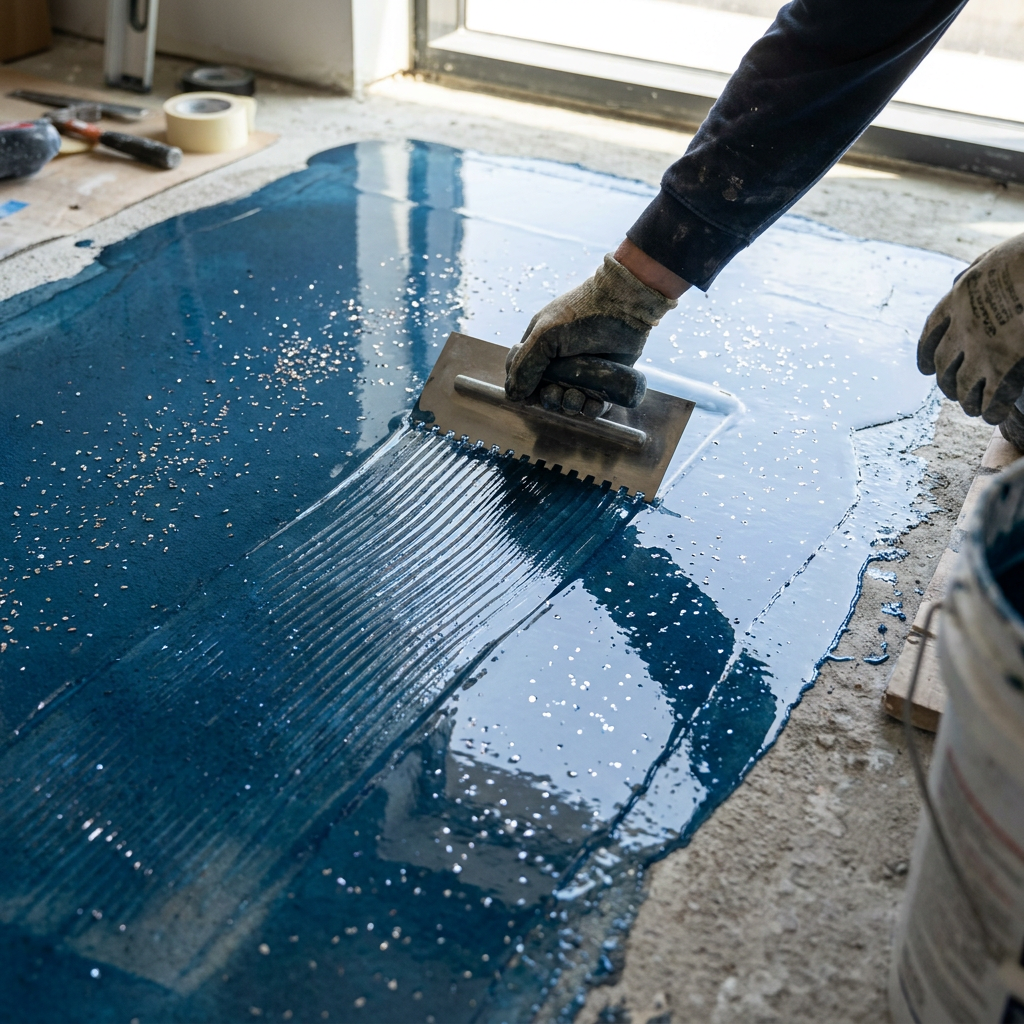
Epoxy flooring consists of two components: a resin and a hardener. When mixed and applied to prepared concrete, these create a chemical bond that forms a durable film ranging from 2 to 3 mils for thin coatings up to 10+ mils for high-build systems. This protective layer shields the concrete from stains, chemicals, and abrasion.
Cost Comparison: Installation and Long-Term Investment
Installation costs for both flooring types vary based on existing floor condition, square footage, and finish level. According to HomeGuide's 2026 pricing data, epoxy flooring for a 2,000 square foot commercial space typically costs between $6,000 and $14,000, averaging $3 to $7 per square foot installed.
Polished concrete ranges from $3 to $12 per square foot depending on the level of shine and aggregate exposure desired. Basic grinding and sealing starts at the lower end, while high-gloss finishes with exposed aggregate command premium pricing. For a 2,000 square foot space, expect to pay $6,000 to $24,000.
| Cost Factor | Polished Concrete | Epoxy Coating |
|---|---|---|
| Installation per sq ft | $3 to $12 | $3 to $7 |
| 2,000 sq ft total | $6,000 to $24,000 | $6,000 to $14,000 |
| Annual maintenance | $0.10 to $0.25/sq ft | $0.15 to $0.35/sq ft |
| Recoat/reseal interval | 5 to 10 years | 5 to 10 years |
| Recoat/reseal cost | $1 to $3/sq ft | $2 to $5/sq ft |
| Expected lifespan | 20+ years | 10 to 20 years |
The 20-year cost analysis typically favors polished concrete for high-traffic commercial spaces. A 10,000 square foot warehouse with polished concrete might spend $80,000 initially plus $20,000 in maintenance over two decades. The same space with epoxy could require $50,000 initially plus $40,000 to $60,000 for two full recoats and ongoing maintenance.
Durability and Performance in Commercial Environments
Polished concrete achieves a surface hardness of 5 to 9 on the Mohs scale after densification, making it highly resistant to scratches and wear. According to Global Polishing Solutions, this hardness allows polished concrete to withstand forklift traffic, pallet jacks, and heavy foot traffic without showing significant wear patterns for decades.
Epoxy coatings offer excellent impact resistance and can absorb shock better than polished concrete. High-build epoxy systems (10+ mils thick) resist chipping and cracking from dropped tools or equipment. However, thin epoxy coatings (2 to 3 mils) can scratch, peel, or delaminate under heavy use, particularly in areas with frequent forklift turning.
Chemical resistance is where epoxy clearly outperforms polished concrete. Standard epoxy resists oils, gasoline, antifreeze, and most cleaning chemicals. Novolac epoxy systems withstand acids, solvents, and caustic substances found in manufacturing and food processing environments. Polished concrete, while stain-resistant, can etch when exposed to acidic substances without immediate cleanup.
How South Florida's Climate Affects Floor Performance
Miami-Dade, Broward, and Palm Beach counties experience average humidity levels of 75% year-round, with summer levels often exceeding 85%. This moisture creates specific challenges for both flooring types that facility managers must address during installation and ongoing maintenance.
Epoxy coatings are particularly vulnerable to moisture vapor transmission from concrete slabs. The American Concrete Institute recommends moisture testing before any epoxy installation, with acceptable levels below 3 pounds per 1,000 square feet over 24 hours. Slabs exceeding this threshold require moisture mitigation systems costing $3 to $5 per square foot before epoxy can be applied.
Polished concrete handles South Florida's humidity better because it does not create a vapor barrier. The densified surface allows the slab to breathe while still resisting moisture penetration from above. This makes polished concrete a lower-risk choice for buildings with known moisture issues or those built on high water tables common throughout South Florida.
Maintenance Requirements and Cleaning Protocols
Daily maintenance for polished concrete involves dust mopping and occasional wet mopping with a neutral pH cleaner. The densified surface resists dust accumulation, actually improving with age as foot traffic burnishes the floor to a higher shine. Most commercial spaces require professional floor deep cleaning quarterly to remove embedded soil and restore optimal appearance.
Epoxy floors require similar daily care but are more susceptible to showing scratches and wear patterns. Weekly cleaning with auto-scrubbers helps maintain the coating's integrity. Facilities should avoid using citrus-based or highly alkaline cleaners, which can dull or damage the epoxy surface over time.
| Maintenance Task | Polished Concrete | Epoxy Coating |
|---|---|---|
| Daily cleaning | Dust mop | Dust mop |
| Weekly cleaning | Wet mop, neutral pH | Auto-scrubber recommended |
| Quarterly service | Burnishing optional | Professional deep clean |
| Annual service | Guard reapplication | Spot repairs, touch-ups |
| Major restoration | Re-polish every 10+ years | Full recoat every 5 to 10 years |
Repair protocols differ significantly between the two systems. Polished concrete damage can often be addressed locally by re-grinding and polishing the affected area, with repairs blending seamlessly into surrounding surfaces. Epoxy repairs are more visible, as color matching proves difficult and patch edges may show. Extensive epoxy damage typically requires full recoating for uniform appearance.
Best Applications by Industry and Space Type
Retail environments throughout South Florida increasingly choose polished concrete for its modern aesthetic and low maintenance demands. The Concrete Polishing Association of America reports that 68% of new retail construction specifies polished concrete for sales floors. The reflective surface enhances lighting efficiency, reducing energy costs by up to 30% compared to darker flooring options.
Warehouses and distribution centers benefit from polished concrete's forklift-friendly surface and dust reduction properties. Amazon, Costco, and Home Depot specify polished concrete for their distribution facilities, citing reduced tire wear and improved air quality as key factors. The National Floor Safety Institute rates properly maintained polished concrete as slip-resistant when dry, with coefficients of friction meeting OSHA requirements.
When Epoxy Is the Better Choice
Commercial kitchens, food processing facilities, and restaurants require epoxy's superior chemical and stain resistance. The FDA and USDA approve certain epoxy systems for food contact areas, and the seamless surface prevents bacterial growth in joints and cracks. South Florida's health departments commonly require epoxy or similar impermeable flooring in commercial food preparation areas.
Manufacturing facilities handling oils, solvents, or chemicals benefit from epoxy's protective barrier. Automotive service centers, print shops, and pharmaceutical production areas typically specify epoxy for its resistance to specific chemical exposures. The flooring can be customized with anti-static properties for electronics manufacturing or conductive formulations for explosive environments.
Decorative requirements often favor epoxy's versatility. Metallic epoxy creates unique, three-dimensional visual effects popular in hotel lobbies and upscale retail. Flake systems provide texture and color options unavailable with polished concrete. Quartz broadcast epoxy offers both aesthetics and enhanced slip resistance for pool decks and locker rooms.
Installation Process and Downtime Considerations
Polished concrete installation takes 2 to 5 days for most commercial spaces, depending on existing floor condition and desired finish level. The process generates significant dust, requiring HEPA filtration and area isolation. Businesses can typically resume operations 24 hours after final sealer application, though heavy traffic should be avoided for 72 hours.
Epoxy installation requires similar timeframes but demands stricter environmental controls. Application temperatures must remain between 50 and 90 degrees Fahrenheit, with humidity below 85%. South Florida's climate often necessitates air conditioning during installation, even in unoccupied spaces. Full cure time ranges from 5 to 7 days before heavy traffic or equipment placement.
Surface preparation is critical for both systems but especially for epoxy. According to Cole Painting's analysis, approximately 80% of epoxy coating failures trace back to inadequate surface preparation. Proper preparation includes shot blasting or diamond grinding to create a profile, followed by thorough cleaning and moisture testing. Skipping these steps virtually guarantees premature coating failure.
Slip Resistance and Safety Considerations
Polished concrete achieves slip resistance through surface profile and guard products rather than texture. Standard polished concrete meets the Americans with Disabilities Act requirements when properly maintained, with coefficients of friction between 0.50 and 0.60 when dry. Wet conditions reduce these values, making entrance matting and prompt spill cleanup essential.
Epoxy offers more options for slip resistance through aggregate additives. Aluminum oxide, silica, or polymer beads can be broadcast into the topcoat to create textured surfaces with coefficients of friction exceeding 0.70. This makes epoxy preferable for areas with frequent wet conditions, including commercial kitchens, breweries, and car washes.
OSHA requires floor surfaces to provide adequate traction for the specific environment. Facility managers should document their flooring choice rationale and maintenance protocols to demonstrate compliance. Both polished concrete and epoxy can meet OSHA requirements when properly specified and maintained for their intended use.
Environmental and Sustainability Factors
Polished concrete earns LEED credits for using existing materials, reducing waste, and improving lighting efficiency. The process generates no volatile organic compounds during installation and requires no petroleum-based coatings. Buildings seeking LEED certification often specify polished concrete for these environmental benefits.
Modern epoxy formulations have reduced VOC content significantly, with many products now meeting LEED requirements. However, epoxy remains a petroleum-based product with a finite lifespan, generating waste during removal and recoating. Water-based epoxy systems offer lower VOC alternatives but may sacrifice some performance characteristics.
Energy efficiency favors polished concrete's reflective properties. Studies by the Portland Cement Association show that polished concrete floors can reduce lighting requirements by 30% compared to darker surfaces. This translates to measurable energy savings in large commercial spaces, particularly warehouses and retail environments with extensive square footage.
Frequently Asked Questions
Is polished concrete flooring better than epoxy?
Polished concrete is better for retail, offices, and warehouses where long-term durability and low maintenance matter most. Epoxy is better for commercial kitchens, manufacturing areas, and spaces requiring chemical resistance or custom colors. Neither is universally superior; the right choice depends on your specific environment, traffic patterns, and maintenance capabilities.
Is concrete polishing cheaper than epoxy?
Initial costs are similar, ranging from $3 to $12 per square foot for polished concrete and $3 to $7 for epoxy. However, polished concrete typically costs less over 20 years because it requires resealing rather than full recoating. A 10,000 square foot space might save $20,000 to $40,000 over two decades by choosing polished concrete.
Does polished concrete last longer than epoxy?
Yes, polished concrete lasts 20+ years with proper maintenance, while epoxy typically requires full recoating every 5 to 10 years. Polished concrete becomes part of the slab itself, eliminating delamination risk. Epoxy coatings can chip, peel, or wear through, especially in high-traffic areas or environments with chemical exposure.
Can epoxy be applied over polished concrete?
Epoxy can be applied over polished concrete, but the polished surface must first be mechanically abraded to create a profile for adhesion. This essentially removes the polish, making the process counterproductive in most cases. If you might want epoxy later, leave the concrete unpolished or minimally processed.
Which floor is better for warehouses?
Polished concrete is generally better for warehouses due to its superior abrasion resistance, forklift compatibility, and dust reduction properties. Major distribution companies including Amazon and Costco specify polished concrete for these reasons. Epoxy may be appropriate for warehouse areas with specific chemical exposure or where color-coded zones are required.
Is polished concrete slippery?
Polished concrete meets ADA and OSHA slip resistance requirements when dry, with coefficients of friction between 0.50 and 0.60. Wet conditions reduce traction, similar to tile or sealed concrete. Entrance matting, prompt spill cleanup, and slip-resistant guard products can enhance safety in areas prone to moisture.
Making the Right Choice for Your South Florida Business
The decision between polished concrete and epoxy coating ultimately depends on your facility's specific requirements. Consider traffic type and volume, chemical exposure, moisture conditions, aesthetic preferences, and long-term maintenance budget. Both options can serve commercial spaces effectively when properly specified and maintained.
For businesses in Miami-Dade, Broward, and Palm Beach counties, South Florida's unique climate adds another consideration. The region's high humidity and occasional flooding make moisture testing essential before epoxy installation. Polished concrete's breathability offers advantages in buildings with known moisture issues or those built on high water tables.
Whichever flooring system you choose, ongoing maintenance determines long-term performance. MB Clean Solutions provides commercial floor deep cleaning for both polished concrete and epoxy surfaces throughout South Florida. Our industrial-grade auto-scrubbers and professional cleaning solutions help extend floor life and maintain optimal appearance.
Request a free on-site floor assessment to evaluate your current flooring condition and discuss maintenance options. Our team serves commercial properties across Miami-Dade, Broward, and Palm Beach counties with transparent pricing starting at $0.40 per square foot.
Need Professional Floor Maintenance?
MB Clean Solutions maintains polished concrete and epoxy floors for commercial properties throughout South Florida. Get a free assessment and transparent quote within 24 hours.
Get Your Free QuoteSiga leyendo
Más guías sobre el mismo tema.
Commercial Floor Polish vs Wax: Which Coating Is Right?
Compare commercial floor polish vs wax to find the right protective coating for your facility. Learn costs, maintenance needs, and which floors need which finish.
Leer la guía
Floor Stripping vs Polishing: Which Service Your Building Needs
Learn when to choose floor stripping over polishing for commercial spaces. Compare costs, timelines, and results to make the right decision for your facility.
Leer la guía
Signs Your Commercial Floor Needs Professional Restoration
Learn the 8 warning signs that indicate your commercial floor needs professional restoration, from yellowing wax to safety hazards. Free assessment available.
Leer la guía
¿Listo Para un Espacio Impecable?
Obtenga un estimado gratis y sin compromiso para su proyecto de limpieza comercial. La mayoría de las cotizaciones se entregan en 24 horas.