Green Cleaning vs Traditional Commercial Cleaning: Full Guide
GREEN CLEANING VS TRADITIONAL COMMERCIAL CLEANING METHODS
Compare green cleaning vs traditional commercial cleaning methods. Learn cost differences, effectiveness, health impacts, and which approach fits your facility.
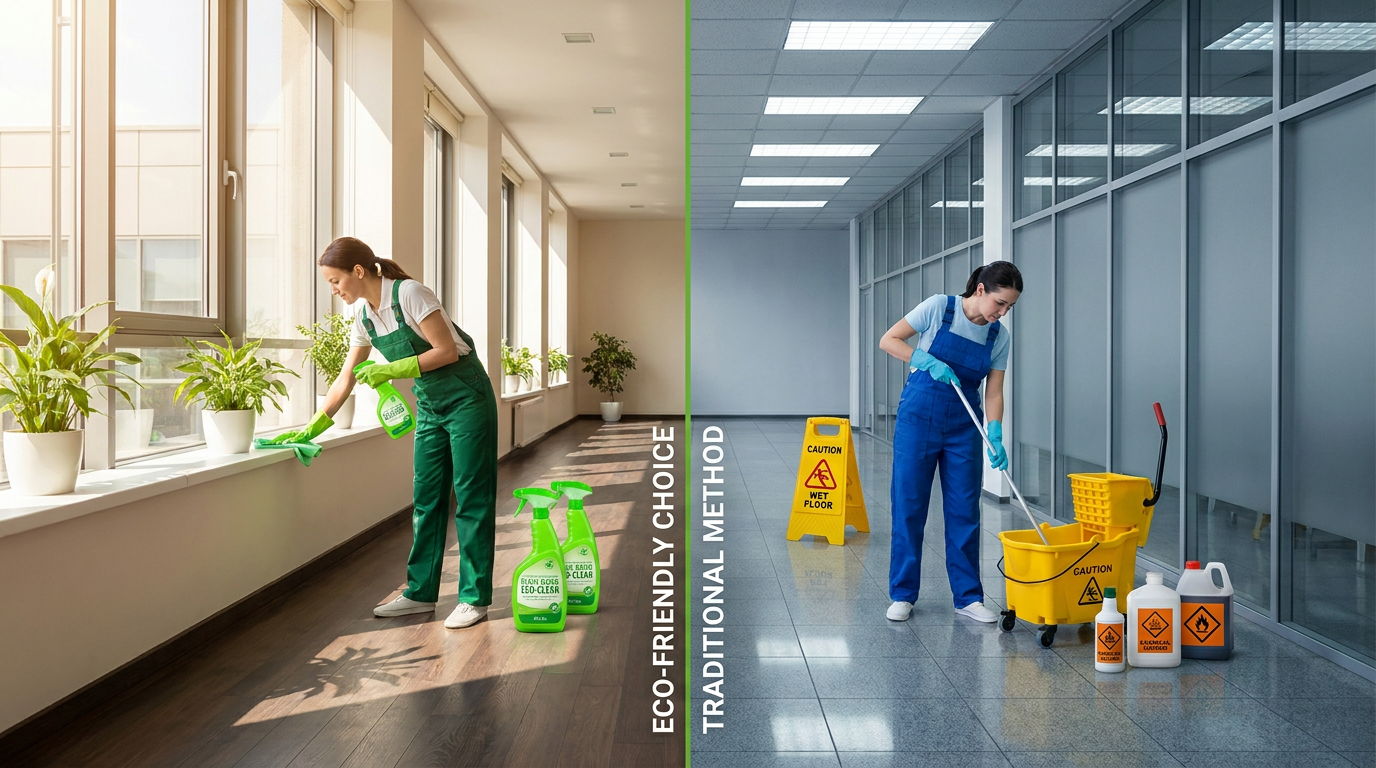
Green cleaning uses third-party certified products, HEPA filtration, and microfiber systems to reduce chemical exposure and environmental impact. Traditional commercial cleaning relies on conventional chemical formulations and standard equipment. Both methods achieve cleanliness, but green cleaning costs roughly the same per square foot while delivering measurable indoor air quality improvements and reduced waste output.
- Green cleaning products with EPA Safer Choice or Green Seal certification perform comparably to traditional cleaners
- Concentrated green formulas reduce product consumption by 30 to 40 percent compared to conventional products
- Green cleaning costs $0.40 to $2.00 per square foot, matching traditional commercial cleaning rates
- HEPA filtration removes 99.97 percent of particles 0.3 microns or larger, improving indoor air quality
- Schools, healthcare facilities, and LEED buildings benefit most from green cleaning programs
What Is Green Commercial Cleaning?
Green commercial cleaning refers to a documented set of practices, products, and equipment designed to minimize environmental impact and chemical exposure. According to the EPA Safer Choice program, green cleaning products must meet strict criteria for human health and environmental safety. This is not simply a marketing label but an operational framework with measurable standards.
The core components of green cleaning include products certified by Green Seal, EPA Safer Choice, or EcoLogo. These certifications require manufacturers to disclose ingredients and meet specific toxicity thresholds. HEPA-filtered vacuums capture 99.97 percent of airborne particles, while microfiber cloths and mops reduce water and chemical usage by up to 90 percent compared to cotton alternatives.
Dilution control systems ensure precise chemical mixing, preventing overuse and reducing waste. A 2024 CleanLink industry report found that facilities using dilution control systems reduced chemical consumption by 25 to 35 percent annually. These systems also simplify staff training by eliminating guesswork in product preparation.
What Is Traditional Commercial Cleaning?
Traditional commercial cleaning uses conventional chemical formulations, standard cotton mops, and basic vacuum systems. Products often contain higher concentrations of volatile organic compounds (VOCs), synthetic fragrances, and ammonia-based ingredients. These formulations have been industry standards for decades and remain widely available.
Standard cleaning equipment includes cotton string mops, conventional vacuums without HEPA filtration, and trigger spray bottles filled with ready-to-use solutions. This approach requires less initial training and offers straightforward product sourcing from major distributors like Grainger, Uline, and local janitorial suppliers.
Traditional methods excel at heavy-duty degreasing and stain removal in industrial settings. However, the higher VOC content can contribute to poor indoor air quality. The Occupational Safety and Health Administration (OSHA) notes that prolonged exposure to cleaning chemical fumes can cause respiratory irritation and headaches among cleaning staff.
Side-by-Side Comparison: Green vs Traditional Cleaning
| Factor | Green Cleaning | Traditional Cleaning |
|---|---|---|
| Cost Per Square Foot | $0.40 to $2.00 | $0.40 to $2.00 |
| Product Certifications | Green Seal, EPA Safer Choice, EcoLogo | EPA registration for disinfectants only |
| VOC Levels | Low or zero VOC formulations | Variable, often higher concentrations |
| Equipment | HEPA vacuums, microfiber, dilution control | Standard vacuums, cotton mops, spray bottles |
| Training Requirements | Initial setup, then simplified ongoing | Basic, familiar to most staff |
| LEED Compliance | Supports IEQ credits | Does not contribute to credits |
| Chemical Waste | 25 to 35 percent reduction | Standard disposal requirements |
Health and Indoor Air Quality Impacts
Indoor air quality represents the most significant differentiator between green and traditional cleaning methods. The EPA estimates Americans spend approximately 90 percent of their time indoors, where pollutant concentrations can be 2 to 5 times higher than outdoor levels. Cleaning products contribute directly to these indoor pollutant levels.
Traditional cleaning products often release VOCs during and after application. A study published in the American Journal of Respiratory and Critical Care Medicine found that professional cleaners using conventional products had accelerated lung function decline comparable to smoking 20 cigarettes daily. Green cleaning products formulated without synthetic fragrances and with low-VOC ingredients reduce this exposure risk.
HEPA filtration in green cleaning programs captures particulate matter that standard vacuums recirculate into the air. This matters particularly in schools and healthcare settings. The California Department of Public Health recommends HEPA vacuums in all educational facilities to reduce asthma triggers and allergen exposure among students and staff.
For facilities prioritizing occupant health, commercial deep cleaning services using HEPA-filtered equipment and eco-friendly solutions deliver measurable air quality improvements without compromising cleaning effectiveness.
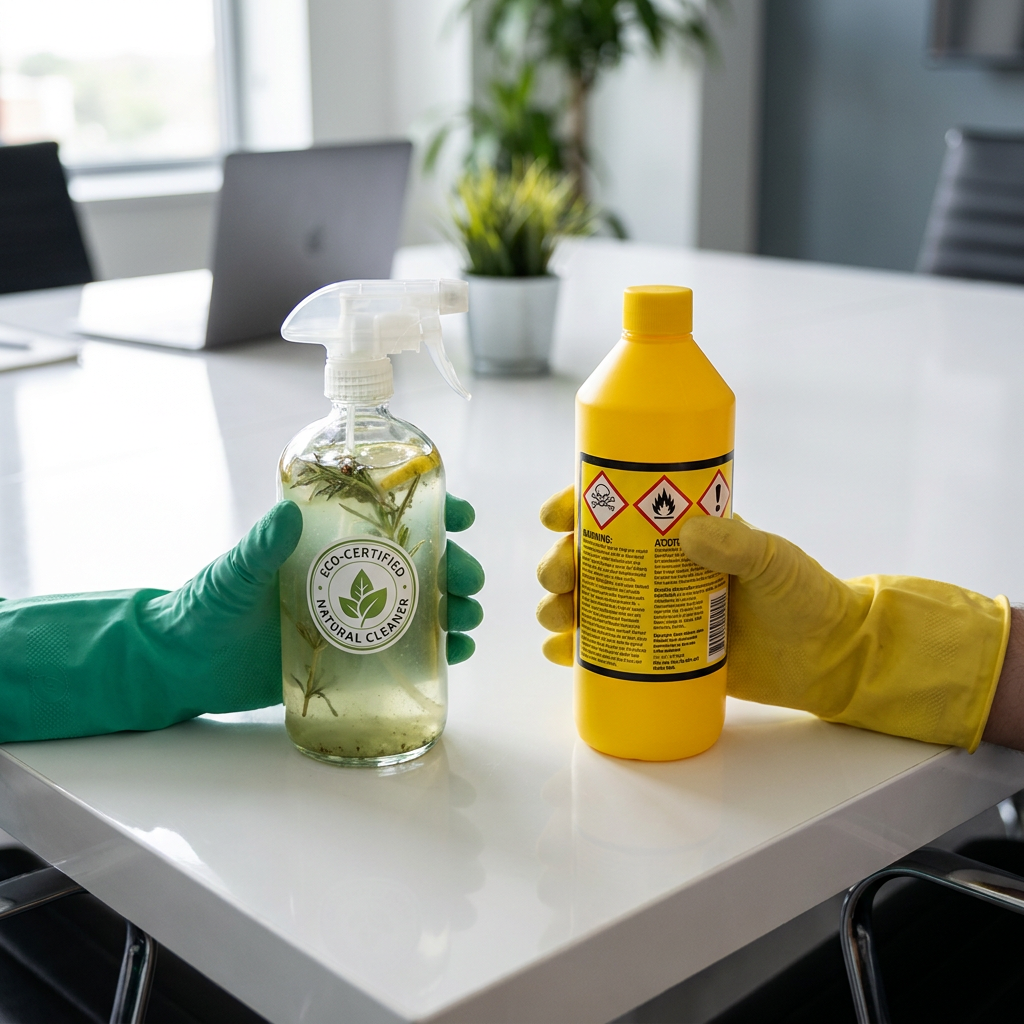
Environmental Impact Comparison
Green cleaning reduces environmental impact through multiple pathways: reduced chemical manufacturing, lower packaging waste, decreased water usage, and biodegradable formulations. The U.S. Green Building Council recognizes these benefits through LEED Indoor Environmental Quality credits for buildings implementing green cleaning programs.
Concentrated green products require less packaging per cleaning task. A facility using concentrated formulas might reduce plastic container waste by 60 to 70 percent compared to ready-to-use products. According to a 2025 Facility Executive survey, 47 percent of commercial property managers now require green cleaning as part of their sustainability commitments.
Microfiber technology reduces water consumption significantly. A single microfiber mop head can clean up to 10,000 square feet before washing, using 90 percent less water than cotton mop systems. This reduction matters in drought-prone regions like South Florida, where water conservation affects operating costs and regulatory compliance.
Cost Analysis: What Facility Managers Should Expect
The cost difference between green and traditional cleaning is smaller than most facility managers assume. Both approaches typically cost $0.40 to $2.00 per square foot for commercial deep cleaning, with pricing variations based on facility type, condition, and service scope rather than product choice.
Green cleaning can reduce total costs through several mechanisms. Concentrated formulas stretch further: one facility documented in CleanLink reduced monthly product usage from 45 gallons to 28 gallons after switching to concentrated green products. That represents a 38 percent reduction in product purchasing costs.
Chemical waste disposal costs also decrease. Organizations report 25 to 35 percent savings in disposal fees after transitioning to green programs. These savings offset any premium on certified products, often resulting in net cost parity or slight savings within the first year of implementation.
Indirect cost benefits include reduced liability exposure from chemical injuries and lower absenteeism among cleaning staff. OSHA data indicates that cleaning chemical exposure accounts for 6 percent of occupational illness claims in the janitorial sector. Green products with lower toxicity profiles reduce this risk.
Cleaning Effectiveness: Do Green Products Actually Work?
Modern green cleaning products match or exceed traditional product performance for most commercial applications. The myth that eco-friendly means weak has been thoroughly debunked by independent testing. EPA-registered green disinfectants kill 99.9 percent of bacteria and viruses when used according to label directions.
Green Seal GS-37 certified products must pass rigorous performance testing for soil removal, surface compatibility, and cleaning efficiency. These standards ensure certified products work as well as conventional alternatives. Major manufacturers including Diversey, Ecolab, and SC Johnson now offer green-certified product lines that meet institutional cleaning requirements.
For floor care specifically, green stripping and finishing products perform comparably to traditional formulations. Facilities requiring floor stripping and waxing services can achieve the same high-gloss results with low-VOC products that protect indoor air quality during and after application.
The key to effectiveness lies in proper product selection and application. Green cleaning requires matching the right certified product to each cleaning task, just as traditional cleaning does. A green all-purpose cleaner will not disinfect; a green disinfectant will. Training staff on product capabilities ensures consistent results.
Best Use Cases by Facility Type
Schools and Daycares
Educational facilities benefit most from green cleaning programs. Children breathe faster than adults and are more susceptible to chemical exposure effects. The Florida Department of Children and Families (DCF) recommends low-VOC cleaning products in licensed childcare facilities. DCF-compliant daycare cleaning services use child-safe products that meet both regulatory requirements and parent expectations.
Green cleaning supports better learning environments. A Harvard T.H. Chan School of Public Health study found that improved indoor air quality correlated with 8 to 11 percent higher cognitive function scores among office workers. Similar benefits apply to students in well-maintained educational facilities.
Healthcare and Medical Offices
Healthcare facilities require EPA-registered disinfectants for infection control, and green options now meet these requirements. Products certified under EPA Design for the Environment criteria provide effective pathogen elimination without harsh chemical residues that can irritate patients with respiratory conditions or compromised immune systems.
Office Buildings
Class A office buildings increasingly specify green cleaning to attract and retain tenants. According to CBRE research, 78 percent of corporate tenants consider sustainability features when selecting office space. Green cleaning programs support WELL Building certification and tenant wellness initiatives. Office building deep cleaning services can implement green protocols that enhance tenant satisfaction scores.
Hotels and Hospitality
Guest sensitivity to chemical odors makes green cleaning attractive for hospitality properties. Strong cleaning product smells can trigger complaints and negative reviews. Low-fragrance green products maintain cleanliness without overwhelming guests. Hotel and hospitality cleaning services using green methods protect guest experience while meeting brand cleanliness standards.
Retail and Shopping Centers
High-traffic retail environments benefit from green cleaning through reduced slip hazards (microfiber systems leave less residue) and improved air quality in enclosed shopping areas. Food court areas particularly benefit from green degreasers that eliminate grease without leaving chemical residues near food service areas.
Common Myths About Green Cleaning
Myth 1: Green Cleaning Costs Significantly More
Reality: Per-square-foot costs are equivalent. Green cleaning typically costs $0.40 to $2.00 per square foot, the same range as traditional commercial cleaning. Concentrated products and reduced waste often offset any product premium within 6 to 12 months.
Myth 2: Green Products Cannot Disinfect Effectively
Reality: EPA-registered green disinfectants meet the same efficacy standards as traditional disinfectants. Products must demonstrate 99.9 percent pathogen elimination to earn EPA registration, regardless of their green certification status.
Myth 3: Green Cleaning Requires Completely New Equipment
Reality: The primary equipment changes involve upgrading to HEPA-filtered vacuums and microfiber tools. Existing auto-scrubbers, pressure washers, and extraction equipment work with green cleaning solutions. The transition focuses on consumables and filtration, not major capital equipment.
Myth 4: Green Cleaning Takes Longer
Reality: Properly implemented green cleaning programs often improve efficiency. Microfiber tools cover more area per pass, dilution control systems eliminate mixing time, and standardized product lines reduce decision-making delays. Some facilities report 10 to 15 percent productivity improvements after transitioning.
How to Choose the Right Approach for Your Facility
Selecting between green and traditional cleaning depends on facility type, occupant sensitivity, regulatory requirements, and sustainability commitments. Use this decision framework to guide your choice.
Choose green cleaning if:
- Your facility serves children, elderly, or immunocompromised populations
- You are pursuing LEED, WELL, or other green building certifications
- Tenants or customers expect sustainability practices
- Staff have reported sensitivity to cleaning chemical odors
- Your organization has ESG (Environmental, Social, Governance) commitments
Traditional cleaning may still fit if:
- Heavy industrial degreasing is a primary cleaning need
- Staff are extensively trained on existing product systems
- Procurement processes cannot accommodate certification verification
- The facility has no occupant sensitivity concerns
Many facilities implement hybrid approaches, using green products for routine cleaning and traditional products for specialized heavy-duty tasks. This balanced strategy captures most green cleaning benefits while maintaining flexibility for challenging cleaning situations.
Certification Standards to Know
Green Seal: The oldest and most recognized green certification for cleaning products. Green Seal GS-37 covers general-purpose, bathroom, glass, and carpet cleaners. Products must meet performance standards and ingredient restrictions.
EPA Safer Choice: Formerly Design for the Environment, this EPA program certifies products where every ingredient meets safety criteria for human health and the environment. The program covers cleaning products, degreasers, and disinfectants.
EcoLogo (UL Environment): A multi-attribute certification covering environmental impact throughout the product lifecycle, from manufacturing through disposal. Widely recognized in commercial and institutional settings.
LEED IEQ Credits: The U.S. Green Building Council awards Indoor Environmental Quality credits for buildings implementing green cleaning programs with certified products, proper equipment, and documented procedures.
Frequently Asked Questions
Are green cleaning products better than regular cleaners?
Green cleaning products perform equivalently to traditional cleaners for most commercial applications while reducing chemical exposure and environmental impact. EPA-registered green disinfectants meet the same 99.9 percent pathogen elimination standards as conventional disinfectants. The primary advantage is lower VOC emissions and reduced toxicity, not superior cleaning power.
What is the most effective cleaning method?
The most effective cleaning method combines proper product selection, correct dilution ratios, adequate dwell time, and appropriate mechanical action. Whether using green or traditional products, effectiveness depends on matching the cleaner to the soil type and following manufacturer instructions. HEPA vacuuming before wet cleaning improves results for both approaches.
What is the 20 10 rule for cleaning?
The 20 10 rule refers to a time management technique where you clean for 20 minutes, then take a 10-minute break. This approach prevents burnout during large cleaning projects and maintains consistent energy levels. In commercial settings, structured work intervals with rest periods improve overall productivity and reduce repetitive strain injuries.
Is green commercial cleaning more expensive?
Green commercial cleaning costs $0.40 to $2.00 per square foot, matching traditional cleaning rates. While some certified products carry slight premiums, concentrated formulas reduce consumption by 30 to 40 percent, and lower waste disposal costs offset any price difference. Most facilities achieve cost parity within the first year of implementation.
Does green cleaning help improve indoor air quality?
Green cleaning significantly improves indoor air quality through low-VOC products, fragrance-free formulations, and HEPA filtration. Traditional cleaning products can increase indoor VOC concentrations by 2 to 5 times during and after application. Green products minimize these spikes, benefiting occupants with asthma, allergies, or chemical sensitivities.
Is green cleaning required for LEED certification?
Green cleaning is not strictly required for LEED certification but contributes to Indoor Environmental Quality credits under LEED Operations and Maintenance. Buildings can earn up to 2 IEQ credits by implementing green cleaning programs with certified products, HEPA equipment, and documented procedures. These credits support overall certification goals.
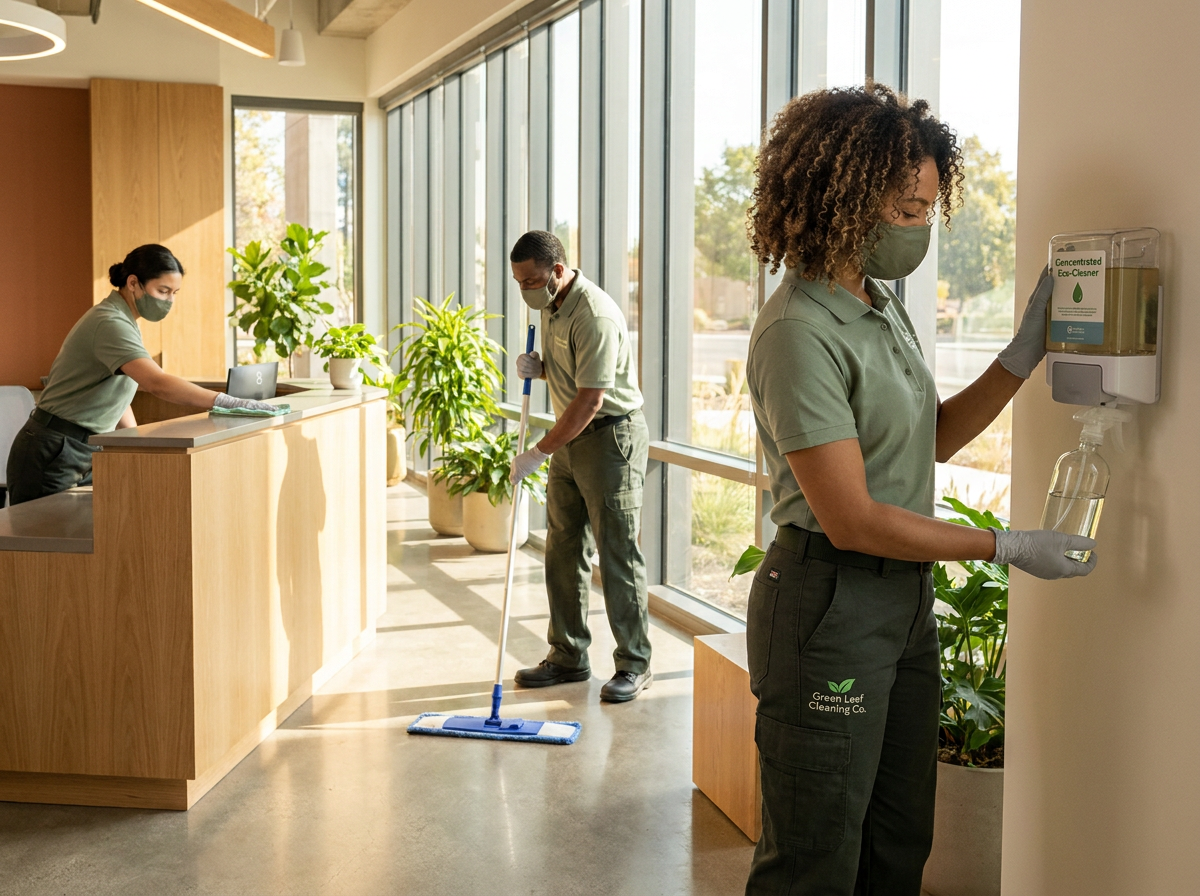
Making the Right Choice for Your South Florida Facility
South Florida's humid climate creates unique cleaning challenges that both green and traditional methods can address effectively. High humidity accelerates mold growth, making regular deep cleaning essential regardless of product choice. The key is selecting a cleaning partner with proper equipment and documented procedures.
For facilities across Miami-Dade, Broward, and Palm Beach counties, MB Clean Solutions offers both green cleaning options and traditional commercial cleaning services. As an SBE and WOSB certified company, we use industrial-grade equipment including HEPA-filtered vacuums, ride-on scrubbers, and truck-mounted extractors to deliver transformative results with either approach.
Whether your facility requires commercial floor deep cleaning, post-construction cleanup, or ongoing maintenance programs, the right cleaning method depends on your specific occupant needs, regulatory requirements, and sustainability goals. Contact us for a free on-site assessment to determine which approach best fits your facility.
Get a Free Cleaning Assessment
MB Clean Solutions provides transparent quotes within 24 hours. Our team will evaluate your facility, recommend the right cleaning approach, and deliver pricing at $0.40 to $2.00 per square foot with no hidden fees.
Request Your Free QuoteSiga leyendo
Más guías sobre el mismo tema.
How to Choose a Commercial Cleaning Service for Office Buildings
Learn the 7 essential criteria for selecting a commercial cleaning service for office buildings, including pricing, certifications, and evaluation checklists.
Leer la guía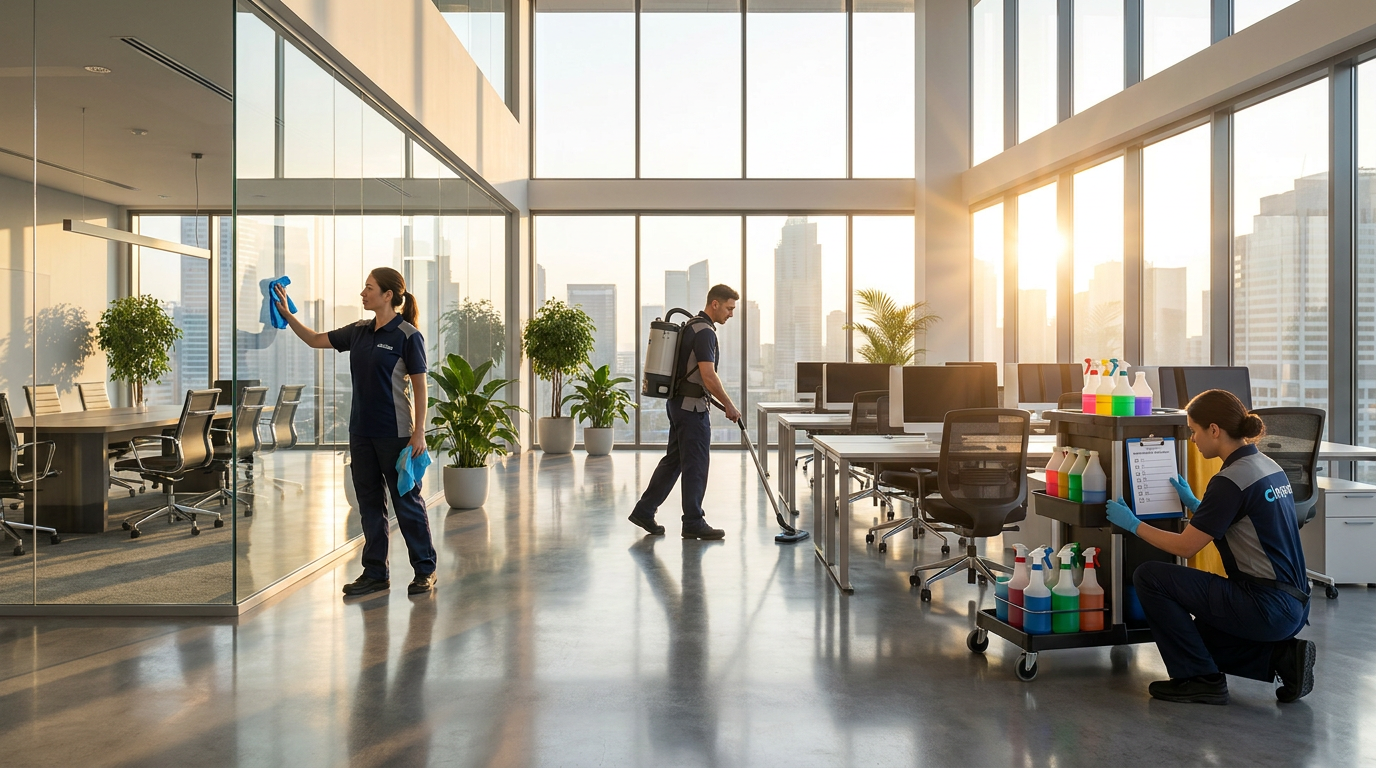
Office Building Cleaning Checklist: Complete Guide for 2026
Comprehensive office building cleaning checklist covering daily, weekly, and monthly tasks. Includes high-touch surfaces, restrooms, floors, and deep cleaning schedules.
Leer la guía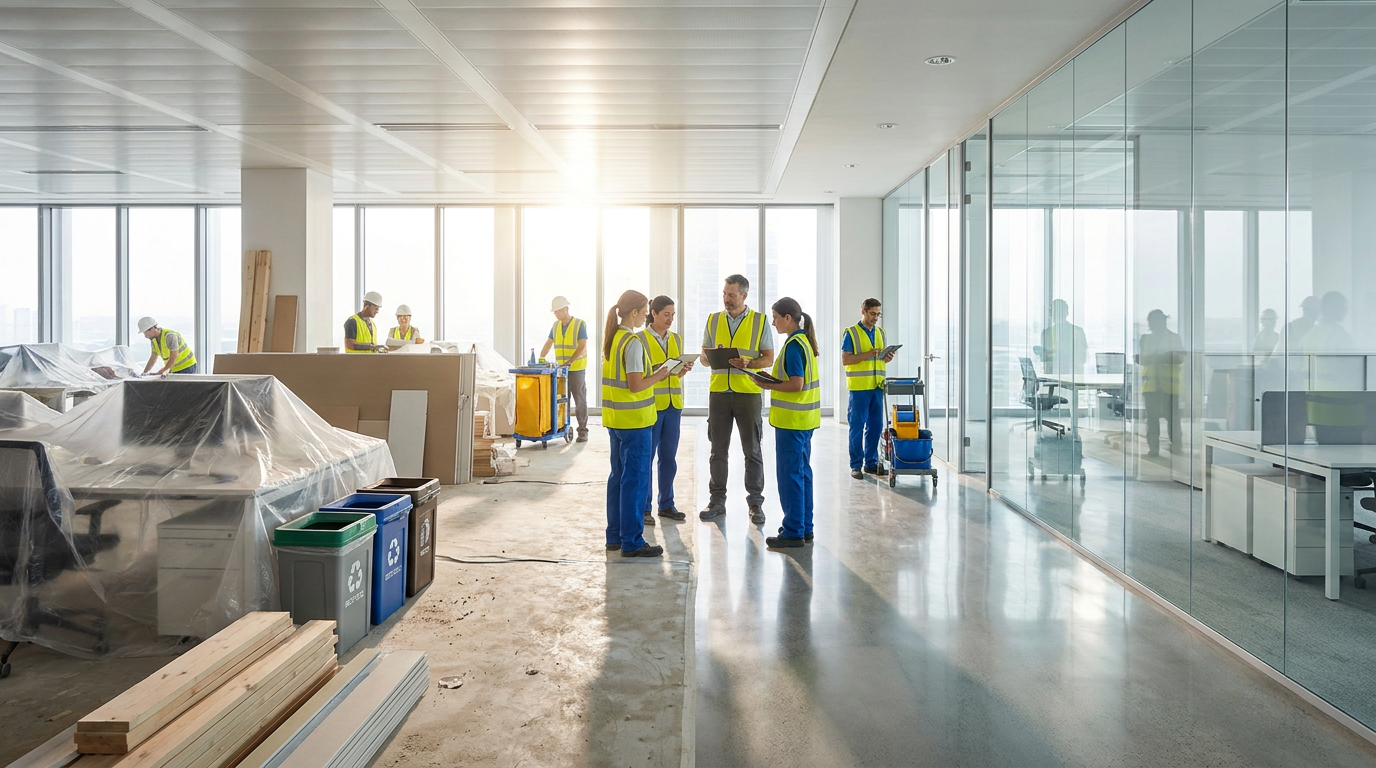
How to Prepare Your Office for Post-Construction Cleaning
Learn the exact steps to prepare an office for post-construction cleaning. Covers the 3 phases, common mistakes, and GC coordination for faster CO approval.
Leer la guía
¿Listo Para un Espacio Impecable?
Obtenga un estimado gratis y sin compromiso para su proyecto de limpieza comercial. La mayoría de las cotizaciones se entregan en 24 horas.