Commercial Deep Cleaning: What It Includes, Costs, and Schedules
COMMERCIAL DEEP CLEANING
Commercial deep cleaning costs $0.40 to $2.00 per square foot and targets hidden dirt in vents, grout, and behind equipment. Learn what is included.
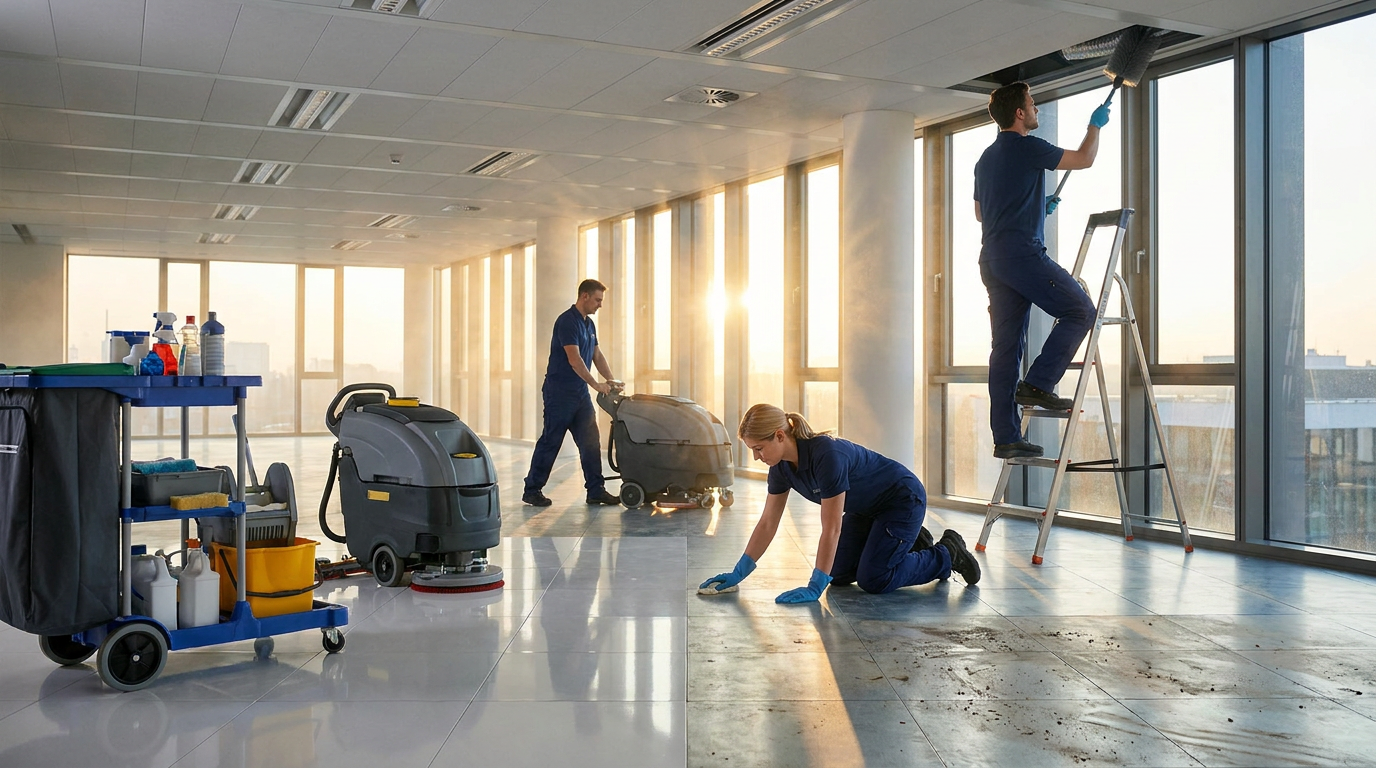
Commercial deep cleaning is an intensive, project-based cleaning service that removes built-up dirt, grease, bacteria, and allergens from areas that routine janitorial work misses. It typically costs $0.40 to $2.00 per square foot and should be scheduled quarterly, semi-annually, or annually depending on facility type and traffic levels.
- Commercial deep cleaning costs $0.40 to $2.00 per square foot, with most offices falling in the $0.15 to $0.25 range for basic deep cleaning
- Deep cleaning targets hidden areas: ventilation grilles, behind equipment, grout lines, elevator tracks, and ceiling fixtures
- Most facilities need deep cleaning every 3 to 6 months; high-traffic spaces like retail require monthly or quarterly service
- Industrial equipment like HEPA vacuums, auto-scrubbers, and steam cleaners achieve results standard janitorial tools cannot
- A 10,000 square foot office typically costs $1,500 to $3,500 for comprehensive deep cleaning
What Is Commercial Deep Cleaning?
Commercial deep cleaning refers to a thorough, detail-focused cleaning service designed for business and non-residential spaces. According to the International Sanitary Supply Association (ISSA), deep cleaning addresses accumulated soil in areas that daily or weekly cleaning routines do not reach. This includes spaces behind equipment, inside ventilation systems, underneath fixtures, and within grout lines.
Unlike standard janitorial services that maintain surface cleanliness, deep cleaning resets the facility to a baseline level of hygiene. The Building Owners and Managers Association (BOMA) recommends deep cleaning as part of preventive maintenance for commercial properties, noting that it extends the life of flooring, fixtures, and HVAC systems.
Deep cleaning is project-based rather than recurring. A facility might schedule it quarterly, before a lease inspection, after construction, or following a contamination event. The goal is both visual improvement and measurable hygiene gains, including reduced allergens, improved indoor air quality, and elimination of bacterial buildup.
Commercial Deep Cleaning vs. Standard Janitorial Services
Understanding the difference between commercial deep cleaning services and routine janitorial work helps facility managers budget appropriately and set realistic expectations. The table below compares these two service types across key factors.
| Factor | Standard Janitorial | Commercial Deep Cleaning |
|---|---|---|
| Frequency | Daily or weekly | Quarterly, semi-annually, or as needed |
| Scope | Visible surfaces, trash, restrooms | All surfaces including hidden and hard-to-reach areas |
| Equipment | Mops, vacuums, spray bottles | Auto-scrubbers, steam cleaners, HEPA vacuums, extractors |
| Cost | $0.05 to $0.15 per square foot | $0.40 to $2.00 per square foot |
| Time Required | 1 to 3 hours for typical office | 4 to 12 hours depending on size and condition |
| Purpose | Maintain daily appearance | Reset facility to baseline hygiene level |
Janitorial services keep a facility presentable between deep cleanings. Deep cleaning addresses the 20% of surfaces that accumulate 80% of the hidden soil, according to research published by the American Institute of Architects on building maintenance cycles.
What Does Commercial Deep Cleaning Include?
A comprehensive commercial deep cleaning follows a multi-phase process. Professional cleaning companies like those certified by ISSA typically use a systematic approach: pre-cleaning assessment, high dusting and overhead surfaces, wall and surface treatment, fixture and detail cleaning, and floor restoration.
General Areas and Common Spaces
Deep cleaning of general areas targets accumulated dust and grime in overlooked locations. This includes dusting and wiping all reachable surfaces from floor to ceiling, cleaning walls, doors, baseboards, and trim, and vacuuming corners, ledges, and window tracks. Technicians clean under and behind desks, furniture, and equipment where dust bunnies and debris accumulate over months.
Light fixtures receive attention during deep cleaning, with covers removed and cleaned to improve light output. According to the Illuminating Engineering Society, dirty light fixtures can reduce illumination by 30% to 50% over two years. Door frames, tops of shelves, and HVAC vents are wiped down to remove dust that circulates through the building.
Restroom Deep Cleaning
Restrooms require intensive sanitation during deep cleaning. Standard tasks include disinfecting toilets, sinks, urinals, and faucets using EPA-registered disinfectants. Grout lines and tile joints are scrubbed to remove mold, mildew, and soap scum buildup. Technicians clean around fixtures and baseboards where moisture creates ideal conditions for bacterial growth.
Partition walls, door handles, and dispensers are sanitized. Mirrors and chrome fixtures are polished. Floor drains are cleaned and treated to eliminate odors. The CDC recommends that high-touch surfaces in restrooms receive disinfection with products effective against common pathogens including norovirus and influenza.
Breakrooms and Kitchen Areas
Commercial kitchens and breakrooms accumulate grease, food residue, and bacteria in hidden areas. Deep cleaning addresses countertops, appliances, cabinets, and sinks. Degreasing solutions remove buildup around stoves, microwaves, and refrigerators. The interior and exterior of appliances are cleaned, including often-neglected areas like microwave vents and refrigerator coils.
According to NSF International, breakroom sinks and coffee maker reservoirs harbor more bacteria than office toilet seats. Deep cleaning protocols address these contamination hotspots with appropriate sanitizers and scrubbing techniques.
Specialty and High-Detail Areas
Deep cleaning extends to specialty areas that require specific techniques and equipment. This includes carpet extraction using truck-mounted or portable hot water extractors, hard floor scrubbing with industrial auto-scrubbers, and upholstery cleaning for fabric chairs and partitions. Window and glass detailing removes fingerprints, smudges, and film buildup.
Air vents and grilles are cleaned to improve HVAC efficiency and indoor air quality. The American Society of Heating, Refrigerating and Air-Conditioning Engineers (ASHRAE) notes that dirty vents reduce system efficiency by 10% to 15% and contribute to poor indoor air quality. Elevator tracks, lobby details, and other mechanical crevices receive attention during comprehensive deep cleaning.
Commercial Deep Cleaning Costs: 2026 Pricing Guide
Commercial deep cleaning rates vary based on facility type, condition, square footage, and regional labor costs. According to industry data from Building Stars and Janitorial Leads Pro, pricing typically falls into these ranges:
| Service Type | Price Per Square Foot | 6,000 Sq Ft Office Cost |
|---|---|---|
| Basic deep cleaning | $0.15 to $0.20 | $900 to $1,200 |
| Standard deep cleaning | $0.40 to $0.75 | $2,400 to $4,500 |
| Intensive deep cleaning | $0.75 to $1.50 | $4,500 to $9,000 |
| Specialty or restoration | $1.50 to $2.00+ | $9,000 to $12,000+ |
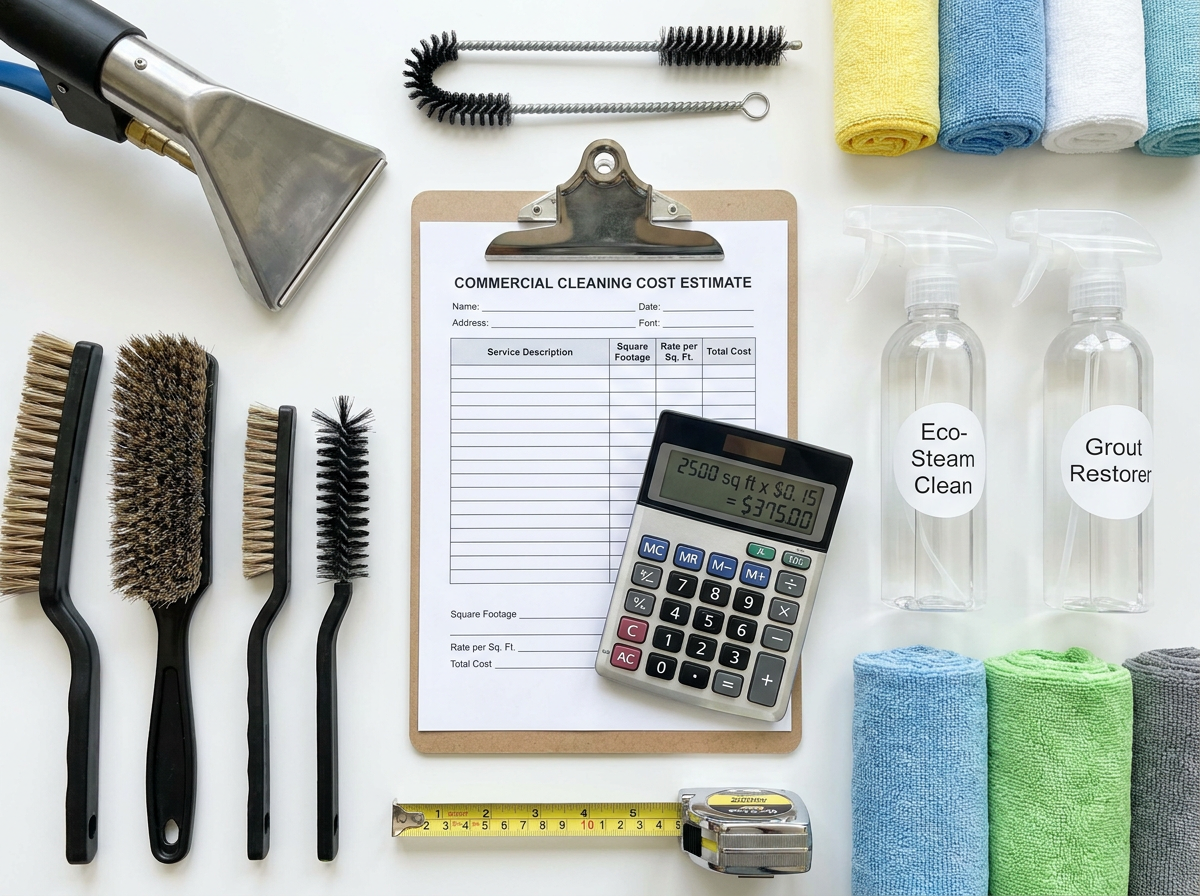
Hourly rates for commercial cleaning typically range from $25 to $50 per hour per technician. A 6,000 square foot office requiring standard deep cleaning would cost approximately $2,400 to $4,500, with the job taking 8 to 16 labor hours depending on condition and scope.
Factors that increase costs include heavy soil accumulation, specialty flooring like terrazzo or marble, medical or food service environments requiring enhanced sanitation, and after-hours scheduling requirements. Facilities in South Florida, for example, may require more frequent deep cleaning due to humidity-related mold and mildew concerns.
How Often Should Businesses Schedule Deep Cleaning?
Deep cleaning frequency depends on facility type, traffic volume, and industry requirements. The ISSA recommends these baseline schedules, which can be adjusted based on specific conditions:
Quarterly deep cleaning suits most standard office environments with moderate traffic. This schedule maintains air quality, extends floor finish life, and prevents significant buildup between services. Office building cleaning programs often combine quarterly deep cleaning with monthly carpet spot treatment and annual comprehensive restoration.
Monthly deep cleaning is appropriate for high-traffic retail environments, food service areas, and medical facilities. Shopping centers, restaurants, and healthcare spaces experience rapid soil accumulation that requires more frequent intervention. Retail and shopping center cleaning schedules often include monthly floor maintenance and quarterly comprehensive deep cleaning.
Semi-annual or annual deep cleaning may suffice for low-traffic warehouses, storage facilities, or seasonal businesses. Schools and daycares typically schedule intensive deep cleaning during summer break, winter recess, and spring break when facilities are unoccupied. School and daycare deep cleaning must meet DCF compliance requirements in Florida, with documentation of products used and service dates.
Signs Your Facility Needs Deep Cleaning
Facility managers should watch for indicators that routine cleaning is no longer sufficient. Visible buildup in corners, grout lines, or ventilation grilles signals accumulated soil that daily cleaning cannot address. Lingering odors despite regular janitorial service often indicate bacterial growth in hidden areas like drains, carpets, or HVAC systems.
Dust returning quickly after janitorial service suggests contaminated ductwork or overhead surfaces that continuously shed particles. Stained carpets or dingy hard floors indicate embedded soil that surface cleaning cannot remove. Employee or visitor complaints about cleanliness, allergies, or air quality warrant investigation and potential deep cleaning intervention.
Specific triggers for deep cleaning include post-construction dust removal, flood or water damage remediation, pest treatment follow-up, and preparation for inspections or lease renewals. Post-construction cleaning services follow a three-phase process to achieve Certificate of Occupancy readiness.
Equipment Used in Commercial Deep Cleaning
Professional deep cleaning requires industrial-grade equipment that delivers results beyond what standard janitorial tools can achieve. Understanding this equipment helps facility managers evaluate contractor capabilities and set appropriate expectations.
HEPA-filtered vacuums capture 99.97% of particles down to 0.3 microns, including allergens, mold spores, and fine dust. Standard vacuums recirculate smaller particles back into the air. The EPA recommends HEPA filtration for commercial environments, particularly those with occupant sensitivity concerns.
Industrial auto-scrubbers combine scrubbing, solution application, and water recovery in a single pass. Ride-on models can clean 20,000 to 50,000 square feet per hour, making them efficient for large facilities. Walk-behind units suit smaller spaces and tight areas. These machines deliver consistent pressure and solution application that manual mopping cannot match.
Truck-mounted carpet extractors provide heated water and powerful suction for deep carpet cleaning. According to the Institute of Inspection, Cleaning and Restoration Certification (IICRC), truck-mounted systems achieve 200+ degree water temperature and 400+ PSI pressure, extracting soil that portable units leave behind.
Steam cleaners use high-temperature vapor to sanitize surfaces without chemicals. Steam at 212 degrees Fahrenheit kills bacteria, viruses, and dust mites on contact. This technology suits environments where chemical residue is a concern, including schools, healthcare facilities, and food service areas.
Industry-Specific Deep Cleaning Requirements
Different industries have unique deep cleaning needs based on regulatory requirements, contamination risks, and operational constraints. Professional cleaning companies develop specialized protocols for each sector.
Healthcare and Medical Facilities
Medical facilities require enhanced sanitation protocols that meet CDC and OSHA guidelines. Deep cleaning includes terminal cleaning of patient rooms, disinfection of high-touch surfaces, and specialized treatment of biohazard areas. According to the Association for the Healthcare Environment (AHE), proper cleaning reduces healthcare-associated infections by 20% to 30%.
Hotels and Hospitality
Hotel and hospitality cleaning addresses guest-facing areas including marble lobby restoration, ballroom carpet cleaning, pool deck pressure washing, and kitchen tile and grout treatment. Brand standards often require documentation with before and after photography. Multi-step diamond polishing processes restore marble floors to showroom condition.
Schools and Daycares
Educational facilities serving children require child-safe, low-VOC products and DCF-compliant documentation in Florida. Deep cleaning schedules align with school closures to minimize disruption. Services include VCT floor stripping and waxing, air duct cleaning, restroom deep cleaning, and nap area sanitation. Signed service completion records document scope, products used, and service dates for inspection files.
Food Service and Restaurants
Commercial kitchens accumulate grease that creates fire hazards and health code violations. Deep cleaning includes hood and duct degreasing, floor and drain treatment, and equipment cleaning. The National Fire Protection Association (NFPA) requires commercial kitchen hoods to be cleaned quarterly for moderate-volume operations and monthly for high-volume facilities.
The Deep Cleaning Process: What to Expect
Professional deep cleaning follows a systematic process that ensures comprehensive coverage and consistent results. Understanding this process helps facility managers prepare their spaces and evaluate contractor performance.
Phase 1: Pre-cleaning assessment. Technicians walk through the facility to identify floor types, condition levels, and specific concerns. They measure square footage, note access constraints, and document existing damage. This assessment informs the scope of work and pricing. Most professional companies offer free on-site assessments with quotes delivered within 24 hours.
Phase 2: High dusting and overhead surfaces. Work proceeds from top to bottom to prevent recontamination of cleaned surfaces. Technicians address ceiling vents, light fixtures, tops of cabinets, and high ledges. Dust and debris fall to lower surfaces where they will be captured in subsequent phases.
Phase 3: Wall and surface treatment. Walls, doors, baseboards, and trim are wiped down. Spot cleaning addresses marks, fingerprints, and stains. Partition walls and glass surfaces are cleaned. This phase includes detailed work around switches, outlets, and fixtures.
Phase 4: Fixture and detail cleaning. Restrooms, kitchens, and specialty areas receive intensive attention. Grout is scrubbed, fixtures are disinfected, and equipment is cleaned inside and out. This phase takes the most time and delivers the most visible improvement.
Phase 5: Floor restoration. Floors are the final phase to avoid recontamination from upper-level work. Depending on floor type, this may include commercial floor deep cleaning, floor stripping and waxing, or scrub and recoat service. Carpets are extracted, hard floors are scrubbed, and finishes are applied as needed.
Frequently Asked Questions About Commercial Deep Cleaning
What is a commercial deep clean?
A commercial deep clean is an intensive cleaning service that targets built-up dirt, grease, bacteria, and allergens in areas that routine janitorial work misses. It includes cleaning behind equipment, inside ventilation grilles, within grout lines, and other hidden or hard-to-reach areas. Deep cleaning resets a facility to baseline hygiene levels and is typically scheduled quarterly, semi-annually, or annually.
What is typically included in a deep clean?
A typical commercial deep clean includes high dusting of ceiling fixtures and vents, wall and baseboard cleaning, detailed restroom sanitation including grout scrubbing, kitchen degreasing and appliance cleaning, carpet extraction or hard floor restoration, and cleaning of all surfaces from floor to ceiling. The specific scope varies by facility type and condition.
How much to charge to clean a 6,000 square foot office?
A 6,000 square foot office typically costs $900 to $4,500 for deep cleaning, depending on the level of service required. Basic deep cleaning runs $0.15 to $0.20 per square foot ($900 to $1,200 total). Standard deep cleaning costs $0.40 to $0.75 per square foot ($2,400 to $4,500 total). Intensive restoration work can exceed $1.00 per square foot.
What is the going rate per hour for commercial cleaning?
Commercial cleaning hourly rates typically range from $25 to $50 per hour per technician in 2026. Rates vary by region, with higher costs in metropolitan areas. Deep cleaning often uses per-square-foot pricing rather than hourly rates because it provides more predictable costs for both the client and contractor.
How long does commercial deep cleaning take?
Commercial deep cleaning takes 4 to 12 hours for a typical office space, depending on size and condition. A 5,000 square foot office in moderate condition requires approximately 8 to 10 labor hours. Heavily soiled facilities or those requiring floor restoration may take 12 to 16 hours. Large facilities like warehouses or retail centers may require multiple days.
Is commercial deep cleaning worth the cost?
Commercial deep cleaning delivers measurable returns through extended floor finish life (saving $0.50 to $1.50 per square foot in replacement costs), improved indoor air quality (reducing sick days by up to 20% according to EPA studies), and enhanced facility appearance that supports tenant retention and customer impressions. Most facilities see positive ROI within 6 to 12 months through reduced maintenance costs and improved occupant satisfaction.
Choosing a Commercial Deep Cleaning Provider
Selecting the right contractor ensures quality results and protects your facility. Key evaluation criteria include licensing and insurance verification, equipment capabilities, industry experience, and reference checks. Professional cleaning companies should carry general liability insurance of at least $1 million and workers compensation coverage.
Request detailed scope of work documents that specify exactly what is included. Ask about equipment: do they own industrial auto-scrubbers, truck-mounted extractors, and HEPA vacuums, or do they rely on basic janitorial tools? Verify experience with your facility type, whether that is office buildings, retail centers, healthcare facilities, or educational institutions.
Certifications provide additional assurance. Look for ISSA CIMS certification, WOSB or SBE designations for diversity requirements, and industry-specific credentials. Companies that offer free on-site assessments demonstrate confidence in their pricing and commitment to accurate scoping.
For facilities in South Florida, local providers understand regional challenges including humidity-related mold concerns, salt air corrosion, and seasonal population fluctuations. Locally owned commercial cleaning companies often provide more responsive service and direct owner accountability than national franchises.
Ready to Schedule Your Commercial Deep Cleaning?
MB Clean Solutions provides comprehensive deep cleaning services for commercial facilities across Miami-Dade, Broward, and Palm Beach counties. Get a free on-site assessment with transparent pricing delivered within 24 hours.
Get Your Free QuoteSiga leyendo
Más guías sobre el mismo tema.
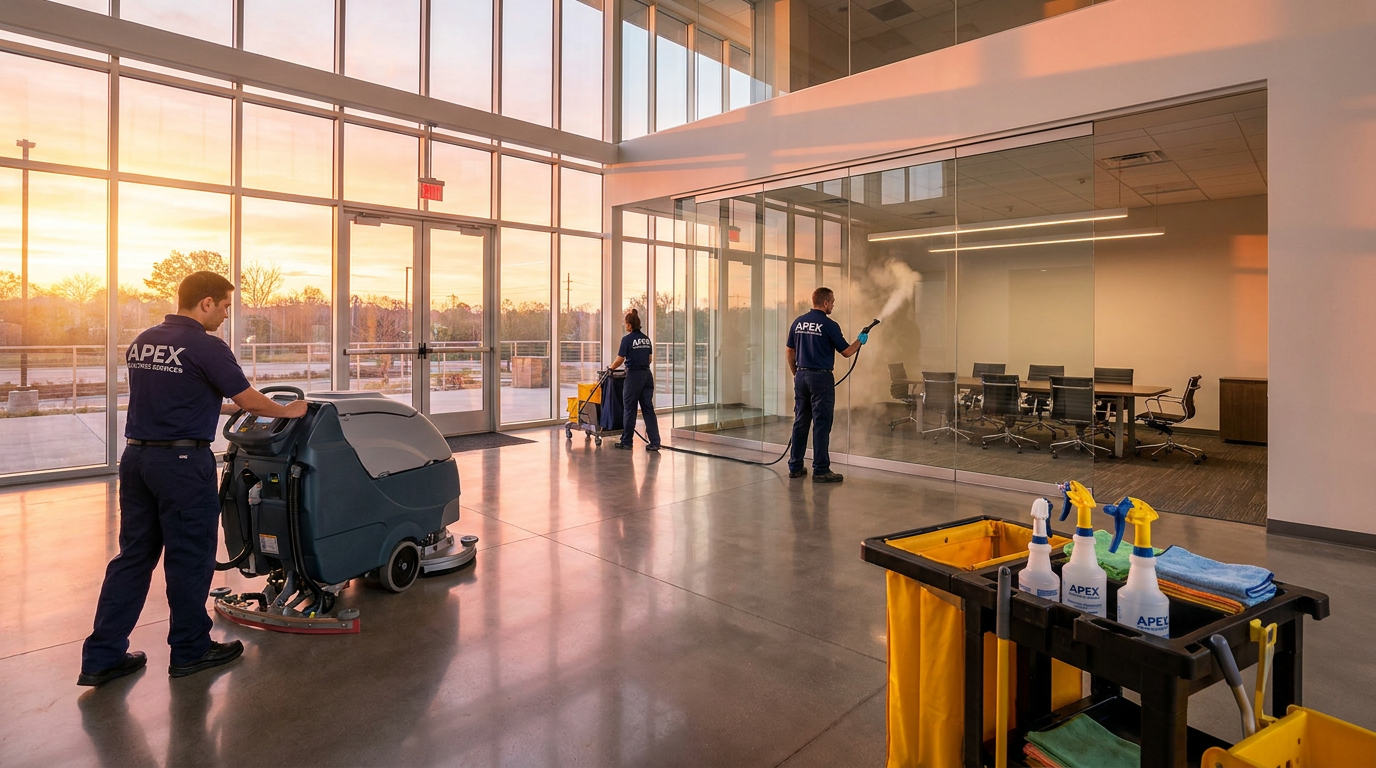
What to Expect During Commercial Deep Cleaning Service
Learn exactly what happens during a commercial deep cleaning service, from pre-cleaning assessment to final inspection. Includes timelines, costs, and preparation tips.
Leer la guía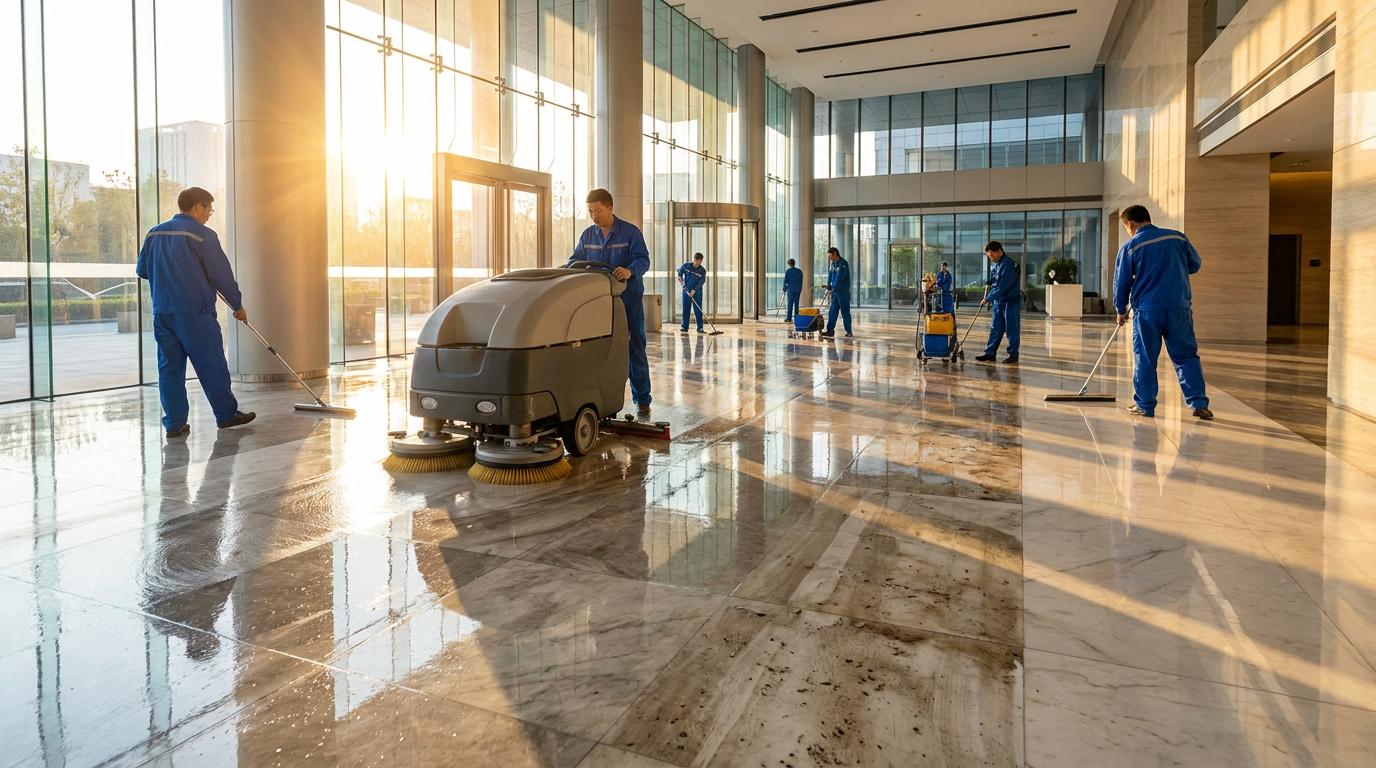
Commercial Deep Cleaning Cost by Square Footage and Building Type
Commercial deep cleaning costs $0.40 to $2.00 per square foot depending on building type, floor condition, and service scope. Get exact pricing breakdowns.
Leer la guía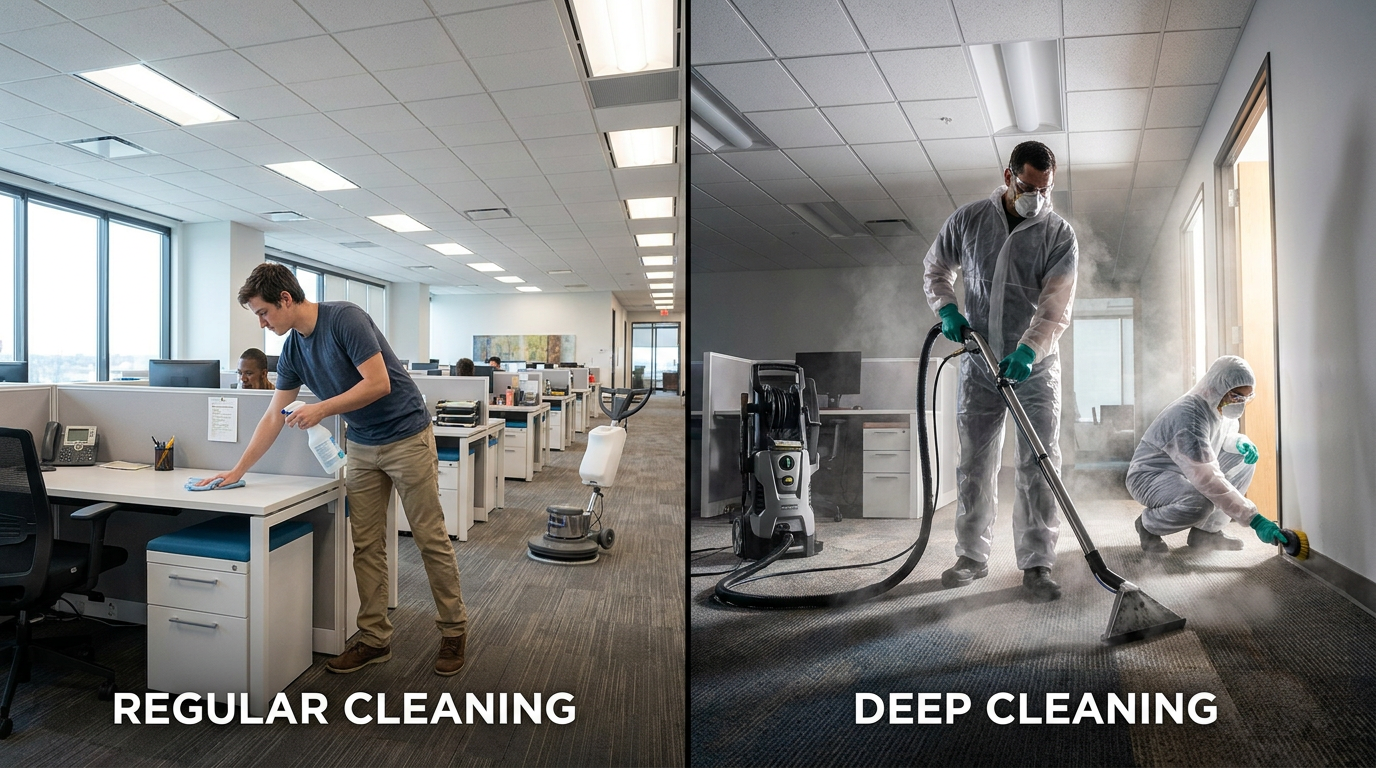
Commercial Deep Cleaning vs Regular Cleaning: Key Differences
Learn the exact differences between commercial deep cleaning and regular cleaning, including costs, frequency, tasks covered, and which service your business needs.
Leer la guía
¿Listo Para un Espacio Impecable?
Obtenga un estimado gratis y sin compromiso para su proyecto de limpieza comercial. La mayoría de las cotizaciones se entregan en 24 horas.